
Table of Contents
- 1. The Reality of Indoor Air Pollution
- 2. The Chemistry of a Kitchen Scrap Simmer Pot
- 3. How to Prepare a Safe, Zero-Waste Simmer Pot
- 3.1. The Standard All-Natural Recipe:
- 3.2. Preparation Steps:
- 4. The Fragrance Fallacy: Pleasant Scents vs. Clean Air
- 5. Important Health and Safety Precautions
- 5.1. 1. Vulnerable Respiratory Systems
- 5.2. 2. The Fire Risk of Unattended Appliances
- 6. Building a Truly Healthy Home Environment
- 7. Conclusion: Set Realistic Expectations
- 8. Frequently Asked Questions (FAQ)
The Hidden Truth About Lemon Peel Simmer Pots and Indoor Air Quality
Most homes tell a unique sensory story. Whether it is the lingering aroma of last night’s fried fish, the heavy scent of a kitchen after a long day of baking, or that unmistakable, damp stuffiness that settles in when windows remain tightly shut against the elements, odors happen. To combat these everyday household smells, a popular DIY hack has taken over social media: simmering a mixture of leftover lemon peels, cinnamon sticks, and sliced ginger in water.
This aromatic trick is incredibly simple, cost-effective, and deeply satisfying to the senses. It fills a room with a warm, inviting fragrance without requiring you to reach for a commercial aerosol spray. However, a major misconception surrounds this natural home remedy. While it can effortlessly make an apartment smell like a cozy spa, lemon peels do not purify or clean the air. Confusing a pleasant aroma with true air filtration can lead to poor indoor air management. Here is a look at what a simmer pot actually does, the science of indoor air quality, and how to safely use kitchen scraps to freshen your home.
The Hidden Truth About Lemon Peel Simmer Pots and Indoor Air Quality
The Reality of Indoor Air Pollution
To understand why a simmer pot falls short of being an air purifier, we have to look at the mechanics of indoor air quality. According to data from the U.S. Environmental Protection Agency (EPA), Americans spend approximately 90 percent of their lives indoors, where concentrations of certain pollutants can occasionally be two to five times higher than outdoor levels.
Americans Spend 90% of Time Indoors ──> Indoor Pollutants Accumulate ──> Masking Scents Cannot Filter Toxins
The EPA formally states that the only reliable methods for reducing indoor air pollutants are:
Source Control: Physically removing or reducing the source of the pollution.
Ventilation: Introducing clean outdoor air into the living space.
Filtration: Utilizing physical filters (like HEPA) or air purifiers to mechanically trap particles, volatile organic compounds (VOCs), and airborne pathogens.

A boiling pot of citrus fruit and spices does not trap, neutralize, or filter out dust mites, pet dander, mold spores, carbon monoxide, or chemical gases. It is a sensory alteration, not a structural purification process.
The Chemistry of a Kitchen Scrap Simmer Pot
The immense appeal of a lemon peel simmer pot lies in the brilliant contrast of its natural ingredients. It relies entirely on basic physics rather than chemical wizardry.

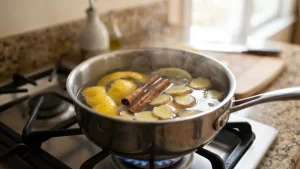
The Lemon Peel: Citrus rinds are rich in d-limonene, a naturally occurring essential oil that projects a bright, sharp, and universally recognized “clean” scent.
The Cinnamon Stick: Cinnamon introduces a rich, sweet, and grounding woody note that evokes a sense of domestic warmth and comfort.
The Ginger Slices: Ginger contributes a sharp, punchy, and spicy undertone that can cut through heavy, oily kitchen grease odors.
When you submerge these ingredients in water and apply heat, the boiling water transitions into steam. This rising water vapor acts as a natural carrier vessel, lifting the volatile aromatic compounds out of the plant matter and dispersing them through the air currents of your home. It functions exactly like an all-natural perfume for your nose, providing temporary sensory relief without altering the actual chemical purity of the air.
How to Prepare a Safe, Zero-Waste Simmer Pot
If your goal is purely to cover up temporary cooking odors or create a welcoming atmosphere for weekend guests, using citrus scraps is a brilliant way to practice zero-waste living. Instead of throwing away lemon rinds after making lemonade or cooking dinner, you can give them one final, aromatic purpose.
The Standard All-Natural Recipe:
3 to 4 cups of clean water
The leftover peel of 1 large lemon
1 whole cinnamon stick
3 to 4 thin slices of fresh, raw ginger
Preparation Steps:
Place the water and all your prepared kitchen scraps into a small saucepan or a dedicated stovetop pot. Bring the liquid to a gentle boil over medium-high heat until steam begins to rise from the surface. As soon as the vapor appears, immediately lower the stovetop burner to its lowest simmer setting.
Within minutes, the fragrance will build, effectively softening stale air in small kitchens, open-concept living rooms, or enclosed apartments. Keep a close eye on the liquid levels; the water evaporates rapidly, and you will need to add an extra cup of warm water every 30 to 45 minutes to keep the ingredients submerged.
The Fragrance Fallacy: Pleasant Scents vs. Clean Air
There is a crucial chemical nuance that every homeowner should understand: a pleasant smell is not the same as clean air. In fact, overdoing fragrances—even entirely natural ones derived from fruits and spices—can occasionally complicate indoor air dynamics in tightly sealed environments.
The EPA notes that many fragranced consumer products, including common commercial air fresheners, emit chemicals that can lower indoor air quality. Specifically, pine and citrus-scented compounds contain terpenes. When these natural terpenes interact with low levels of background ozone commonly found inside homes, they can react to form microscopic particulate matter and trace amounts of formaldehyde.
While a small pot of real lemon peel is infinitely gentler and safer than a synthetic chemical aerosol spray, it is still a potent reminder not to overwhelm a closed room with heavy, concentrated aromatics of any kind. Masking an odor does not solve the root issue. If a room smells continuously musty or stale, the culprit is likely hidden mold, poor ventilation, or a full trash can. True health begins by eliminating the source of the smell, running a kitchen exhaust fan, or opening a window to let fresh air do the heavy lifting.
Important Health and Safety Precautions
While generally safe for the public, certain populations and physical environments require a cautious approach to stovetop aromatherapy.
1. Vulnerable Respiratory Systems
Individuals living with chronic asthma, severe seasonal allergies, chemical sensitivities, migraine disorders, or chronic obstructive pulmonary disease (COPD) can experience airway irritation from strong aromas—even when those scents originate from 100% natural, organic food ingredients.
The Food and Drug Administration (FDA) regularly issues warnings regarding the marketing of natural fragrance and aromatherapy products, reminding consumers that “natural” does not automatically mean universally harmless. If you or a family member has sensitive lungs, test a mild version of the simmer pot first. Use less ginger and cinnamon, keep a nearby window cracked, and turn off the burner immediately if anyone experiences throat tickles, unexpected coughing, headaches, or shortness of breath.
2. The Fire Risk of Unattended Appliances
The greatest hazard associated with a homemade simmer pot has absolutely nothing to do with the botanical properties of lemon, cinnamon, or ginger. Instead, it is the severe risk of leaving a hot stove completely unattended. It is incredibly easy to turn a burner on low, walk into another room to fold laundry or watch television, and completely forget about the pot. Once the water completely evaporates, the organic matter will instantly scorch, filling your home with toxic smoke and creating a serious fire hazard.
According to data compiled by the U.S. Fire Administration, cooking stands as the absolute leading cause of residential building fires and home fire injuries across the nation. Unattended cooking equipment is cited as the primary factor in nonconfined home fires. The safety rule for utilizing a simmer pot is simple, absolute, and highly effective:
If you leave the kitchen or head out of the house, turn the burner completely off. Never leave a simmering pot active while you sleep or run errands.
Building a Truly Healthy Home Environment
An occasional stovetop simmer pot is a beautiful, comforting addition to a cozy self-care routine. After you have scrubbed down the kitchen counters, taken out the garbage, and run the dishwasher, letting a citrus aroma drift through the clean air adds a wonderful finishing touch.
However, a healthy home routine must prioritize structural cleanliness over aromatic camouflage. To maintain a truly healthy breathing environment for your family, always follow this order of operations:
Eliminate the Core Source: Locate and remove the root cause of any persistent bad odors rather than trying to bury them under spices.
Ventilate Active Areas: Always turn on your overhead range hood fan when frying, searing, or cooking with oils to pull fine grease particles out of the house.
Control Ambient Moisture: Use dehumidifiers or bathroom exhaust fans to keep indoor humidity levels below 50 percent, systematically preventing the colonization of musty mold and mildew.
Introduce Mechanical Filtration: Rely on dedicated HEPA air purifiers to actively trap allergens, dust, and microscopic airborne pollutants.
Conclusion: Set Realistic Expectations
Should you save your next batch of lemon peels and simmer them with a dash of ginger and cinnamon? Absolutely—provided you enjoy the fragrance and commit to monitoring the stove safely. It is a charming, low-cost, and sustainable way to add a touch of seasonal warmth to your living space without spending a dime on commercial room sprays.
Just ensure your expectations remain firmly grounded in science. Enjoy the beautiful, comforting aroma for what it truly is: a natural perfume that delights the senses, rather than a magical cure that cleans the air. By balancing cozy home traditions with proper ventilation and source control, you can cultivate a home that both smells wonderful and remains genuinely healthy to breathe in.
Frequently Asked Questions (FAQ)
Can I reuse the ingredients in a simmer pot for a second day?
Yes. If you only simmered your mixture for an hour or two and there is still plenty of fragrance left in the rinds and spices, you can turn off the heat, let the pot cool completely, and store it in the refrigerator overnight. The next day, simply add a fresh cup of water and turn the burner back on. Discard the mixture once the fruits turn mushy or lose their vibrant scent.
Does adding vinegar to a simmer pot help clean the air?
Adding a splash of white vinegar to a simmer pot can dramatically improve its ability to neutralize tough odors, such as airborne fish grease or cigarette smoke. This happens because the acetic acid in the boiling vinegar vapors chemically binds with and neutralizes alkaline odor molecules in the air. However, while it is an exceptional deodorizer, it still does not filter out particulate matter or purify the air like a mechanical filter.
Can I use a slow cooker (Crock-Pot) instead of a stovetop for a simmer pot?
Utilizing an electric slow cooker is an excellent, much safer alternative to using a gas or electric stovetop. You can place your lemon peels, spices, and water inside the slow cooker, set it to “low” or “warm,” and leave the lid completely off so the steam can escape. While you still shouldn’t leave the house with it turned on, it eliminates the risk of an open flame or intense, fast-drying burner heat.
Will a simmer pot help relieve sinus congestion if I am sick?
The warm, humid steam generated by a simmer pot can provide temporary physical comfort by lubricating dry nasal passages and soothing an irritated throat, much like taking a hot, steamy shower. Ingredients like ginger also provide a sharp, clearing sensation. However, it is not a medical treatment and will not cure a viral infection or eliminate airborne cold viruses from the room.
Can I use citrus essential oils instead of real lemon peels?
Yes, you can drop a few drops of pure lemon, orange, or grapefruit essential oil into a pot of simmering water or an electronic mist diffuser to achieve an identical aroma. However, real kitchen scraps provide a completely free, zero-waste alternative that keeps garbage out of landfills, making real peels the preferred choice for eco-conscious households.