
Table of Contents
- 1. The Core Problem: Why Glass-Ceramic Stovetops Streak So Easily
- 1.1. The Hidden Traps of Reusable Cloths
- 1.2. The Danger of Excess Moisture and Cleaner Residue
- 2. The Simple Paper Towel Solution
- 2.1. How a Dry Pass Acts as a Micro-Polisher
- 2.2. What Major Appliance Manufacturers Say
- 3. Step-by-Step Blueprint for a Flawless Everyday Clean
- 3.1. 1. The Cool-Down Phase
- 3.2. 2. Debris Clearance
- 3.3. 3. The Gentle Wash
- 3.4. 4. The Paper Towel Buff
- 4. Crucial Mistakes That Ruin Glass Cooktops
- 5. Conclusion: A Simpler, Calmer Approach to Kitchen Care
- 6. Frequently Asked Questions
- 6.1. Can I use window cleaner or Windex on my glass-ceramic cooktop?
- 6.2. Why does my cooktop still look cloudy even after using a dry paper towel?
- 6.3. Are microfiber cloths better than paper towels for the final polish?
- 6.4. How can I remove deep, white ring marks around my burners?
- 6.5. Is it safe to use a razor scraper to clean a glass cooktop?
1 Simple Trick Keeps Your Glass Cooktop Streak-Free Every Day
A glass-ceramic cooktop has a unique way of making a kitchen feel instantly elevated. With its sleek, reflective surface and minimalist design, it gives the entire room a clean, contemporary edge that looks almost untouched. Then, dinner happens. A single splatter of pasta sauce, an oily mist from a sauté pan, or even a swipe with a damp dishcloth can transform that immaculate surface into a frustrating maze of cloudy films and white streaks.
For many homeowners, the post-dinner cleanup becomes an endless cycle of wiping, stepping back, catching the overhead light, and realizing the glass looks just as hazy as before. It feels like a battle that requires heavy-duty chemical sprays or exhausting physical scrubbing.
However, professional cleaners and major appliance manufacturers agree that the secret to a crystal-clear, mirror-like finish does not require harsh chemicals or muscle power. Instead, the ultimate solution relies on a remarkably basic kitchen staple: a fresh, dry paper towel used as the definitive final step. By shifting your focus from the washing stage to the polishing stage, you can permanently eliminate the cloudiness that plagues glossy stovetops.

1 Simple Trick Keeps Your Glass Cooktop Streak-Free Every Day
The Core Problem: Why Glass-Ceramic Stovetops Streak So Easily
To fix a dull, cloudy cooktop, it helps to understand that the visual problem usually is not lingering food or grease. Often, you have already successfully cleaned away the actual grime. The stubborn haze that remains is typically a microscopic film composed of hard water minerals, leftover detergent surfactants, or tiny traces of oils that have simply been dragged across the glossy surface rather than lifted off.
The Hidden Traps of Reusable Cloths
While reusable microfiber cloths and sponge cloths are excellent for tackling initial spills and loosening stuck-on food, they are inherently flawed when it comes to the final polish. Even after a thorough machine wash, reusable cloths can retain tiny particles of laundry detergent, fabric softener, old grease, and lint fibers. When a damp cloth is wiped across smooth ceramic glass, it deposits these microscopic residues in its wake. As the moisture evaporates into the air, these residues dry in place, creating those classic, maddening streaks that show up clearly under your kitchen lighting.

The Danger of Excess Moisture and Cleaner Residue
Another widespread mistake is utilizing a cleaning cloth that is far too saturated with water or soapy solution. Excess liquid pools in subtle imperfections on the glass surface. Furthermore, spraying an excessive amount of specialized cooktop cleaner can work against you. Too much product leaves a heavy chemical film that acts as a magnet for dust and fingerprints, turning a quick daily chore into an ongoing headache.
The Simple Paper Towel Solution
The mechanics of the paper towel trick are beautifully straightforward. Instead of relying on a continuous application of liquid cleaners to dissolve the haze, the magic happens during the dry buffing stage.
How a Dry Pass Acts as a Micro-Polisher
Once the initial layer of grease and food debris has been wiped away with a soft, damp cloth, a dry paper towel is introduced to the completely cooled or lightly warm surface. Because a fresh paper towel is entirely free of laundry detergents, old oils, or fabric softeners, it acts like a pristine blotter.

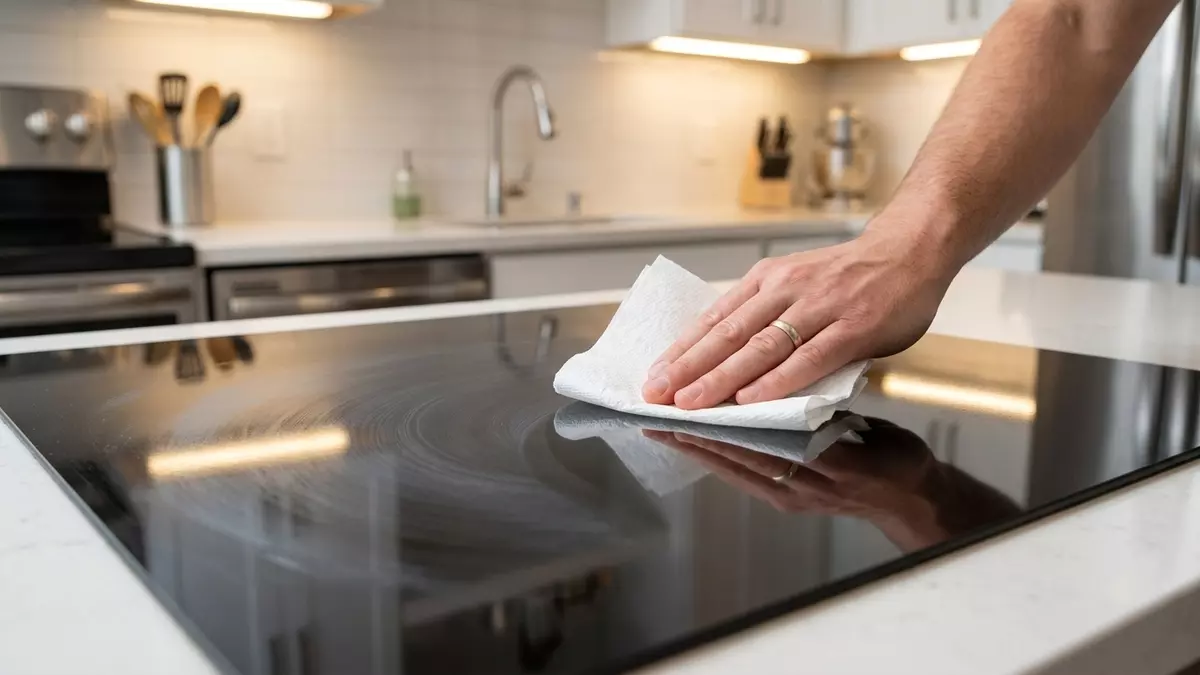
As you glide the dry paper towel across the ceramic glass using smooth, gentle circular motions, the ultra-absorbent cellulose fibers instantly trap and lift the remaining micro-moisture and chemical film. This mechanical action polishes the glass without adding any new liquids, revealing the factory-clear shine hidden underneath.
What Major Appliance Manufacturers Say
This simple, effective habit is heavily supported by the official care guidelines of the world’s leading home appliance brands. Rather than pushing proprietary chemical formulas, their core instructions prioritize proper drying techniques:
Whirlpool: Their official ceramic glass cooktop care documentation explicitly states that the definitive step to achieving an unblemished shine is to polish the entire surface with a clean, dry cloth or a fresh, dry paper towel as the final pass.
KitchenAid: Mirroring this approach, KitchenAid’s consumer guidance for glass stovetops highlights that a gentle buffing motion with a dry paper towel or pristine cloth is essential to remove lingering haziness and safely restore the original luster.
GE Appliances: They emphasize that a dry paper towel is the safest tool for clearing away all remaining cleaning residues. Crucially, they issue a strong warning to home cooks: never turn on or heat a burner until all cleaning products have been completely wiped away and dried. Heating leftover chemical residue can permanently bake the film into the ceramic glass, causing severe discoloration that is incredibly difficult to fix.
Maytag: Their maintenance guidance reminds users to always ensure the cooktop is fully turned off and allowed to cool until it is safely warm—but never hot—before initiating a clean. They also suggest utilizing household white vinegar to help break down stubborn food rings before doing your final dry buff.
EuroKera: As a premier global manufacturer of the actual glass-ceramic material utilized in high-end cooktops, EuroKera emphasizes that thorough drying is the single most important factor in daily maintenance, advising users to reserve specialized glass-ceramic creams only for heavy-duty, burned-on stains.
Step-by-Step Blueprint for a Flawless Everyday Clean
To integrate this professional method into your evening kitchen routine, follow this safe, gentle, and highly efficient blueprint:
1. The Cool-Down Phase
Never attempt to clean a glass-ceramic surface while the hot surface indicator light is still illuminated. Working on a scorching burner causes cleaning liquids to instantly flash-boil, which can warp the glass, bake chemical residues into the cooktop, and pose a severe burn risk to your hands. Wait until the surface is completely cool, or slightly warm to the touch.
2. Debris Clearance
Before introducing any moisture, take a dry cloth or a soft brush to sweep away loose crumbs, salt crystals, or dry food particles. Skipping this step can trap hard crumbs under your wet cloth, causing you to accidentally drag them across the glass and leave fine micro-scratches.
3. The Gentle Wash
Mist the cooktop lightly with a mild solution, such as warm water mixed with a drop of gentle dish soap, or a diluted 50/50 mixture of water and white vinegar. Wipe the surface thoroughly with a soft, damp cloth to loosen and lift away surface oils and splatters.
4. The Paper Towel Buff
Immediately after wiping, while the glass is still slightly damp, take a clean sheet of dry paper towel. Fold it into a manageable pad and buff the glass using smooth, continuous circular movements. Apply minimal downward pressure—the goal is to absorb the moisture film and polish the glass, not to scrape it. Within seconds, the cloudy haze will vanish, leaving a pristine, streak-free shine.
Crucial Mistakes That Ruin Glass Cooktops
While ceramic glass is engineered to be exceptionally durable against thermal shock and heavy cookware, it is highly susceptible to physical abrasion. To keep your stovetop free of permanent damage, avoid these common pitfalls:
Avoid Abrasives At All Costs: Never use steel wool, rough green scouring pads, or gritty abrasive powders on a glass cooktop. These harsh materials create micro-scratches that permanently dull the glass over time, making it easier for future grease splatters to become deeply embedded.
Lifting vs. Dragging: Heavy cast iron, stoneware, or stainless steel pots and pans frequently feature rough, textured bottoms. Sliding these heavy vessels horizontally across your burners can leave dark metallic transfer marks or deep scratches. Always lift your cookware completely when moving it from burner to burner.
Ignoring Rushed Overflows: High-sugar spills, such as boiling jam, syrups, or starchy pasta water, require immediate attention. If allowed to cool completely and harden on a glass-ceramic surface, these substances can chemically bond with the glass material, occasionally causing tiny pits or fractures when the hardened residue is eventually pulled away.
Conclusion: A Simpler, Calmer Approach to Kitchen Care
Embracing the dry paper towel trick proves that keeping a beautiful home does not have to be an expensive, stressful, or chemically intensive chore. By adding one simple, intentional drying step to a routine you are already doing, you bypass the need for a cabinet full of specialty products. This uncomplicated habit keeps your modern appliance looking pristine, protects its structural integrity for years to come, and brings a welcome sense of calm, order, and satisfaction to your daily cooking space.
Frequently Asked Questions
Can I use window cleaner or Windex on my glass-ceramic cooktop?
It is highly recommended to avoid standard window cleaners on a cooktop. Many commercial glass cleaners contain ammonia or harsh chemical solvents that can react poorly when heated, potentially leaving a permanent, iridescent blue chemical stain or cloudy haze on your premium ceramic glass surface. Stick to mild dish soap, white vinegar, or specialized cooktop creams.
Why does my cooktop still look cloudy even after using a dry paper towel?
If a cloudy film persists after buffing with a paper towel, there is likely a heavy layer of old grease or cooked-on chemical residue built up from previous cleaning sessions. To clear this away, apply a dedicated glass-ceramic cleaning cream or a paste of baking soda and water, let it sit for a few minutes, wipe it clean with a damp cloth, and then perform the dry paper towel polish to reveal the streak-free surface.
Are microfiber cloths better than paper towels for the final polish?
A completely pristine, brand-new microfiber cloth can work well for polishing. However, because reusable cloths are laundered frequently, they often pick up trace amounts of oils, fabric softeners, and lint fibers in the washing machine. A fresh sheet of paper towel is a safer, more reliable choice for the final pass because it is guaranteed to be entirely free of laundry chemical residues.
How can I remove deep, white ring marks around my burners?
Those stubborn white rings are usually caused by mineral deposits from pots boiling over or metallic friction from the bottom of your cookware. To dissolve them safely, soak a towel in pure white vinegar and lay it directly over the cold rings for 15 to 30 minutes to break down the minerals. Wipe away the loosened residue with a damp cloth, and finish by buffing the area dry with a paper towel.
Is it safe to use a razor scraper to clean a glass cooktop?
Yes, but only when used correctly for heavy, carbonized, burnt-on food mounds. Always ensure the glass is fully lubricated with a cooktop cleaner or water first, and hold the razor blade at a very shallow, 30-degree angle relative to the glass. Gently scrape the mound away without digging the corners of the blade into the surface, and always perform a final wipe and paper towel buff afterward.