
Table of Contents
- 1. The Dynamic Architecture of Gut Repair
- 2. The Experiment: Reinvigorating Old Tissue with Youthful Microbes
- 3. Unpacking the Wnt Signaling Pathway
- 4. A Surprising Microbial Discovery: Akkermansia Muciniphila
- 5. This Is Not a Probiotic Shortcut
- 5.1. Distinguishing Controlled Biological Procedures from Commercial Supplements
- 6. Clinical Horizons: What the Future Holds for Human Health
- 7. Conclusion
- 8. Frequently Asked Questions
- 8.1. What is a fecal microbiota transfer (FMT)?
- 8.2. How do intestinal stem cells know when to repair the gut lining?
- 8.3. Can I change my gut microbiome through my daily diet?
- 8.4. Is the Wnt signaling pathway found in other parts of the human body?
- 8.5. Are fecal transplants currently used to treat human medical conditions?
How Young Microbial Transfers Reverse Gut Aging Markers in Older Mice
Growing older is traditionally viewed as an inevitable one-way street, marked by a gradual decline in the body’s ability to heal and regenerate. However, groundbreaking new tissue research is fundamentally changing how scientists think about the biological clock. A remarkable animal study has revealed that introducing gut microbes from young mice into older mice can actually revitalize aging intestinal tissue and kickstart repair mechanisms that had slowed to a crawl.
Published in the peer-reviewed medical journal Stem Cell Reports, the study shows that a youthful mix of gut microorganisms can directly boost intestinal stem cells—the specialized engines responsible for rebuilding and maintaining the inner lining of our digestive tracts. While this laboratory success does not mean an immediate anti-aging cure has arrived for humans, it provides an invaluable blueprint showing that age-related cellular decline is far more dynamic and reversible than previously assumed.
How Young Microbial Transfers Reverse Gut Aging Markers in Older Mice
The Dynamic Architecture of Gut Repair
The human and mammalian intestinal tract is far from a passive, stationary plumbing tube. It is a highly active, high-traffic biological barrier exposed to a continuous barrage of rough materials, including acidic digestive fluids, abrasive food particles, and trillions of diverse microbes. Because of this relentless daily wear and tear, the cells that form the delicate inner wall of the gut are shed and replaced entirely every few days.
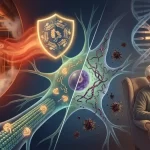
The heroes behind this perpetual restoration project are intestinal stem cells (ISCs). Tucked safely within protective pockets of the gut lining known as crypts, these stem cells act as a permanent, localized emergency repair crew. As shown in detailed anatomical models of the digestive tract, these master cells constantly divide and mature into specialized cells called enterocytes, goblet cells, and enteroendocrine cells. Together, these cells form a flawless, tightly sealed barrier that absorbs essential nutrients while keeping dangerous pathogens firmly confined inside the digestive tract.
As an organism ages, this internal repair crew naturally loses its vigor. The stem cells divide less frequently, become sluggish, and take significantly longer to respond to structural damage. When the rate of cellular shedding outpaces the rate of stem cell regeneration, the protective lining of the gut becomes thin, fragile, and increasingly vulnerable to chronic inflammation, localized infections, and poor overall healing.

The Experiment: Reinvigorating Old Tissue with Youthful Microbes
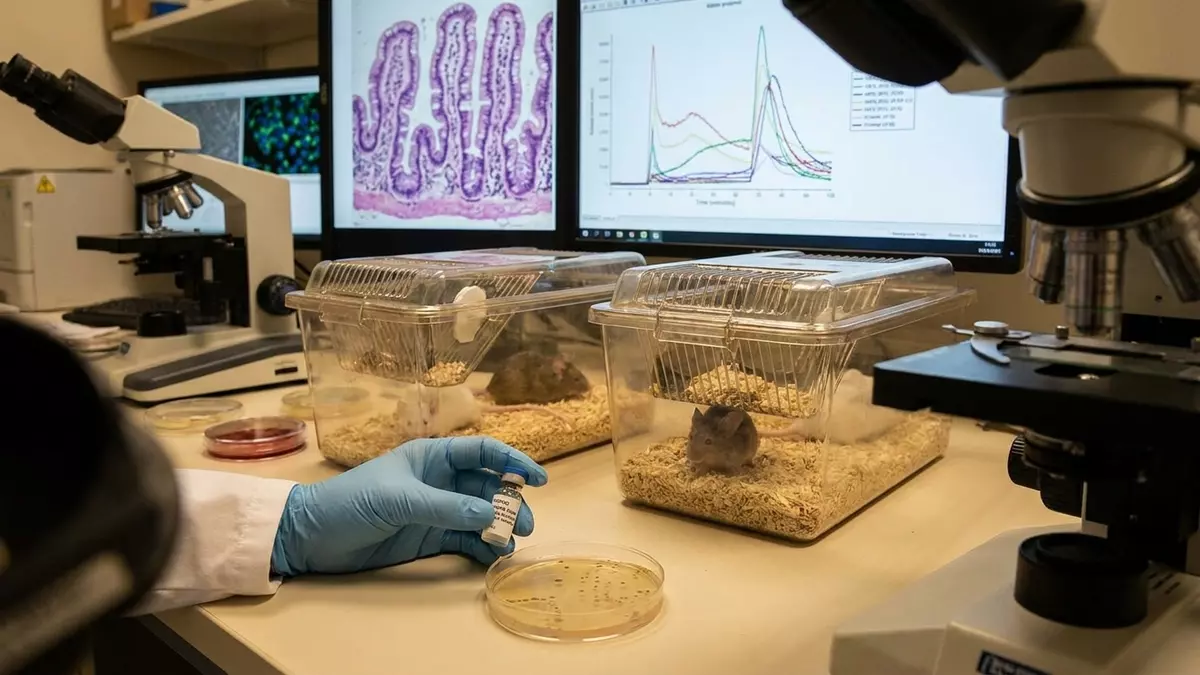
To investigate whether the aging of the gut microbiome—the massive community of bacteria, viruses, and fungi living in the digestive tract—plays a direct role in this cellular slowdown, a collaborative international research team stepped in. The project was co-led by Hartmut Geiger of Ulm University in Germany, alongside researchers Yi Zheng and Kodandaramireddy Nalapareddy based at the Cincinnati Children’s Hospital Medical Center.
The researchers executed a series of controlled experiments using fecal microbiota transplants (FMT) to transfer the diverse bacterial ecosystems from young, vibrant donor mice into an aging cohort of older mice. The internal biological shifts observed after the microflora transfers were immediate and striking.
According to the published findings, the introduction of a younger microbial environment successfully flipped a biological switch within the older animals’ tissues. Their sluggish intestinal stem cells suddenly awakened, displaying a rapid surge in cellular division and activity. When the researchers introduced minor experimental damage to the intestinal lining, the old mice that had received the youthful microbiome healed at an accelerated rate, functioning remarkably like the tissues of young, healthy animals.

Unpacking the Wnt Signaling Pathway
To understand exactly how microscopic bacteria in the digestive tract can command physical stem cells inside an animal’s tissue to heal, the researchers mapped out an essential internal communication matrix known as the Wnt signaling pathway.
Think of Wnt signaling as a cellular megaphone. It is a highly conserved network of proteins that passes vital instructions from the surrounding tissue directly into the nucleus of stem cells, telling them precisely when it is time to replicate, grow, and repair structural damage.
[Young Microbiome Transfer] ➔ [Restores Wnt Signaling Signal] ➔ [Reactivates Sluggish Stem Cells] ➔ [Accelerated Gut Lining Repair]
As a natural part of the aging process, this biological megaphone becomes increasingly faint. The Wnt communication signal weakens, leaving stem cells without the explicit instructions they need to rebuild the intestinal wall after an injury or bout of illness.
The most profound revelation of the Stem Cell Reports study was that the youthful fecal microbiota transplant did not merely alter the surface bacteria; it actively repaired this deep communication framework. By restoring the strength of the Wnt signaling pathway, the young microbes effectively handed the aging stem cells a fresh set of instructions, forcing the older repair crew back into highly efficient action.
A Surprising Microbial Discovery: Akkermansia Muciniphila
In addition to tracking stem cell activity, the research team closely monitored specific bacterial strains to identify which residents of the gut neighborhood were driving these changes. This analysis yielded a highly surprising and nuanced discovery regarding a famous bacterium called Akkermansia muciniphila.
In modern health media and consumer wellness circles, Akkermansia muciniphila is frequently celebrated as a definitive “good bacterium” because of its well-documented abilities to support metabolic health, strengthen the gut barrier, and manage obesity markers. However, in this specific study focused on aging tissue, higher concentrations of Akkermansia muciniphila within the older intestines were unexpectedly correlated with weaker Wnt signaling and slower stem cell reproduction.
This paradox highlights a vital reality of microbiome science: the gut ecosystem cannot be simplified into a rigid scoreboard of universally good versus bad bacteria. Microbes are complex living organisms that adapt to their surroundings. A specific bacterial strain can act as a helpful ally in a young, resilient metabolic environment, yet behave entirely differently or create unexpected complications when interacting with older, structurally shifting tissues. The impact of a microbe depends heavily on context, timing, age, and the overall balance of the surrounding microbial neighborhood.
This Is Not a Probiotic Shortcut
Because consumer interest in gut health is currently at an all-time high, it is easy for exciting scientific headlines to be misinterpreted as a green light for consumer wellness products. It is critical to state clearly that these experimental results cannot be replicated by purchasing a bottle of probiotics from a local drugstore shelf, drinking a commercial kombucha, or eating yogurt.
Distinguishing Controlled Biological Procedures from Commercial Supplements
| Feature | Controlled Microbial Transplant (FMT) | Over-the-Counter Probiotics |
| Composition | A complex, intact ecosystem comprising thousands of co-dependent microbial strains | A handful of isolated, mass-produced bacterial strains |
| Delivery Mechanism | Viable, deep systemic delivery directly to the colon architecture | Fragmented survival rates through harsh stomach acids |
| Scientific Objective | Restoring core cellular communication pathways (Wnt) | General maintenance of daily digestive comfort |
A professional fecal microbiota transfer is an intricate biological procedure that introduces a fully integrated, live community of highly co-dependent microbes. Modern medicine is still in the early stages of deciphering which exact combinations of bacteria are safe, stable, and effective for targeted therapeutic use over long periods. Casual experimentation with random consumer supplements completely misses the deep cellular targets identified in the lab.
Clinical Horizons: What the Future Holds for Human Health
While human biology is significantly more complex than that of a mouse, the foundational mechanisms of intestinal stem cell renewal and Wnt signaling are highly shared across mammals. If future clinical trials validate that a similar microbial pathway exists in humans, it could pave the way for revolutionary medical treatments.
The long-term value of this research lies in helping vulnerable human patients bounce back from severe physiological trauma. For instance, elderly individuals recovering from major abdominal surgeries, severe gastrointestinal infections, or destructive radiation therapies for cancer often suffer from a compromised, slow-healing gut lining. An optimized, targeted microbial therapy designed to re-energize localized stem cells could drastically accelerate their physical recovery times, prevent dangerous systemic infections, and significantly enhance their overall quality of life.
Conclusion
The study from Ulm University and Cincinnati Children’s Hospital reminds us that the human body is an interconnected ecosystem where microscopic residents wield immense influence over our physical longevity. By showing that age-related stem cell decline can be partially mitigated and reversed through the surrounding microbial environment, science has opened up a thrilling new frontier in longevity research. Aging may still be a certainty, but our understanding of how fluidly our tissues can heal and adapt continues to grow deeper every single day.
Frequently Asked Questions
What is a fecal microbiota transfer (FMT)?
A fecal microbiota transfer is a clinical medical procedure where processed stool from a carefully screened, healthy donor is transplanted into the colon of another individual. The primary goal is to completely replace a damaged, diseased, or aged microbial environment with a diverse, stable ecosystem of healthy bacteria.
How do intestinal stem cells know when to repair the gut lining?
Intestinal stem cells constantly read chemical markers in their immediate environment. When cells on the surface of the gut wall are damaged or shed, specialized cellular communication networks—such as the Wnt signaling pathway—release proteins that bind to receptors on the stem cells. This serves as a direct command instructing them to divide and generate fresh replacement tissue.
Can I change my gut microbiome through my daily diet?
Yes, your daily diet is the primary factor shaping the composition of your gut microbiome. Consuming a diverse array of whole, fiber-rich plant foods, prebiotic vegetables (like garlic, onions, and asparagus), and traditional fermented foods provides the complex carbohydrates that nourish beneficial gut bacteria, helping to maintain a diverse ecosystem.
Is the Wnt signaling pathway found in other parts of the human body?
Absolutely. The Wnt signaling pathway is a fundamental biological communication system found in almost all multicellular organisms. It plays a critical role in early embryonic development, tissue regeneration, bone growth, and the maintenance of stem cell niches in various organs, including the skin, liver, and blood-forming systems.
Are fecal transplants currently used to treat human medical conditions?
Yes, fecal microbiota transfers are highly successful, FDA-approved treatments in human medicine specifically for combating recurrent Clostridioides difficile (C. diff) infections. This dangerous bacterial condition causes severe, life-threatening diarrhea and often fails to respond to standard antibiotics, making an ecosystem reset via FMT the most effective cure available.