
Table of Contents
- 1. The Physics of Fluid Resistance: A Gentle Powerhouse
- 1.1. The Low-Impact Sanctuary
- 1.2. Balanced Full-Body Resistance
- 2. The Neurological Reset: How the Pool Standardizes Calm
- 2.1. Sensory Deprivation and Rhythmic Focus
- 2.2. The Scientific Validation of Aquatic Calm
- 3. Maximizing the Pool: Technique Over Raw Speed
- 3.1. Holistic Benefits of Consistent Aquatic Conditioning
- 4. Conclusion: Meeting You Where You Are
- 5. Frequently Asked Questions
- 5.1. Can swimming laps help prevent or reverse age-related bone density loss?
- 5.2. Why do my shoulders sometimes ache after a long swimming session?
- 5.3. Is chlorine exposure in public pools dangerous for my skin and respiratory system?
- 5.4. How many calories does a moderate swimming session burn compared to running?
- 5.5. Can individuals who don’t know how to swim still benefit from aquatic exercise?
What Happens to Your Body When You Swim: The Dual Power of Cardio and Emotional Regulation
In an era dominated by long office hours, constant screen time, gridlock traffic, and compounding daily stress, finding a workout that doesn’t feel like another grueling chore can be a challenge. While traditional gym routines often focus purely on burning calories or lifting heavy weights, swimming is gaining fresh attention for offering something entirely different.
The global need for accessible movement is clear. According to data from the World Health Organization (WHO), roughly 31% of adults worldwide failed to meet recommended physical activity guidelines. In specific regions, the gap is even more pronounced; for instance, Peru’s Ministry of Health reported that a striking 26% of Peruvian adults participate in regular physical activity.
This widespread physical inactivity is why aquatic exercise is stepping into the spotlight. Swimming is not just a highly efficient form of cardiovascular conditioning; it is a holistic biological reset button that simultaneously targets your heart, muscle density, joint longevity, and emotional regulation.
What Happens to Your Body When You Swim The Dual Power of Cardio and Emotional Regulation

The Physics of Fluid Resistance: A Gentle Powerhouse
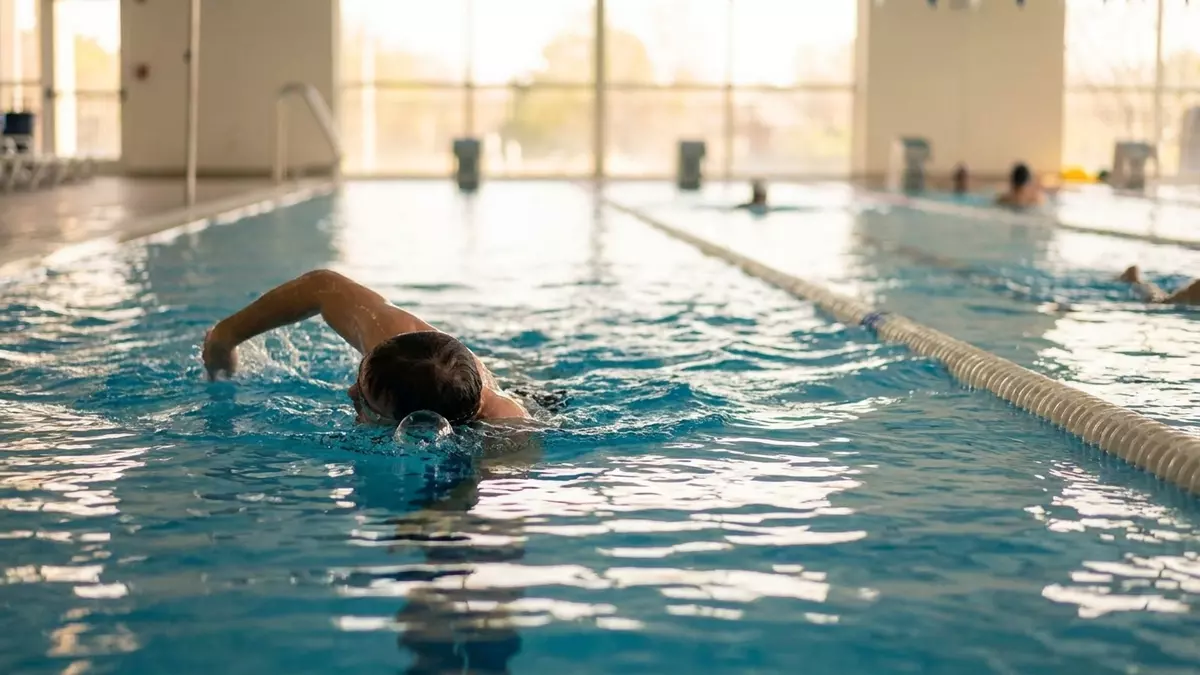
The magic of swimming begins with the unique physical properties of water itself. It alters how gravity interacts with your musculoskeletal frame, introducing two foundational principles: buoyancy and viscous resistance.
[Buoyancy]           ➔ Reduces body weight by 90% ➔ Unweights joints & spine
[Viscous Resistance] ➔ Pushes back from all sides ➔ Builds smooth, balanced muscle
The Low-Impact Sanctuary
When you submerge yourself in a pool up to your chest, water buoyancy bears approximately 90% of your body weight. In simple terms, this drastically minimizes the harsh, concussive compression forces that your knees, hips, and lower spine typically endure during land-based exercises like running or jumping rope.
Dr. Matthew Crowe, an orthopedic surgeon and sports medicine expert at the Mayo Clinic, highlights this structural sanctuary: “Swimming is easy on the joints, and it’s very good for both cardiac health and your core strength.” This makes the pool an ideal environment for older adults, individuals managing severe arthritis, or anyone restarting a fitness routine after a long sedentary break.

Balanced Full-Body Resistance
While water shields your joints from impact, it simultaneously forces your muscles to exert significant energy. Water is roughly 800 times denser than air. Every kick, pull, and stroke requires your body to displace this dense fluid, transforming a simple lap into a continuous, full-body resistance workout.
As Maria Eneyda Romero, a brand manager at Swim World, notes: “The aquatic workout allows people to work the whole body, improve endurance, and reduce stress.” A single swimming session dynamically engages your quadriceps, glutes, core stability muscles, latissimus dorsi, and deltoids all at the same time, promoting balanced muscular development without overloading your frame.
The Neurological Reset: How the Pool Standardizes Calm
While the cardiovascular and muscular transformations are undeniable, swimming’s hidden superpower is its profound capacity for emotional regulation. The simple act of entering a pool initiates a series of psychological and neurological shifts that help clear away daily anxiety and mental fatigue.

Sensory Deprivation and Rhythmic Focus
When you submerge your head to take a stroke, the ambient noise of the outside world is instantly muffled. This creates a mild form of therapeutic sensory reduction, shielding your nervous system from the constant digital and auditory stimulation of modern life.
Furthermore, swimming forces you to adopt a strict, rhythmic breathing pattern. Unlike running, where you can breathe erratically, a swimmer must deliberately coordinate each breath with the physical rotation of their stroke. This mandatory focus on controlled inhalation and prolonged exhalation directly stimulates the vagus nerve, signaling your parasympathetic nervous system to lower your heart rate, reduce cortisol production, and ease full-body tension.
The Scientific Validation of Aquatic Calm
This emotional payoff is firmly anchored in modern psychiatric research. A comprehensive 2022 systematic review led by researcher Zhengyan Tang at Tsinghua University analyzed 18 original clinical trials evaluating the explicit relationships between aquatic exercise, general mood state, and active anxiety symptoms.
Published in the medical journal Frontiers in Psychiatry, the meta-analysis concluded that regular aquatic exercise is consistently linked to measurable improvements in overall mental health and stress resilience. While the authors noted that larger, higher-quality clinical studies are still required to fully map out individual responder profiles, the structural trend is clear: the repetitive, hypnotic rhythm of swimming laps serves as an exceptional tool for stabilizing mood and encouraging deep, restful sleep loops.
Maximizing the Pool: Technique Over Raw Speed
To fully unlock these physical and mental rewards, it is vital to understand that inside the water, fluid efficiency beats raw aggression every single time. Gunning down the lane with frantic, uncoordinated movements simply wastes cellular energy, spikes your heart rate unnecessarily, and introduces a risk of localized shoulder impingement.
Developing smooth, streamlined strokes allows your lungs to process oxygen efficiently and protects your rotating joints from overuse injuries. This focus on technique has fueled an expansion of innovative training options. For individuals who do not have access to an Olympic-sized facility, countercurrent propulsion systems—commonly integrated into compact units like Endless Pools—act like a traditional treadmill for swimmers. These systems generate an adjustable, smooth current of water, allowing you to swim continuously in place to perfect your form and build stamina right at home.
Holistic Benefits of Consistent Aquatic Conditioning
| Biological System | Physical Adaptation | Lifestyle Outcome |
| Cardiovascular & Pulmonary | Expands stroke volume; strengthens intercostal breathing muscles | Enhanced daily stamina; lower resting heart rate |
| Musculoskeletal | Low-impact isometric and isotonic muscular resistance | Preserved joint cartilage; balanced core and shoulder strength |
| Neuroendocrine | Stimulates steady endorphin release; optimizes vagal nerve tone | Heightened emotional regulation; reduced daily stress levels |
Conclusion: Meeting You Where You Are
Ultimately, the true beauty of swimming is its complete lack of elitism—it is an exercise system that gracefully meets you exactly where your body is today. If you are recovering from an injury or dealing with severe joint discomfort, you can move through the water slowly and mindfully, utilizing the pool as a space for gentle rehabilitation. If you are an elite athlete, you can crank up the intensity to push your cardiovascular limits to the absolute edge.
Swimming is not a magical cure-all, but it is one of the most complete, sustainable tools available for human wellness. By dedicating just two or three sessions a week to the water, you can gently break the cycle of physical inactivity, fortify your heart, and claim a quiet, meditative space to regulate your mind.
Frequently Asked Questions
Can swimming laps help prevent or reverse age-related bone density loss?
While swimming is unparalleled for cardiovascular health and joint protection, it is not the most effective exercise for building bone mineral density. Because water buoyancy counteracts gravity and unweights your skeleton, swimming does not provide the heavy, weight-bearing impact needed to stimulate osteoblasts (the cells responsible for laying down new bone tissue). To ensure comprehensive skeletal health as you age, balance your swimming routine with at least two days of gravity-based resistance training or bodyweight exercises like walking or light lifting.
Why do my shoulders sometimes ache after a long swimming session?
Localized shoulder discomfort in swimmers is most commonly driven by a condition known as “swimmer’s shoulder,” which involves micro-trauma or impingement of the rotator cuff tendons. This is typically caused by poor stroke mechanics—such as entering the water thumb-first, which forces the shoulder into internal rotation, or failing to engage your core and upper back muscles to drive the pull. If you experience persistent shoulder pain, reduce your training volume, focus on a high-elbow recovery technique, and incorporate simple resistance-band exercises to strengthen your lower traps and external rotator muscles.
Is chlorine exposure in public pools dangerous for my skin and respiratory system?
For the vast majority of people, standard commercial pool chlorination is completely safe, though it can occasionally cause superficial dryness or eye irritation. Chlorine binds with organic matter like sweat to create chemical compounds called chloramines, which give pools their distinct smell and can trigger mild airway sensitivity in individuals managing asthma. To protect yourself, always take a quick shower before entering the pool to minimize chloramine formation, wear a snug pair of silicone goggles, and rinse off thoroughly with a gentle moisturizer immediately after exiting the water.
How many calories does a moderate swimming session burn compared to running?
An average individual weighing roughly 150 pounds will burn approximately 400 to 500 calories during one hour of moderate swimming laps, which is highly comparable to a moderate-paced jog on land. However, because water conducts heat away from the human body roughly 25 times faster than air, swimming in a cool pool forces your body to expend extra metabolic energy simply to maintain its core temperature, making it an exceptionally efficient tool for long-term weight management.
Can individuals who don’t know how to swim still benefit from aquatic exercise?
Absolutely. You do not need to master complex strokes like the front crawl or butterfly to reap the rewards of water-based medicine. Participating in vertical aquatic exercises—such as water walking, water aerobics, or using specialized foam dumbbells for deep-water jogging while wearing a flotation belt—delivers the exact same benefits of joint unweighting, multi-directional resistance, and cardiovascular conditioning, all while keeping your head safely above water.