
Table of Contents
- 1. The Foundation: The Assisted Pistol Squat
- 2. A Balanced Outdoor Circuit
- 3. Why Park Training Works for Over-60s
- 4. Pro Tips for Your Outdoor Sessions
- 5. Frequently Asked Questions (FAQ)
- 5.1. 1. I have knee pain. Is the assisted pistol squat safe for me?
- 5.2. 2. How often should I do this workout?
- 5.3. 3. Do I need any special equipment?
- 5.4. 4. What if the park is crowded?
- 5.5. 5. Is it really as effective as gym equipment?
The Ideal Park Workout for Seniors: Building Strength Safely
For adults over 60, maintaining lower-body strength is the cornerstone of independence, mobility, and confidence. While many think that building muscle requires a gym full of heavy equipment, the best training ground is often right in your local park. Exercising outdoors provides a refreshing alternative to the monotony of indoor machines, offering fresh air, natural sunlight, and the flexibility to train at your own pace.
By utilizing simple, stable park structures like benches, railings, and bars, you can build a functional, lower-body-focused routine that minimizes joint strain while maximizing results.
The Ideal Park Workout for Seniors Building Strength Safely
The Foundation: The Assisted Pistol Squat
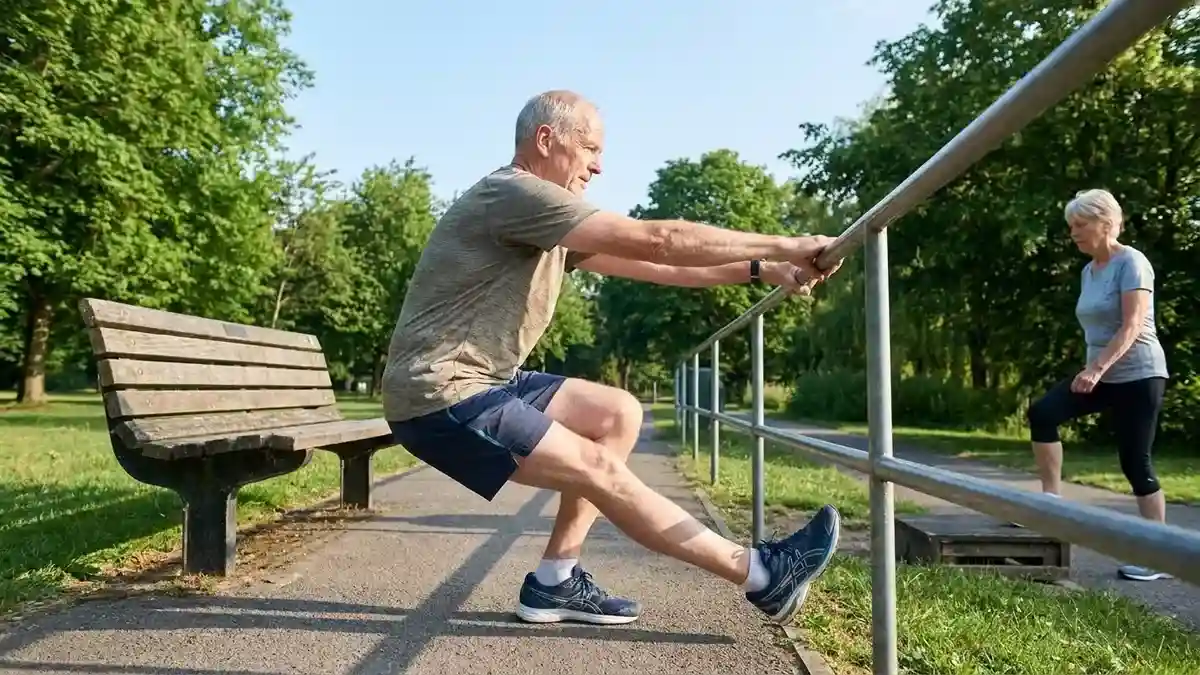
The most effective move for building lower-body strength at any age—but specifically for those over 60—is the assisted pistol squat.

A standard pistol squat is an advanced move, but by adding support, it becomes the ultimate tool for leg strength and stability. By holding onto a stable pole or railing, you can lower your body on one leg while extending the other forward.
Why it works: The support allows you to control your descent, ensuring perfect alignment.
The benefit: It isolates the glutes, quads, and hips, correcting imbalances and protecting the knees by offloading some of the weight onto your arms.
Safety Tip: Focus on keeping your chest upright and your standing heel planted firmly on the ground. Only go as low as you feel comfortable—control is far more important than depth.

A Balanced Outdoor Circuit
To build a well-rounded routine, pair the assisted pistol squat with other movements that target stability, balance, and core strength. Rotate through these exercises at your local park:
Step-ups: Find a sturdy bench or park step. Slowly step up with one foot, driving through your heel, and lower yourself back down with complete control. This builds essential quad strength for navigating stairs.
Lateral Swings: Standing beside a support, swing one leg gently from side to side. This activates the hips, improves mobility, and challenges your balance in a different plane of movement.
Inverted Rows: Using a lower parallel bar, pull your chest upward while keeping your body in a straight line. This is a safer, more accessible version of a pull-up that works the upper back and core.
Controlled Box Pikes: With your feet elevated on a low, stable surface, lean forward slightly to target the shoulders and upper core. This is a gentle way to prep your body for more intense movements.

Why Park Training Works for Over-60s
The transition to outdoor fitness offers more than just physical exercise; it provides a comprehensive boost to your well-being:
Mindful Movement: The natural environment encourages focus. Being outdoors forces you to be more present, helping you refine your form and tune into how your muscles are responding to the load.
Vitamin D and Muscle Function: Natural sunlight exposure is a key factor in your body’s production of Vitamin D, which is essential for maintaining normal muscle function and bone health.
Flexibility in Routine: Parks are not rigid. You can adapt the intensity of your session based on the weather or how you feel that day, making it easier to maintain consistency—the most important factor in long-term strength building.
Functional Stability: Unlike indoor machines that fix your body in one position, outdoor movements require you to stabilize yourself, which naturally improves your balance for real-world activities.
Pro Tips for Your Outdoor Sessions
To get the most out of your park training, remember that this is about longevity, not intensity.
Warm Up: Take five minutes to walk briskly around the park or do some gentle shoulder rolls and leg swings to get the blood flowing.
Prioritize Form: Never rush a repetition. If you cannot maintain perfect form, take a break or simplify the movement.
Listen to Your Body: If a move causes sharp joint pain, stop and pivot to a different exercise. Strength is built over months of steady, pain-free effort.
Wear Proper Footwear: Even though you are in a park, ensure you are wearing supportive athletic shoes to provide the stability your joints need.
By embracing the natural space around you, you are doing more than just working out; you are building the physical foundation needed to stay active, mobile, and confident in your daily life.
Frequently Asked Questions (FAQ)
1. I have knee pain. Is the assisted pistol squat safe for me?
Because you are holding onto a support, you can control your weight distribution and take the pressure off your knees. However, if you have chronic knee pain, always consult your physician or a physical therapist before starting a new exercise program.
2. How often should I do this workout?
For strength building, aim for 2 to 3 sessions per week. Consistency is key, but remember to allow your muscles at least 48 hours to recover between workouts.
3. Do I need any special equipment?
None! That is the beauty of a park workout. Use the existing environment—benches, low walls, railings, and bars—as your gym.
4. What if the park is crowded?
Choose early morning or late afternoon times when the park is less busy. Most exercises can be done in a small, quiet corner of the park.
5. Is it really as effective as gym equipment?
In many ways, yes. Using your own body weight while stabilizing yourself on park structures often recruits more stabilizer muscles than machine-based training, making it highly effective for “functional” strength.