
Table of Contents
- 1. The Invisible Culprit: Understanding Urushiol Oil
- 2. How to Identify the Three Most Common Toxic Plants
- 2.1. Poison Ivy (Toxicodendron radicans): The Master of Disguise
- 2.2. Poison Oak (Toxicodendron diversilobum & Toxicodendron pubescens)
- 2.3. Poison Sumac (Toxicodendron vernix)
- 3. Proven Strategies to Prevent Accidental Exposure
- 3.1. Gear Up for Physical Defense
- 3.2. Stick to Maintained Paths
- 3.3. Protect Yourself from Pet Contamination
- 3.4. Never Burn Unidentified Yard Waste
- 4. Immediate First Aid: What to Do After Contact
- 4.1. Step 1: Strip down and wash with cold water
- 4.2. Step 2: Utilize specialized cleaning solvents
- 4.3. Step 3: Sanitize your tools and apparel
- 4.4. Step 4: Soothe the itch without scratching
- 5. Conclusion
- 6. Frequently Asked Questions
- 6.1. Is a poison ivy rash contagious from person to person?
- 6.2. Why does a rash sometimes appear to spread to new areas of my body days later?
- 6.3. Can I develop an immunity to urushiol over time?
- 6.4. How long does a typical poison oak or ivy rash last?
- 6.5. Will standard household laundry detergent remove urushiol from my clothing?
Warning: Exposure to These Three Toxic Plants Causes Severe Rashes
Spending a warm afternoon exploring a sun-dappled woodland trail or clearing out an overgrown corner of your backyard is a quintessential outdoor pleasure. Unfortunately, these peaceful activities can quickly take a miserable turn if you accidentally brush up against North America’s most notorious hazardous flora. Dealing with a severe, blistering, and intensely itchy skin reaction can ruin your summer plans and leave you uncomfortable for weeks.
The secret to enjoying nature safely lies in proactive awareness. By training your eyes to spot problematic vegetation before you make physical contact, you can shield your skin from harm. Understanding the subtle differences between poison ivy, poison oak, and poison sumac is the most effective way to guarantee your outdoor adventures remain completely rash-free.
Warning Exposure to These Three Toxic Plants Causes Severe Rashes

The Invisible Culprit: Understanding Urushiol Oil
While these three problematic plants belong to different species and thrive in diverse habitats, they all share a hidden biological weapon: an organic oily resin called urushiol. This clear, sticky substance is found inside every part of the plant, including the leaves, stems, roots, and berries.
When urushiol comes into contact with human skin, it triggers an allergic reaction known as contact dermatitis in the vast majority of the population. The oil is incredibly potent; an amount smaller than a grain of salt is enough to cause severe swelling, redness, and fluid-filled blisters. What makes urushiol particularly dangerous is its resilience. It does not simply evaporate or wash away with rain; it can remain active on clothing, gardening tools, and camping gear for months or even years if not intentionally neutralized.
How to Identify the Three Most Common Toxic Plants
Recognizing these plants in the wild can be challenging because their physical appearance changes significantly depending on the geographical region, the local ecosystem, and the current season.

Poison Ivy (Toxicodendron radicans): The Master of Disguise
Poison ivy is undoubtedly the most widespread and adaptable offender of the triad. It grows aggressively throughout nearly every region of North America, making itself at home along forest edges, public hiking paths, suburban fences, and neglected backyard gardens.
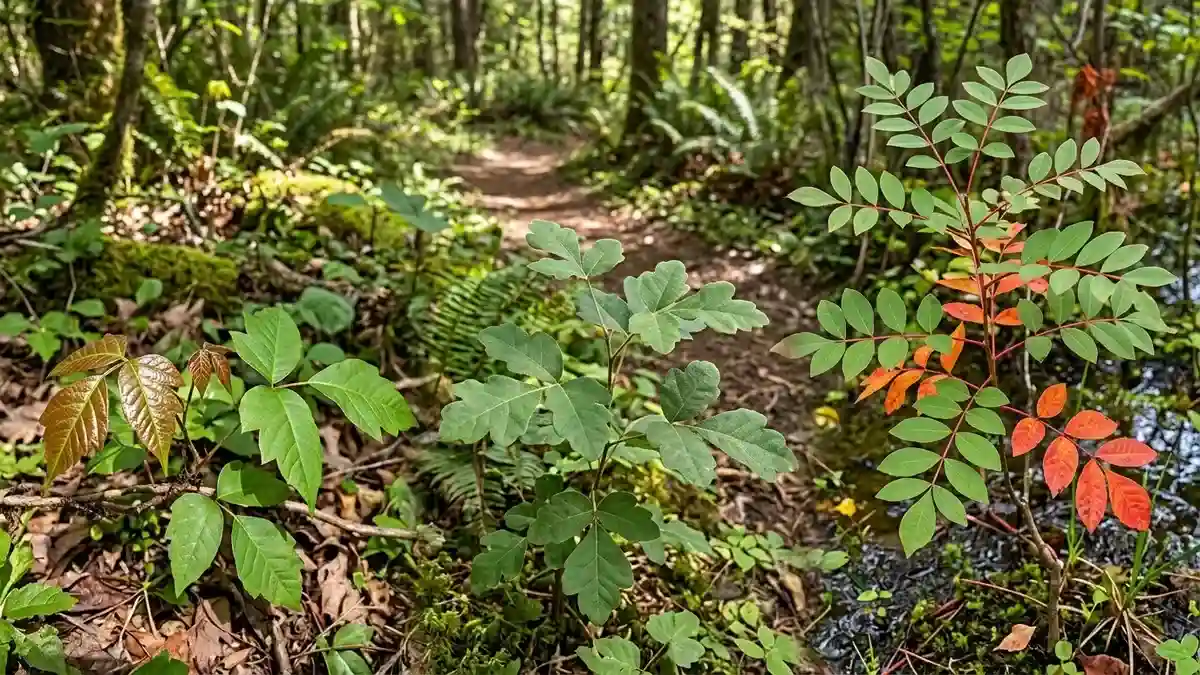
The golden rule for spotting this plant is the classic folk rhyme: “Leaves of three, let it be.” Each leaf cluster consists of one central leaflet with a distinct stem and two smaller side leaflets growing directly from the main branch. The individual leaflets feature pointed tips, but their margins are highly variable—some are completely smooth, while others possess jagged, tooth-like notches.
Poison ivy is a true chameleon throughout the year:

Spring: Fresh, emerging leaves exhibit a shiny, vibrant red or bronze tint.
Summer: The foliage matures into a deep, rich green, often with a glossy sheen.
Autumn: The plant puts on a brilliant display, shifting to striking shades of bright yellow, vivid orange, or deep red.
Furthermore, poison ivy can assume multiple growth habits. It can crawl along the ground as a dense carpet, grow as a low-standing independent shrub, or transform into a thick, woody vine that climbs up tree trunks and brick walls using thousands of hairy, dark rootlets. It thrives in shaded woodlands, damp riverbanks, and common roadside ditches.
Poison Oak (Toxicodendron diversilobum & Toxicodendron pubescens)
Poison oak is predominantly found in two distinct regions of the United States: the Pacific Coast and the Southeast. It is frequently misidentified because its foliage closely mimics the appearance of a harmless young oak tree sapling, allowing it to blend seamlessly into the surrounding brush.
Like its cousin poison ivy, poison oak consistently produces leaf clusters in groups of three. However, the leaflets have distinctly rounded, wavy, or lobed edges that closely resemble true oak leaves. The surfaces of the leaves are typically duller and covered in fine, velvety hairs, giving them a slightly textured appearance.
Unlike poison ivy, which gravitates toward moist, shaded pockets of the forest, poison oak is highly drought-tolerant. It actively prefers dry, sunny, and open environments such as coastal hillsides, exposed hiking trails, and abandoned fields. It typically grows as an upright, rigid shrub, though it can occasionally behave as a climbing vine in optimal conditions.
Poison Sumac (Toxicodendron vernix)
While poison sumac is much less common than ivy or oak, it is substantially more toxic. It contains a higher concentration of urushiol oil, meaning even a glancing blow against its branches can result in an exceptionally painful, long-lasting inflammatory reaction.
To spot poison sumac, you must completely discard the “leaves of three” rule. This plant grows exclusively as an open, woody shrub or a small tree. Each individual leaf stem features a row of seven to thirteen smooth-edged, oval leaflets arranged in perfectly symmetrical pairs, topped by a single terminal leaflet at the very tip.
The most defining visual marker of poison sumac is its bright, distinctive reddish-pink stems. In the autumn, the entire shrub transforms into a stunning, fiery shade of crimson, making it highly conspicuous. Geographically, poison sumac is quite picky about its home. It is found primarily in the eastern half of the United States and grows exclusively in saturated, waterlogged environments such as peat bogs, deep swamps, fens, and swampy riverbanks.
Proven Strategies to Prevent Accidental Exposure
Avoiding a painful encounter with urushiol requires a combination of protective habits and situational awareness when spending time outdoors.
Gear Up for Physical Defense
When clearing out thick brush, weeding a wild garden, or hiking through unmaintained territory, your wardrobe is your first line of defense. Always wear long-sleeved shirts, sturdy long pants, and tall socks. Tucking your pants into your boots prevents vines from contacting your ankles. Thick, non-porous work gloves are essential for gardening, as fabric gloves can absorb urushiol oil and transfer it directly to your fingers.
Stick to Maintained Paths
When exploring state parks or nature reserves, always remain in the center of designated, well-traveled trails. Venturing off-trail into the undergrowth drastically increases your chances of stepping on hidden ground cover or brushing against low-lying toxic shrubs.
Protect Yourself from Pet Contamination
Our furry companions are completely immune to the irritating effects of urushiol because their thick fur prevents the oil from reaching their skin. However, if your dog or cat dashes through a patch of poison ivy, the sticky resin will coat their fur. When you pet them later, the oil transfers directly to your hands. If your pet has been exploring overgrown areas, wear protective gloves and give them a thorough bath with specialized pet shampoo before welcoming them back onto your furniture.
Never Burn Unidentified Yard Waste
If you are clearing out an overgrown property, never throw suspected toxic plants or mysterious vines onto a bonfire or brush pile. When urushiol burns, the oil particles attach to the smoke molecules. If you accidentally inhale this toxic smoke, it can cause severe, life-threatening inflammation and blistering inside your respiratory tract and lungs, requiring immediate emergency medical intervention.
Immediate First Aid: What to Do After Contact
If you realize that you have accidentally touched a toxic plant, you must act decisively. You have a narrow window of opportunity to remove the resin before it binds permanently to your skin cells.
Step 1: Strip down and wash with cold water
Immediately remove all exposed clothing and head straight to a sink or hose. Thoroughly rinse the affected skin using copious amounts of cold water combined with a degreasing soap, such as liquid dish soap. Cold water is absolutely critical because hot water opens your skin’s pores, allowing the toxic oil to penetrate deeper into your tissues.
Step 2: Utilize specialized cleaning solvents
If you have access to a first-aid kit, wash the area with rubbing alcohol or a specialized over-the-counter countermeasure like Tecnu. These products are chemically formulated to break down and lift the stubborn, oily bonds of urushiol far more effectively than standard hand soap.
Step 3: Sanitize your tools and apparel
Carefully place all contaminated clothing, shoes, and shoelaces directly into the washing machine on a hot cycle with heavy-duty detergent. Do not mix them with unexposed laundry. Additionally, wipe down any garden shears, trowels, or pruners with rubbing alcohol to ensure you don’t accidentally re-expose yourself the next time you garden.
Step 4: Soothe the itch without scratching
If a rash does begin to develop, absolute self-control is required: do not scratch the blisters. While scratching does not actually spread the rash via the blister fluid, it tears open the skin and introduces bacteria from your fingernails, significantly increasing your risk of developing a dangerous secondary skin infection. To find relief from the intense itch, apply a thick paste made of baking soda and water, soak in a cool colloidal oatmeal bath, or apply a cotton ball soaked in chilled apple cider vinegar to soothe the inflammation.
Conclusion
The great outdoors should be a place of relaxation, exercise, and discovery, not a source of painful skin conditions. By taking the time to memorize the unique shapes, leaf patterns, and seasonal colors of poison ivy, poison oak, and poison sumac, you can confidently navigate any environment. Combine this botanical knowledge with smart habits—like wearing protective clothing, washing pets after hikes, and keeping a bottle of degreasing soap nearby—and you will keep your skin safe, healthy, and completely itch-free all year long.
Frequently Asked Questions
Is a poison ivy rash contagious from person to person?
No, the rash itself is absolutely not contagious. The fluid contained within the resulting skin blisters does not contain any urushiol oil, so popping a blister or touching someone else’s rash will not cause it to spread. The only way another person can develop a rash is if they make direct physical contact with the original urushiol oil left behind on your skin, clothes, or tools.
Why does a rash sometimes appear to spread to new areas of my body days later?
This illusion of spreading occurs for two reasons. First, areas of your body where the skin is thinner or more sensitive (like your inner arms or face) will react to the urushiol much faster than areas with thicker skin (like your palms or legs). Second, if you unknowingly touched contaminated gear or clothing a few days after your initial exposure, you may have accidentally re-exposed yourself to the oil, starting a brand-new reaction timeline.
Can I develop an immunity to urushiol over time?
No. In fact, medical consensus shows that the exact opposite is true. The skin reaction caused by urushiol is an allergic immune response. Repeated exposure over the course of your life tends to sensitize your immune system further, meaning that your reactions can become progressively more severe, blistering, and painful each time you encounter the plants.
How long does a typical poison oak or ivy rash last?
For a mild to moderate exposure, a typical rash will reach its peak discomfort within a few days and completely clear up on its own within one to three weeks. However, if your rash covers more than a quarter of your body, involves your face or genitals, or shows signs of severe swelling and infection, you should visit a healthcare professional immediately for prescription topical or oral treatments.
Will standard household laundry detergent remove urushiol from my clothing?
Yes, standard modern laundry detergents are highly effective at breaking down plant oils, including urushiol. To ensure total removal, wash the contaminated garments separately from your household’s regular laundry on the highest water temperature setting recommended by the clothing manufacturer’s care label. Avoid overloading the machine so that the water can thoroughly flush away the loosened oil particles.