
Table of Contents
- 1. The Crucial First Step: Identify and Seal Heat Escapes
- 2. 1. Harness Passive Thermal Mass with Water Storage
- 3. 2. Utilize Active Composting Inside the Structure
- 4. 3. Install Traditional Manure Hotbeds
- 5. 4. Layer Protection with Internal Row Covers
- 6. 5. Build a Heat-Absorbing Solar Wall
- 7. 6. Deploy Internal Cold Frames
- 8. 7. Erect External Hay Bale Windbreaks
- 9. 8. Fine-Tune Daily Solar Gain
- 10. 9. Sink Growing Beds for Geothermal Advantages
- 11. 10. Pivot to Ultra-Cold-Hardy Varieties
- 12. Conclusion
- 13. Frequently Asked Questions
- 13.1. How many water barrels do I need to heat my greenhouse?
- 13.2. Does misting plants inside a winter greenhouse help protect them from freezing?
- 13.3. Will compost piles inside the greenhouse create unpleasant odors?
- 13.4. Can I use regular bubble wrap from shipping boxes to insulate the walls?
- 13.5. At what temperature will cold-hardy winter crops stop growing entirely?
10 Ways to Heat Your Greenhouse in Winter Without Electricity
Walking into your greenhouse on a crisp winter morning only to find a biting, icy chill in the air is a frustrating experience for any gardener. Protecting vulnerable crops from freezing temperatures is essential to maintaining a year-round harvest, but running electrical extensions or facing staggering utility bills isn’t always an option.
Fortunately, keeping your greenhouse cozy doesn’t require flipping a single switch. By tapping into passive solar design, natural biological processes, and smart insulation strategies, you can maintain a thriving grow space throughout the coldest months. Here are ten proven ways to heat your winter greenhouse completely off the grid.
10 Ways to Heat Your Greenhouse in Winter Without Electricity

The Crucial First Step: Identify and Seal Heat Escapes
Before deploying passive heating methods, you must secure the perimeter. Greenhouses lose the vast majority of their warmth through the roof and side panels, but cold can also radiate upward from the bare ground.
Take time in late autumn to patch any tears in plastic filming, apply weatherstripping around doors, and caulk gaps in hard panels. Lining the interior walls with a layer of heavy-duty, clear bubble wrap adds excellent thermal insulation without blocking vital sunlight. Securing the structure ensures that every bit of passive heat you generate stays exactly where your plants need it.
1. Harness Passive Thermal Mass with Water Storage
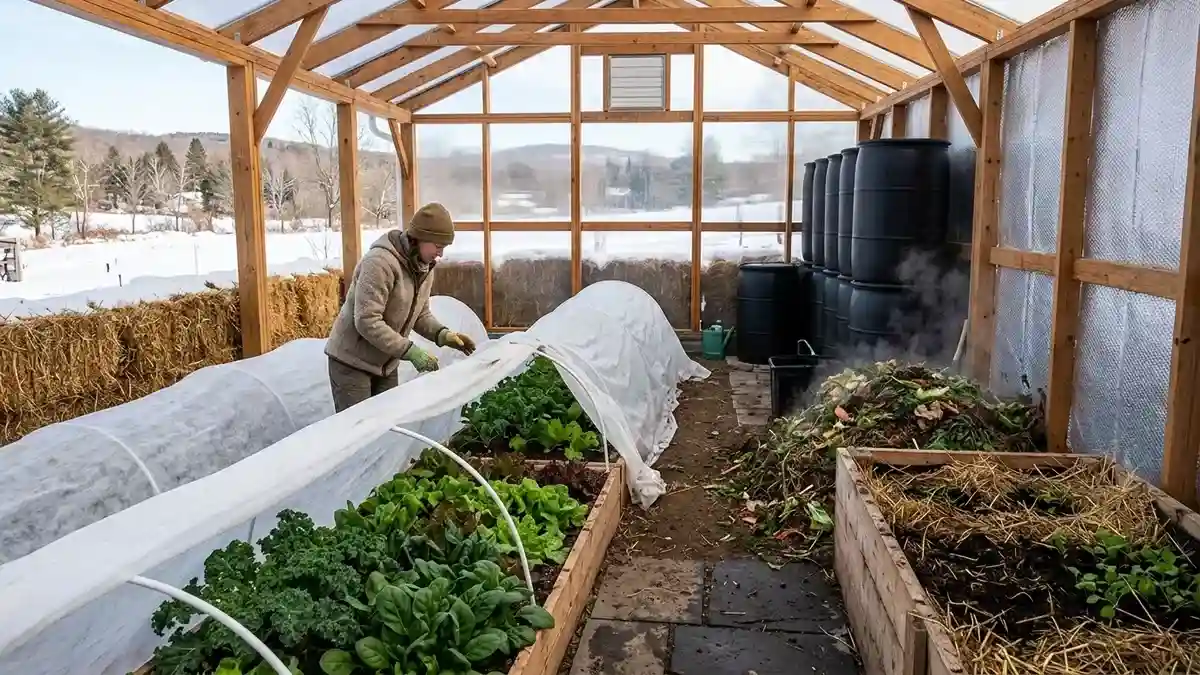
Using thermal mass is an ancient, highly efficient method for stabilizing temperatures. The concept is simple: you introduce dense materials into the greenhouse that absorb ambient heat during peak daylight hours and release it slowly back into the air as temperatures plummet overnight.
Water is one of the most effective materials for retaining thermal energy. Line the interior north wall of your greenhouse with dark-colored 55-gallon steel or plastic drums filled with water. The dark surface absorbs solar radiation all day. At night, this water acts as a gentle, radiant radiator. For smaller spaces, even a collection of 1-gallon jugs painted black and tucked between plant rows will provide localized protection against frost.
2. Utilize Active Composting Inside the Structure
A well-constructed compost pile is more than a source of rich organic fertilizer—it is an active biological heater. The microbes responsible for breaking down organic matter generate a significant amount of metabolic heat.
If space permits, build a dynamic compost bin directly inside your greenhouse utilizing a balanced mix of nitrogen-rich greens (manure, kitchen scraps) and carbon-rich browns (straw, dry leaves). A healthy, active compost pile can easily maintain core temperatures between 130°F and 160°F. This radiant energy creates a steady plume of low, rising warmth that tempers the surrounding air for weeks at a time.
3. Install Traditional Manure Hotbeds
Centuries before electric heating pads were invented, market gardeners relied on “hotbeds” to jumpstart early spring vegetables and shield delicate seedlings from freezing ground temperatures.
To build a traditional hotbed, dig a trench or construct a deep raised bed inside the greenhouse. Layer 6 to 12 inches of fresh horse or cow manure mixed with straw at the base, then top it with 8 to 10 inches of high-quality potting soil. As the subterranean manure decomposes, it generates steady, bottom-up heat that warms plant root zones directly, which is crucial for survival during severe cold snaps.
4. Layer Protection with Internal Row Covers
Think of internal row covers as dressing your crops in winter layers. Even within the protective shell of a greenhouse, adding floating row covers or lightweight frost blankets directly over your growing beds provides an indispensable secondary microclimate.
Drape the fabric loosely over low hoops to prevent it from resting flat against wet foliage. This traps a pocket of ground heat around cold-sensitive salad greens, spinach, and herbs, raising the immediate temperature around the plants by several crucial degrees when outside conditions fall below freezing.
[Greenhouse Outer Glazing] ---> [Internal Row Cover] ---> [Warm Soil Air Pocket]
5. Build a Heat-Absorbing Solar Wall
Maximizing solar gain depends heavily on the materials inside your structure. If your greenhouse features a solid northern or southern wall exposure, paint it matte black or face it with high-density materials like dark brick, stone, or concrete pavers.
These heavy materials soak up the sun’s intense midday rays. Because stone and masonry have high thermal retention properties, they function identically to water barrels, gently radiating stored warmth back into the environment long after the sun has gone down.
6. Deploy Internal Cold Frames
Using cold frames inside a greenhouse creates a powerful “nesting doll” insulation effect. By building or placing a glass- or polycarbonate-topped cold frame over tender crops inside the main structure, you create a highly insulated safety zone.
During a clear day, solar energy easily penetrates both layers of glazing. At night, the double-barrier framework prevents the trapped heat from dissipating into the wider greenhouse structure. This is an exceptionally reliable way to safeguard fragile winter seedlings or keep out-of-season, heat-loving crops alive.
7. Erect External Hay Bale Windbreaks
Frigid winter winds can strip heat from a greenhouse faster than almost any other element by driving cold air through micro-gaps. Creating a structural defense on the outside of your greenhouse is highly effective.
Stack square bales of hay or straw tightly around the perimeter base of your greenhouse walls, particularly along the north and west sides where winter winds typically strike. This creates a dense, insulating windbreak that stops low-level drafts from chilling the floor of your growing space.
8. Fine-Tune Daily Solar Gain
Managing an off-grid greenhouse requires active, daily observation of the weather. Make the most of clear winter days by practicing strict ventilation habits.
Morning (Sunup): Open vent flaps slightly to release excess morning humidity.
Afternoon (Prior to Sunset): Close all vents securely to seal in the accumulated solar heat.
Keeping the interior layout clean and clutter-free also ensures that maximum sunlight directly hits your soil beds and thermal masses rather than bouncing off empty pots or unused tools.
9. Sink Growing Beds for Geothermal Advantages
Air temperatures change drastically, but subterranean soil temperatures remain remarkably stable. By lowering your greenhouse walkways and sinking your actual growing beds below the frost line, you can take advantage of natural earth insulation. Sunk or pit greenhouses (often referred to as walipinis) use the surrounding earth to maintain a baseline temperature, making them much easier to keep frost-free without supplemental power.
10. Pivot to Ultra-Cold-Hardy Varieties
Sometimes the most effective strategy is to work with winter nature rather than fighting against it. If your primary goal is consistent food production through the coldest months, fill your beds with crops naturally adapted to freezing conditions.
| Veggie Variety | Temperature Tolerance | Winter Performance |
| Spinach & Kale | Down to 10°F–20°F | Sugars concentrate in winter, making them sweeter after a frost. |
| Arugula & Mizuna | Down to 25°F | Fast-growing greens ideal for continuous cut-and-come-again harvesting. |
| Mache & Claytoina | Down to 5°F | Extremely resilient salad greens that tolerate low light conditions perfectly. |
These hardy options can endure significant freezing dips without sustaining structural cellular damage, allowing you to harvest fresh food with minimal intervention.
Conclusion
Keeping your greenhouse functional and warm throughout the winter doesn’t have to depend on an electrical grid. By combining smart structural insulation with natural thermal mass, biological heat sources like compost, and cold-hardy crop choices, you can create a resilient microclimate. Monitor your daily solar cycles, shield your structure from structural drafts, and enjoy the reward of a thriving garden even in the dead of winter.
Frequently Asked Questions
How many water barrels do I need to heat my greenhouse?
As a general rule of thumb for passive solar heating, aim for 2 to 5 gallons of water thermal mass for every square foot of greenhouse floor space. Adjust based on your regional winter severity and the insulation level of your structure.
Does misting plants inside a winter greenhouse help protect them from freezing?
While water releases a tiny bit of latent heat as it freezes, excessive moisture inside a cold, closed winter greenhouse creates dangerously high humidity. This often leads to fungal outbreaks like gray mold (Botrytis). It is best to keep winter foliage dry.
Will compost piles inside the greenhouse create unpleasant odors?
A properly balanced compost pile should smell like clean, rich earth. If your indoor compost begins to smell foul or like ammonia, it has become anaerobic (lacking oxygen) or too wet. Turn the pile thoroughly and add dry carbon materials like straw or wood shavings to neutralize the smell.
Can I use regular bubble wrap from shipping boxes to insulate the walls?
Yes, standard packing bubble wrap works well, but it degrades quickly under intense UV sunlight. For long-term success, purchase UV-stabilized horticultural bubble wrap, which features larger bubbles that trap more air and lasts for several seasons.
At what temperature will cold-hardy winter crops stop growing entirely?
While greens like kale and spinach can survive temperatures well below freezing, their growth rate will slow down significantly once daylight drops below 10 hours a day and ambient temperatures stay consistently below 40°F. During this period, your goal is crop preservation and maintenance rather than rapid vegetative growth.