
Table of Contents
- 1. The Root of the Problem: Understanding How Oxalis Grows
- 2. 10 Expert Secrets to Maximize Your Oxalis Blooms
- 2.1. 1. Synchronize With the Plant’s Natural Growth Rhythms
- 2.2. 2. Provide the Exact Light Intensity to Fuel Flower Buds
- 2.3. 3. Maintain Mild Temperatures to Prevent Premature Dormancy
- 2.4. 4. Implement a Precise “Moist but Breathable” Watering Cadence
- 2.5. 5. Feed Strategically With a Half-Strength Balanced Nutrient Solution
- 2.6. 6. Lean Into a Cold, Dark Dormancy Reset
- 2.7. 7. Divide and Separate Overcrowded Corms
- 2.8. 8. Use an Airy, Perlite-Heavy Soil Blend
- 2.9. 9. Master the Art of Continuous Deadheading and Foliage Pruning
- 2.10. 10. Eradicate Energy-Sapping Pests Promptly
- 3. Final Thoughts
- 4. Frequently Asked Questions
- 4.1. Is the Oxalis plant safe to have around curious household pets?
- 4.2. Why do my Oxalis flowers keep drying up before they fully open?
- 4.3. Can I grow an Oxalis plant outdoors in my garden permanently?
- 4.4. Why are the purple leaves on my shamrock plant starting to turn solid green?
- 4.5. How long does it take for an Oxalis to wake up from its dormancy cycle?
10 Simple Secrets to Make Your Oxalis Bloom This Spring
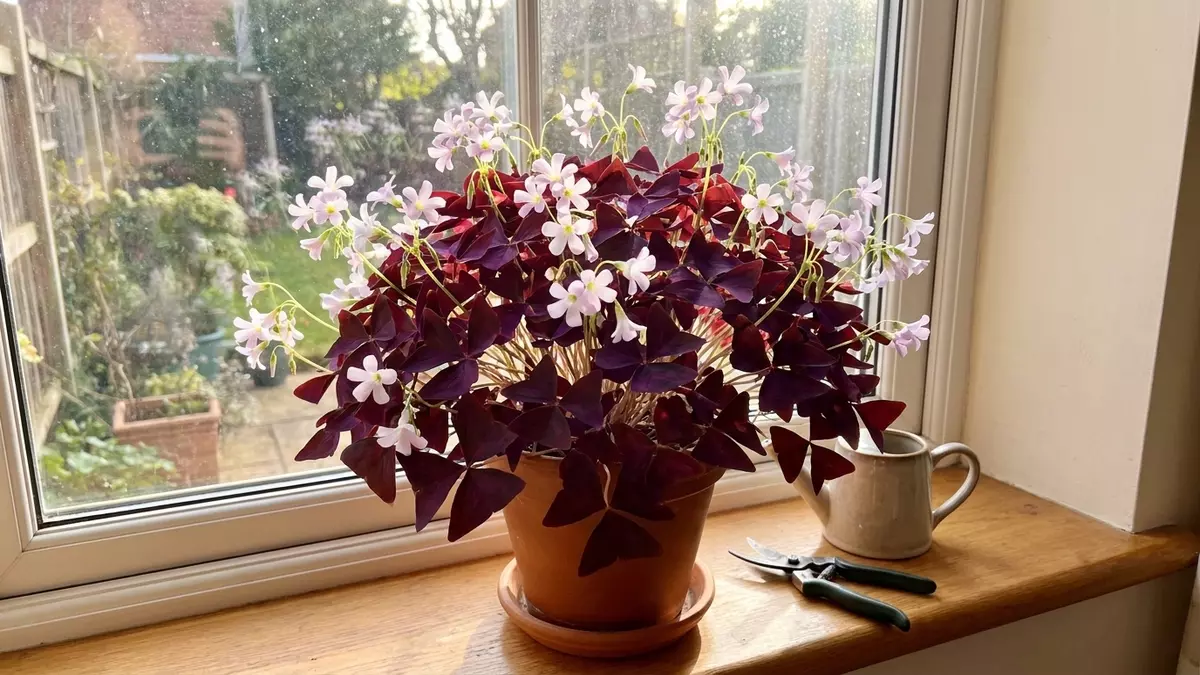
With their delicate, clover-like leaves and whimsical petals, Oxalis plants—frequently called wood sorrels or shamrock plants—are beloved staples of the indoor gardening world. They possess a fascinating habit known as nyctinasty, where their distinct triangular leaves fold inward tightly like umbrellas at dusk and open back up to greet the morning sun.
While a lush canopy of purple or green foliage is stunning on its own, the real magic happens when an Oxalis pushes out an abundance of soft white, pink, or yellow blossoms that dance gracefully above the leaves.
However, many indoor plant parents find themselves with a specimen that grows plenty of leaves but stubbornly refuses to produce a single bud. If your shamrock plant has stalled out into a purely green or purple groundcover, do not fret. Coaxing these charming, bulbous plants into a prolific flowering frenzy is straightforward once you decode their unique environmental triggers.

10 Simple Secrets to Make Your Oxalis Bloom This Spring
The Root of the Problem: Understanding How Oxalis Grows
To truly optimize your plant’s flowering potential, you must first understand its underground anatomy. Unlike traditional houseplants that develop fibrous root systems, Oxalis grows from small, segmented structures called corms or rhizomes. These underground storage units function exactly like tiny batteries. They spend a portion of the year collecting and saving starches, which they later convert into bursts of leaf and flower growth.
If your plant is failing to bloom, it simply means its underground battery hasn’t been charged correctly, or it isn’t receiving the proper seasonal cues to release that stored energy. By applying these ten expert, chemical-free secrets, you can perfectly coordinate its growth cycles and trigger an absolute explosion of fresh blossoms.

10 Expert Secrets to Maximize Your Oxalis Blooms
1. Synchronize With the Plant’s Natural Growth Rhythms
The absolute foundation of an abundant Oxalis display is accepting that this plant cannot—and should not—bloom continuously throughout the entire year. Most common varieties, such as the deep-purple Oxalis triangularis, naturally undergo a vigorous push of growth and flowering throughout the spring and mid-summer months.
As autumn approaches, the plant will naturally slow down, and its leaves may begin to droop, wither, or completely yellow. This is not a sign of failure or disease; it is the plant entering its necessary seasonal rest period. Trying to force a resting plant to produce flowers by over-fertilizing it will only rot the corms and weaken its future development. True blooming mastery requires riding these natural waves rather than fighting them.
2. Provide the Exact Light Intensity to Fuel Flower Buds
Light is the core engine that drives cellular energy in plants. If your shamrock plant is kept in a dim corner or too far from a window, it will channel every scrap of its limited energy into elongating its leaf stems (petioles) to reach for the sun. This results in a leggy, floppy, sparse plant that lacks the excess resources required to develop delicate flower buds.

Indoor Placement: Situate your container immediately on the sill of a bright east- or south-facing window. A minimum of six hours of bright, indirect sunlight daily is essential.
Outdoor Transitions: If you keep your potted Oxalis on a porch or patio during the warm summer months, select a location that receives filtered dappled shade. Intense, direct afternoon sunlight can scald the thin, tissue-paper leaves and bleach out their vibrant colors.
3. Maintain Mild Temperatures to Prevent Premature Dormancy
Oxalis varieties have evolved to thrive in mild, moderate temperate zones. Their sweet spot for active growth and flower development ranges strictly between 60°F and 75°F (15°C to 24°C).
Temperature management is a critical toggle switch for this species. If your home regularly climbs above 80°F (27°C) during the summer, or if the plant is positioned next to a hot appliance or heating vent, it will assume a harsh drought has arrived. To protect itself, the plant will halt flower production entirely and plunge itself into emergency summer dormancy. If your plant looks healthy but won’t bud, moving it to a cooler room or a well-ventilated space with lower ambient temperatures can frequently snap it back into action.
4. Implement a Precise “Moist but Breathable” Watering Cadence
Watering an Oxalis requires a delicate touch. Because the plant’s corms store moisture efficiently, keeping the potting medium perpetually soggy or letting the pot sit inside a water-filled saucer will quickly suffocate the roots, leading to a fatal case of bulb rot.
During the active spring and summer blooming phases, wait until the top inch of the soil feels dry to the touch before watering deeply. Pour water evenly across the soil surface until it exits the bottom drainage holes, then discard any runoff. When the plant enters its natural resting phase in late autumn and the leaves begin to drop, you must reduce your watering drastically. Allow the soil to dry out almost entirely, offering only a tablespoon or two of water every few weeks just to prevent the subterranean bulbs from shriveling up completely.
[Active Phase] ➔ Water when top 1" is dry ➔ High bloom output
[Dormant Phase] ➔ Keep soil nearly dry for 6–8 weeks ➔ Replenishes bulb energy
5. Feed Strategically With a Half-Strength Balanced Nutrient Solution
To sustain an intense cycle of continuous blooming, your shamrock plant needs regular access to key macronutrients. However, standard commercial houseplant fertilizers can easily overwhelm their delicate roots if applied at full strength.
Every two to three weeks during the spring and summer active periods, apply a balanced, water-soluble liquid fertilizer (such as a 10-10-10 or 20-20-20 NPK ratio) diluted to exactly half the manufacturer’s recommended strength.
Pro Tip on Nitrogen: Avoid fertilizers that are excessively high in nitrogen. Nitrogen fuels pure vegetative leaf expansion. If you over-apply it, you will end up with a massive, dense canopy of leaves but zero flower stalks. Balanced phosphorus and potassium are what build thick, resilient flower stems and long-lasting buds.
6. Lean Into a Cold, Dark Dormancy Reset
This is the single most important secret that casual indoor gardeners miss. If your Oxalis has been growing continuously for over a year without a break, it will eventually become exhausted, resulting in sparse, tiny leaves and a total absence of flowers. To fix this, you must intentionally trigger a dormancy cycle.
When the plant begins to look ragged in the late autumn, stop watering it entirely and snip off all the fading foliage at the soil line. Move the dry, bare pot into a cool, dark location—such as an unheated basement, a closet, or a garage—that stays around 50°F to 60°F (10°C to 15°C). Let the bulbs rest completely undisturbed for six to eight weeks. This deep, chilly sleep allows the corms to fully reset their internal biological clocks. When you bring the pot back out into a warm, bright room and resume regular watering, the bulbs will wake up energized, sending up a massive flush of new leaves accompanied immediately by dozens of flower stalks.
7. Divide and Separate Overcrowded Corms
Oxalis bulbs multiply rapidly beneath the soil surface. Within a couple of seasons, a small pot can become absolutely choked with hundreds of tiny, overlapping rhizomes competing fiercely for a limited amount of soil, moisture, and root space.
Every two to three years, gently slip the plant out of its container and crumble away the old potting mix. You will see groups of small, pinkish-white or orange bulb clusters that resemble miniature pinecones. Gently snap these clusters apart into smaller groups of 5 to 10 corms. Replant them into fresh, nutrient-rich soil, spacing them out evenly. This newfound breathing room relieves physical stress on the root system, prompting each individual bulb to maximize its reproductive power through heavy flowering.
8. Use an Airy, Perlite-Heavy Soil Blend
Because the subterranean corms are highly sensitive to standing water, standard off-the-shelf potting soils are often too heavy and dense, compacting over time and strangling the delicate roots.
| Component | Ideal Ratio | Function |
| Standard Organic Potting Soil | 60% | Provides essential organic nutrients and base structure |
| Coarse Perlite or Pumice | 30% | Creates large air pockets to prevent soil compaction |
| Horticultural Sand | 10% | Enhances rapid water drainage throughout the container |
Mixing these components ensures that when you water your plant, the moisture glides through the container smoothly, hydrating the roots without leaving the corms sitting in a dense, muddy marsh.
9. Master the Art of Continuous Deadheading and Foliage Pruning
As Oxalis flowers fade, they naturally droop down and begin the energy-intensive process of forming seed pods. If left on the plant, these dying flowers act as an energy sink, draining precious sugars away from the underground bulbs.
Make it a weekly habit to clean up your plant. Follow the spent flower stem down to the very base of the plant near the soil line and give it a sharp, clean tug or snip it off with micro-pruning shears. Removing these spent structures instantly signals to the plant’s core that it needs to produce a replacement flower stalk. At the same time, prune away any yellowed, torn, or floppy leaves to maximize light penetration into the center of the crown, which stimulates dormant bud eyes to activate.
10. Eradicate Energy-Sapping Pests Promptly
While Oxalis is relatively pest-resistant due to the high concentration of oxalic acid in its tissues, it can occasionally fall prey to common greenhouse invaders like spider mites or aphids during dry summer stretches. These microscopic sap-suckers pierce the delicate leaf membranes to drain the plant’s vital fluids.
Regularly inspect the undersides of the triangular leaflets and the tender new growth tips at the center of the pot. If you notice fine webbing or small, sticky clusters of insects, treat the plant immediately. A gentle rinse under a lukewarm sink faucet followed by a thorough misting of organic insecticidal soap or diluted neem oil will quickly eliminate the infestation. Removing this baseline environmental stressor ensures 100% of the plant’s metabolic energy goes directly into pushing out gorgeous, healthy flowers.
Final Thoughts
The secret to a spectacularly blooming shamrock plant lies in replicating its native environmental triggers: distinct seasons, bright filtered sunlight, airy well-draining soil, and a regular cycle of rest. By allowing your Oxalis to drop its leaves and hibernate during the winter, you set the stage for an unparalleled floral performance when the warm spring sunshine returns. Treat those underground corms like premium rechargeable batteries, follow these steps, and you will enjoy a dense, dancing cloud of delicate blossoms year after year.
Frequently Asked Questions
Is the Oxalis plant safe to have around curious household pets?
No, Oxalis plants are considered toxic to both dogs and cats. The leaves and stems contain high levels of soluble calcium oxalates, which give the plant a sharp, bitter, sour taste that usually deters animals from eating a significant amount. However, if ingested, it can lead to excessive drooling, vomiting, lethargy, and potentially serious kidney damage in small animals. It is always best to display this plant on high shelves completely out of reach of your pets.
Why do my Oxalis flowers keep drying up before they fully open?
If your developed flower buds are turning brown and crispy before expanding, your plant is likely suffering from a sudden lack of humidity or localized heat stress. This frequently happens if the pot is placed directly in the path of a dry air-conditioning vent or if the soil was allowed to dry out completely during a critical stage of bud development. Increase ambient humidity by placing a pebble tray nearby and maintain a consistent watering routine.
Can I grow an Oxalis plant outdoors in my garden permanently?
Whether your Oxalis can survive outdoors year-round depends heavily on your specific USDA Hardiness Zone and the exact variety you own. Some wild wood sorrels are incredibly cold-hardy, while common ornamental varieties like Oxalis triangularis are tender tropicals that cannot tolerate hard frosts. If you live in an area with freezing winters, grow your shamrock plant in a portable container so you can easily bring it indoors before the autumn frosts arrive.
Why are the purple leaves on my shamrock plant starting to turn solid green?
If your purple shamrock plant’s foliage is losing its deep, rich burgundy coloration and reverting to a muddy green, it is telling you it needs more sunlight. In low-light environments, the plant produces an excess of chlorophyll (the green pigment used for photosynthesis) to maximize its ability to capture what little light is available. Move the container closer to a bright window to restore its dark purple coloration.
How long does it take for an Oxalis to wake up from its dormancy cycle?
Once you bring your dormant Oxalis corms back into a warm, brightly lit room and give them their first thorough watering, you will usually see the first tiny, tightly coiled leaf spikes pushing up through the soil surface within 7 to 14 days. A full canopy of mature leaves and the initial flush of fresh flower buds typically develops within 4 to 6 weeks.