
Table of Contents
- 1. Decoding the Visual Stages of Tomato Ripening
- 1.1. Stages 1 Through 3: Green to Mature Green
- 1.2. Stage 4: The Breaker Stage
- 1.3. Stages 5 and 6: Turning to Fully Ripe
- 2. The Science of the Breaker Stage: Why Vine-Ripening Is a Myth
- 3. Strategic Advantages of an Early Harvest
- 3.1. 1. Complete Protection Against Cracking and Splitting
- 3.2. 2. Beating Backyard Wildlife to the Punch
- 3.3. 3. Eliminating Sunscald Issues
- 3.4. 4. Effortless Storage and Handling
- 4. How to Successfully Harvest and Post-Ripen Your Crop
- 4.1. Step-by-Step Harvesting and Countertop Care
- 5. Maximizing Your Garden’s Full Potential
- 6. Frequently Asked Questions
- 6.1. Will tomatoes harvested at the green stage ripen on the counter?
- 6.2. Do I need to place my breaker-stage tomatoes on a sunny windowsill?
- 6.3. Can I speed up the indoor ripening process if I need them sooner?
- 6.4. Why do store-bought tomatoes taste bland if they are also picked early?
- 6.5. Does the breaker-stage technique apply to cherry tomatoes and heirloom varieties?
Why the Breaker Stage Is the Smartest Time to Harvest Tomatoes
Few moments in gardening match the pure satisfaction of watching a heavy, green tomato slowly transform into a deep, radiant crimson on the vine. For many backyard growers, leaving that fruit hanging until it reaches uniform, flawless color feels like a badge of honor. We assume that the longer it draws life from the mother plant, the sweeter, juicier, and more flavorful the final bite will be.
Unfortunately, this waiting game often ends in heartbreak. You walk out to your garden bed only to discover your prize tomato has split wide open after a summer rain, developed a leathery patch of sunscald, or been hollowed out by enterprising birds, squirrels, and hornworms.
The good news? You do not have to risk your harvest to get a gourmet-quality tomato. The smartest, safest, and most strategic time to pick a tomato is actually during a brief window known as the breaker stage. Harvesting at this exact turning point provides the perfect shield against environmental hazards without sacrificing a single ounce of home-grown flavor.
Why the Breaker Stage Is the Smartest Time to Harvest Tomatoes

Decoding the Visual Stages of Tomato Ripening
Tomatoes do not mature in a single, sudden burst. Instead, they transition through a highly predictable series of chemical and visual transformations. According to standard botanical classifications, a tomato progresses through six distinct milestones:
Stages 1 Through 3: Green to Mature Green
During the initial phases of growth, the fruit is rock-hard, solid green, and strictly accumulating starches. As it approaches a “mature green” status, the interior seed cavities develop a jelly-like consistency, and the fruit expands to its maximum physical size. At this point, the tomato is still unpalatable, lacking the natural sugars and volatile compounds that define a great eating experience.
Stage 4: The Breaker Stage
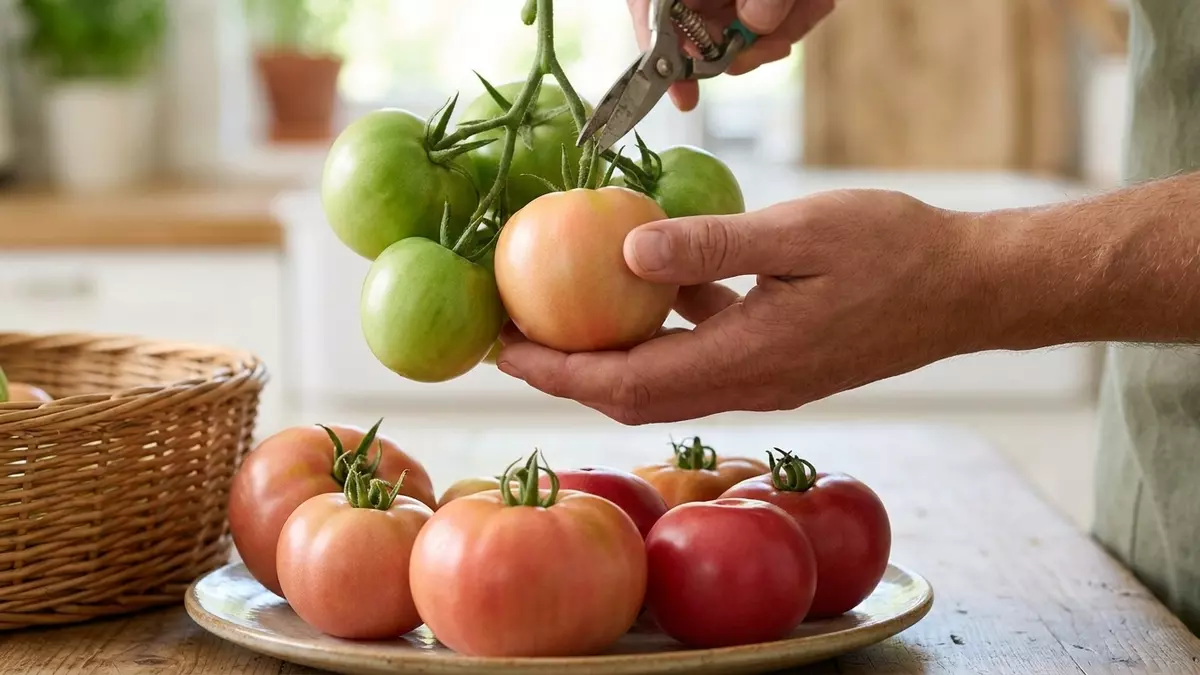
This is the golden window for savvy gardeners. The breaker stage is defined by the absolute first definitive break in color. Typically starting at the blossom end (the bottom of the fruit opposite the stem), you will notice a faint blush of pink, yellow, tan, or orange appearing on 10% to 30% of the skin.

Stages 5 and 6: Turning to Fully Ripe
As the tomato enters the final stages, the color deepens dramatically, spreading upward toward the shoulders until the fruit is uniformly vibrant. While visually stunning, leaving the fruit on the vine during this phase exposes it to maximum risk right when its skin is thinning and softening.
The Science of the Breaker Stage: Why Vine-Ripening Is a Myth
The primary reason growers hesitate to pick tomatoes early is the deeply ingrained myth that a tomato pulled from the vine too soon will taste bland, starchy, or store-bought. To understand why this is false, we have to look at the internal anatomy of a ripening fruit.
+------------------------------------------------------------------------+
|                      THE MECHANICS OF THE BREAKER STAGE                |
+------------------------------------------------------------------------+
| 1. Nutrients are locked in: The plant seals off the stem connection.   |
| 2. Ethylene gas takes over: The fruit generates its own ripening agent.|
| 3. Internal transformation: Starches convert to sugars independently.  |
+------------------------------------------------------------------------+
When a tomato hits the mature green phase and transitions into the breaker stage, it forms an abscission layer—a physical barrier of cells across the neck of the stem. This layer acts as a literal shutoff valve. Once it forms, the tomato is completely cut off from the parent plant; it can no longer absorb sugars, nutrients, or water from the root system.

From the breaker stage onward, a tomato is entirely self-sufficient. It ripens from the inside out using its own naturally generated ethylene gas to break down chlorophyll and convert its internal starches into sweet fructose and aromatic acids. Whether it completes this chemical process hanging on a branch or sitting on your kitchen counter, the final sugar concentration, texture, and flavor profile will be completely identical.
Strategic Advantages of an Early Harvest
Bringing your tomatoes indoors the second they show their first blush of color offers a massive array of defensive and structural benefits for your backyard garden.
1. Complete Protection Against Cracking and Splitting
One of the most common mid-summer disasters is skin cracking. When a period of dry weather is followed by a heavy thunderstorm, the roots of the tomato plant rapidly gorge themselves on water. This sudden surge of moisture is forced straight into the ripening fruit. Because fully ripe fruit has thin, inelastic skin, the interior swells faster than the skin can expand, causing catastrophic radial or concentric splits that invite immediate mold and rot. Picking at the breaker stage completely bypasses this risk.
2. Beating Backyard Wildlife to the Punch
Pests do not wait for an invitation. Birds, chipmunks, squirrels, and slugs are highly attracted to the moisture and bright colors of ripening fruit. A squirrel will gladly take a single bite out of a perfectly red tomato, ruin it, and move on to the next. By harvesting at the first sign of color, you remove the visual target from your garden beds before the local wildlife notices it.
3. Eliminating Sunscald Issues
When extreme summer heatwaves strike, direct intense sunlight can literally cook the tissue of an exposed tomato. This results in sunscald, leaving unsightly, leathery white or tan patches along the shoulders of your fruit. Harvesting early allows the tomatoes to finish maturing in a climate-controlled indoor environment safely away from scorching UV rays.
4. Effortless Storage and Handling
Fully ripe tomatoes are incredibly delicate. Their skins bruise under the slightest pressure, and they can easily rupture during transport from the garden plot to the kitchen counter. Breaker-stage tomatoes retain their structural firmness, allowing you to handle, stack, and transport them without fear of bruising or creating messy, soft spots.
How to Successfully Harvest and Post-Ripen Your Crop
Implementing the breaker-stage strategy is incredibly simple, but it does require a slight shift in your daily garden routine.
Step-by-Step Harvesting and Countertop Care
Inspect the Blossom End: Walk your rows daily and peer underneath the fruit. Look for that unmistakable, subtle shift from dull green to a light cream, yellow, or soft pink hue at the very base of the tomato.
Clip Safely: Gently grasp the fruit. At the breaker stage, many varieties will cleanly snap away from the vine at the knuckle just above the fruit. If the stem resists, use a sharp pair of pruning shears to make a clean cut, preserving the green calyx (the star-shaped leaves on top) to help protect the fruit from rot.
Find the Perfect Indoor Location: Place your harvested tomatoes on a flat surface, such as a countertop, a rimmed baking sheet, or a cardboard tray. Arrange them blossom-end down (stem up). The shoulders of a tomato are structurally sturdier than the bottom, so storing them upside down prevents the weight of the fruit from flattening or bruising the flesh.
Manage the Environment: Keep the room at standard household temperatures, ideally between 65°F and 75°F (18°C to 24°C). Within two to four days, your tomatoes will smoothly transition into a deep, uniform, professional-grade red.
The Ultimate Kitchen Rule: Keep Them Out of the Fridge!
Never place a ripening breaker-stage tomato inside the refrigerator. Cold temperatures below 50°F (10°C) permanently halt the enzymatic activity responsible for creating the volatile aroma compounds that give homegrown tomatoes their rich, complex flavor. It also breaks down the cell walls, resulting in a mealy, mushy texture. Keep them strictly at room temp until they are sliced and ready to serve.
Maximizing Your Garden’s Full Potential
Adopting the breaker-stage harvest method is a game-changer for anyone tired of losing their hard work to weather, pests, and bad luck. By letting science work for you indoors, you protect the physical integrity of your hard-earned crop while securing that deep, rich, classic home-grown flavor. Even better, by clearing older, maturing fruit off the vines early, you reduce the physical weight load on your trellises and encourage the parent plant to funnel its remaining water and energy into developing a brand-new flush of blossoms and green fruit for an extended autumn harvest.
Frequently Asked Questions
Will tomatoes harvested at the green stage ripen on the counter?
It depends on whether they reached the “mature green” milestone. If a tomato is picked while still completely immature and small, it lacks the proper internal hormones to ripen and will eventually just wither and rot. However, if the tomato has reached its full size and its seeds are fully developed inside, it can successfully ripen indoors even if it hasn’t shown its first blush of color yet, though the breaker stage is a much more foolproof indicator.
Do I need to place my breaker-stage tomatoes on a sunny windowsill?
No. In fact, you should actively avoid placing them in direct sunlight. Tomatoes do not require light to ripen once they are picked; the process is entirely driven by temperature and internal ethylene gas. Placing them on a hot, sunny windowsill can overheat the fruit, leading to uneven ripening, soft spots, or localized rotting. A shaded countertop is ideal.
Can I speed up the indoor ripening process if I need them sooner?
Yes, easily. If you want to accelerate the timeline, place your breaker-stage tomatoes inside a brown paper bag along with a ripe banana or a red apple. These companion fruits release high volumes of natural ethylene gas. When trapped inside the paper bag, the concentrated gas will signal the tomatoes to convert their starches to sugars much faster.
Why do store-bought tomatoes taste bland if they are also picked early?
Commercial growers often pick tomatoes long before they even reach the mature green or breaker stages. These rock-hard, completely immature green tomatoes are kept in cold storage for weeks and then artificially blasted with synthetic ethylene gas in a warehouse to turn them red right before shipping. Because they never formed an abscission layer naturally on the vine, they never developed the essential sugars and complex acids required for true flavor.
Does the breaker-stage technique apply to cherry tomatoes and heirloom varieties?
Absolutely. This botanical process applies uniformly across the entire nightshade family, including tiny cherry tomatoes, massive beefsteaks, dense paste types, and delicate heirloom varieties. Heirloom tomatoes, which are notorious for having thin skins and a high propensity for cracking after rain, benefit immensely from being harvested early at the breaker stage.