
Table of Contents
- 1. 1. Denying Them the Right to Choose
- 2. 2. Managing Every Single Daily Task (The Savior Complex)
- 3. 3. Smothering Progress Through Overprotection
- 4. 4. Modeling Volatile Emotional Reactivity
- 5. 5. Projecting Unfulfilled Personal Expectations
- 6. 6. Shifting Boundaries and Enforcing Inconsistent Rules
- 7. 7. Using Comparisons as a Motivational Tool
- 8. 8. Allowing Emotional Care to Slip into Autopilot
- 9. 9. Relying on Harsh, Punitive Discipline
- 10. The Path to Mindful Caregiving
- 11. Frequently Asked Questions (FAQs)
Breaking the Cycle: 9 Common Parenting Mistakes That Restrict a Child’s Growth
There is no such thing as a perfect parent. Every mother, father, and caregiver enters parenthood armed with good intentions, hoping to provide a safe, loving environment that prepares their child for a successful future. Yet, despite this deep affection, child psychiatrists and developmental psychologists continuously observe a set of deeply ingrained behavioral patterns that can inadvertently undermine a child’s psychological growth.
Parenthood is a delicate balancing act between offering protection and encouraging autonomy. When the scale tips too far toward control, emotional reactivity, or inconsistency, children can miss out on critical milestone coping mechanisms. By recognizing these nine widespread parenting pitfalls, families can pivot toward more constructive, science-backed strategies that foster resilient, confident, and emotionally intelligent individuals.
Breaking the Cycle 9 Common Parenting Mistakes That Restrict a Child’s Growth
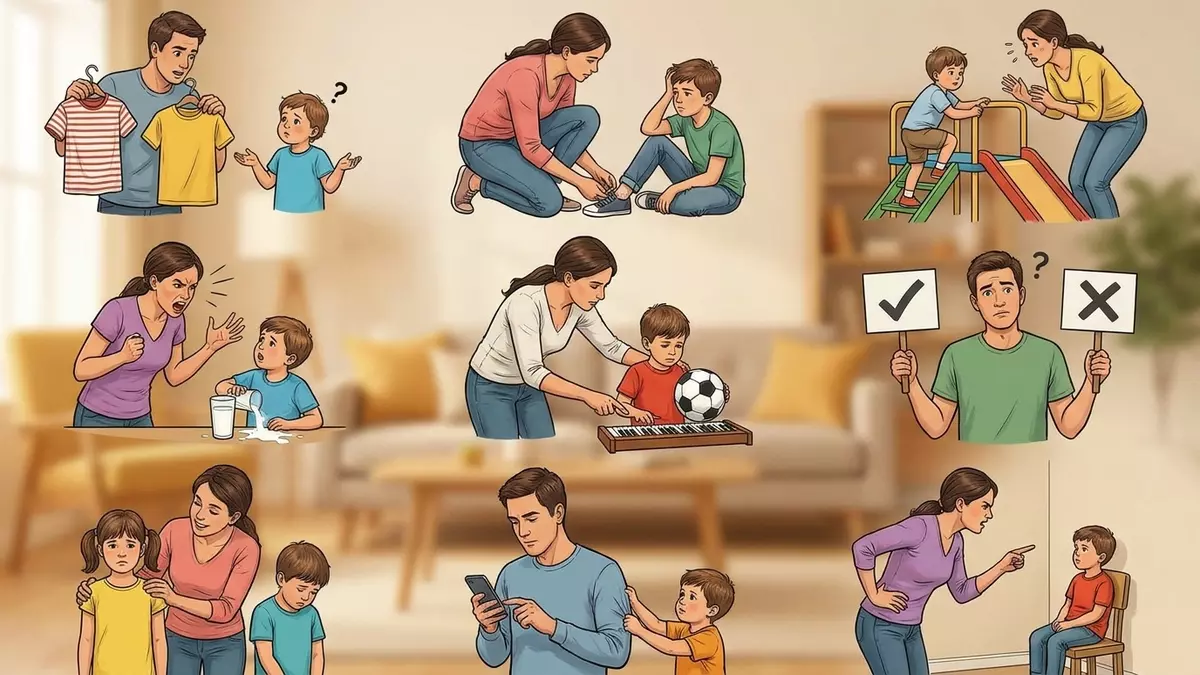
1. Denying Them the Right to Choose
It is entirely natural for parents to want to streamline daily routines to avoid chaotic delays or minor mistakes. However, when adults make every single choice on behalf of a child, they bypass a critical neurological training ground.
 The Biological Reality of Gray Hair
Allowing children to make age-appropriate decisions inside a structured environment builds structural confidence, independent problem-solving skills, and executive functioning.
How to implement healthy choices: Instead of leaving the floor completely open—which can overwhelm a young mind—offer a simplified binary choice. For example, ask: “Would you like to wear the blue shirt or the green shirt today?” or “Do you want to practice your drawing or ride your bike this afternoon?” This allows the child to exercise autonomy while the parent maintains overall safety boundaries.
2. Managing Every Single Daily Task (The Savior Complex)
When a parent rushes to tie a seven-year-old’s shoes, packs their school backpack, or cleans up their scattered toys, it is usually done out of love or a desire to save time. Unfortunately, micromanaging every physical task deprives children of the opportunity to develop functional independence.

From an early age, children crave a sense of personal mastery. Consistently taking over their responsibilities sends an invisible, damaging message: “I am doing this because you are not capable of doing it yourself.”
To reverse this, introduce age-appropriate household chores. The minor struggles a child faces while learning to fold their clothes or wash a plastic dish build a deep sense of real-world accomplishment and self-reliance.
3. Smothering Progress Through Overprotection
The instinct to shield a child from physical or emotional discomfort is incredibly powerful. Yet, sheltering children from the natural ups and downs of life can severely restrict their psychological development.

+-------------------------------------------------------------------------+
|                    THE OVERPROTECTION RISK TIMELINE                     |
+------------------------------------+------------------------------------+
| Parenting Action                   | Long-Term Psychological Outcome   |
+------------------------------------+------------------------------------+
| Shielding from all minor failures  | Heightened childhood anxiety and  |
| and structural discomfort          | low self-worth                     |
+------------------------------------+------------------------------------+
| Allowing calculated risks and      | Robust psychological resilience    |
| navigating small social conflicts  | and problem-solving mastery       |
+------------------------------------+------------------------------------+
Clinical research consistently links high levels of parental overprotectiveness to elevated rates of childhood anxiety and diminished social confidence. If a child never experiences a minor social conflict, a scraped knee, or a disappointing grade, they never learn how to self-soothe or problem-solve.
Allow your children to take calculated risks. Navigating small, manageable hurdles gives them the exact tools they need to build lifetime resilience.
4. Modeling Volatile Emotional Reactivity
Children are microscopic researchers; they learn how to regulate their emotions by watching how the adults in their home handle stress. When a parent responds to a minor household accident—like a spilled glass of milk or a misplaced school book—with high-pitched anger, shouting, or visible panic, they model emotional volatility.
Before reacting impulsively to a stressful situation, pause and take a slow, deep breath. By consciously subduing your immediate emotional response, you demonstrate to your child that unexpected problems can be met with calm, logical solution-seeking behavior rather than chaos.
5. Projecting Unfulfilled Personal Expectations
One of the most complex psychological dynamics in a household is the unconscious projection of a parent’s unfulfilled dreams onto their offspring. Parents frequently look at their children and visualize the path they wish they had taken—whether that means pushing them toward a high-earning corporate career, an elite sport, or a specific artistic discipline.
Every child possesses a distinct genetic blueprint, temperament, and set of intrinsic interests. Forcing them into a pre-existing mold creates deep resentment and chronic performance anxiety. True parental support means celebrating your child’s unique individuality, actively listening to their emerging passions, and letting them forge an authentic path.
6. Shifting Boundaries and Enforcing Inconsistent Rules
Children require predictable environments to feel emotionally safe. When household rules shift based entirely on a parent’s current mood—such as being loose and permissive on a relaxed morning but hyper-strict and punishing on a stressful afternoon—the child becomes profoundly confused.
+------------------------------------------------------------------------+
|                      THE CONSEQUENCE OF INCONSISTENCY                  |
+------------------------------------------------------------------------+
| Permissive Phase: Rules are ignored because the parent is tired.       |
| Strict Phase: The same behavior triggers intense punishment later.     |
| The Result: The child focuses on predicting the parent's mood rather    |
| than understanding the baseline moral rule.                             |
+------------------------------------------------------------------------+
Inconsistent boundary enforcement damages a child’s understanding of cause and effect. Establish clear, unwavering household rules alongside predictable, transparent consequences. When a child knows exactly where the behavioral boundaries lie, they develop better internal self-control.
7. Using Comparisons as a Motivational Tool
“Why can’t you sit quietly like your sister?” or “Look at how well your classmate did on the math test.” While parents often use these comparative statements hoping to spark a competitive fire or inspire better behavior, the tactic almost always backfires.
Constant comparison damages a child’s self-esteem and fosters toxic sibling rivalry or social insecurity. Instead of evaluating your child against an external benchmark, evaluate them against themselves. Praise their personal progress, acknowledge their specific micro-improvements, and make them feel valued for who they are today.
8. Allowing Emotional Care to Slip into Autopilot
In the chaotic rush of managing modern life—balancing careers, organizing schedules, making dinners, and paying bills—it is surprisingly easy for parental interaction to slip into a purely transactional state. A parent can spend all day in the same room with a child managing their physical logistics without ever truly connecting with them.
Children need to feel seen, heard, and emotionally validated. Dedicate a block of uninterrupted time each day to step away from your digital screens and engage directly with your child. Put down your phone, look them in the eye, ask open-ended questions about their thoughts, and actively cultivate an environment where their emotional needs are treated as a priority.
9. Relying on Harsh, Punitive Discipline
The use of physical punishment, aggressive screaming, or shaming tactics has been thoroughly studied by global mental health institutions. The data is clear: harsh, punitive discipline does not teach long-term morality or self-control. Instead, it activates a child’s defense mechanisms, frequently leading to heightened aggression, calculated deception, and behavioral disorders down the road.
True discipline is educational, not vindictive. Shift your focus away from inducing fear and toward teaching natural consequences. Utilize balanced, structured tools like brief time-outs, the temporary loss of specific privileges, and calm, explicit conversations regarding why a behavior was unacceptable. This teaches children to respect authority out of understanding rather than fear.
The Path to Mindful Caregiving
Acknowledging that you have fallen into some of these behavioral patterns isn’t a sign of parental failure; it is an entry point for mindful growth. Children do not need flawless, perfect parents. What they need are self-aware caregivers who are willing to analyze their own habits, adjust their communication styles, and repair relationship dynamics when things go wrong. By swapping out control for guidance and emotional reactivity for steady patience, you can build a secure family foundation that allows your child to step out into the wider world as an independent, resilient, and confident adult.
Frequently Asked Questions (FAQs)
1. Is it ever acceptable to shield my child from a difficult experience?
Yes. Protection is necessary when a situation presents a genuine physical danger, severe emotional trauma, or an adult conflict that is far beyond a child’s developmental capacity to process. The goal is to allow your child to experience manageable discomfort—such as losing a board game, forgetting a homework assignment, or managing a minor peer disagreement—which serves as a safe practice run for adult challenges.
2. How can I transition my child to making choices if they are used to me doing everything?
Start exceptionally small to avoid decision paralysis. Begin with inconsequential daily routines. Ask them to select between two specific breakfast options, or let them pick which book to read before bed. As their confidence and comfort levels rise, gradually elevate the scope of their choices, allowing them to take ownership of their weekend schedules, clothing styles, and personal hobbies.
3. What should I do if I lose my temper and yell at my child?
First, remember that you are human and stress happens. Once you have fully calmed down, approach your child and model an authentic emotional repair. Say something like: “I am sorry that I raised my voice earlier. I was feeling very stressed, but it was not right for me to yell at you. Next time, I will take a deep breath instead.” This teaches your child that mistakes happen, but taking responsibility and apologizing restores connection.
4. How do I maintain consistent rules when my co-parent has a completely different style?
This is a very common hurdle. Children are incredibly adept at navigating different rule systems, but massive contradictions between parents can create behavioral issues. Sit down with your co-parent away from the children to negotiate a unified front on core pillars, such as bedtime schedules, screen time limits, and non-negotiable safety rules, ensuring you support each other’s boundaries in front of the kids.
5. At what age should children begin taking on independent household responsibilities?
Toddlers as young as two or three years old can begin practicing simple, supportive tasks, such as putting their shoes in a closet or tossing dirty clothes into a laundry hamper. By ages four to six, they can easily help set the dinner table or feed a family pet. Tailor the physical complexity of the chore to their motor skill development, focusing on the habit of contribution rather than flawless execution.