
Table of Contents
- 1. Master the Timeline: Planting for Peak Sweetness
- 1.1. Calculating Your Days to Maturity
- 1.2. Tailoring for Cool Climates vs. Warm Zones
- 2. Fueling Growth: Light, Soil, and Nutrition Requirements
- 2.1. Maximizing Sunlight Exposure
- 2.2. The Heavy Feeder Diet: Layering Nutrients
- 3. Hydration and Moisture Management Strategies
- 3.1. The Critical Need for Even Watering
- 3.2. The Power of Mulching
- 4. Advanced Techniques to Explode Your Yield
- 4.1. The Art of Topping Your Plants
- 4.2. Harvesting from the Ground Up
- 5. Embracing Winter and Protecting Your Crop
- 5.1. Why Frost is a Brussels Sprout’s Best Friend
- 5.2. Shielding Against Brassica Pests
- 5.3. Overwintering and Stalk Preservation
- 6. Patience Pays Off with a Bountiful Harvest
- 7. Frequently Asked Questions
- 7.1. Why are my Brussels sprouts loose, leafy, and open instead of tight?
- 7.2. Should I remove the large fan leaves from the stalk as it grows?
- 7.3. Can Brussels sprouts survive a hard freeze in the winter?
- 7.4. How do I know exactly when a sprout is ready to be picked?
- 7.5. Why do my homegrown sprouts taste bitter?
9 Secrets to Grow Massive Brussels Sprout Yields This Fall
Brussels sprouts have undergone a massive culinary redemption arc. Once the dreaded, boiled-to-mush vegetable of childhood dinners, they are now a celebrated star of the autumn dinner table when roasted to caramelized, crispy perfection.
However, growing your own abundant supply of these mini-cabbages requires more than just dropping a few seeds in the ground and hoping for the best. Brussels sprouts are a long-term commitment. They require patience, specific environmental conditions, and strategic intervention throughout their lengthy growing season. If you are ready to transition from sparse, spindly stalks to a heavy harvest of tight, sweet buds, these nine proven strategies will maximize your backyard yield.
9 Secrets to Grow Massive Brussels Sprout Yields This Fall
Master the Timeline: Planting for Peak Sweetness
Successfully growing Brussels sprouts hinges completely on timing. These plants are built for the cold, and their flavor profile relies heavily on maturing under chilly autumn skies.
Calculating Your Days to Maturity
Most cultivars require anywhere from 80 to 100 days from the time they are transplanted into the garden to reach harvest size. Because they take so long to mature, you must backward-engineer your planting date based on your region’s first expected hard frost.
Tailoring for Cool Climates vs. Warm Zones
Northern & Cool Climates: Start your seeds indoors during late winter or very early spring. Move the young transplants into the garden as soon as the danger of severe spring frost has passed, allowing them to grow through the summer and mature as the weather cools in September and October.
Southern & Warm Climates: Summer heat is the archenemy of high-quality Brussels sprouts. If they mature during hot weather, the sprouts will remain small, open, loose, and incredibly bitter. In warmer regions, treat them strictly as a fall-to-winter crop. Sow seeds in midsummer so that the plants reach maturity during the late autumn and early winter months.

Fueling Growth: Light, Soil, and Nutrition Requirements
To grow thick stalks capable of supporting pounds of heavy produce, you must provide your plants with the foundational resources they need to generate energy.
Maximizing Sunlight Exposure
Brussels sprouts are incredibly sun-hungry. While they can technically survive in partial shade, a low-light environment will result in leggy stalks and tiny, unusable buds. Position your brassica patch in a location that receives a minimum of six hours of direct sunlight daily. If you can provide eight to ten hours of uninhibited light, your plants will reward you with sturdier frames and significantly higher yields.
The Heavy Feeder Diet: Layering Nutrients
These plants are exceptionally heavy feeders, drawing far more nutrition from the earth than quick crops like lettuce or radishes. Prepare your planting beds by deeply incorporating several inches of rich compost or well-rotted manure. Because their nutritional needs evolve as they mature, follow a stepped fertilization schedule:
+------------------+-------------------------+-----------------------------------------+
| Growth Stage     | Target Nutrient         | Purpose                                 |
+------------------+-------------------------+-----------------------------------------+
| Early Season     | High Nitrogen           | Promotes rapid, leafy vegetative growth |
+------------------+-------------------------+-----------------------------------------+
| Mid-Season       | Balanced (10-10-10)     | Maintains steady, stable stalk development|
+------------------+-------------------------+-----------------------------------------+
| Late Season      | High Potassium/Phosphorus| Encourages firm, tight, and plump buds  |
+------------------+-------------------------+-----------------------------------------+
Hydration and Moisture Management Strategies
The Critical Need for Even Watering
Consistent soil moisture is non-negotiable for brassicas. Brussels sprouts require roughly 1 to 1.5 inches of water per week. When soil moisture levels swing erratically between bone-dry conditions and sudden saturation, the plant experiences extreme physiological stress. This stress causes the layers of the developing sprouts to separate, leaving you with loose, leafy tufts instead of compact, store-quality spheres.
The Power of Mulching
To protect the shallow root systems of your plants from moisture stress, apply a heavy 3-inch layer of organic mulch around the base of the stalks. Clean straw, shredded autumn leaves, or wood chips work beautifully. Mulch serves three critical functions: it prevents moisture from evaporating out of the topsoil, dampens soil temperature spikes during late-summer heatwaves, and suppresses weed competition.
Advanced Techniques to Explode Your Yield
Once your plants are established and growing tall, you can use physical manipulation techniques to force the plant to maximize its output.
The Art of Topping Your Plants
One of the best-kept secrets to an explosive harvest is a technique known as topping. In late summer or early autumn, when the main stalk has reached roughly 28 to 30 inches tall and small sprouts have begun forming along the lower leaf axils, cleanly cut off the growing tip at the very top of the plant.
By removing this apical meristem, you signal to the plant that it should stop climbing taller. Deprived of the ability to grow upward, the plant redirects all its energy and stored sugars downward into the existing sprouts, forcing the lower buds to swell rapidly into large, firm heads.
Harvesting from the Ground Up
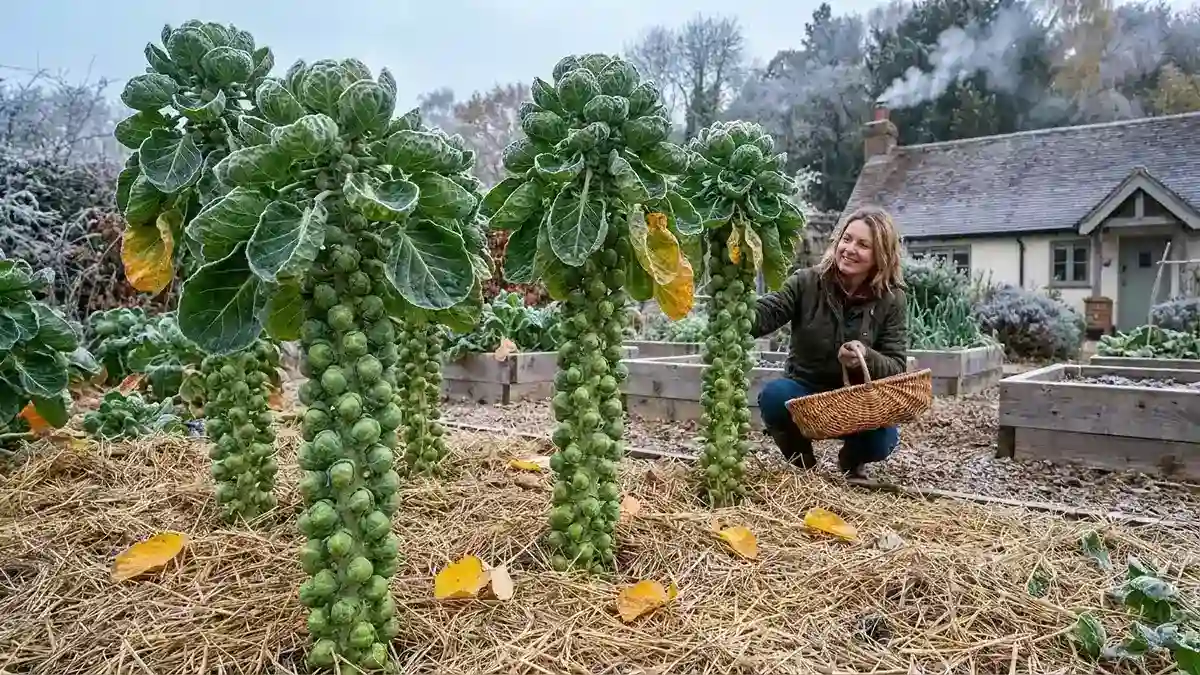
Brussels sprouts do not mature simultaneously across the entire plant; instead, they ripen sequentially from the bottom of the stalk upward. Monitor the base of the plant and begin picking the lowest sprouts as soon as they reach 1 to 2 inches in diameter and feel rock-hard when squeezed.
You can remove them by twisting them sharply downward or snipping them with a knife. By continuously removing the mature lower sprouts, you clear the way for the plant to push its remaining resources into the smaller, younger buds developing near the top.
Embracing Winter and Protecting Your Crop
Why Frost is a Brussels Sprout’s Best Friend
Never rush to harvest your entire crop before the first autumn freeze. Brussels sprouts taste vastly superior after they have been “kissed” by a few light frosts. When air temperatures drop below freezing, the plant converts its internal starches into natural sugars to act as a built-in antifreeze. This sudden surge in glucose strips away any underlying bitterness, leaving the sprouts incredibly sweet, nutty, and flavorful.
Shielding Against Brassica Pests
Because they belong to the cabbage family, Brussels sprouts are a primary target for destructive garden pests. Cabbage loopers, imported cabbageworms, flea beetles, and aphids can quickly skeletonize leaves and ruin developing buds.
+-------------------------------------------------------------------------+
|                       BRASSICA PEST DEFENSE TOOLKIT                     |
+-------------------+-----------------------------------------------------+
| Floating Row      | Install over young plants to block egg-laying moths |
| Covers            |                                                     |
+-------------------+-----------------------------------------------------+
| Bt Spray          | Apply naturally occurring bacteria to eliminate     |
| (Bacillus         | chewing caterpillars without harming pollinators    |
| thuringiensis)    |                                                     |
+-------------------+-----------------------------------------------------+
| Neem Oil          | Use as an organic contact spray for aphid outbreaks |
+-------------------+-----------------------------------------------------+
Overwintering and Stalk Preservation
When early winter weather threatens to bring deep, prolonged freezes that could turn the soil to ice, you can harvest the entire remaining plant at once. Cut the main stalk off at ground level and bring it indoors. Stand the stalk upright in a bucket of damp sand or hang it upside down in a cold garage, root cellar, or shed. The upper sprouts will continue to pull residual moisture from the thick stalk, allowing you to pick fresh, crisp sprouts for weeks after the garden has gone dormant.
Patience Pays Off with a Bountiful Harvest
While growing Brussels sprouts requires a significantly larger investment of time and attention than cultivating quick summer crops, the reward is unmatched. By managing your planting timeline, treating the soil with rich nutrients, topping the stalks to channel energy into the buds, and letting the autumn frost work its chemical magic, you will unlock a massive harvest of gourmet vegetables that will elevate your cool-weather cooking for months on end.
Frequently Asked Questions
Why are my Brussels sprouts loose, leafy, and open instead of tight?
Loose, open sprouts are typically caused by heat stress or inconsistent watering. If the plants mature during hot summer weather, or if the soil dries out completely between waterings, the buds will open up like tiny cabbages rather than forming tight, compact heads.
Should I remove the large fan leaves from the stalk as it grows?
Yes. As the sprouts along the lower portion of the stalk begin to swell, it is highly beneficial to snap off the lower fan leaves directly beneath them. Removing these older leaves improves airflow around the developing sprouts—reducing the risk of fungal disease—and allows more direct sunlight to hit the buds, speeding up their maturity.
Can Brussels sprouts survive a hard freeze in the winter?
Yes, mature Brussels sprouts are incredibly resilient and can easily tolerate temperatures down to 20°F (-6°C), and even lower for short periods. In many agricultural zones, you can leave them standing in the garden throughout the winter, brushing away snow to harvest fresh sprouts as needed.
How do I know exactly when a sprout is ready to be picked?
Look for size and firmness. A perfect sprout is roughly the size of a golf ball (1 to 2 inches in diameter), deep green, and feels dense and completely firm when pinched. If the sprout feels soft or squishy, leave it on the stalk a bit longer to fill out.
Why do my homegrown sprouts taste bitter?
If your sprouts taste excessively bitter, they likely matured during a warm stretch of weather, or they were harvested before experiencing cold autumn temperatures. To guarantee sweet sprouts, always time your planting so that the final month of bulb development occurs during frosty late-fall or early-winter conditions.