
Table of Contents
- 1. 1. The Angled Tarp Slanted Chute System
- 2. 2. Reclaimed Rain Gutter Waste Troughs
- 2.1. How to Install a Gutter Chute
- 2.2. Seasonal Maintenance Advantages
- 3. 3. Suspended Chain and Tarp Drop Chute
- 4. 4. Integrated Sand Tray Droppings Board
- 5. 5. Multi-Tiered Roosting Shelves with Sand Beds
- 6. 6. Exterior Access Poop Chute Hatch
- 7. 7. Space-Saving Corner Shelf with Ladder Access
- 8. 8. Sloped Metal Bar System
- 9. Conclusion
- 10. Frequently Asked Questions
- 10.1. How often do I need to clean out a coop poop chute?
- 10.2. Will a slanted poop chute completely eliminate coop odors?
- 10.3. What angle is best for a DIY slanted poop chute?
- 10.4. Is chicken manure from a poop chute safe to put directly on garden plants?
- 10.5. Can metal roosting bars cause bumblefoot or frostbite?
8 Clever Chicken Coop Poop Chute Designs for Fast Cleanup
Every backyard chicken keeper shares a common battle: managing flock waste. While fresh eggs and quirky chicken personalities bring immense joy, the persistent odor and daily cleanup of a chicken coop can quickly become overwhelming. If you find yourself constantly scrubbing roosts and sifting through soiled bedding, it is time to upgrade your setup.
The secret to a low-maintenance, fresh-smelling coop lies in modern waste management. By implementing a dedicated roosting bar poop chute or droppings board system, you can capture waste exactly where it falls most—directly under the evening perches. This strategic upgrade drastically reduces maintenance time, saves money on bedding, and creates a healthier environment for your flock.
Explore these eight ingenious, DIY-friendly poop chute and roosting bar designs to transform your coop maintenance routine.

8 Clever Chicken Coop Poop Chute Designs for Fast Cleanup
1. The Angled Tarp Slanted Chute System
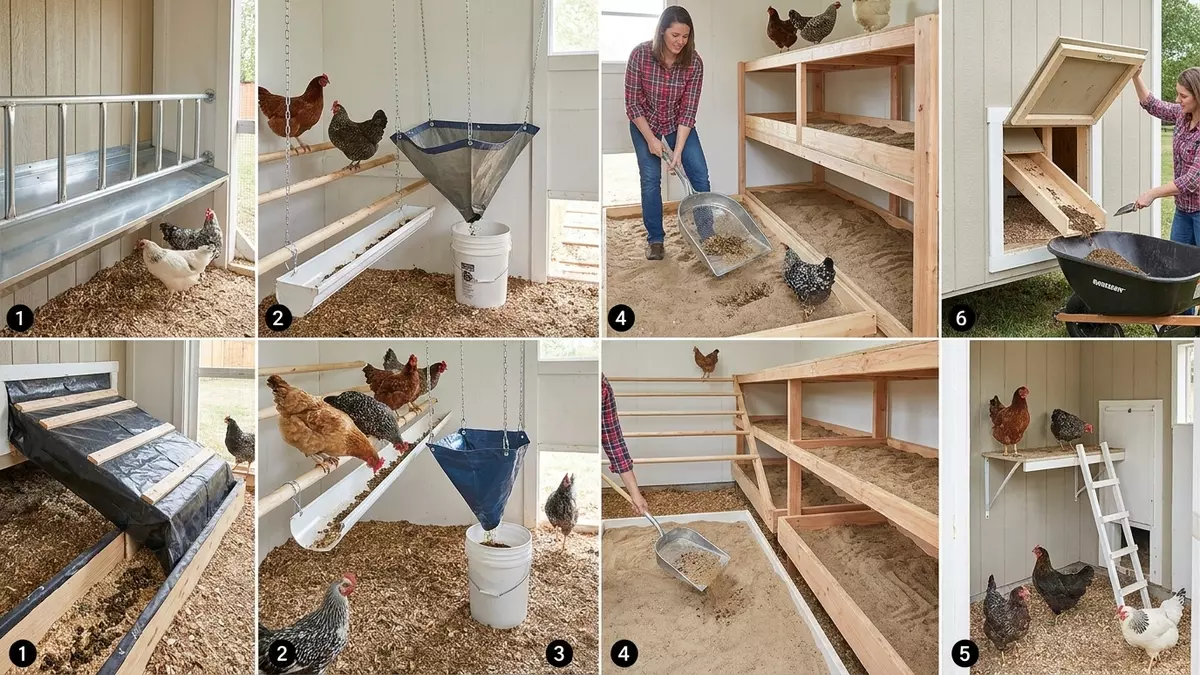
This design relies on gravity to do the heavy lifting. A slanted platform is constructed directly underneath the main roosting bars, positioned at a sharp enough angle that droppings naturally slide downward.
To ensure effortless waste removal, the wooden platform is tightly wrapped in a heavy-duty, durable black tarp. The slick surface of the tarp prevents waste from sticking. As chickens sleep and deposit waste overnight, the droppings slide down the slick incline into a designated collection zone in the bedding below. This setup keeps the perches spotless and concentrates the waste into a single, easy-to-scoop track.

2. Reclaimed Rain Gutter Waste Troughs
If you love upcycling materials, this innovative method repurposes standard residential rain gutters into highly efficient waste collection channels.
How to Install a Gutter Chute
Mount a wide plastic or vinyl gutter directly beneath the nighttime roosting bars. Ensure the gutter has a slight slope toward one end of the coop.
Seasonal Maintenance Advantages
As droppings fall, they are captured entirely by the gutter channel, completely protecting the floor bedding below. This system shines during the colder winter months; instead of scrubbing frozen coop floors, you simply take a hand trowel or customized scoop and slide it down the smooth gutter track to collect the frozen debris in seconds.
3. Suspended Chain and Tarp Drop Chute
For a budget-friendly and highly adaptable solution, a suspended tarp system offers incredible efficiency with minimal construction required.
This design features a heavy-duty tarp suspended directly underneath the roosts using durable chains or ropes attached to the coop frame. The chains are adjusted to create a distinct funnel or V-shaped slope. This slope guides falling waste directly into a strategically placed five-gallon bucket or bin. When it is time to clean, you simply tap the tarp to dislodge any stuck debris, empty the collection bucket into the compost pile, and the job is done.
4. Integrated Sand Tray Droppings Board
Sand is a favorite material among experienced poultry keepers due to its incredible moisture-wicking and clumping capabilities. This design positions a wide, shallow tray filled with construction-grade sand directly under the roosting perches.
When droppings fall into the sand, the moisture is instantly absorbed, drying out the waste and neutralizing odors rapidly. To maintain this system, keep a cat litter scoop or a hardware-cloth sifter nearby. Each morning, you can skim the sand tray just like a litter box, leaving behind clean, fresh sand while removing waste in less than two minutes.
5. Multi-Tiered Roosting Shelves with Sand Beds
When managing a larger flock, vertical space utilization is essential for preventing pecking order disputes and keeping birds comfortable. This multi-tiered setup features staggered wooden shelves acting as perches.
Ample Perching Space: Staggered tiers allow dominant and submissive birds to find their preferred sleeping heights without conflict.
Sturdy Construction: Low-maintenance, heavy-duty wooden supports ensure long-term stability.
Deep Sand Base: A wide, sand-filled bedding zone sits beneath the entire tiered structure, acting as a massive catchment area that keeps droppings away from the rest of the coop floor.
6. Exterior Access Poop Chute Hatch
The ultimate luxury in chicken coop design is being able to clean the entire setup without ever setting foot inside the coop structure. An exterior access hatch makes this a reality.
In this layout, the internal poop chute or droppings board slopes toward the outer wall of the coop. A secure, hinged access door is built into the exterior siding exactly where the chute terminates. To clean the system, you simply walk up to the outside of the coop, unlatch the hatch door, and scrape the collected waste directly into a wheelbarrow or compost bin. It keeps your boots clean and slashes chore time down to moments.
7. Space-Saving Corner Shelf with Ladder Access
Small backyard coops require creative spatial layouts. Standard linear roosting bars can crowd a compact footprint, which is why a corner-mounted roosting shelf is highly effective.
By utilizing the often-wasted corner space of a coop, you open up the central floor area for scratching and feeding. This design features an elevated corner platform equipped with a custom mini-ladder, allowing older, heavy, or less agile chickens to safely climb up to bed. The localized zone under the corner shelf concentrates all nighttime waste into one small, easily manageable quadrant of the coop bedding.
8. Sloped Metal Bar System
For flock keepers who prioritize sanitization and longevity, incorporating metal components into the roosting architecture yields fantastic results.
This system utilizes smooth, angled metal bars or pipes as the primary perches, set above a steeply sloped metal back-pan. Because chicken droppings have a hard time adhering to slick metal surfaces, the vast majority of waste slides immediately down into the floor litter. Any stubborn residue left on the metal components can be instantly wiped away or sprayed down during deep cleans, as metal does not absorb moisture, bacteria, or coop pests like mites.
Conclusion
Managing chicken manure does not have to be a dreaded, back-breaking chore. By implementing a smart roosting bar poop chute or tray system, you work with gravity to isolate and manage waste efficiently. Whether you choose the budget-friendly suspended tarp method, an upcycled rain gutter trough, or a premium exterior access hatch, reducing your daily cleaning time will allow you to spend more time enjoying the rewarding aspects of backyard poultry keeping.
Frequently Asked Questions
How often do I need to clean out a coop poop chute?
For optimal odor control and flock health, daily or every-other-day scooping is recommended for sand trays and gutter systems. Slanted tarp or deep-litter chute designs can often go a week or more before requiring collection, depending on your flock size.
Will a slanted poop chute completely eliminate coop odors?
While it won’t eliminate odor entirely on its own, a poop chute drastically reduces smells by consolidating waste so it can be removed quickly. Removing the bulk of moisture-rich nighttime droppings prevents ammonia buildup.
What angle is best for a DIY slanted poop chute?
A minimum angle of 45 degrees is recommended for a slanted chute to allow gravity to pull waste down effectively. Slicker materials, such as heavy tarp, vinyl flooring, or metal, can slide waste successfully at slightly shallower angles.
Is chicken manure from a poop chute safe to put directly on garden plants?
No, fresh chicken manure is considered “hot” because it contains exceptionally high levels of nitrogen, which can burn plant roots. It should be composted for at least six months to a year before being applied to your garden.
Can metal roosting bars cause bumblefoot or frostbite?
In extremely cold climates, bare metal can contribute to frostbite if a chicken’s toes wrap completely around it. To prevent this, ensure metal bars are wide enough for the chicken to sit flat on their feet, covering their toes with their breast feathers, or use metal exclusively for the slick chute backing while keeping perches wooden.