
Table of Contents
- 1. The Science of Citric Acid: Why Lemon Juice Benefits Snake Plants
- 1.1. 1. Correcting Alkaline Tap Water and Soil pH
- 1.2. 2. Dissolving Stubborn Mineral Spots and Dust
- 2. Multi-Functional Uses of Lemon Juice in Snake Plant Care
- 3. Step-by-Step Guide: How to Apply Lemon Juice Safely
- 3.1. The Soil-Balancing Drench Method
- 3.2. The Leaf-Polishing Ritual
- 4. Critical Mistakes to Avoid to Prevent Plant Stress
- 5. Conclusion: A Subtle Helper for a Beautiful Display
- 6. Frequently Asked Questions
- 6.1. 1. Can I use bottled lemon juice from the grocery store instead of fresh lemons?
- 6.2. 2. Will lemon juice help stop my snake plant leaves from tipping over?
- 6.3. 3. Is it safe to use this method on variegated snake plants with yellow borders?
- 6.4. 4. Can I use lime juice instead of lemon juice?
- 6.5. 5. How can I tell if I have used too much lemon juice on my plant?
The Secret Reason Experienced Gardeners Use Lemon Juice on Snake Plants
Snake plants (Sansevieria trifasciata) are legendary in the houseplant community for their nearly indestructible nature. They can comfortably survive in dark corners, tolerate weeks of watering neglect, and shrug off dry indoor air that would cause other tropical plants to wither. Yet, while these hardy architectural specimens are masters of survival, there is a distinct difference between a snake plant that is merely surviving and one that is truly thriving.
To unlock vibrant, glossy growth and push out robust new pups, some of the most experienced indoor gardeners rely on a surprising kitchen ingredient: fresh lemon juice. When utilized with precision, this citric acid powerhouse acts as a gentle soil balancer, a leaf rejuvenator, and an eco-friendly pest deterrent.
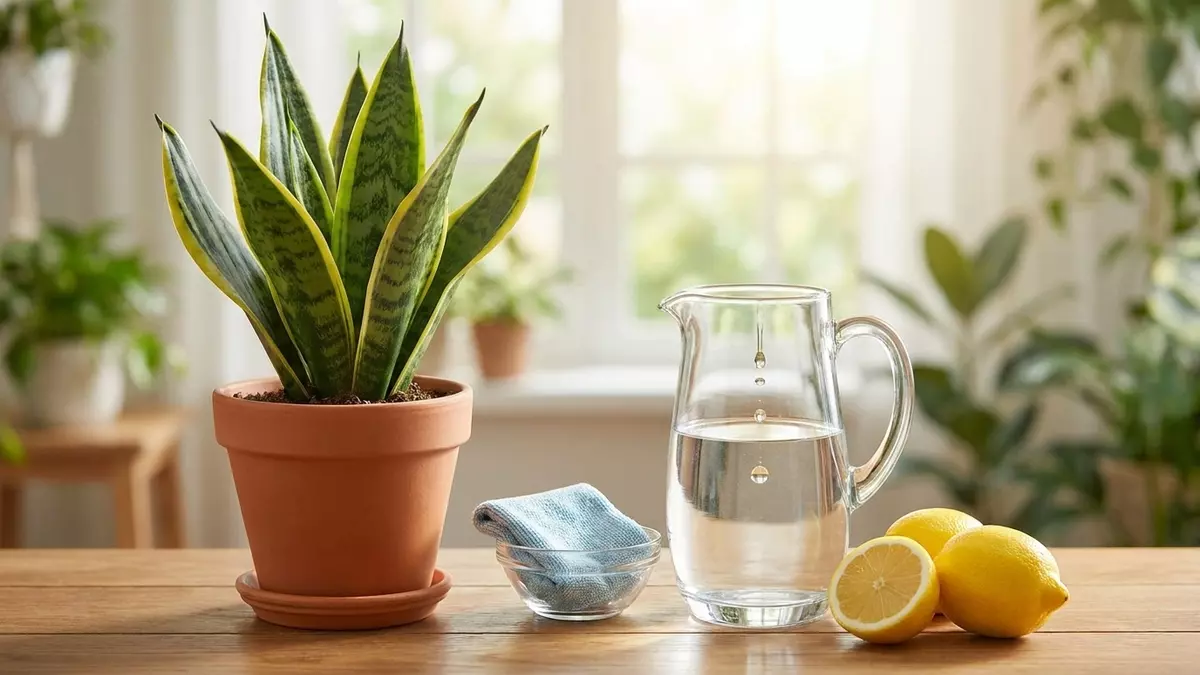
The Secret Reason Experienced Gardeners Use Lemon Juice on Snake Plants

The Science of Citric Acid: Why Lemon Juice Benefits Snake Plants
Introducing a highly acidic fruit juice to a succulent-like desert plant might sound counterintuitive at first. However, the benefits boil down to simple chemistry.
1. Correcting Alkaline Tap Water and Soil pH
Snake plants naturally prefer a growing medium that sits in a slightly acidic to neutral sweet spot, ideally between a pH of 6.0 and 7.0. Unfortunately, most residential tap water is heavily treated and naturally alkaline, often climbing well above a pH of 7.5.
Over months of routine watering, these alkaline minerals accumulate in the potting soil, slowly raising its pH. As the earth becomes too alkaline, the snake plant encounters a chemical block, losing its ability to absorb vital nutrients like iron and manganese. A microscopic dose of lemon juice introduces citric acid, which neutralizes alkaline tap water and restores the soil to the slightly acidic zone your plant craves, unlocking trapped nutrients.

2. Dissolving Stubborn Mineral Spots and Dust
Because snake plants feature broad, upright, sword-like leaves, they act as natural dust magnets in the home. A thick layer of household dust doesn’t just look unsightly; it physically blocks the leaf pores (stomata), drastically reducing the plant’s ability to photosynthesize and clean indoor air.
Furthermore, misting or top-watering often leaves behind crusty, white chalk lines known as hard water spots. The natural acids in lemon juice act as a mild chelating agent, easily breaking down and dissolving these stubborn calcium and magnesium deposits without scratching the leaf tissue.
Multi-Functional Uses of Lemon Juice in Snake Plant Care
Instead of buying multiple commercial leaf shines, soil flushers, and pest sprays, a single lemon can handle several maintenance tasks simultaneously.
| Garden Problem | How Lemon Juice Resolves It | Primary Benefit |
| Alkaline Soil Build-up | Lowers the medium’s pH level | Unlocks nutrient absorption for greener leaves |
| Chalky Water Spots | Dissolves mineral crusts | Restores a natural, glossy shine to foliage |
| Surface Soil Mold | Disrupts fungal spores | Sanitizes the topsoil layer naturally |
| Minor Insect Pests | Repels with citric aroma | Discourages gnats and mites from nesting |
Step-by-Step Guide: How to Apply Lemon Juice Safely
The golden rule when using lemon juice on any houseplant is extreme dilution. Undiluted lemon juice is highly corrosive to plant tissues and will instantly scorch roots and dissolve foliage. Follow these exact preparation methods to guarantee a safe application.
The Soil-Balancing Drench Method
To refresh your soil and adjust pH levels, create a highly diluted watering tonic.
The Formula: Add exactly 2 to 3 drops of fresh lemon juice into 1 quart (approximately 1 liter) of room-temperature water. Stir thoroughly to ensure the acid is evenly distributed.
The Application: Pour the mixture evenly over the soil until it drains out the bottom of the pot.
Frequency: Use this tonic only once every month or two during the active spring and summer growing season. Never use it as a replacement for every routine watering.
The Leaf-Polishing Ritual
To remove dust and restore a breathtaking, deep-green luster to the upright swords, apply a targeted topical treatment.
[Mix 2-3 Drops Lemon Juice into 1 Quart Water]
                       │
                       ▼
         [Dampen a Soft Microfiber Cloth]
                       │
                       ▼
[Gently Wipe Blades Upward (Avoid Pooling at the Base)]
The Application: Submerge a clean, soft microfiber cloth or cotton pad into your diluted lemon water mixture. Wring it out thoroughly until it is barely damp. Support the back of a snake plant leaf with one hand, and gently wipe the cloth upward from the base to the tip.
Important Safety Rule: Do not spray the mixture directly onto the plant with a misting bottle. If liquid lemon water pools deep inside the central rosette of a snake plant, it can trap stagnant moisture and quickly trigger fatal crown rot.
Critical Mistakes to Avoid to Prevent Plant Stress
While lemon juice is a fantastic home remedy, a heavy-handed application can quickly backfire, resulting in severe plant damage.
Never Use Under Intense Sunlight: Citric acid causes temporary photosensitivity on plant foliage. If you wipe down the leaves with lemon juice and immediately place the pot in front of a blazing, hot window, the sun’s rays will intensify, leaving behind permanent, bleached burn spots. Always clean leaves in the evening or move the plant to a shady spot while it dries.
Do Not Rely On It for Major Pest Outbreaks: While the sharp scent of lemon can deter a passing fungus gnat or spider mite, it is not an insecticide. If your snake plant is suffering from a full-blown infestation of fuzzy white mealybugs, lemon juice will not save it. You must graduate to targeted biological controls, such as rubbing alcohol swabs or organic neem oil treatments.
Avoid Over-Acidification: More is not better. Overusing lemon juice will drop the soil pH far below 5.5, creating an intensely acidic, toxic environment that will shrivel the plant’s roots and cause the outer leaf margins to turn yellow and mushy.
Conclusion: A Subtle Helper for a Beautiful Display
Lemon juice should be viewed as a fine-tuning tool rather than a mandatory requirement for snake plant survival. Your plant will continue to live a perfectly long, healthy life without ever tasting a drop of citrus. However, if you notice your snake plant’s growth has stagnated, or if the leaves are looking dull, chalky, and coated in hard-water film, a tiny bit of kitchen chemistry might be exactly what it needs. Keep your mixtures incredibly weak, observe how the plant responds, and enjoy the gorgeous, deep-green results.
Frequently Asked Questions
1. Can I use bottled lemon juice from the grocery store instead of fresh lemons?
Yes, you can use 100% pure bottled lemon juice, provided it does not contain any added sugars, artificial preservatives, or flavorings. Sugars left behind in your soil or on foliage will attract ants, fruit flies, and harmful fungal pathogens.
2. Will lemon juice help stop my snake plant leaves from tipping over?
Not directly. Snake plant leaves tip over or become floppy due to overwatering, root rot, or a severe lack of sunlight. While lemon juice optimizes nutrient uptake in healthy plants, it cannot fix structural floppiness caused by damaged roots or waterlogged soil.
3. Is it safe to use this method on variegated snake plants with yellow borders?
Yes. Diluted lemon juice is completely safe for all varieties of Sansevieria, including the popular Sansevieria laurentii with its signature bright yellow margins. The acid will not fade or bleach the beautiful variegation patterns as long as you follow the correct dilution ratios.
4. Can I use lime juice instead of lemon juice?
Limes and lemons possess nearly identical chemical profiles when it comes to citric acid content and pH strength. You can safely swap lime juice for lemon juice using the exact same 2-to-3-drop dilution ratio per quart of water.
5. How can I tell if I have used too much lemon juice on my plant?
If the soil has become overly acidic or concentrated with acid, your snake plant will flash warning signs. Look for curling leaf tips, a sudden yellowing of the foliage, or a soft, mushy texture near the base of the soil line. If you notice these symptoms, flush the soil immediately with copious amounts of pure, clean rainwater or distilled water to wash away the excess acid.