
Table of Contents
- 1. 1. Create a Tactile Deterrent with Plastic Forks
- 1.1. How to Set It Up
- 1.2. Why This Strategy Works
- 2. 2. Upgrade to Elegant Glass Terrariums
- 2.1. Aesthetic and Functional Protection
- 2.2. Added Benefits for Tropical Varieties
- 3. 3. Install a Fitted Protective Pot Lid
- 3.1. Stop Digging Before It Starts
- 3.2. A Cleaner Living Space
- 4. 4. Layer the Soil with Large Decorative Pebbles
- 4.1. Discourage Scratching Instincts
- 4.2. Simple Maintenance and Clean Aesthetics
- 5. 5. Use Strategic Toothpick Barriers
- 5.1. Subtle and Disabling Defenses
- 5.2. Modifying Feline Behavior
- 6. 6. Secure the Rim with Fine Mesh Covers
- 6.1. Breathable and Secure Shielding
- 6.2. Zero Interference with Plant Care
- 7. 7. Repurpose a Vintage Birdcage
- 7.1. Quirky and Secure Styling
- 7.2. Perfect for Trailing Vines
- 8. 8. Utilize a Secure Wire Pet Crate
- 8.1. Foolproof Safety for Dangerous Varieties
- 8.2. Maximum Airflow and Light Exposure
- 9. Conclusion
- 10. Frequently Asked Questions (FAQ)
- 10.1. Why is my cat suddenly attracted to my houseplants?
- 10.2. Will placing forks or toothpicks in the soil hurt my cat?
- 10.3. What are some common houseplants that are highly toxic to cats?
- 10.4. Can I give my cat their own plants to distract them?
- 10.5. How do I water my plants if I use mesh or stone covers?
8 Clever Ways to Protect Houseplants From Your Cat This Season
If you are a plant parent who also owns a feline companion, you know the struggle all too well. One minute you are admiring your flourishing monstera, and the next, you catch your kitty treating the potting soil like a personal sandbox. Cats are naturally curious creatures. To them, a lush indoor jungle looks like an interactive playground, a cozy spot for a nap, or even a hidden litter box. Unfortunately, this curiosity can lead to knocked-over pots, ruined roots, and messy floors. More importantly, chewing on certain leaves can pose a serious threat to your pet’s health if the plant happens to be toxic.
Fortunately, you do not have to choose between your love for greenery and your devotion to your pet. With a few strategic adjustments, you can create a harmonious environment where both your flora and your furry friend can thrive side by side.
Here are eight practical, budget-friendly strategies to safeguard your indoor garden from curious paws.
8 Clever Ways to Protect Houseplants From Your Cat This Season
1. Create a Tactile Deterrent with Plastic Forks
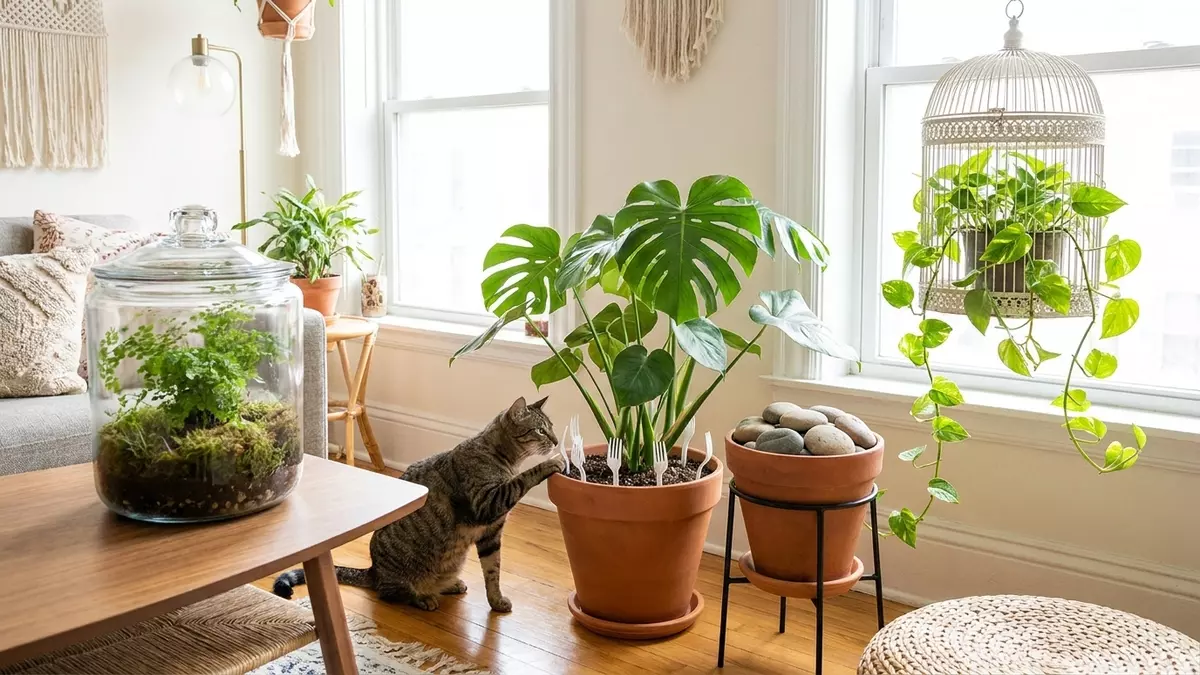
One of the easiest and most affordable ways to keep your cat out of large plant pots is to make the soil surface less inviting to step on. Placing plastic forks directly into the dirt is an excellent, non-harmful solution.
How to Set It Up
Simply insert single-use plastic forks into the potting mix with the handles buried and the prongs pointing upward. Space them a few inches apart across the entire exposed soil surface.

Why This Strategy Works
Cats are highly sensitive to the textures beneath their paws. When they step into the pot and feel the rigid prongs, they will find the sensation uncomfortable and immediately back away. This gentle deterrent keeps your cat from digging or using the pot as a bathroom, allowing the root system to grow undisturbed without altering your watering routine.
2. Upgrade to Elegant Glass Terrariums
If you own smaller tropical varieties or delicate succulents, a glass terrarium offers a beautiful and impenetrable barrier against nibbling teeth.
Aesthetic and Functional Protection
Enclosed glass containers completely isolate your greenery from your cat while turning your plants into a striking decor feature. Because the glass is entirely transparent, you can still enjoy the visual appeal of your indoor garden without worrying about structural damage.
Added Benefits for Tropical Varieties
Beyond catproofing, terrariums excel at trapping moisture and maintaining high humidity levels. This makes them ideal microclimates for moisture-loving species like ferns, fittonias, and carnivorous plants that often struggle in dry indoor air.
3. Install a Fitted Protective Pot Lid
For an incredibly neat and minimalist approach, blocking access to the soil entirely with a physical barrier or customized lid is a game-changer.
Stop Digging Before It Starts
A durable, solid barrier fitted directly over the rim of the pot leaves only a small opening in the center for the main plant stem to grow through. Because your pet can no longer reach or smell the damp dirt, the temptation to scratch, kick up debris, or use the container as an alternative litter box is completely eliminated.
A Cleaner Living Space
By sealing off the soil, you also drastically cut down on daily housekeeping. You will no longer find stray dirt scattered across your hardwood floors or carpets, making this a highly efficient solution for busy pet owners.
4. Layer the Soil with Large Decorative Pebbles
If you prefer a more organic look that still deters digging, replacing bare soil with a heavy layer of polished stones is an excellent alternative.
Discourage Scratching Instincts
Cover the top of the soil with a thick layer of large, smooth river rocks or decorative pebbles. Cats love soft, loose dirt because it satisfies their instinct to bury things. Replacing that loose texture with heavy, solid stones makes the surface completely unappealing for scratching.
Simple Maintenance and Clean Aesthetics
Pebbles give your pottery a clean, sophisticated, and polished appearance. When it is time to water, you can pour water directly over the rocks; the liquid will seamlessly filter down to the roots while keeping your cat’s paws entirely clean.
5. Use Strategic Toothpick Barriers
Similar to the plastic fork trick, everyday wooden toothpicks can be used to form an invisible grid that keeps pets at bay without ruining the look of smaller planters.
Subtle and Disabling Defenses
Insert wooden toothpicks vertically into the potting soil, spacing them closely together. Because toothpicks are small and neutral in color, they blend into the soil and remain virtually unnoticeable from a distance, preserving the natural beauty of your display.
Modifying Feline Behavior
When your kitty reaches out to swat at a low-hanging leaf or test the dirt, their paws will encounter the pointy tips. The sensation is sharp enough to startle them but completely harmless. Over time, your pet will associate the pot with an unpleasant texture and lose interest entirely.
6. Secure the Rim with Fine Mesh Covers
If you want a flexible barrier that accommodates complex branch structures or multi-stemmed plants, fine mesh netting is a highly versatile option.
Breathable and Secure Shielding
A durable, fine-mesh screen can be stretched tightly over the mouth of the pot and anchored firmly around the edges. Cut a small slit in the middle to allow the plant stems to pass through safely.
Zero Interference with Plant Care
Mesh covers are fantastic because they allow maximum airflow and do not hinder your ability to care for your greenery. You can easily mist your plants or pour water directly through the fabric, knowing that your cat cannot claw through the barrier to reach the dirt underneath.
7. Repurpose a Vintage Birdcage
For those who love eclectic or farmhouse interior design, converting an old metal birdcage into a plant sanctuary is both a creative and effective security measure.
Quirky and Secure Styling
Place your vulnerable or trailing plants inside a vintage wire birdcage and latch the door securely shut. The close spacing of the metal bars allows plenty of sunlight to filter through while ensuring your cat’s paws cannot reach the delicate foliage inside.
Perfect for Trailing Vines
This method works exceptionally well for hanging or cascading varieties like pothos or English ivy. The vines can grow safely inside the frame, giving your room a unique, fairytale-like aesthetic while keeping toxic leaves safely out of your pet’s reach.
8. Utilize a Secure Wire Pet Crate
When dealing with highly toxic plants or exceptionally persistent cats who view every obstacle as a personal challenge, a heavy-duty wire crate provides maximum security.
Foolproof Safety for Dangerous Varieties
While it may not be the most glamorous design choice, placing prized or hazardous flora inside a locked metal pet crate guarantees total peace of mind. It ensures your cat cannot accidentally ingest leaves that could cause a medical emergency.
Maximum Airflow and Light Exposure
The open wire construction of a standard crate ensures that your plants still receive adequate ventilation and bright, indirect sunlight. It serves as an excellent temporary measure while you train your kitten or work on establishing long-term behavioral boundaries.
Conclusion
Sharing your home with both thriving houseplants and a happy cat requires a little ingenuity, but it is entirely achievable. By understanding your cat’s instinctual drive to dig and chew, you can implement smart physical barriers like decorative stones, mesh covers, or glass terrariums to protect your greenery. Try out these different methods to see which option best fits your home’s aesthetic and your cat’s unique personality.
Frequently Asked Questions (FAQ)
Why is my cat suddenly attracted to my houseplants?
Cats are naturally drawn to indoor plants out of boredom, curiosity, or instinct. The movement of leaves in a gentle breeze mimics prey, while loose soil triggers their hardwired desire to dig, explore, or mark territory.
Will placing forks or toothpicks in the soil hurt my cat?
No. These methods are designed to act as physical deterrents, not weapons. The texture is uncomfortable to step on, which gently startles your cat and discourages them from returning, without causing any physical injury.
What are some common houseplants that are highly toxic to cats?
Several popular houseplants are dangerous to felines, including Lilies, Dieffenbachia (Dumb Cane), Philodendrons, Aloe Vera, and Sago Palms. If you own these varieties, keeping them entirely out of reach via terrariums, cages, or locked rooms is crucial.
Can I give my cat their own plants to distract them?
Yes! Providing a designated pot of certified cat grass (such as wheatgrass, oat, or barley) or a catnip plant can successfully redirect their attention. Praise your cat for chewing on their specific greens to keep them away from your decorative collection.
How do I water my plants if I use mesh or stone covers?
You do not need to remove these barriers to water your plants. Both decorative pebbles and fine mesh fabric allow water to pass right through easily, meaning your plant stays hydrated while remaining fully protected.