
Table of Contents
- 1. The Monday Effect: Why the Start of the Week is a Biological Trigger for Disease
- 2. The Cardiovascular Spike: Mondays and the Heart
- 3. Inside the Chemistry: Cortisol and the HPA Axis
- 3.1. The 23% Cortisol Accumulation Study
- 4. The Phantom Trigger: Why the Monday Effect Lasts into Retirement
- 5. 4 Science-Backed Strategies to Recalibrate Your Weekly Cycle
- 6. Conclusion
- 7. Frequently Asked Questions
- 7.1. What is the difference between standard “Monday blues” and clinical anxiety?
- 7.2. How does hair sampling measure stress compared to a blood or saliva test?
- 7.3. Why does unpredictability trigger such a massive stress response in the brain?
- 7.4. Can a person change their biological stress response after age 60?
- 7.5. Is social jetlag truly dangerous for cardiovascular health?
The Monday Effect: Why the Start of the Week is a Biological Trigger for Disease
For decades, the “Monday blues” have been laughed off as a collective social complaint—a passing cloud of mild annoyance as we transition away from weekend freedom and head back to school or work. However, a profound wave of medical and sociological research reveals a much more alarming reality: Mondays inflict a severe, measurable toll on both the human brain and body.
Far from a psychological illusion, the start of the week behaves like a systemic biological trigger, causing massive spikes in stress hormones and significantly elevating the risk of life-threatening medical emergencies.
The Monday Effect Why the Start of the Week is a Biological Trigger for Disease
The Cardiovascular Spike: Mondays and the Heart
The most stark evidence of Monday’s physical toll comes directly from hospital emergency rooms. Epidemiological data has consistently revealed a sharp, predictable weekly surge in severe cardiovascular events at the beginning of the week.

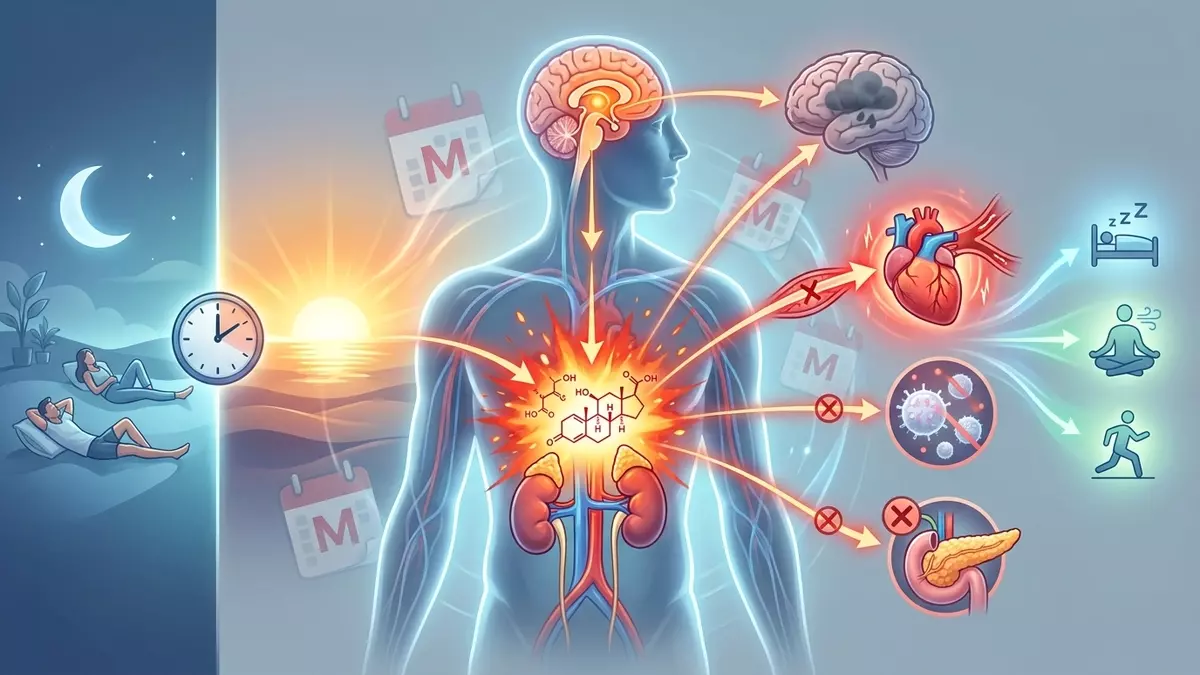
[Sunday Evening Anticipation] ➔ [Sudden Monday Cortisol/Adrenaline Surge] ➔ [Elevated Blood Pressure] ➔ [19% Increase in Cardiac Risk]
Clinical studies indicate that the risk of sudden cardiac death from heart attacks, strokes, and related arterial blockages drops to its lowest points over the weekend, only to spike by 19% on Mondays. This dangerous cardiovascular surge cuts across all age brackets and gender demographics, proving that the body’s internal systems undergo a violent physiological shift every single Monday morning.
Inside the Chemistry: Cortisol and the HPA Axis
To map exactly how a calendar day translates into arterial stress, sociologists and neuroscientists have turned their focus to the human body’s primary chemical alarm system: the hypothalamus-pituitary-adrenal (HPA) axis.
When the brain perceives a threat or an unyielding demand, the HPA axis instantly triggers the adrenal glands to flood the bloodstream with cortisol, the body’s primary stress hormone. In brief, controlled bursts, cortisol is highly beneficial—it sharpens cognitive focus, temporarily suppresses pain, and floods major muscles with glucose for quick energy.

However, when cortisol levels remain elevated for prolonged periods, the hormone becomes deeply destructive, gradually breaking down the body from the inside out:
                  ┌─── Brain ───➔ Suppresses Serotonin (Elevates Depression Risks)
[Chronic Cortisol]├─── Heart ───➔ Constricts Arteries & Elevates Blood Pressure
                  ├─── Immune ──➔ Inhibits White Blood Cells (Weakens Immunity)
                  └─── Organs ──➔ Triggers Insulin Resistance (Drives Type 2 Diabetes)
The 23% Cortisol Accumulation Study
A groundbreaking investigation spearheaded by sociologist Tarani Chandola analyzed long-term data from the English Longitudinal Study of Ageing, tracking more than 10,000 adults over the age of 50. Participants regularly logged their daily anxiety levels, while researchers collected hair samples to measure exact, long-term cortisol accumulation embedded within the hair shafts over several months.
The biochemical results were undeniable:
 Sculpt Your Core and Unlock Your Hips: A 30-Minute Equipment-Free Pilates Guide for Beginners
The Monday Contrast: Adults who reported experiencing high levels of anxiety specifically on Mondays possessed, on average, 23% higher long-term cortisol levels in the subsequent months compared to individuals who reported feeling identical levels of anxiety on any other day of the week.
This effect was most pronounced in individuals who already had elevated baseline stress levels, placing them in an ultra-vulnerable category for chronic health complications.
The Phantom Trigger: Why the Monday Effect Lasts into Retirement
The most surprising discovery to emerge from Chandola’s research was that this chemical surge did not depend on employment status. Retirees who had been out of the workforce for years exhibited the exact same high anxiety levels and elevated cortisol spikes on Mondays.
This reveals that the Monday effect is not merely a reaction to a demanding boss or a difficult commute. Instead, decades of experiencing intense Monday dread during our formative school and working years essentially conditions the brain’s neurological pathways.
[Decades of Workweek Dread] ➔ [Neurological Pavlovian Conditioning] ➔ [Retirement: Automatic Monday Stress Response]
Through a process of Pavlovian conditioning, the body learns to treat Monday as an automatic biological stressor. When the calendar flips, the HPA axis automatically fires, releasing a torrent of hormones even when there is no longer a job to go to.
4 Science-Backed Strategies to Recalibrate Your Weekly Cycle
While the biological conditioning of the Monday effect runs deep, neuroplasticity proves that the brain’s stress pathways can be successfully retrained. If you want to protect your heart and balance your hormones, consider implementing these foundational habits:
Establish Weekend Sleep Consistency: Shifting your sleep schedule by more than an hour or two on Friday and Saturday nights throws off your circadian rhythm—a phenomenon known as “social jetlag.” This circadian disruption causes your body to secrete massive amounts of cortisol on Monday morning just to force you awake. Keep your wake-up times consistent all week long.
Buffer Your Monday Schedule: Unpredictability drastically amplifies HPA axis activation. Avoid scheduling high-stress meetings, difficult conversations, or tight deadlines for Monday morning. Use the first few hours of the week to quietly organize your tasks and settle into a routine.
Practice Short, Strategic Mindfulness: Dedicating just 5 to 10 minutes to deep breathing exercises, meditation, or light stretching on Sunday evening and Monday morning can actively stimulate your parasympathetic nervous system (the “rest and digest” switch), effectively lowering your heart rate and blunting the morning cortisol spike.
Move Your Body Early: Engaging in a 20-minute brisk walk or light workout on Monday morning helps your body naturally burn off excess adrenaline and cortisol, replacing those high-stress hormones with endorphins that support a steady, balanced mood throughout the day.
Conclusion
The scientific validation of the Monday effect proves that our calendars leave a deep, physical footprint inside our bodies. Recognizing that Mondays serve as a genuine cardiovascular and hormonal trigger allows us to approach our health with greater mindfulness. By establishing consistent habits, shielding our schedules from early-week chaos, and actively practicing stress-reduction techniques, we can successfully disarm this recurring stressor and protect our long-term wellness.
Frequently Asked Questions
What is the difference between standard “Monday blues” and clinical anxiety?
The “Monday blues” are a transient, brief emotional wave of lethargy or mild reluctance that completely dissipates once you get caught up in your daily routine. Clinical anxiety, conversely, triggers intense physical symptoms—such as a crushing feeling in the chest, trembling hands, severe gastrointestinal issues, and unyielding dread—that persist throughout the day and actively impair your ability to function.
How does hair sampling measure stress compared to a blood or saliva test?
Blood and saliva tests only capture a fleeting, instantaneous snapshot of your hormone levels at the exact minute your sample is collected. Because hair grows at a steady rate of roughly one centimeter per month, cortisol from the bloodstream becomes permanently trapped inside the hair’s keratin structure. Analyzing a small strand of hair allows scientists to view an accurate, month-by-month historical timeline of your systemic stress levels.
Why does unpredictability trigger such a massive stress response in the brain?
From an evolutionary standpoint, your brain is a predictive organ designed to keep you safe by anticipating future events. When an environment is highly volatile or unpredictable, the brain cannot accurately forecast threats, which it interprets as a state of immediate danger. This lack of control forces the HPA axis to flood your body with emergency hormones to prepare you for a worst-case scenario.
Can a person change their biological stress response after age 60?
Absolutely. While decades of lifestyle conditioning mean that retirees can experience automatic Monday stress responses, the human brain retains its neuroplasticity throughout life. Engaging in consistent mindfulness practices, regular cardiovascular exercise, and positive social interactions can successfully reshape neural pathways, calming a hyperactive HPA axis even in later life stages.
Is social jetlag truly dangerous for cardiovascular health?
Yes. Disrupting your body’s natural internal clock by staying up late and sleeping in on weekends forces your endocrine system to rapidly alter its blood pressure, insulin production, and hormone cycles when Monday arrives. This weekly metabolic and chemical whiplash places cumulative, long-term strain on your arterial walls, significantly increasing your risk for cardiovascular disease over time.