
Table of Contents
- 1. The Ultimate Guide to the Slow-Tempo Squat for Longevity and Joint Health
- 2. The Biomechanics of the Slow-Tempo Squat
- 2.1. 1. Maximizing Time Under Tension (TUT)
- 2.2. 2. Disarming the Joint Elasticity Bounce
- 3. Step-by-Step Guide to the Perfect Slow Squat
- 4. What Slow-Tempo Squats Do for Your Aging Body
- 5. Building a Balanced, Bulletproof Longevity Routine
- 6. Frequently Asked Questions
- 6.1. How low should I go if I have severe knee arthritis or pain?
- 6.2. Is it safe for my knees to travel past my toes during a squat?
- 6.3. Why do my knees pop or crackle when I perform a slow squat?
- 6.4. Can holding my breath during a squat be dangerous?
- 6.5. How many times a week should I perform slow-tempo squats?
The Ultimate Guide to the Slow-Tempo Squat for Longevity and Joint Health
The squat is universally celebrated by fitness professionals as the king of all lower-body exercises. It is a fundamental, functional movement pattern that targets your glutes, quadriceps, hamstrings, and core all at once. For adults over the age of 50, mastering the squat is one of the single most important physical investments you can make to preserve your daily independence, maintain bone density, and prevent age-related falls.
However, despite its massive popularity, the squat is also one of the most frequently butchered movements in the gym. Many individuals rush through their repetitions, utilizing fast momentum rather than muscle power, which places immense, dangerous stress on their lower back, hips, and kneecaps.
According to Dr. Steven Bowers, D.O., a board-certified family physician and author of Secrets of the World’s Healthiest People, the secret to a perfect, life-extending squat has nothing to do with heavy gym weights or dropping your hips all the way to the floor. Instead, the ultimate hack for joint safety and maximum muscle tone is tempo. By slowing the movement down to a deliberate, controlled pace, you transform a basic exercise into a highly effective, joint-safe strength builder.
The Ultimate Guide to the Slow-Tempo Squat for Longevity and Joint Health
The Biomechanics of the Slow-Tempo Squat
When you perform a standard squat quickly, momentum does the vast majority of the heavy lifting. Your joints absorb the jarring shock at the bottom of the movement, and your muscles only turn on briefly to push you back up.
Slowing down the tempo fundamentally changes how your body processes the exercise through two core mechanisms:
[Slow Eccentric Phase] ➔ Eliminates Joint Momentum ➔ Maximizes Time Under Tension (TUT)
[3-Second Isometric Pause] ➔ Recruits Stabilizing Core Muscles ➔ Fixes Structural Imbalances
1. Maximizing Time Under Tension (TUT)
By forcing your muscles to control your body weight slowly against gravity on the way down, you drastically increase the muscle’s “Time Under Tension.” This stimulates deep muscle fiber growth and endurance without requiring you to overload your frame with heavy, dangerous dumbbells.
2. Disarming the Joint Elasticity Bounce
Fast squatters rely on a dangerous “rebound” effect at the absolute bottom of the movement, bouncing off their knee cartilage and tendons to stand back up. A deliberate, multi-second pause at the bottom completely erases this momentum, forcing your glutes and thighs to do 100% of the actual work from a dead stop.
Step-by-Step Guide to the Perfect Slow Squat
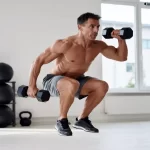
To practice this fitness pro-approved method safely at home, prioritize smooth control over high repetition counts. You can use your pure body weight, or hold a light kettlebell or dumbbell close against your chest in a “goblet” position.

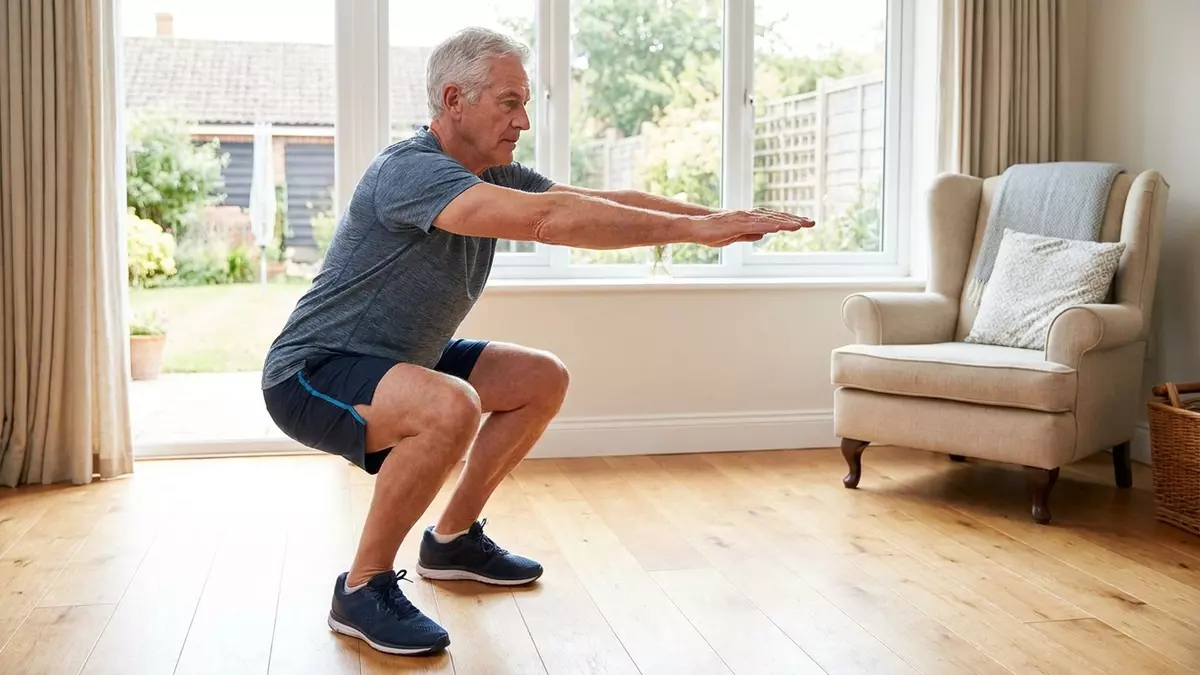
Stand completely upright with your feet positioned hip-to-shoulder distance apart. Turn your toes slightly outward (about 15 to 30 degrees) to create a natural, anatomically comfortable pathway for your hip joints to open up.
Inhale deeply through your nose, engage your core muscles, and begin lowering your body. Actively push your hips backward and downward as if you are attempting to sit into a low kitchen chair. Keep your chest up high and your gaze fixed forward; do not allow your knees to cave inward.
Stop smoothly at your lowest comfortable depth—ideally where your thighs sit parallel to the floor, or slightly higher if your joints feel stiff. Hold this exact position statically for 3 full seconds while maintaining a tight, rigid spine. Focus on keeping your weight evenly distributed across your heels and mid-foot.
Exhale powerfully through your mouth as you drive your feet straight into the floor. Push up smoothly to the starting position, focusing on squeezing your glutes tightly at the absolute top of the movement. Complete 10 pristine repetitions.
What Slow-Tempo Squats Do for Your Aging Body
By shifting away from rapid, chaotic gym movements and dedicating yourself to high-quality, slow-tempo repetitions, you systematically target the entire physical framework that keeps you moving safely through everyday life:
Glute Activation: Strong gluteal muscles provide structural support for your pelvis, naturally improving your standing posture while taking chronic pressure off your lower back.
Quadriceps and Hamstring Balance: Strengthening the large muscle groups running along the front and back of your upper legs wraps your kneecaps in a protective muscular brace, significantly reducing the localized grinding pain associated with osteoarthritis.
Joint Flexibility and Lubrication: The slow, deliberate compression and extension of your ankle, knee, and hip joints stimulates the production of synovial fluid—your body’s natural, internal joint lubricant—improving full-body flexibility.
Imbalance Correction: For experienced fitness enthusiasts, slowing down your reps instantly reveals hidden physical weaknesses or side-to-side muscular imbalances that faster, momentum-driven repetitions easily mask.
Building a Balanced, Bulletproof Longevity Routine
While the slow squat is an exceptional lower-body builder, a truly functional lifestyle requires full-body balance. To prevent muscle over-focus—which can inadvertently pull joints out of alignment—always pair your squat sessions with movements that cover other primary anatomical planes.
                  ┌─── Lower Body Push ───➔ The Slow-Tempo Squat
                  ├─── Upper Body Pull ───➔ Dumbbell Rows or Lat Pulldowns
[Balanced Motion] ┼─── Upper Body Push ───➔ Modified Push-Ups or Overhead Presses
                  └─── Rotational Core ───➔ Standing Woodchoppers or Russian Twists
To maximize your physical results over time, employ the concept of progressive overload. You don’t need to keep adding heavier weights to get stronger; instead, simply add one extra second to your bottom pause each week (moving from a 3-second hold to a 4-second hold, then a 5-second hold). This challenges your muscles safely, builds bulletproof core stability, and maintains your functional mobility for a long, vibrant retirement.
Frequently Asked Questions
How low should I go if I have severe knee arthritis or pain?
You should only descend as deep as your body can go completely pain-free. If dropping down to a full parallel position triggers localized joint discomfort, simply shorten your depth to a “mini-squat” (a shallow 30-to-45-degree bend). The continuous multi-second pause at that shallower depth will still recruit significant muscle fiber and build joint-saving strength without pushing into your pain threshold.
Is it safe for my knees to travel past my toes during a squat?
Yes, this is a pervasive fitness myth. For decades, individuals were told that knees crossing the toes was inherently dangerous. In reality, allowing your knees to naturally drift slightly forward over your toes is completely safe and required for proper ankle mechanics, provided your heels stay firmly planted flat on the floor.
Why do my knees pop or crackle when I perform a slow squat?
If the popping or clicking sounds (known medically as crepitus) are completely painless, it is generally harmless. It is typically caused by tiny air bubbles naturally escaping the joint capsule or tendons sliding smoothly over bony ridges. However, if the cracking sound is accompanied by sharp pain, swelling, or structural catching, pause the exercise and consult an orthopedic doctor.
Can holding my breath during a squat be dangerous?
Yes. Many people instinctively hold their breath during difficult exercises, which can cause a rapid spike in intra-thoracic pressure and blood pressure. To exercise safely, practice rhythmic breathing: inhale deeply on the slow way down, maintain shallow breathing or hold comfortably during the 3-second pause, and exhale completely as you power through the ascent.
How many times a week should I perform slow-tempo squats?
For optimal functional health and recovery, aim to perform 2 to 3 sets of 10 slow-tempo repetitions, 2 to 3 times per week. Always leave at least 48 hours of rest between sessions to allow your muscle fibers to successfully repair, adapt, and grow stronger.