
Table of Contents
- 1. DIY Sweet Potato and Rice Rooting Tonic for Houseplants and Cuttings
- 2. Why Sweet Potato and Rice Promote Root Growth
- 2.1. The Role of Sweet Potato
- 2.2. The Benefits of Uncooked Rice
- 3. How to Prepare Your Homemade Rooting Liquid
- 3.1. Essential Supplies:
- 3.2. Step-by-Step Instructions:
- 4. Proper Propagation Techniques Using the Tonic
- 5. Best Practices for Maximizing Success
- 6. Conclusion
- 7. Frequently Asked Questions
- 7.1. Can I store the leftover liquid tonic in the refrigerator?
- 7.2. Can I use cooked rice or leftover rice water instead?
- 7.3. Why is my rooting liquid turning cloudy or smelling sour?
- 7.4. Does this sweet potato tonic work on hardwood tree cuttings?
- 7.5. Do I need to peel the sweet potato before blending it?
DIY Sweet Potato and Rice Rooting Tonic for Houseplants and Cuttings
Plant enthusiasts are constantly seeking gentle, budget-friendly ways to encourage stubborn cuttings to strike roots. While commercial rooting hormones and synthetic gels certainly have their place, many gardeners prefer a sustainable, chemical-free approach. If you are looking for a highly accessible propagation hack, the solution might be sitting right in your kitchen pantry.
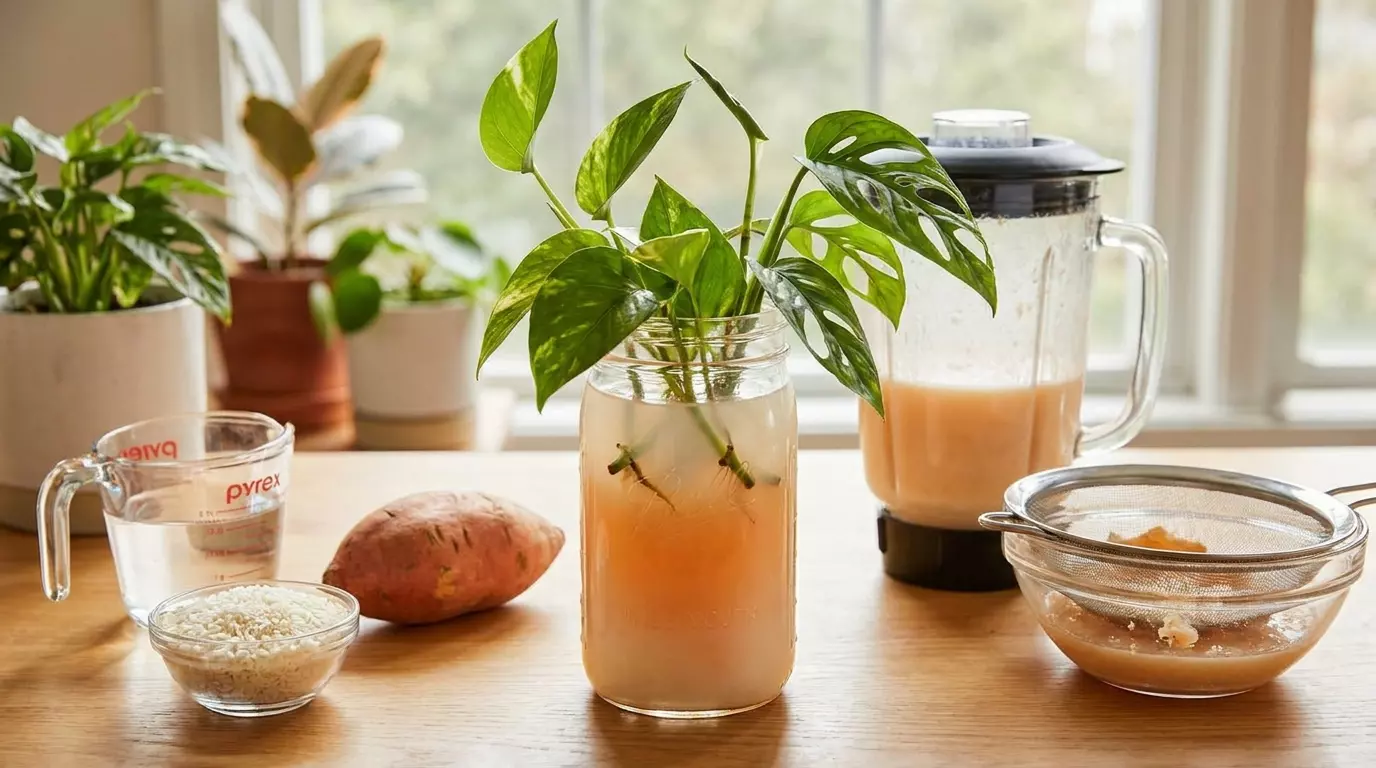
A simple, natural liquid booster made from a fresh sweet potato and uncooked rice provides a gentle environment for delicate stems. This homemade tonic utilizes the organic compounds, starches, and minerals found in everyday food items to give your plant cuttings a reliable, nurturing head start.
DIY Sweet Potato and Rice Rooting Tonic for Houseplants and Cuttings
Why Sweet Potato and Rice Promote Root Growth
This natural propagation method gains its strength from the unique combination of nutrients released by both staple ingredients. Instead of shocking a vulnerable cutting with concentrated synthetic chemicals, this mixture delivers a steady supply of foundational elements that young plants require during early development.

The Role of Sweet Potato
Sweet potatoes are rich in essential macronutrients, specifically potassium and phosphorus. Phosphorus plays a critical role in tissue division and structural establishment, encouraging a cutting to push out robust initial root nodes rather than focusing energy on foliage growth.
The Benefits of Uncooked Rice
When processed into water, raw rice releases valuable starches, B vitamins, and trace minerals. These compounds create a soft, nutrient-dense buffer in the liquid. The starches also act as a mild, natural energy source for the cellular changes occurring at the base of the plant stem.
How to Prepare Your Homemade Rooting Liquid
Creating this budget-friendly gardening solution requires no specialized laboratory equipment or expensive additives. You can blend a fresh batch in your kitchen in just a few minutes.
Essential Supplies:
1 medium fresh sweet potato
1 cup of uncooked white or brown rice
1 liter of clean, room-temperature water
A standard kitchen blender
A fine-mesh strainer or cheesecloth
A clean glass jar or propagation vessel
Step-by-Step Instructions:
Prep the Potato: Wash the sweet potato thoroughly to remove any surface dirt, then slice it into small, manageable cubes to protect your blender blades.
Combine Ingredients: Place the sweet potato chunks, raw rice, and one liter of water directly into your blender.
Blend Thoroughly: Process the mixture on high speed until the rice and potato are completely broken down, resulting in a smooth, opaque, milky liquid.
Strain the Pulp: Pour the blended liquid through your fine sieve or cheesecloth. Squeeze out as much moisture as possible, collecting the smooth fluid into a bowl while discarding the solid pulp.
Fill Vessels: Pour the clean, strained tonic into your chosen propagation jars. Your natural rooting solution is now ready for cuttings.
Proper Propagation Techniques Using the Tonic
To get the most out of your natural mixture, you must manage your plant cuttings carefully during their time in the liquid.
[Take Fresh Cutting] ➔ [Trim Base clean] ➔ [Submerge in Tonic] ➔ [Refresh every 10 Days]
Simply submerge the bare nodes or trimmed stems of your plant cuttings directly into the prepared liquid. Place the propagation vessel in a warm room that receives plenty of bright, indirect sunlight, making sure to avoid harsh, direct afternoon sun which can overheat the water.
On average, cuttings can remain in this solution for up to 30 days. Over these few weeks, the minerals and organic starches will continuously bathe the base of the stem. Many indoor gardeners note that cuttings started in this mixture develop a thicker, more resilient root mass compared to those left in plain tap water. Once the root system reaches a few inches in length, carefully transplant the young plant into high-quality potting soil.
Best Practices for Maximizing Success
Prioritize Freshness: Always use a crisp, fresh sweet potato. Older, shriveled tubers have degraded nutrient profiles and won’t yield the same beneficial results.
Clean Cuts Matter: Always slice the bottom of your plant stems with a sterilized, sharp blade. Jagged cuts from dull scissors invite rot-causing bacteria into the tissue.
Refresh the Fluid: Because this is an organic, preservative-free formula, you must discard the old liquid and replace it with a fresh batch every 10 to 14 days to keep bacteria from building up.
Target the Right Plants: This gentle tonic works best on softwoods, tropical houseplants (like pothos, philodendrons, and monsteras), leafy green herbs, and tender shrub cuttings.
Conclusion
While a homemade sweet potato and rice tonic won’t magically revive a dead or poorly prepped stem, it serves as an excellent, low-stress booster for healthy cuttings. It offers an affordable, sustainable alternative to commercial chemicals, allowing you to multiply your favorite houseplants using simple items from your grocery list. With a little patience, clean water changes, and bright indirect light, you’ll watch your garden grow naturally.
Frequently Asked Questions
Can I store the leftover liquid tonic in the refrigerator?
Yes, you can store any unused, freshly strained liquid in a sealed jar in the refrigerator for up to 5 days. However, allow the liquid to warm up to room temperature before placing your plant cuttings into it, as cold water can shock tender tropical stems.
Can I use cooked rice or leftover rice water instead?
It is highly recommended to use raw, uncooked rice. The blending process breaks down raw grain starches and unlocks vital nutrients in their purest form. Cooked rice alters the chemical structure of the starches and can cause the water to spoil much faster.
Why is my rooting liquid turning cloudy or smelling sour?
Because this tonic contains zero synthetic preservatives, microorganisms will naturally begin to break down the organic starches over time. If the water smells sour or looks overly cloudy before your scheduled change, discard it immediately, wash the jar, rinse the plant stem, and replace it with a fresh batch.
Does this sweet potato tonic work on hardwood tree cuttings?
Hardwood cuttings (like fruit trees or mature outdoor shrubs) generally require much stronger, concentrated synthetic rooting hormones to successfully stimulate root growth through tough bark. This mild kitchen tonic is best suited for soft, green, herbaceous stems and common indoor houseplants.
Do I need to peel the sweet potato before blending it?
No, peeling is not necessary. The skin of the sweet potato actually contains highly concentrated amounts of vitamins and minerals. Simply wash the exterior thoroughly under running water to remove any lingering soil or debris before cutting it up.