
Table of Contents
- 1. The Genius Cornstarch Fluid Sowing Trick for Perfect Carrot Rows
- 2. How Fluid Sowing with Cornstarch Works
- 3. Materials and Tools Required
- 4. Step-by-Step Guide to Fluid Sowing Carrots
- 4.1. 1. Cooking the Starched Slurry
- 4.2. 2. Incorporating the Seeds and Bagging
- 4.3. 3. Sowing and Covering in the Garden
- 5. Key Benefits of Using the Cornstarch Method
- 6. Troubleshooting Common Fluid Sowing Mistakes
- 6.1. The Gel is Too Thick or Too Runny
- 6.2. Seeds are Settling to the Bottom
- 6.3. The Flow is Blocked
- 7. Conclusion
- 8. Frequently Asked Questions
- 8.1. Will the cornstarch attract ants, pests, or fungal diseases to my garden?
- 8.2. Can I use this fluid sowing method for other types of garden seeds?
- 8.3. How long will a batch of seed-infused cornstarch gel last if I get rained out?
- 8.4. Can I use arrowroot powder or flour instead of cornstarch?
- 8.5. Does the cornstarch gel change how often I need to water the garden?
The Genius Cornstarch Fluid Sowing Trick for Perfect Carrot Rows
Anyone who has ever tried growing carrots knows that sowing the tiny, weightless seeds can be an incredibly frustrating task. They cling to your fingertips, blow away in the slightest breeze, and drop into tight, chaotic clumps along your garden rows. This messy clumping forces backyard gardeners into weeks of tedious thinning later on—hunched over soil beds, pinching out excess seedlings to make room for roots to grow.
While the sweet flavor of homegrown carrots is worth the effort, the initial planting process has long been considered a chore. Fortunately, a brilliant, old-school gardening technique known as fluid sowing solves this problem entirely. By creating a simple, homemade cornstarch slurry, you can suspend your carrot seeds evenly in a thick gel and pipe them directly into the ground with absolute precision.
The Genius Cornstarch Fluid Sowing Trick for Perfect Carrot Rows
How Fluid Sowing with Cornstarch Works
The science behind this kitchen-to-garden hack is beautifully straightforward. When cooked with water, cornstarch creates a stable, viscous gel. This smooth slurry possesses the perfect density to hold tiny carrot seeds in suspension.
[Suspended Seeds] ➔ [Even Distribution] ➔ [Smooth Piping] ➔ [Zero Waste / Clumping]
Because the seeds remain suspended rather than sinking to the bottom or floating to the top, they are forced to separate naturally within the mixture. As you gently squeeze the gel along your planting furrows, the seeds flow out at a predictable, spaced cadence. Furthermore, the gel acts as a temporary moisture reservoir, wrapping each seed in a protective layer that prevents the surrounding soil from drying out during the critical initial days of germination.
Materials and Tools Required
You do not need specialized agricultural tools to pull off this trick. In fact, everything required for this project can likely be found in your kitchen cabinets right now.
2 tablespoons of cornstarch
1 cup of cold water
A small saucepan
A wooden spoon or whisk
Your favorite carrot seed packet
A quart-sized zip-top bag or an old plastic squeeze bottle
A prepared garden bed or container filled with loose, raked soil
Step-by-Step Guide to Fluid Sowing Carrots
1. Cooking the Starched Slurry
Pour the one cup of cold water and two tablespoons of cornstarch into your small saucepan before turning on the burner. Whisk the mixture thoroughly while cold to completely dissolve any starchy lumps. Place the pan over medium heat and stir constantly.
Within a few minutes, the opaque white liquid will begin to thicken and transition into a glossy, translucent, heavy gel. As soon as it becomes a smooth paste, remove it from the heat source.
Crucial Step: Allow the cornstarch gel to cool down completely to room temperature before moving forward. Pouring delicate, living plant seeds into a hot or even warm slurry will cook the embryo inside, destroying your germination rates entirely.
2. Incorporating the Seeds and Bagging
Once the gel is completely cool to the touch, sprinkle your carrot seeds directly into the saucepan or a small mixing bowl containing the slurry. Gently stir the mixture with your spoon to fold the seeds evenly throughout the gel structure.
Carefully transfer your seed-infused gel into a quart-sized zip-top bag or a clean squeeze bottle. If you are using a plastic bag, seal it tightly, pushing out excess air, and use a sharp pair of scissors to snip a tiny fraction of an inch off one of the bottom corners. This creates a highly controlled DIY pastry piping bag.
3. Sowing and Covering in the Garden
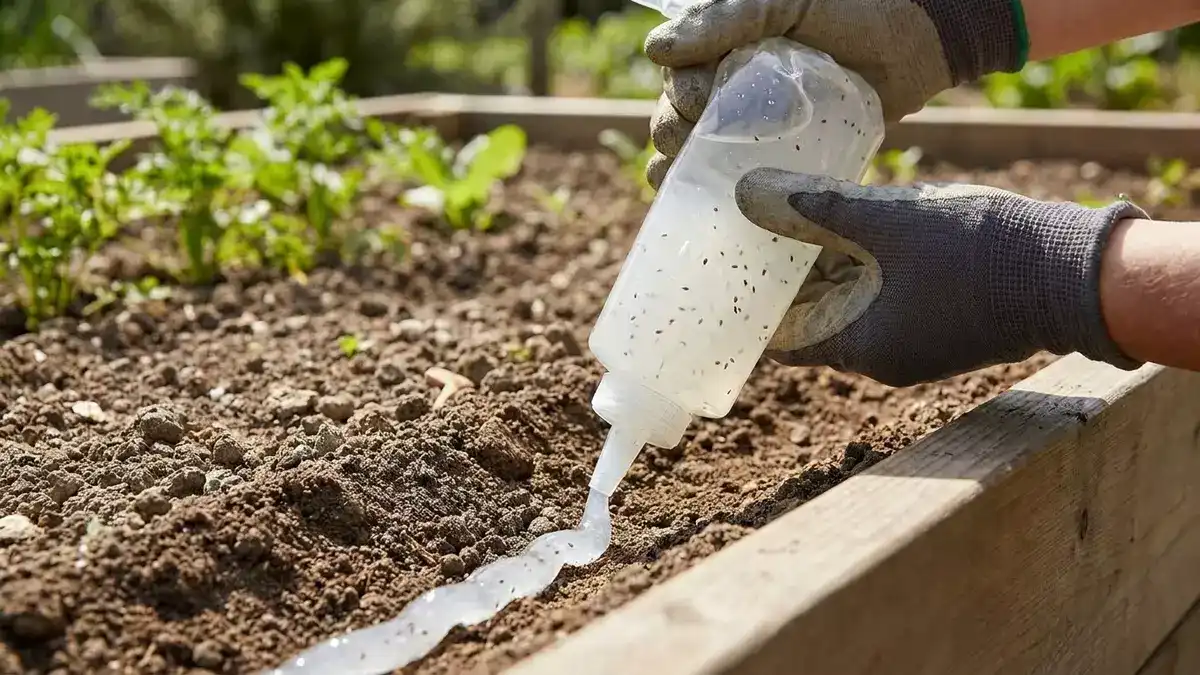
Head out to your prepared garden bed and create shallow furrows about one-quarter of an inch deep. Hold your piping bag or squeeze bottle directly over the trench and apply gentle, steady pressure. Guide the bag smoothly along the row as a neat line of seed-bearing gel glides out into the dirt.
[ Garden Row ] =======( Gel Ribbon With Even Seeds )=======
Once your lines are piped, lightly crumble a very thin layer of fine compost or loose soil over the top of the gel ribbon. Because carrot seeds require a bit of light penetration to spark growth, they should never be buried deeply. Give the rows a gentle misting of water to settle the soil.
Key Benefits of Using the Cornstarch Method
Eliminates the Need for Thinning: By spreading the seeds out evenly inside the gel, you avoid overcrowding. This saves you hours of back-breaking thinning labor later in the season.
High Seed Efficiency: Instead of oversowing an entire packet out of frustration and discarding half the seedlings later, this method ensures that almost every seed you plant has the space it needs to mature into a full-sized carrot.
Enhanced Early Moisture Retention: The starchy gel acts as a damp barrier right against the seed coat. This helps bridge the gap during dry, sunny afternoons when the very top millimeter of garden soil tends to dehydrate rapidly.
Perfect Visual Alignment: Piping a clear gel ribbon makes it incredibly easy to see exactly where your rows are situated, ensuring your garden beds stay organized and perfectly straight.
Troubleshooting Common Fluid Sowing Mistakes
The Gel is Too Thick or Too Runny
If your slurry turned out like heavy rubber, it will be impossible to squeeze out smoothly, causing large blobs to drop onto the soil. Conversely, if it is watery, the seeds will instantly sink to the bottom. If it is too thick, whisk in a tablespoon of cold water at a time to thin it out. If it is too runny, return it to the stove with a tiny pinch of extra cornstarch and simmer it for another minute.
Seeds are Settling to the Bottom
If you notice your seeds starting to congregate at the bottom of your plastic bag or squeeze bottle while you are working in the garden, simply give the container a quick shake or massage the plastic bag to redistribute the seeds evenly throughout the starch matrix.
The Flow is Blocked
If the gel stops flowing, a clump of seeds or a piece of unblended starch is likely blocking the exit hole. If using a plastic bag, widen the corner cut by a tiny fraction of a millimeter. Be careful not to cut too much at once, or the gel will pour out too quickly, defeating the purpose of the controlled layout.
Conclusion
The cornstarch fluid sowing trick turns one of the most tedious tasks in the spring garden into a clean, precise, and satisfying project. By utilizing basic kitchen science, you give your carrot crop a structured, moisture-locked head start while saving yourself from the annoying chore of thinning crowded seedlings down the road. Prep a batch of slurry for your next planting weekend, and enjoy perfectly spaced, straight rows of sweet homegrown carrots.
Frequently Asked Questions
Will the cornstarch attract ants, pests, or fungal diseases to my garden?
No. The small amount of organic cornstarch used in this method breaks down very rapidly in outdoor soil environments. Soil microbes and beneficial bacteria consume the starches within a matter of days, long before pests or mold can cause issues for your emerging seedlings.
Can I use this fluid sowing method for other types of garden seeds?
Absolutely. This technique works beautifully for any variety of small, difficult-to-handle seeds. Gardeners frequently use the cornstarch slurry method to sow parsnips, radishes, lettuce, spinach, and tiny flower seeds like poppies.
How long will a batch of seed-infused cornstarch gel last if I get rained out?
If your gardening plans get interrupted by bad weather, you can store the seedless gel in a sealed container in the refrigerator for 2 to 3 days. However, do not mix the seeds into the gel until right before you head out to plant, as leaving seeds submerged in moisture for multiple days will trigger the germination process prematurely.
Can I use arrowroot powder or flour instead of cornstarch?
Arrowroot powder works as an excellent substitute because it creates a similar translucent, smooth gel when heated. Avoid using standard grain flour, as it turns into a sticky, gummy paste that does not pipe smoothly and can easily rot or harden around the seeds.
Does the cornstarch gel change how often I need to water the garden?
While the starch matrix provides an excellent moisture buffer for the seeds, it does not completely replace regular irrigation. You should still gently mist your carrot rows daily to keep the top layer of soil damp until the green tops successfully break through the surface.