
Table of Contents
- 1. The Biology of Sempervivum Offsets
- 2. 9 Actionable Secrets to Force More Succulent Pups
- 2.1. 1. Flood the Rosettes with Full, Direct Sunlight
- 2.2. 2. Transition to an Ultra-Gritty Alpine Soil Mix
- 2.3. 3. Keep Potting Enclosures Intentionally Snug
- 2.4. 4. Provide a Diluted, Low-Nitrogen Spring Feeding
- 2.5. 5. Master the “Soak and Dry” Drought Cycle
- 2.6. 6. Remove Emerging Flower Stalks Promptly
- 2.7. 7. Utilize the Power of Winter Cold Dormancy
- 2.8. 8. Induce Reproductive Shock Through Division
- 2.9. 9. Simulate Alpine Crevices Using Stone Troughs
- 3. Summary Table: Balancing Environmental Triggers
- 4. Final Thoughts
- 5. Frequently Asked Questions
- 5.1. When is the best time of year to separate pups from the mother hen?
- 5.2. How big should a succulent chick be before I cut it off?
- 5.3. Can I grow Hens and Chicks successfully in a pot without drainage holes?
- 5.4. Do coffee grounds help Sempervivum multiply faster?
- 5.5. Why did my succulent hen die after turning completely green?
9 Secrets to Maximize Succulent Pups This Season
If you have ever cultivated Sempervivum—affectionately known as “Hens and Chicks”—you know how deeply satisfying these hardy succulents can be. A healthy parent rosette (the hen) naturally sends out small offset runners (the chicks) that nestle tightly around her base. Over time, these dynamic little families spread outward to create dense, jewel-toned carpets of geometric foliage.
For avid collectors and backyard gardeners alike, multiplying these offsets is the ultimate goal. A higher volume of succulent pups translates to richer textures, vibrant seasonal color shifts, and an abundance of free material for propagation projects
However, it is not uncommon for a mature hen to stall out, sitting in a pot for months on end without producing a single offset. If your succulents seem stubbornly unmotivated to multiply, you do not have to wait around for nature to take its sweet time. By understanding their unique evolutionary survival triggers, you can intentionally gently nudge your plants into high-production mode.
9 Secrets to Maximize Succulent Pups This Season
The Biology of Sempervivum Offsets
To successfully induce reproduction, it helps to understand how Sempervivum functions. These are alpine plants native to mountainous, rocky regions across Europe and North Africa. Because they have evolved to survive in unforgiving environments with minimal soil and extreme temperature fluctuations, their primary mechanism for survival is rapid clonal multiplication. When conditions are optimal—or when the plant senses a strategic environmental shift—it funnels its stored starches into producing stolons (creeping horizontal stems) that quickly root to form independent clones.
9 Actionable Secrets to Force More Succulent Pups
1. Flood the Rosettes with Full, Direct Sunlight
Sempervivum are absolute sun-worshippers that thrive on exposed, rocky slopes. If your plants are languishing in partial shade or ordinary indoor room light, they will lack the sheer energy required to develop offsets.

To supercharge pup production, ensure your plants receive at least six to eight hours of direct, unfiltered sunlight daily.
Outdoor Cultivation: Position your containers or rock gardens in a hot, south- or west-facing location.
Indoor Cultivation: A standard windowsill rarely suffices long-term. Place your collection beneath a high-intensity LED grow light set on a 12-to-14-hour daily timer to mimic peak summer conditions.
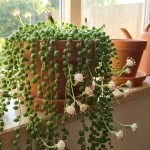
Warning Sign: If your rosette begins to stretch upward abnormally, losing its tight geometric symmetry, it is experiencing “etiolation” (sun starvation) and will not produce offsets.
2. Transition to an Ultra-Gritty Alpine Soil Mix
In nature, Hens and Chicks anchor themselves into gravelly rock crevices where water drains away instantly. If their root systems sit in heavy, damp peat moss, the mother plant becomes perpetually stressed, expending all her physiological resources simply fighting off root rot rather than generating offspring.
Create a dedicated alpine environment by mixing 50% standard organic cactus soil with 50% coarse mineral grit (such as pumice, perlite, poultry grit, or fine lava rock). If you are planting directly in the ground, excavate the native soil and heavily amend the area with coarse gravel to maximize aeration around the root zone.
3. Keep Potting Enclosures Intentionally Snug
While it might seem counterintuitive, moving a single Sempervivum into a massive, spacious planter will actually delay pup production. When given an overabundance of soil volume, the plant prioritizes expanding its underground root network to anchor itself, putting topsoil reproduction on the back burner.
Instead, select a shallow, compact container that leaves only an inch or two of space around the mother rosette. When the root system reaches the physical boundaries of the pot, the plant instinctively registers that space is limited. This root-bound pressure triggers a survival response, prompting the hen to rapidly push out aerial offsets to claim the remaining surface territory.
4. Provide a Diluted, Low-Nitrogen Spring Feeding
Hens and Chicks do not require heavy chemical feeding, but a precise, well-timed dose of nutrients right as they wake up from winter dormancy can trigger an explosion of new growth.
In early spring, apply a highly diluted liquid fertilizer explicitly formulated for cacti and succulents. Look for a ratio high in phosphorus and potassium but remarkably low in nitrogen, such as a 5-10-10 blend. High nitrogen levels can cause the foliage to become bloated, watery, and weak, making the plant highly susceptible to pests. A single light application in spring, followed by a secondary half-strength dose in mid-summer, provides the ideal chemical blueprint for cellular division.
5. Master the “Soak and Dry” Drought Cycle
Because these succulents are exceptionally drought-tolerant, their watering schedule should look like a pendulum. Drench the container thoroughly until water flows freely out of the drainage holes, then completely walk away until the potting medium is entirely bone-dry throughout.
Interestingly, strategic neglect can work to your advantage here. In the wild, extended dry spells signal to the plant that environmental conditions are shifting. To ensure its genetic lineage survives, the hen will often respond to a period of dry stress by generating an emergency flush of offsets. Allow the soil to sit completely dry for a few days longer than usual before your next deep watering to simulate this natural catalyst.
6. Remove Emerging Flower Stalks Promptly
Sempervivum are strictly monocarpic, meaning an individual rosette will grow, bloom beautifully once, and then permanently die. When a mature hen begins to rocket upward into a thick, central flower tower, she is channeling her final, remaining reserves into seed production.
If your primary goal is expanding your collection via vegetative clones, you can attempt to redirect that reproductive energy. Use a sterilized blade to snip off the central bloom stalk as soon as it begins to elongate. While this will not save the mother plant from her eventual life cycle termination, it frequently forces her to send out a final, frantic burst of surrounding pup stolons before she fades away.
[Monocarpic Bloom Stalk Appears] ➔ [Snip Stalk Early] ➔ [Energy Redirects Downward] ➔ [Final Burst of Pups]
7. Utilize the Power of Winter Cold Dormancy
Unlike tropical houseplants, Hens and Chicks require a distinct change of seasons to regulate their internal clocks. They are remarkably cold-hardy, with many varieties surviving down to USDA Hardiness Zone 3 without sustaining damage.
Exposure to freezing winter temperatures gives the succulent a necessary winter rest period. This cold stratification phase regulates growth hormones inside the plant’s core. When the spring thaw arrives and soil temperatures climb, the sudden transition acts as a powerful alarm clock, resulting in far more vigorous pup generation compared to specimens kept indoors at a constant room temperature year-round.
8. Induce Reproductive Shock Through Division
If a mature rosette has remained completely stagnant for a year or more, it may simply be too comfortable. You can shake up its biology by physically disturbing the plant.
Carefully dig up the stubborn rosette, shake away the old exhausted soil from its roots, and gently trim back any excessively long, dead root fibers. Replant the hen into fresh, mineral-rich gritty soil in a sunny spot. The superficial shock of being uprooted and forced to re-establish its root network mimics environmental disruption, often shocking the plant into a rapid reproductive cycle.
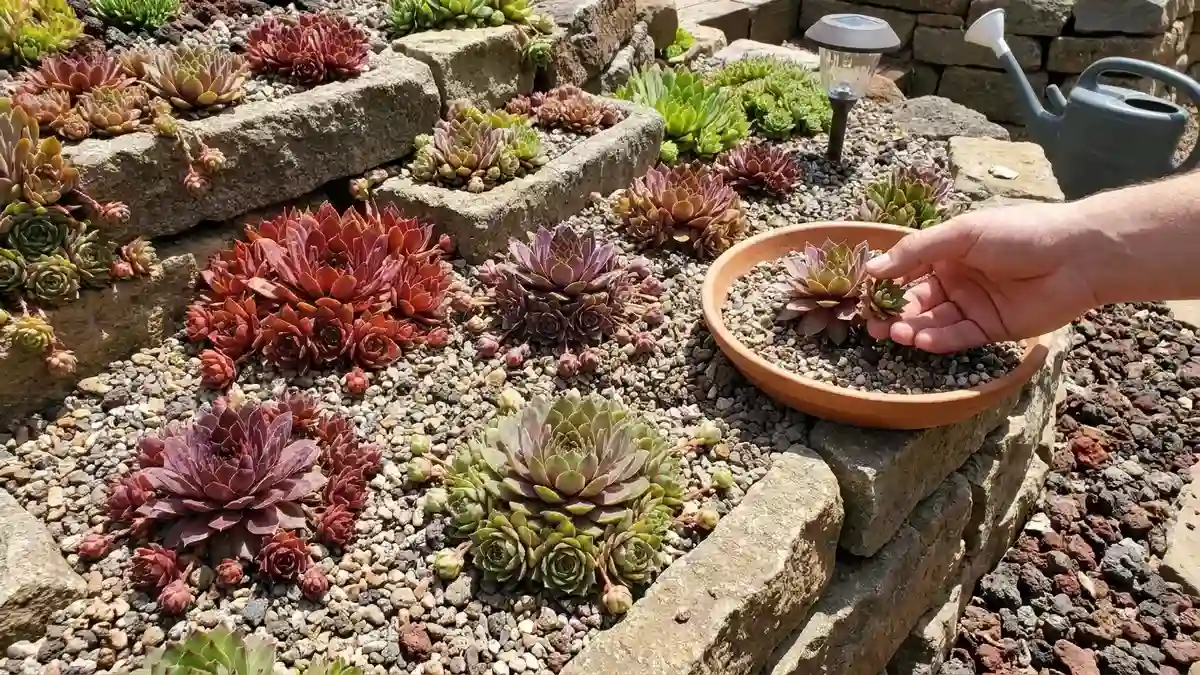
9. Simulate Alpine Crevices Using Stone Troughs
To create a visual masterpiece that naturally yields hundreds of offsets, ditch standard plastic pots entirely. Plant your Sempervivum directly into the vertical cracks of a dry-stacked stone wall, inside stone troughs, or between concrete patio pavers.
These tight, mineral-heavy pockets force the mother plant’s roots against cold stone, which regulates root temperature and ensures flawless drainage. Nestled securely in a rock fissure, the rosettes will rapidly push out stolon wires to drape over the stone faces, creating an interconnected mosaic of colorful clones that fill every available micro-crevice.
Summary Table: Balancing Environmental Triggers
| Factor | Standard Care (Maintenance) | Cultivation Strategy (For Pups) |
| Light Exposure | 4–5 hours of morning sun | 6–8+ hours of direct, south-facing sun |
| Container Size | Large planter with room to grow | Shallow, tightly binding pots |
| Watering Cadence | Water as soon as soil surface dries | Extended dry periods followed by deep soaking |
| Temperature | Stable indoor temperatures | Exposure to freezing winter outdoor dormancy |
Final Thoughts
Patience is a virtue in gardening, but understanding your plants’ evolutionary shortcuts can yield incredible results. By mimicking the rocky, sun-drenched, climate-shifting conditions of an alpine mountainside, you can easily convince a stubborn parent Sempervivum that it is time to expand her family. Implement these subtle environmental stressors, keep the drainage impeccable, and your garden beds will be overflowing with gorgeous succulent chicks in no time.
Frequently Asked Questions
When is the best time of year to separate pups from the mother hen?
The ideal window for separating and propagating Sempervivum pups is during their active growing season in late spring or early summer. This gives the young offsets plenty of warm weather and sunshine to develop their own independent root systems before the cold winter dormancy sets in.
How big should a succulent chick be before I cut it off?
As a general rule of thumb, wait until the individual pup is at least one-third the size of the parent rosette before detaching it. Look closely underneath the pup; if it has started developing small, brown, nub-like roots along its stolon wire, it is fully capable of surviving on its own.
Can I grow Hens and Chicks successfully in a pot without drainage holes?
It is highly discouraged. Sempervivum have zero tolerance for standing water around their root base. Without drainage holes, excess moisture accumulates at the bottom of the vessel, quickly souring the soil and causing fatal root rot. Always utilize clay, terra-cotta, or fabric pots with open drainage channels.
Do coffee grounds help Sempervivum multiply faster?
While a very sparse sprinkling of spent coffee grounds can introduce a mild trace of nitrogen and acidity to the soil, it should be used with extreme caution. Coffee grounds retain a significant amount of moisture, which can ruin the gritty, fast-drying environment your succulents require. A balanced, low-nitrogen liquid commercial fertilizer is much safer and more predictable.
Why did my succulent hen die after turning completely green?
It is completely normal for Sempervivum to lose their rich red, purple, or bronze pigments and fade to a solid green during the low-light winter months. However, if the plant turned green, stretched out, grew soft, and then collapsed, it was likely suffering from a combination of overwatering and insufficient sunlight. Ensure your plants receive bright light and minimal moisture to maintain their vigor.