
Table of Contents
- 1. What Exactly Are Bagworms?
- 2. Why Bagworms Are a Serious Threat to Landscaping
- 2.1. Voracious Defoliation
- 2.2. Evergreens Face the Highest Risk
- 2.3. Exponential Reproduction Rates
- 3. Clear Warning Signs to Look For
- 4. 5 Natural and Effective Ways to Eliminate Bagworms
- 4.1. 1. Manual Handpicking (Best for Fall, Winter, and Early Spring)
- 4.2. 2. Apply Targeted Bacillus thuringiensis (BT) Sprays
- 4.3. 3. Suffocate Larvae With Neem Oil or Insecticidal Soap
- 4.4. 4. Invite Natural Avian Predators
- 4.5. 5. Strategic Pruning
- 5. Long-Term Prevention Strategies
- 6. Frequently Asked Questions
- 6.1. Can a tree completely recover from a bagworm attack?
- 6.2. When exactly do bagworm eggs hatch?
- 6.3. Is the adult bagworm moth dangerous to my garden?
- 6.4. Why shouldn’t I just use a strong chemical pesticide to kill them instantly?
- 6.5. Will cold winter weather freeze and kill bagworm eggs?
Spotting This Hanging Case on Your Tree? It’s a Bagworm and Here’s What to Do
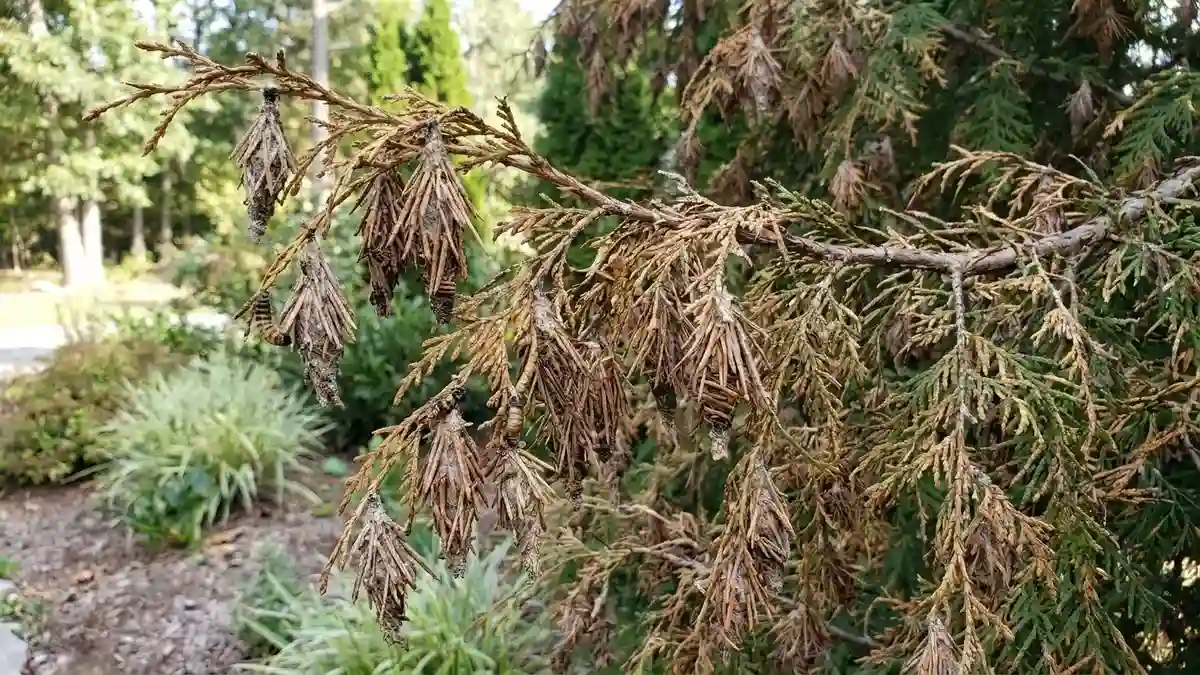
If you’ve ever noticed a strange, pinecone-like bundle hanging from your tree branches, don’t ignore it. That little decoration isn’t a natural seed pod, a dried flower, or leftover autumn leaf debris—it’s the cleverly disguised fortress of a bagworm moth larva (Oiketicus abbotii or Thyridopteryx ephemeraeformis).
At first glance, these tiny hanging structures might seem entirely harmless, but these industrious little architects can spell major trouble for your landscaping if left unchecked. Understanding exactly what you are dealing with is the absolute first step to protecting your yard, keeping your trees healthy, and stopping an urban pest cycle in its tracks.
Spotting This Hanging Case on Your Tree It’s a Bagworm and Here’s What to Do
What Exactly Are Bagworms?
Bagworms are the highly destructive caterpillar stage of the bagworm moth. They are world-class camouflage experts. As soon as a tiny larva hatches from its egg, it immediately begins weaving a silk mobile home around itself, attaching bits of leaves, twigs, bark, and needles from its host plant.
[Hatched Larva] ➔ [Weaves Silk & Twig Case] ➔ [Feeds & Grows (1–2 Inches)] ➔ [Pupates Into Adult]
As the caterpillar grows, so does its case, eventually reaching anywhere from 1 to 2 inches in length. These spindle-shaped bundles dangle vertically from twigs like small, rustic holiday ornaments. Inside this secure, weather-resistant shelter, the caterpillar feeds eagerly, sticks its head out to move along branches, and eventually pupates into an adult moth.
Why Bagworms Are a Serious Threat to Landscaping
A solitary bagworm hanging on a large oak tree isn’t a cause for immediate panic. However, bagworms rarely travel alone, and when their populations surge, the visual and physical damage to your property becomes obvious incredibly fast.
Voracious Defoliation
Bagworms are incredibly hungry pests. They strip away foliage at an alarming rate, leaving bare, skeletonized branches behind. Because they blend in so perfectly with natural tree growth, a heavy infestation is often only discovered after substantial structural damage has already occurred.

Evergreens Face the Highest Risk
While these pests will happily munch on deciduous trees like maples and oaks, they are devastating to evergreens. Varieties such as arborvitae, junipers, spruces, and cedars are exceptionally vulnerable. Unlike deciduous trees, evergreens cannot easily regenerate lost needles. A severe bagworm attack can permanently disfigure or completely kill an evergreen shrub in a single season.
Exponential Reproduction Rates
The reproductive cycle of the bagworm makes future infestations almost guaranteed if you don’t intervene. The adult female moth is wingless and legless; she never actually leaves the silk case she built as a caterpillar. Instead, she releases pheromones to attract a winged male, mates through the bottom of the case, deposits up to 500 to 1,000 eggs inside her old home, and dies.
The Compounding Problem: Leaving just three or four cases on a branch over the winter can result in thousands of hungry young caterpillars crawling all over your prized landscape the following spring.
Clear Warning Signs to Look For
Because bagworms are sneaky, keeping a vigilant eye out for these subtle indicators can save your plants from severe stress:
Pseudos-Pinecones: Scan your shrubs for small, cone-like bundles of dead leaves and silk that appear to be firmly tied to live twigs with thick silk bands.
Top-Down Browning: Keep a close eye out for unexplained patches of brown, dying needles or stripped branches. Infestations typically start at the uppermost canopy of trees—where the sun warms the eggs first—and gradually move downward as food supplies dwindle.
Moving Foliage: On warm summer afternoons, closely observe your branches. If you see what looks like a tiny cluster of dead twigs slowly walking along a stem, you are witnessing an active bagworm larva feeding.
5 Natural and Effective Ways to Eliminate Bagworms
If your trees are currently playing host to these troublesome pests, you don’t need to spray harsh, broad-spectrum chemical insecticides that kill off your yard’s beneficial insects. Try these highly effective, organic control methods instead.
1. Manual Handpicking (Best for Fall, Winter, and Early Spring)
When the weather cools down and deciduous trees drop their leaves, bagworm cases become incredibly easy to spot.
Pluck the cases directly off the branches by hand or use small pruning shears to snip the silk loop securing them to the wood. Be sure to cut the silk band completely; if left wrapped tightly around a twig, that silk line can eventually girdle and kill the branch as it grows.
Proper Disposal: Never just throw the plucked bags onto the grass. The eggs inside are highly resilient and will still hatch on the ground. Instead, submerge the collected cases into a bucket filled with warm water and a generous squirt of liquid dish soap to destroy the larvae and eggs permanently.
2. Apply Targeted Bacillus thuringiensis (BT) Sprays
If you are dealing with a larger infestation on tall trees, manual picking might not be realistic. In late spring to early summer, look for an organic pesticide containing Bacillus thuringiensis (BT).
BT is a naturally occurring soil bacterium that targets leaf-eating caterpillars specifically, paralyzing their digestive tract without harming birds, bees, dogs, or humans.
Important Limitation: BT must be ingested by the insect to work. It is exceptionally effective against tiny, young larvae that are actively feeding on leaves, but it will completely fail against older, mature bagworms that have sealed themselves up inside their tough winter cases. Thoroughly drench the foliage during May or June for maximum impact.
3. Suffocate Larvae With Neem Oil or Insecticidal Soap
For mild, early-season outbreaks, spraying your shrubs with pure neem oil or commercial insecticidal soap can effectively break down the outer cuticle of young larvae and suffocate them.
Because these contact sprays do not leave a long-lasting toxic residue on the leaves, you will need to repeat the application every 7 to 10 days until the active crawling stops. Always apply these oils in the early morning or late evening hours to prevent intense midday sunlight from burning your plant’s leaves.
4. Invite Natural Avian Predators
You can enlist local wildlife to do the heavy lifting for you. Wild birds—particularly chickadees, sparrows, titmice, and woodpeckers—view plump bagworm larvae as an absolute delicacy. They will actively tear open the silk cases to feast on the protein inside.
Encourage these feathered allies to patrol your yard by hanging bird feeders, installing fresh birdbaths, and leaving dead perennial stalks intact to provide natural foraging perches.
5. Strategic Pruning
If a single section or lower branch of an ornamental shrub is absolutely coated in hundreds of tiny bagworm cases, the most practical solution is to prune that specific branch away entirely. Carefully place the infested clippings directly into a heavy-duty trash bag, seal it tightly, and remove it from your property.
Long-Term Prevention Strategies
Preventing a full-blown infestation is infinitely easier than trying to recover a dying evergreen. Cultivate these simple habits to keep your garden safe year after year:
Conduct Bi-Annual Inspections: Make it a routine to check your vulnerable evergreens twice a year—once in late autumn when hiding spots open up, and again in mid-spring right before the new growth begins to sprout.
Prioritize Tree Health: Healthy, vigorous trees can naturally withstand a moderate amount of pest feeding without suffering permanent damage. Ensure your trees are deeply watered during summer dry spells, properly mulched to retain soil moisture, and fertilized correctly according to your soil’s needs.
Frequently Asked Questions
Can a tree completely recover from a bagworm attack?
Whether a tree recovers depends entirely on the variety. Deciduous trees (like oaks, birches, and maples) are highly resilient and will usually sprout a fresh set of leaves the following spring after an attack. However, evergreens (like arborvitae and spruces) cannot easily replace lost needles on bare branches. If a bagworm infestation completely strips an evergreen branch down to the bare wood, that specific branch will likely remain dead permanently.
When exactly do bagworm eggs hatch?
Depending on your local climate zone, bagworm eggs typically hatch in late spring to early summer—usually around late May or early June. The microscopic new larvae crawl out from the bottom of their mother’s old case and often spin a long line of silk to catch the wind, a dispersal method known as “ballooning” that allows them to float onto neighboring trees.
Is the adult bagworm moth dangerous to my garden?
No, the adult moths do not cause any direct physical damage to your plants. The adult male moth is a small, clear-winged insect that looks similar to a bee; his only purpose is to find a female, mate, and die within a few days. The adult female never develops wings, eyes, or functional mouthparts, meaning she cannot eat your plants. The entire threat to your garden rests solely on the caterpillar stage.
Why shouldn’t I just use a strong chemical pesticide to kill them instantly?
While broad-spectrum chemical insecticides will kill bagworms, they also wipe out ladybugs, lacewings, predatory wasps, and honeybees. Eliminating these beneficial insects disrupts your yard’s natural ecosystem, frequently triggering secondary pest outbreaks like spider mites or aphids. Utilizing targeted organic solutions like handpicking and BT sprays keeps your yard balanced and healthy.
Will cold winter weather freeze and kill bagworm eggs?
Unfortunately, bagworm eggs are incredibly cold-hardy. The protective silk case constructed by the mother moth acts as a highly insulated, weatherproof sleeping bag that easily shields the eggs from freezing winter temperatures, snow, and heavy downpours. Manual removal is the only reliable way to ensure those eggs don’t survive to see the spring.