
Table of Contents
- 1. The Enemy Profile: Understanding the Squash Bug Lifecycle
- 2. 6 Proactive Steps for Effective Squash Bug Prevention
- 2.1. 1. Execute Thorough Fall and Spring Garden Cleanups
- 2.2. 2. Deploy Floating Row Covers Early
- 2.3. 3. Implement Strict Crop Rotation
- 2.4. 4. Conduct Weekly Leaf Inspections and Egg Removal
- 2.5. 5. Create Simple Board Traps
- 2.6. 6. Attract Beneficial Insect Allies
- 3. Targeted Treatment: Managing Nymphs with Homemade Organic Spray
- 3.1. Safe Horticultural Neem Spray Recipe
- 3.2. Application Instructions
- 4. Frequently Asked Questions
- 4.1. Can I use neem oil to kill adult squash bugs?
- 4.2. Does diatomaceous earth work against squash bugs?
- 4.3. Are there any squash varieties that are naturally resistant to these bugs?
- 4.4. Why do squash bugs smell so bad when they are crushed?
- 4.5. Can I let my backyard chickens loose to eat squash bugs?
6 Natural Strategies to Shield Your Garden From Destructive Squash Bugs
Few garden pests are as relentlessly destructive as the squash bug (Anasa tristis). You might only spot one or two crawling across your vines in late spring, but if left unchecked, their population can explode with alarming speed.
These resilient insects feed by piercing plant tissue and injecting a toxic saliva that causes leaves to wilt, blacken, and die—a condition often mistaken for bacterial wilt. Worse still, they are masters of survival, overwintering in your garden debris only to emerge stronger and hungrier the following spring.
The good news? Defending your backyard bounty doesn’t require harsh chemical pesticides. By understanding their lifecycle and executing a few consistent, natural preventative measures, you can safeguard your summer and autumn harvests of pumpkins, zucchini, and winter squash.
6 Natural Strategies to Shield Your Garden From Destructive Squash Bugs
The Enemy Profile: Understanding the Squash Bug Lifecycle
Native to North America, squash bugs thrive in warm, dry conditions. Adult bugs are characterized by their flat, shield-shaped bodies, measuring about a half-inch to three-quarters of an inch long. They are dark brown to gray, and if you accidentally crush one, they emit a sharp, unpleasant odor.
As your vines begin to sprawl in early summer, females begin laying clusters of neat, metallic copper-colored eggs, most frequently nestled into the V-shaped intersections of veins on the undersides of leaves.
[Adult Emerges in Spring] ➔ [Lays 250 Copper Eggs] ➔ [Nymphs Hatch in 7-10 Days] ➔ [Rapid Vine Destruction]
Within a week to ten days, these eggs hatch into green-bodied, black-legged nymphs. Nymphs congregate in large groups, draining the life from your plants before transforming into reproductive adults. Because a single female can deposit up to 250 eggs per season, early intervention is absolutely paramount.

6 Proactive Steps for Effective Squash Bug Prevention
1. Execute Thorough Fall and Spring Garden Cleanups
The absolute best defense against next year’s pest invasion happens at the end of the current growing season. Because adult squash bugs seek shelter from winter frosts beneath organic matter, a pristine garden bed offers them nowhere to hide.
Autumn Protocol: Once your final harvest is complete, pull up all remaining squash vines, leaves, and damaged fruit. Do not toss these into your standard backyard compost pile unless it maintains a consistently high temperature; instead, securely bag and discard them with your yard waste or burn them where permitted.
Spring Protocol: Before planting new seedlings, thoroughly rake your beds, clear out old mulch, and inspect the soil surface. Turning over the top few inches of soil disrupts any dormant adults attempting to emerge.
2. Deploy Floating Row Covers Early
Lightweight, spun-bond polyester row covers act as a physical fortress for your young crops. They allow crucial sunlight, air, and overhead water to reach your seedlings while completely blocking migrating adult insects from landing and depositing eggs.
Crucial Timing Tip: Secure the edges of the fabric tightly against the soil using landscape staples or heavy stones immediately after transplanting your seedlings. Leave the covers on until the first female blossoms appear. At that point, you must remove the covers to allow bees and other pollinators access to the flowers, or commit to hand-pollinating the blooms yourself.
3. Implement Strict Crop Rotation
Never plant melons, cucumbers, pumpkins, or squash in the exact same soil plot two years in a row. Practicing a three-to-four-year crop rotation schedule forces emerging overwintered bugs to travel across the yard in search of food, exposing them to natural predators and significantly lowering their survival rate.
4. Conduct Weekly Leaf Inspections and Egg Removal
Make it a habit to walk through your garden patch at least once a week to flip over leaves, paying close attention to the foliage closest to the base of the plant where squash bugs love to hide.
If you discover rows of copper eggs, act quickly to neutralize them before they hatch:
The Tape Trick: Wrap a piece of duct tape around your fingers with the sticky side facing out, and firmly press it against the egg clusters to lift them cleanly off the leaf.
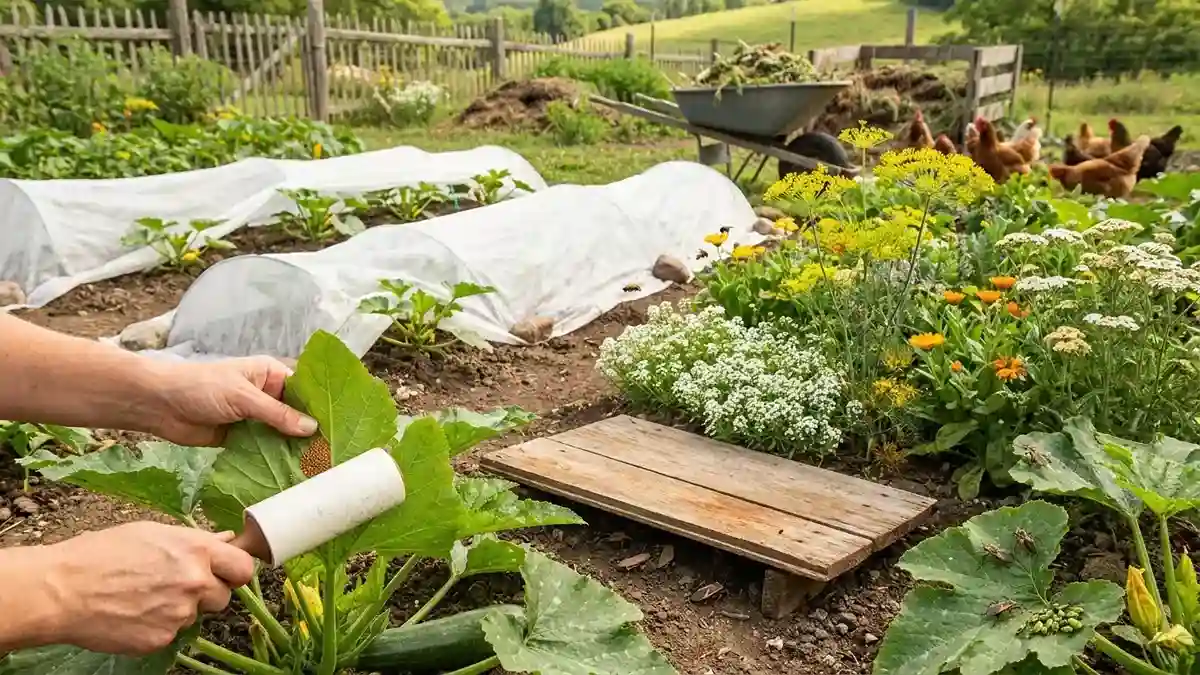
The Lint Roller Method: Gently roll a sticky lint roller across the undersides of wide leaves to harvest the eggs effortlessly.
Disposal: Drop the collected eggs into a small jar filled with water and a few drops of liquid dish soap to ensure they are destroyed.
5. Create Simple Board Traps
Squash bugs are highly active under the cover of night and during the cool hours of early dawn. When the midday sun heats up, they instinctively seek dark, damp shelter. You can easily exploit this behavior to catch them.
Place flat pieces of cardboard, old wooden boards, or asphalt shingles directly on the ground between your squash rows in the evening. First thing the next morning, walk out to the garden and flip the boards over. You will frequently find dozens of adults and nymphs seeking refuge underneath. Scrape them directly into a bucket of soapy water to quickly trim down their numbers.
6. Attract Beneficial Insect Allies
Mother Nature provides excellent pest control if you cultivate the right environment. Parasitic tachinid flies (Trichopoda pennipes) and various ground beetles are natural enemies of the squash bug, frequently laying their own eggs directly onto adult squash bugs or consuming the young nymphs.
To welcome these helpful predators into your garden space, plant a diverse border of nectar-rich companion flowers and herbs nearby, including:
Sweet Alyssum
Yarrow
Dill
Fennel
Calendula
Targeted Treatment: Managing Nymphs with Homemade Organic Spray
If your preventative measures missed a few egg clusters and you suddenly find yourself facing an army of young nymphs, your window for direct treatment narrows. Hard-shelled adult squash bugs are highly resilient against organic treatments, but their soft-bodied nymphs are incredibly vulnerable.
You can whip up a highly effective, non-toxic suffocation spray using standard household ingredients.
Safe Horticultural Neem Spray Recipe
1 quart of warm water
1 teaspoon of pure, cold-pressed neem oil
½ teaspoon of mild, plant-based liquid dish soap (acts as an emulsifier)
Application Instructions
Pour the ingredients into a clean spray bottle and shake vigorously before each use. Generously coat the plant, focusing heavily on the undersides of the leaves and the base of the main vine where nymphs cluster.
Apply this treatment strictly during the early morning or late evening hours. Spraying neem oil during the peak heat of the day can magnify sunlight and cause severe leaf burn on your delicate vines. Repeat the application every five to seven days until the nymph population vanishes.
Frequently Asked Questions
Can I use neem oil to kill adult squash bugs?
Unfortunately, neem oil is largely ineffective against fully mature adult squash bugs. Their hard, shield-like outer shells protect them from the suffocating properties of organic oils and soaps. Neem oil should be reserved specifically for the soft-bodied, younger nymphs and applied directly to them for the best results.
Does diatomaceous earth work against squash bugs?
Yes, food-grade diatomaceous earth (DE) can be dusted around the base of your squash plants to help deter these pests. The microscopic, razor-sharp particles scratch the insects’ waxy outer coating, causing them to dehydrate. However, DE loses all effectiveness when it gets wet from rain or morning dew and must be reapplied frequently. Be careful not to get it on flowers, as it can harm beneficial pollinators like bees.
Are there any squash varieties that are naturally resistant to these bugs?
While no squash plant is completely immune, squash bugs definitely have preferred targets. They absolutely love yellow summer squash, zucchini, and pumpkins. If you experience severe infestations year after year, try planting more resistant varieties like Butternut squash, Royal Acorn, or Sweet Cheese, which the bugs tend to avoid if other options are available.
Why do squash bugs smell so bad when they are crushed?
Squash bugs belong to the order Hemiptera (true bugs) and possess specialized scent glands. When they feel threatened or are crushed, they release a pungent, foul-smelling defensive fluid. This scent serves as a warning signal to alert other nearby squash bugs of danger and deters predators like birds from eating them.
Can I let my backyard chickens loose to eat squash bugs?
Chickens and ducks absolutely love chasing down and eating squash bugs. Letting your flock patrol the garden patch in the late autumn after the harvest, or in early spring before planting, is an excellent way to clean up overwintering pests. However, monitor them closely during the active summer growing season, as eager chickens may accidentally scratch up your plants or peck at your developing squash.