
Table of Contents
- 1. 1. Perfecting the Light Spectrum
- 1.1. Ideal Window Orientations
- 1.2. Avoid the Scorching South and West
- 2. 2. Master Even Moisture Calibration
- 2.1. The Touch Test
- 3. 3. Upgrade to High-Quality Water
- 3.1. The Sensitivity to Municipal Tap
- 4. 4. Elevate Ambient Humidity Levels
- 4.1. Practical Humidity Boosting Strategies
- 5. 5. Engineer a Breathable, Rich Soil Matrix
- 5.1. The Ideal Artisanal Recipe
- 6. 6. Feed Lightly During the Growing Season
- 6.1. The Dilution Protocol
- 7. 7. Maintain Warm, Stable Temperatures
- 7.1. Defend Against Drafts
- 8. 8. Strategic Pruning for Maximum Fullness
- 8.1. Shaping Your Specimen
- 9. 9. Keep Leaves Clean and Dust-Free
- 9.1. Boosting Photosynthetic Efficiency
- 10. 10. Decode the Language of Leaf Movement
- 10.1. Reading the Signs
- 11. Frequently Asked Questions
- 11.1. Why are the leaves on my prayer plant turning yellow?
- 11.2. Can I use regular tap water to water my prayer plant?
- 11.3. How often should I repot my prayer plant?
- 11.4. Why have the edges of my prayer plant’s leaves turned brown and crispy?
- 11.5. Is the prayer plant safe for homes with pets?
10 Pro Tips to Grow a Stunning Prayer Plant This Season
Few houseplants possess the sheer charismatic charm of the prayer plant (Maranta leuconeura). With foliage that looks intricately hand-painted—boasting striking herringbone patterns, deep crimson veins, and velvety emerald surfaces—it easily serves as a living centerpiece in any indoor jungle.
But the real magic of this tropical beauty lies in its daily rhythm, a phenomenon known as nyctinasty. During the day, the leaves extend horizontally to capture ambient light, but as dusk falls, they tilt upward, folding together like hands gathered in silent prayer.
While this mesmerizing daily ritual makes the prayer plant an incredibly rewarding companion, it is a species that demands a specific touch. Hailing from the warm, damp, and shaded floor of the Brazilian rainforest, these plants require an indoor environment that closely mirrors their native habitat. If you have struggled with crispy edges, fading colors, or sluggish growth, this ultimate care guide breaks down ten professional strategies to transform your prayer plant into a lush, vibrant masterpiece.
10 Pro Tips to Grow a Stunning Prayer Plant This Season

1. Perfecting the Light Spectrum
In their native tropical habitats, prayer plants are low-slung residents of the forest floor, entirely shielded from harsh alpine sun by an overarching canopy of ancient trees. To replicate this indoors, you must provide bright, filtered, or indirect illumination.
Ideal Window Orientations
An east-facing window is arguably the most perfect location for your plant, allowing it to soak in the gentle, cool rays of the early morning sun without risk of overheating. Alternatively, a north-facing window offers a highly stable, uniform level of brightness throughout the day.
Avoid the Scorching South and West
You should actively steer clear of placing your plant directly on the sill of an unshaded southern or western window. The intense, magnified afternoon heat will rapidly bleach the vivid pigments out of the leaves, resulting in permanent scorch marks and crisping. If you must use these orientations, always soften the incoming light with a sheer, translucent curtain.

Conversely, keeping the plant in a dark corner will cause its growth to stall, and the iconic patterns on new foliage will emerge dull and faded.
2. Master Even Moisture Calibration
One of the quickest ways to stress a prayer plant is to subject it to wild swings between bone-dry soil and waterlogged mud. These tropical beauties thrive on structural consistency, requiring a growing medium that remains uniformly damp but never soggy.
The Touch Test
Develop the habit of testing the substrate manually. Insert your finger into the soil; when the top inch feels dry to the touch, it is time to water thoroughly. Ensure your cultivation vessel is equipped with functional drainage holes. Allowing a prayer plant to sit in stagnant, pooled water inside a decorative saucer will inevitably suffocate the roots, inducing root rot and sudden plant collapse.

3. Upgrade to High-Quality Water
If you are providing great light and steady moisture but still notice your plant developing unsightly brown, brittle margins along its leaves, the root cause is likely flowing right from your kitchen faucet.
The Sensitivity to Municipal Tap
Prayer plants possess highly sensitive root systems that react poorly to the chemical additives found in standard municipal tap water. Dissolved minerals, chlorine, heavy metals, and fluoride accumulate within the leaf tissues over time, slowly burning the outer edges of the foliage.
To keep your plant’s leaves looking immaculate, switch entirely to one of the following pure water sources:
Rainwater collected naturally
Distilled water
Purified or reverse-osmosis filtered water
4. Elevate Ambient Humidity Levels
True to their rainforest heritage, prayer plants are absolute lovers of high humidity, ideally thriving in environments where the air moisture sits comfortably between 60% and 70%. Because modern, air-conditioned or heated homes frequently maintain humidity levels below 40%, our indoor spaces can feel like harsh deserts to these sensitive specimens.
Practical Humidity Boosting Strategies
When the air grows too dry, a prayer plant will proactively curl its leaves inward or develop brittle brown tips to prevent moisture loss. To combat this, utilize these professional techniques:
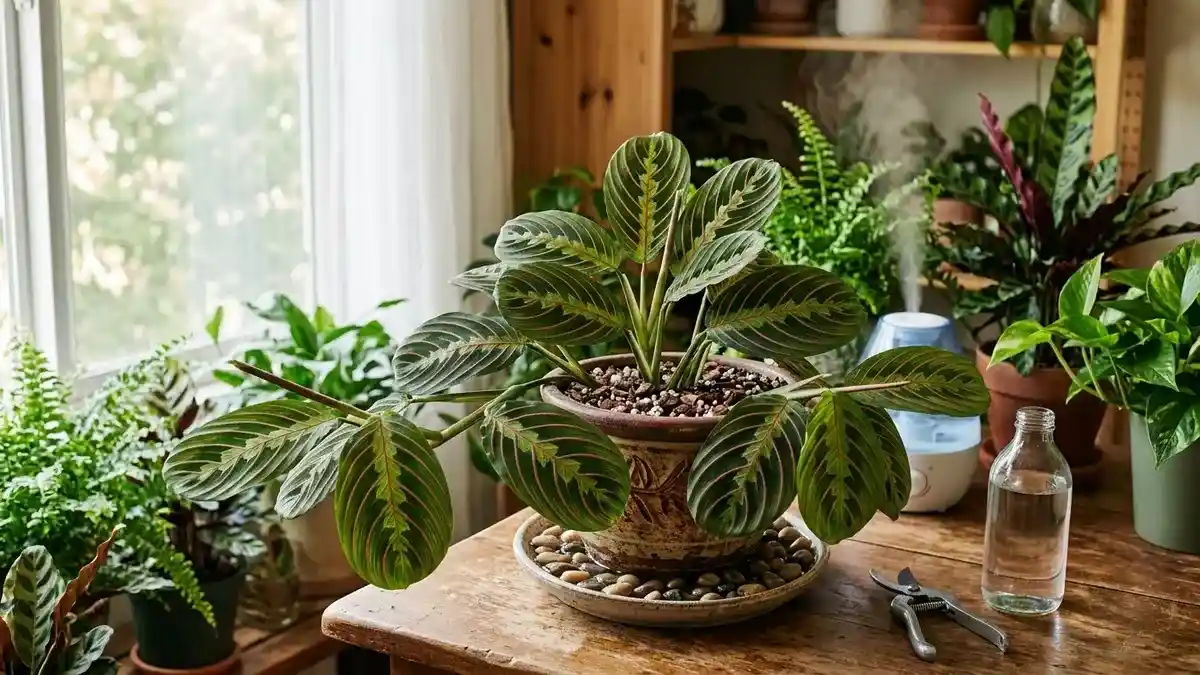
Deploy a Dedicated Humidifier: Placing a small cool-mist humidifier near your plant display is the most effective way to sustain the ideal moisture envelope.
Construct a Pebble Tray: Rest the plant container atop a shallow tray filled with river stones and water. As the water slowly evaporates, it creates a localized microclimate of moist air around the foliage. Just ensure the bottom of the pot never makes direct contact with the liquid.
Create a Plant Community: Grouping several tropical houseplants closely together allows them to share ambient moisture through collective transpiration, naturally raising the humidity of the immediate area.
Sustaining high humidity becomes doubly critical during the winter months, when artificial heating systems aggressively strip moisture from indoor environments.
5. Engineer a Breathable, Rich Soil Matrix
Never settle for standard, dense potting soil straight out of a generic garden bag. Heavy mixtures hold onto excess water for far too long, effectively cutting off oxygen to the roots, which quickly manifests as yellowing, dropping leaves.
The Ideal Artisanal Recipe
Your prayer plant requires a loose, fluffy, organic-rich medium that holds moisture without packing tightly down around the roots. Aim for a custom substrate blend structured around these ratios:
40% Peat Moss or Premium Coco Coir: This component acts as the moisture sponge, ensuring the root zone stays hydrated without drowning.
30% Coarse Perlite or Pumice: These volcanic elements introduce vital air pockets into the soil, maximizing oxygen delivery and allowing excess water to drain away instantly.
30% Orchid Bark or Rich Leaf Mold: This chunkier addition keeps the texture light, mimics the organic debris of the forest floor, and resists natural compaction over time.
To give your soil a nutrient-rich boost, incorporate a generous handful of pure worm castings or organic compost into the final mix for gentle, slow-release nourishment.
6. Feed Lightly During the Growing Season
Because prayer plants are not naturally aggressive feeders, heavy applications of synthetic fertilizer will quickly overload their delicate roots and cause chemical leaf burn. However, providing a controlled, gentle stream of nutrients will reward you with explosive growth and incredibly vivid leaf color.
The Dilution Protocol
During the active spring and summer months, feed your plant every two weeks using a standard, balanced liquid houseplant fertilizer (such as an NPK ratio of 10-10-10 or 20-20-20). The secret lies in the dilution: always mix the solution to one-quarter or one-half of the manufacturer’s recommended strength. This delivers just enough fuel to power new leaf production without accumulating harmful salt residues in the soil matrix.
As daylight shortens in the autumn and winter, the plant naturally enters a period of rest. During this time, halt fertilization completely, or limit it to a single mild feeding every six to eight weeks. If you prefer a purely organic approach, flush the soil with a diluted worm casting tea once a month for a gentle, completely safe nutrient boost.
7. Maintain Warm, Stable Temperatures
Unsurprisingly, these Brazilian natives have zero tolerance for cold conditions or sudden environmental fluctuations. To keep your prayer plant happy and thriving, sustain a reliable temperature range between 65°F and 80°F (18°C to 27°C).
Defend Against Drafts
Sudden exposure to cold air currents will shock the plant, causing the leaves to droop or drop unexpectedly. Keep your specimen well away from:
Exterior doorways that open frequently during winter
Drafty window panes
Central heating vents or radiators
Blasting air conditioning units
Sustaining a warm, uniform ambient temperature encourages steady root metabolic activity, which directly translates to robust, unblemished top growth.
8. Strategic Pruning for Maximum Fullness
Left completely to their own devices, older prayer plant stems can eventually grow elongated, leggy, and sparse, focusing energy on trailing vines rather than dense center growth. Do not be afraid to step in with a clean pair of shears.
Shaping Your Specimen
Every few months, perform a selective trim to maintain a compact, bushy, and visually striking profile. Always make your cuts cleanly right below a leaf node (the small swelling where a leaf branch meets the main stem).
This targeted pruning acts as a hormonal trigger, forcing the plant to activate dormant side buds and push out fresh, dense foliage from the center. Even better, you can take those healthy pruned stem cuttings, pop them into a clean jar of water, and watch them sprout roots within weeks to create entirely new plants for free.
9. Keep Leaves Clean and Dust-Free
The ultimate appeal of a prayer plant lies in the visual display of its patterns. However, because these leaves sit horizontally during the day, they act as natural dust magnets in the home environment.
Boosting Photosynthetic Efficiency
A thick layer of household dust does more than just dull the beautiful colors of your plant; it physically blocks light from reaching the chloroplasts and clogs the tiny pores (stomata) through which the plant breathes.
Every two weeks, take a soft, damp cloth and gently wipe down the upper and lower surfaces of each leaf. This simple maintenance step instantly restores the plant’s natural brilliance and allows it to process light and nutrients with maximum efficiency. While giving them a light misting during this process can help dislodge dust, remember that occasional misting cannot replace the sustained benefits of a true humidifier.
10. Decode the Language of Leaf Movement
The daily dance of your prayer plant is your absolute best diagnostic tool for monitoring its overall health. Paying close attention to the expressiveness of its movements allows you to spot potential issues long before visible damage occurs.
Reading the Signs
If your plant is thriving, you will witness a dramatic transformation between morning openness and evening closure every single day. However, if your prayer plant suddenly stops moving and its leaves remain rigidly locked in place or droop listlessly through the night, it is a clear cry for help.
This lack of movement is often the earliest indicator that the plant is undergoing environmental stress—usually pointing to a lack of ambient humidity, insufficient light exposure, or underwatered, dehydrated soil. Treat these structural cues as an early warning system, and adjust your care routine accordingly to prevent long-term decline.
Frequently Asked Questions
Why are the leaves on my prayer plant turning yellow?
Yellowing leaves are most frequently a symptom of overwatering or a dense, poorly draining soil mix that is suffocating the root system. Ensure you are allowing the top inch of soil to dry out before watering again, and verify that your pot drains freely. Less commonly, yellowing can be caused by exposure to sudden cold drafts.
Can I use regular tap water to water my prayer plant?
While tap water will not instantly kill the plant, using it consistently often leads to crispy, brown leaf tips and margins. This damage is caused by the accumulation of fluoride, chlorine, and hard minerals standard in municipal tap water. Switching to distilled water, rainwater, or filtered water will prevent this cosmetic issue.
How often should I repot my prayer plant?
Prayer plants generally enjoy being slightly snug in their containers, but they benefit greatly from fresh soil and expanded root space every 1 to 2 years. The best time to repot is during the active spring season. Always select a new pot that is only one size larger than the current one to prevent excess soil from holding too much water.
Why have the edges of my prayer plant’s leaves turned brown and crispy?
Brittle, brown edges are almost always caused by a lack of ambient humidity or the use of hard tap water. To fix this issue, move your plant away from heating vents, group it with other plants, run a cool-mist humidifier to raise the air moisture to 60-70%, and switch to distilled water or rainwater.
Is the prayer plant safe for homes with pets?
Yes! Unlike many other popular tropical houseplants (such as pothos or philodendrons), the prayer plant (Maranta leuconeura) is completely non-toxic to both dogs and cats. This makes it an ideal, worry-free choice for pet-friendly households.