
Table of Contents
**Scorpion Venom and Habanero Peppers Fight Superbugs**
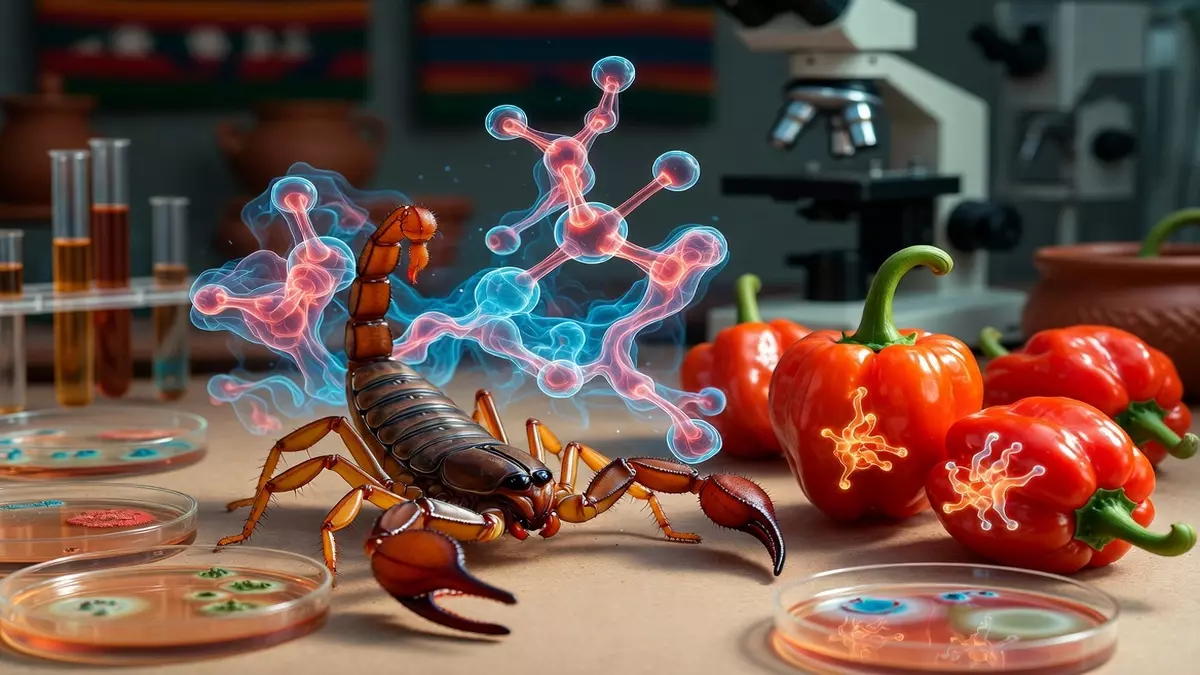
Mexican scientists are harnessing the power of scorpion venom and habanero pepper compounds to develop promising new antibiotics. These natural sources target some of the world’s most dangerous, drug-resistant bacteria — offering fresh hope against a growing global health crisis.
Antimicrobial resistance (AMR) already claims over a million lives each year, complicating treatments for common infections and turning routine surgeries or illnesses into high-stakes battles. In this challenging landscape, researchers at Mexico’s National Autonomous University of Mexico (UNAM) and collaborating institutions are exploring unconventional solutions from nature. While still in early stages, these experimental candidates demonstrate how biodiversity can inspire next-generation medicines.
Scorpion Venom and Habanero Peppers Fight Superbugs

### The Growing Crisis of Antibiotic-Resistant Bacteria
Modern medicine faces a silent threat: bacteria that have evolved to survive standard antibiotics. Tuberculosis, methicillin-resistant *Staphylococcus aureus* (MRSA), *Pseudomonas aeruginosa*, and *Acinetobacter baumannii* top the WHO’s list of priority pathogens. These “superbugs” lead to longer hospital stays, higher medical costs, and increased mortality.
In 2024, the World Health Organization reported 10.7 million new tuberculosis cases and 1.23 million deaths globally. Drug-resistant strains make TB particularly difficult to treat. Hospital-acquired infections from resistant *Staph* and *Pseudomonas* further strain healthcare systems. The need for novel antibiotics has never been more urgent, yet traditional drug development pipelines have slowed. This is where nature-derived compounds from scorpion venom and peppers enter the picture.

### Scorpion Venom Yields Powerful Benzoquinones
Researchers focused on *Diplocentrus melici*, a scorpion species native to Veracruz, Mexico. Led by experts including Lourival Domingos Possani Postay at UNAM’s Institute of Biotechnology, the team isolated two unique benzoquinone molecules from its venom.
Unlike typical protein-based venom toxins, these small molecules change color when exposed to air — one turning blue and the other red. This distinctive property helped scientists determine their chemical structures and successfully synthesize them in the lab, with assistance from Stanford University’s Richard Zare.

**The blue benzoquinone** shows strong activity against *Mycobacterium tuberculosis*, the bacterium responsible for TB. In animal studies conducted by Rogelio Hernández Pando at the Salvador Zubirán National Institute of Medical Sciences and Nutrition, the compound demonstrated significant antibacterial effects in mice with induced tuberculosis.
**The red benzoquinone** targets *Staphylococcus aureus*, a major cause of skin infections, pneumonia, bloodstream infections, and endocarditis. Both molecules represent exciting new chemical scaffolds that could bypass existing resistance mechanisms.
Further testing revealed the blue compound’s effectiveness against drug-resistant *Acinetobacter baumannii*, a notorious hospital pathogen. A 2025 study published in *The Journal of Antibiotics* noted that repeated exposure did not quickly trigger new resistance in lab conditions — an encouraging early sign for long-term usefulness.
### Habanero Pepper Defensins Target Pseudomonas
The second approach draws from the fiery habanero pepper. A team led by Gerardo Corzo Burguete, in partnership with Georgina Estrada Tapia at the Yucatán Scientific Research Center, identified a plant defensin peptide called J1-1.
These peptides naturally help plants defend against microbial invaders. Using biotechnology, researchers engineered a bacterium to produce the modified peptide XisHar J1-1 through submerged fermentation — a scalable industrial process.
This candidate shows activity against *Pseudomonas aeruginosa*, another high-priority resistant pathogen responsible for severe lung, wound, and urinary tract infections, especially in vulnerable patients. While initial tests used laboratory strains rather than fresh clinical isolates, the results highlight the potential of plant-derived antimicrobials.
### Why Natural Compounds Offer New Hope
Bacteria develop resistance through genetic mutations, efflux pumps, and enzyme production that neutralize drugs. Many synthetic antibiotics follow familiar chemical pathways that resistant strains already evade. Scorpion benzoquinones and habanero defensins operate differently, potentially attacking bacterial cells in novel ways that reduce the likelihood of rapid resistance.
These molecules combine multiple benefits:
– **Targeted action**: Effective against priority pathogens while laboratory data suggests lower immediate resistance development.
– **Natural origins**: Evolutionary refinement over millions of years gives them sophisticated mechanisms.
– **Synthetic scalability**: Scientists can now produce the compounds in the lab, moving beyond limited natural extraction.
UNAM teams are also investigating nanoparticle delivery systems to improve stability, bioavailability, and targeted delivery while minimizing potential effects on healthy human cells.
### The Challenges on the Path to Clinical Use
Promising lab and animal results are exciting, but significant hurdles remain. Clinical trials in humans represent the critical next phase, requiring substantial funding and collaboration. Possani Postay has emphasized the need for support from Mexican pharmaceutical partners to advance production and testing.
Key development challenges include:
– Ensuring safety and efficacy in diverse patient populations.
– Optimizing formulations for oral, intravenous, or inhaled delivery.
– Navigating regulatory approval processes across countries.
– Addressing potential toxicity or degradation inside the body.
Patents filed in Mexico and South Africa provide intellectual property protection, but they do not replace the lengthy, expensive journey to approved medicines.
### Broader Implications for Global Health
This research arrives at a pivotal time. Iván Arenas Sosa and colleagues have highlighted the rising tide of resistant infections and the urgent need for innovation. Success with these candidates could inspire similar bioprospecting efforts worldwide, particularly in biodiverse regions like Mexico.
For everyday people, new antibiotics mean better outcomes for common infections, safer surgeries, and reduced pressure on healthcare systems. Families dealing with resistant infections in loved ones understand how devastating treatment failures can be. Advances like these offer tangible hope.
### Practical Context and Future Outlook
While you won’t find scorpion venom antibiotics at your local pharmacy yet, this work underscores the value of protecting natural ecosystems. Many future medicines may come from seemingly unlikely sources — venoms, plants, marine life, and soil microbes.
Researchers continue refining these compounds. Combination therapies, improved delivery methods, and expanded testing against clinical isolates will shape the next phase. International collaboration and sustained funding will determine how quickly these candidates reach patients.
### Expanding the Arsenal Against Resistance
Beyond these specific molecules, the Mexican research contributes to a larger movement exploring natural products for antibiotics. Traditional knowledge combined with modern biotechnology accelerates discovery. Similar efforts worldwide examine frog skin, bee venom, and other biological treasures.
Public health strategies must pair new drugs with stewardship — using antibiotics responsibly to slow resistance development. Vaccination, infection prevention, and rapid diagnostics also play essential roles in a comprehensive response.
### Conclusion: Nature’s Chemistry Meets Modern Science
Mexican scientists are transforming scorpion venom and habanero pepper compounds into innovative tools against antibiotic-resistant bacteria. From TB and *Staph* to *Pseudomonas* and *Acinetobacter*, these experimental candidates demonstrate the power of looking to nature for solutions.
While clinical availability lies ahead, the progress signals renewed momentum in the fight against superbugs. By supporting research, protecting biodiversity, and promoting responsible antibiotic use, we can help ensure effective treatments remain available for future generations.
This story reminds us that solutions to complex problems often hide in plain sight — or in this case, in the sting of a scorpion and the heat of a pepper. Continued investment in such innovative science offers genuine hope against one of medicine’s greatest challenges.
### FAQ: Scorpion Venom, Habanero Antibiotics, and Superbugs
**1. How close are these new antibiotics to being available?**
They are still in preclinical stages with animal testing completed for some. Human clinical trials are the important next step and will take several years.
**2. Why use scorpion venom for medicine?**
Venoms contain highly specialized compounds refined by evolution. Many have unique ways of targeting bacteria that standard drugs miss.
**3. Can eating habanero peppers help fight infections?**
No. The research uses a specific purified peptide produced through biotechnology, not the whole pepper or spicy food.
**4. What makes these compounds different from existing antibiotics?**
They represent new chemical classes with novel mechanisms, which may help overcome existing resistance pathways.
**5. Are these treatments safe for humans?**
Early lab and animal data are promising, but full safety profiles will come from clinical trials. Researchers are addressing stability and delivery challenges.
**6. How big is the antibiotic resistance problem?**
It causes over a million deaths annually and complicates many medical procedures. The WHO lists several critical priority pathogens.
**7. What can individuals do to help fight resistance?**
Use antibiotics only when prescribed, complete full courses, practice good hygiene, and support research and public health initiatives.
This groundbreaking Mexican research highlights how creativity and science can tackle urgent health threats. Staying informed about these developments helps us appreciate the ongoing battle against superbugs.