
Table of Contents
- 1. The Legal Foundation: The USDA “Equal Treatment” Requirement
- 2. Tensions Build Over Shifting November Food Aid Disbursements
- 2.1. The Emergency Contingency Fund Squeeze
- 2.2. The Partial Benefit Recalculation
- 2.3. Safeguarding the Child Nutrition Safety Net
- 3. Operational Reality for Shoppers and Retailers
- 4. Frequently Asked Questions
- 4.1. Why is it illegal for a grocery store to offer discounts to SNAP shoppers?
- 4.2. Can grocery stores still participate in the “Double Up Food Bucks” program?
- 4.3. How are grocery stores supposed to help low-income communities during the shutdown?
- 4.4. What are the penalties for a store that breaks the equal treatment rule?
- 4.5. Does this rule apply to farmers’ markets or local food co-ops?
Federal Equal Treatment Rule Upheld: Grocery Stores Barred From Offering SNAP-Only Discounts
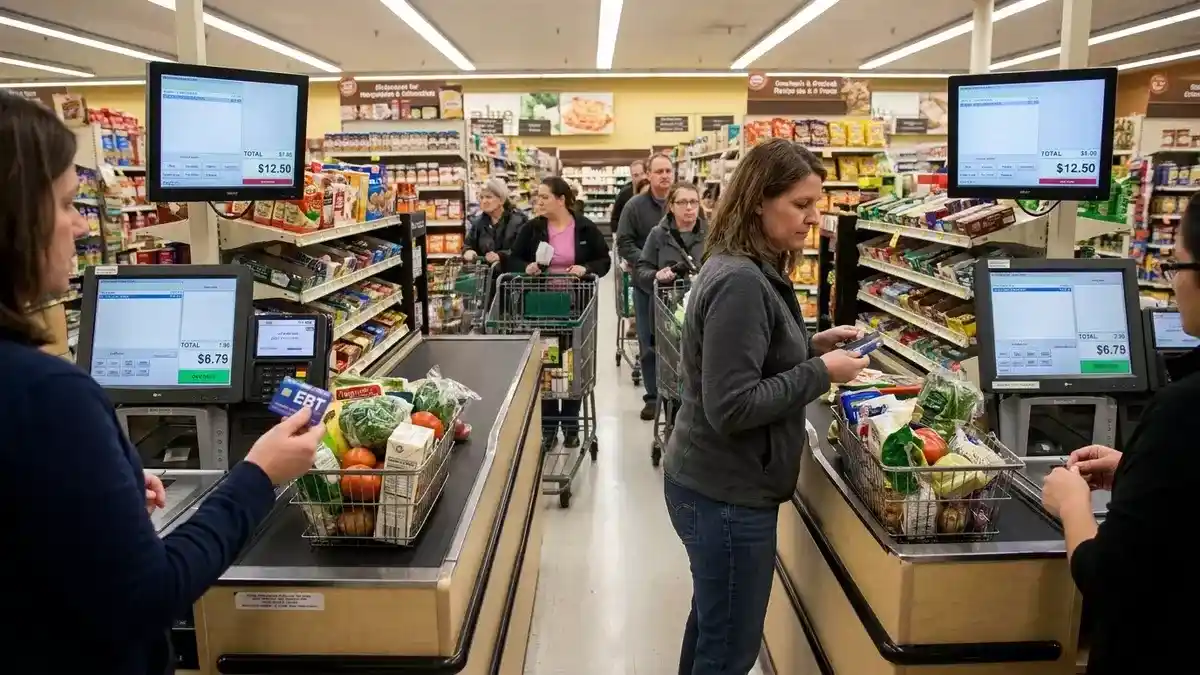
Amid the financial strain of the ongoing federal government shutdown, the U.S. Department of Agriculture (USDA) has issued a firm reminder to grocery retailers nationwide: stores are legally prohibited from offering specialized discounts, promotions, or financial incentives exclusively to Supplemental Nutrition Assistance Program (SNAP) recipients.
The federal directive, published directly on the USDA’s official portal, clarifies that all SNAP-authorized retailers must maintain strict pricing consistency. Supermarkets and independent grocers are legally required to sell eligible food items to SNAP beneficiaries under the exact same prices, terms, and conditions offered to cash-paying or credit-paying customers. Offering targeted financial relief solely to food assistance users—even as an act of community goodwill during a federal crisis—constitutes a direct violation of long-standing program guidelines.
Federal Equal Treatment Rule Upheld Grocery Stores Barred From Offering SNAP-Only Discounts
The Legal Foundation: The USDA “Equal Treatment” Requirement
The USDA’s enforcement notice is rooted in the foundational regulatory architecture of the Food and Nutrition Act. The “equal treatment” clause is designed to prevent discrimination, ensuring that low-income shoppers are never stigmatized, upcharged, or treated differently at the point of sale. However, the law cuts both ways: just as a store cannot penalize a SNAP shopper, it cannot offer them exclusive, localized price cuts that are unavailable to the general public.

[Retail Store Point of Sale] ➔ Must Maintain Identical Pricing Structures ➔ Regardless of Tender Type (Cash, Credit, or EBT)
The National Grocers Association (NGA), which represents more than 21,000 independent grocery stores across the United States, confirmed receipt of the federal warning. David Cutler, vice president of the NGA, noted that the association’s member stores have been instructed to strictly align their checkout systems with the federal rule to protect their operational licenses. While many independent grocers have expressed a desire to assist struggling families during the benefits squeeze, the NGA emphasized that stores must operate within the strict boundaries of the law to avoid severe federal penalties or the revocation of their SNAP authorization.
Tensions Build Over Shifting November Food Aid Disbursements
The timing of the USDA’s strict pricing reminder coincides with immense structural disruptions within the anti-hunger program itself. SNAP, which provides vital nutritional support to more than 40 million Americans, has been operating on emergency lifelines since federal budget appropriations expired on October 1st.
The program’s survival for the month of November has been marked by a complex, multi-sided legal battle between state leaders and the executive branch.

The Emergency Contingency Fund Squeeze
Following initial federal warnings that food stamp distributions could face a total nationwide freeze due to the legislative stalemate, federal district judges in Rhode Island and Boston intervened. The courts ordered the administration to tap into the agency’s emergency reserves. The USDA complied, confirming it would deploy a $4.65 billion contingency fund to backstop the program.
The Partial Benefit Recalculation
Because the baseline national cost of a standard month of SNAP benefits exceeds $9 billion, the available contingency fund is structurally insufficient to cover the entire country’s needs.
| Total Estimated National Cost for Full Monthly SNAP Benefits | Total Available Federal Contingency Funds | Maximum Percentage of Monthly Allotments Funded |
| ~$9.0 Billion | ~$4.65 Billion | Up to 65% |
Government officials initially projected that payments would have to be cut precisely in half. However, after identifying an internal calculation error, the USDA adjusted its operational guidelines, authorizing states to distribute up to 65% of normal maximum monthly allotments to eligible households.
Safeguarding the Child Nutrition Safety Net
During federal court proceedings, advocates pressed the government to fully bridge the remaining 35% funding gap by pulling additional money from alternate federal accounts, such as the Section 32 Child Nutrition Program.
Administration officials firmly rejected this approach. Tapping into those specialized reserves, the government argued, would present an “unacceptable risk” to other core nutritional protections, potentially causing a total funding collapse for public school free lunch initiatives later in the fiscal year.
Operational Reality for Shoppers and Retailers
As a result of these compounding federal crises, the marketplace must remain strictly uniform. While some states have independently launched temporary state-funded grocery assistance programs to help low-income families cushion the blow of the 35% federal benefit reduction, commercial retailers cannot step in with store-level SNAP discounts.
Grocery stores are being strongly urged by federal regulators to maintain standard business operations. The USDA maintains that ensuring a fair, legally compliant, and perfectly consistent checkout process for all consumers is paramount as the federal government works internally to resolve the broader budgetary impasse.
Frequently Asked Questions
Why is it illegal for a grocery store to offer discounts to SNAP shoppers?
The restriction is governed by the federal “equal treatment” regulation. This law dictates that a retailer cannot alter its prices, terms, or conditions based on how a customer pays. While designed primarily to protect SNAP users from being charged higher prices or target-marketed unfairly, the law explicitly prevents retailers from creating exclusive, SNAP-only discounts or promotions unless the store applies for and receives an official, formal program waiver from the USDA.
Can grocery stores still participate in the “Double Up Food Bucks” program?
Yes. Programs like “Double Up Food Bucks” or the Gus Schumacher Nutrition Incentive Program (GusNIP) are fully legal and unaffected by this warning. These specific initiatives are backed by authorized federal grants and explicitly designed to match SNAP purchases on fresh fruits and vegetables. Because these programs operate under pre-approved USDA guidelines and formal legislative frameworks, they do not violate the standard equal treatment mandate.
How are grocery stores supposed to help low-income communities during the shutdown?
While grocers are legally barred from offering discounts tied directly to EBT card usage, they can still introduce broad, store-wide price reductions, clear inheritance sales, or loyalty program discounts. As long as these promotions are offered uniformly to the entire shopping public—regardless of whether a customer pays with cash, a credit card, or an EBT card—the pricing structure is entirely legal and compliant with USDA rules.
What are the penalties for a store that breaks the equal treatment rule?
Grocery retailers that violate SNAP compliance policies face severe administrative repercussions from the USDA. Penalties range from heavy civil monetary fines to temporary suspension or permanent disqualification from the SNAP program. Because losing SNAP authorization can devastate a grocery store’s revenue, major retail chains and independent shops monitor compliance strictly.
Does this rule apply to farmers’ markets or local food co-ops?
Yes. The equal treatment requirement applies uniformly to every single retail entity authorized by the USDA to accept SNAP benefits, including corporate supermarket chains, independent neighborhood bodegas, localized food co-ops, and rural farmers’ markets. Every authorized vendor must sell their items under identical terms to all members of the public.