
Table of Contents
The Strategic Rollback of Federal Tanning Bed Restrictions: Navigating the Policy Shift and Medical Realities
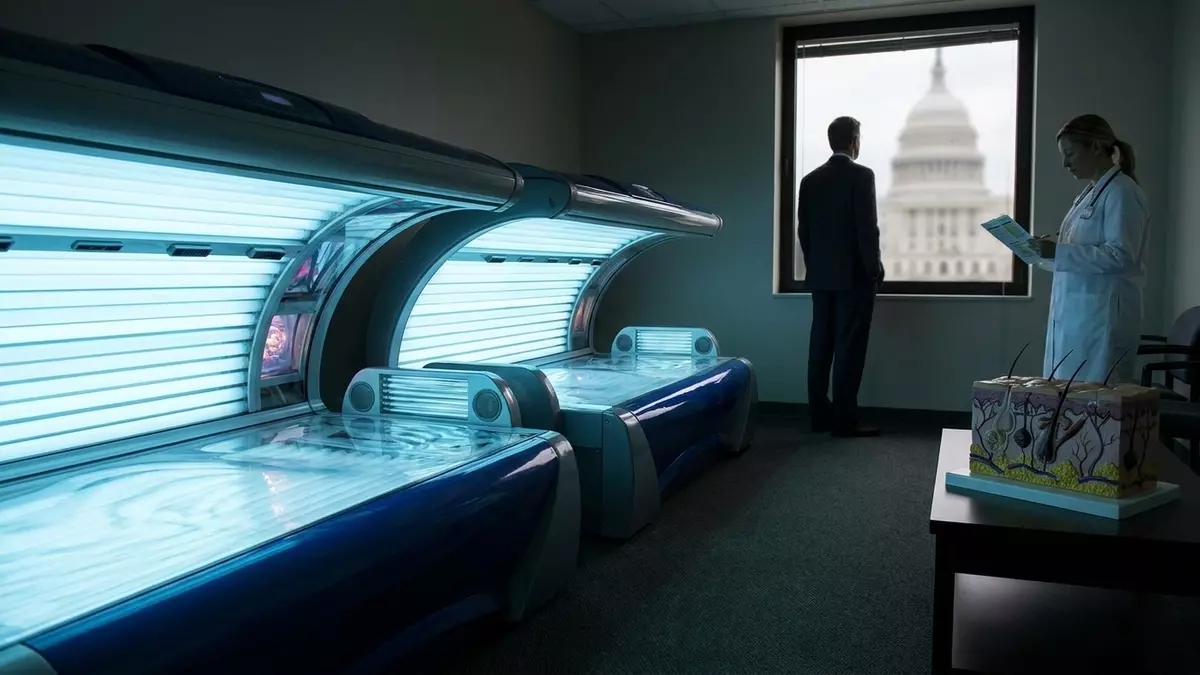
The Food and Drug Administration’s (FDA) announcement on March 16, 2026, officially withdrew a decade-old proposed rule designed to restrict minors from utilizing indoor tanning beds. The policy rollback, enacted under Health and Human Services (HHS) Secretary Robert F. Kennedy Jr., shifts the authority over age limits and consumer safety waivers entirely back to state governments and individual families.
While proponents view the decision as a defense of parental autonomy and small business flexibility, the public health and dermatological communities have expressed deep alarm. Public health experts note that the decision occurs alongside rising internet wellness trends advocating for unscientific practices like building a “sun callus,” making a thorough examination of the scientific data and the new regulatory landscape more urgent than ever.
The Strategic Rollback of Federal Tanning Bed Restrictions Navigating the Policy Shift and Medical Realities
The Withdrawn Rule: What Was the Federal Framework?
First introduced in December 2015, the proposed rule sought to establish uniform, nationwide safety guardrails around the commercial use of sunlamp products, including indoor tanning beds and booths.

The original regulatory framework focused on three core interventions:
A Nationwide Under-18 Ban: Prohibiting anyone under the age of 18 from utilizing commercial indoor tanning facilities.
Mandatory Risk Acknowledgement Forms: Requiring adult users to sign a formal certification every six months acknowledging the specific health and carcinogenic risks associated with indoor ultraviolet (UV) radiation.
Operational Transparency: Forcing tanning facilities to provide product user manuals upon consumer request, shifting indoor tanning from a casual cosmetic choice to a high-risk, informed decision.

Following the collection of over 8,100 public comments—spanning debates over personal choice, operational burdens on small businesses, and the vulnerability of adolescents—the FDA pulled the proposal. The agency stated it “no longer intends to finalize the proposed rule,” choosing to leave the enforcement of age limits to state-by-state legislation.
Under the Microscope: The Biological Impact of UV Tanning
The central friction between federal policy changes and the medical community rests on an extensive, unequivocal body of molecular evidence. The human body’s reaction to ultraviolet radiation is not merely cosmetic; a tan represents a cellular defense mechanism responding to acute structural trauma.

[UV Radiation Exposure] ➔ [Intracellular DNA Strand Breakage] ➔ [Melanin Production Stimulated] ➔ [Visual Tan / Fixed Genetic Mutation]
Indoor tanning devices primarily emit concentrated doses of UVA radiation, which penetrates deeply into the dermis, alongside UVB radiation, which causes visible burning on the epidermal surface. When these rays strike skin cells, they induce permanent DNA damage.
A landmark study published in Science Advances utilized deep genetic sequencing of skin cells from donors alongside tens of thousands of dermatology patient records. The findings revealed that individuals who utilized indoor tanning beds possessed an immense accumulation of permanent genetic mutations. In several young tanners, the level of underlying genetic damage mirrored that of individuals decades older. Researchers explicitly warned that the skin of regular tanning bed users was “riddled with the seeds of cancer”—mutations that remain embedded in the tissue long after a seasonal tan fades.
Adolescent Vulnerability and Rising Cancer Statistics
Age is the most critical metric in skin cancer prevention because the genetic damage caused by ultraviolet radiation is cumulative over a lifetime.
According to data highlighted by the American Academy of Dermatology, initiating indoor tanning bed use before the age of 20 increases the risk of developing melanoma by 47%, with the statistical risk escalating linearly with every subsequent exposure.
The broader public health data underscores the scale of the challenge:
Total Projected Diagnoses: The Skin Cancer Foundation estimates that 234,680 cases of melanoma will be diagnosed in the United States in 2026.
Invasive Progressions: Approximately 112,000 of those projected cases are classified as invasive melanomas.
A Staggering Decade Spike: New diagnoses of invasive melanoma have surged by 46.6% over the past ten years.
Dermatologists specializing in oncology warn that teenagers and young adults are biologically more susceptible to rapid cell mutation, yet psychologically, they are the demographic least likely to view a commercial beauty device as a Group 1 carcinogen—the same regulatory classification assigned to tobacco and asbestos by the World Health Organization.
The Patchwork Reality: State-by-State Enforcement
With the federal rule permanently shelved, the legal responsibility for protecting minors returns to a highly fragmented state-by-state landscape.
| Regulatory Model | Number of States | Practical Legal Operational Reality |
| Strict Minor Prohibition | 23 States & D.C. | Total ban on the commercial sale of tanning sessions to individuals under 18. |
| Parental Consent Model | Varies Regionally | Minors may tan if a parent signs a liability waiver or physically accompanies them. |
| Lax / No Age Restrictions | Varies Regionally | Minor usage is permitted with minimal oversight or simple medical note exceptions. |
This geographic patchwork creates distinct regional gaps. A teenager residing in a state with a strict under-18 ban can frequently drive across state lines to a neighboring jurisdiction where indoor tanning is permitted with a basic parental signature. Public health groups note that this lack of uniform protection leaves millions of adolescents vulnerable to targeted marketing ahead of major milestones like spring breaks, prom seasons, and summer vacations.
Addressing Modern Myths: The Truth About the “Sun Callus”
The federal deregulation of tanning beds arrives at a complicated moment, as social media algorithms actively amplify unverified wellness trends among Gen Z and millennial users.
A prominent example is the promotion of a “sun callus”—the pseudoscientific claim that individuals can condition their skin to resist burning by skipping sunscreen and intentionally building a base tan through progressive, unprotected UV exposure.
The Skin Cancer Foundation and leading international dermatological bodies have completely debunked this concept. In medical science, a “sun callus” does not exist. A tan is not a protective shield; it is a visible distress signal indicating that cellular DNA has already been altered and injured by radiation. Suppressing a visible sunburn through a base tan does nothing to mitigate the deep, systemic DNA mutations that drive melanoma development.
Conclusion
The withdrawal of the FDA’s proposed tanning bed regulations represents a significant shift toward personal and regional accountability. While the policy change provides regulatory relief to independent salon owners and champions the principle of parental choice, the underlying medical reality remains unchanged.
Indoor tanning devices emit a known, preventable human carcinogen. In the absence of a unifying federal age restriction, the burden of education, risk mitigation, and behavioral boundary-setting falls entirely upon families, individual consumers, and local healthcare providers.
To get a closer look at the immediate responses from the medical community and industry stakeholders following the rule’s withdrawal, you can watch this NBC News Report on the FDA Tanning Bed Policy Rollback. This video provides crucial on-the-ground reporting and expert commentary from practicing dermatologists explaining the public health implications of leaving these restrictions up to individual states.