
Table of Contents
- 1. The Theory of Island Dwarfism
- 2. What the DNA Actually Revealed
- 3. Surviving the Genetic Bottleneck
- 4. The Cost of Survival: Eradication and Recovery
- 5. The Importance of Biological Archives
- 6. Frequently Asked Questions (FAQ)
- 6.1. 1. Why were the cattle abandoned on Amsterdam Island?
- 6.2. 2. What is “island dwarfism”?
- 6.3. 3. Did the cattle evolve to become smaller?
- 6.4. 4. How did the herd survive such extreme inbreeding?
- 6.5. 5. Why were the cattle removed from the island?
Mystery of the Amsterdam Island Herd: DNA Overturns a Century of Assumptions
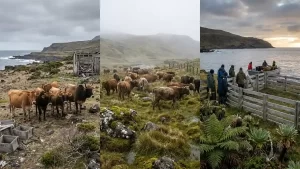
In 1871, five cattle were left behind on Amsterdam Island, a wind-battered, remote outpost in the southern Indian Ocean. Abandoned by a failed French settlement, these animals faced a brutal environment—cold, wet, and exposed—that should have spelled disaster for domestic livestock. Instead, the small group defied the odds, breeding into a wild herd that thrived for over a century.
For years, scientists believed this herd provided a textbook example of “island dwarfism,” a biological phenomenon where large animals rapidly evolve smaller bodies to survive on limited resources. However, modern genetic analysis has recently dismantled this theory, revealing that the story of the Amsterdam Island cattle is not one of rapid evolution, but of hidden genetic preparation.
Mystery of the Amsterdam Island Herd DNA Overturns a Century of Assumptions
The Theory of Island Dwarfism
The concept of island dwarfism is well-documented in the natural world. When species are confined to isolated ecosystems with restricted food and space, they often undergo significant morphological changes over generations to become smaller.

Following a 2017 study by Roberto Rozzi and Mark V. Lomolino, it was widely accepted that the Amsterdam Island cattle had shrunk rapidly to adapt to their isolated home. The environment, located 2,760 miles from Madagascar, offered few comforts, and it seemed logical that the survivors were those who evolved to require fewer resources. But as genomic technology advanced, researchers gained the ability to “read” the genetic history of these animals, leading to a surprising revelation.
What the DNA Actually Revealed
A research team led by geneticist Mathieu Gautier, involving experts from INRAE and the University of Liège, conducted a comprehensive genetic study. By analyzing DNA preserved from 18 cattle—sampled in 1992 and 2006—the team utilized whole genome sequencing to map the herd’s ancestry.
The results were transformative:

Mixed Ancestry: Approximately 75% of the herd’s genetics traced back to European taurine cattle, specifically those related to the Jersey breed. The remaining 25% originated from Indian Ocean zebu cattle.
Pre-existing Size: Because the Jersey and zebu breeds are naturally smaller than many other cattle varieties, the scientists concluded that the founders were likely small before they even stepped foot on the island.
Preadaptation: The cattle weren’t just small; they were uniquely suited for the climate. The ancestral regions of the Jersey breed shared environmental similarities with the harsh conditions of Amsterdam Island. This “preadaptation” gave them a distinct advantage from the very first day.

Surviving the Genetic Bottleneck
Starting a population with only five individuals typically results in a “genetic bottleneck,” which drastically reduces diversity and often leads to the expression of harmful, inbred traits. Yet, the Amsterdam Island herd expanded rapidly, reaching population peaks of approximately 2,000 animals in 1952 and 1988.
While the DNA did confirm high levels of inbreeding, the herd avoided the total genetic collapse many experts expected. Furthermore, the genome scans revealed markers near genes associated with the nervous system, suggesting that the animals underwent rapid behavioral changes to turn “feral,” allowing them to successfully navigate the challenges of wild social structures and environmental survival.
The Cost of Survival: Eradication and Recovery
While the herd was a scientific marvel, it proved catastrophic for the island’s fragile ecosystem. By the late 1980s, researchers identified the cattle as the primary threat to the island’s endemic flora and fauna. The conflict between preserving a rare, feral herd and protecting endangered native species became a significant conservation dilemma.
Ultimately, a fence was erected to partition the island, and a gradual eradication program began. By 2010, the last of the feral cattle were removed. Today, Amsterdam Island is part of the French Austral Lands and Seas, a UNESCO World Heritage site, allowing native ecosystems to recover from a century of bovine presence.
The Importance of Biological Archives
The saga of the Amsterdam Island cattle highlights the crucial importance of biological archives. Because tissue samples were meticulously saved before the herd was eradicated, scientists were able to use 21st-century technology to revisit and correct a historical misconception.
This study underscores a vital lesson in evolutionary biology: what appears to be rapid adaptation is sometimes simply the success of a diverse, well-suited founder population. Through the lens of modern genetics, the “vanished” herd continues to teach us about resilience, the nature of isolation, and the hidden power of a diverse genetic heritage.
Frequently Asked Questions (FAQ)
1. Why were the cattle abandoned on Amsterdam Island?
In 1871, a French farmer attempted to settle on the island. When the settlement project failed, the settlers left, and five cattle were left behind to fend for themselves.
2. What is “island dwarfism”?
Island dwarfism is a biological process where species isolated on islands evolve smaller body sizes over time due to limited resources, space, and a lack of traditional predators.
3. Did the cattle evolve to become smaller?
No. The DNA evidence suggests the cattle were already small because of their specific European Jersey and Indian Ocean zebu ancestry. They did not need to “shrink” to survive; they were already well-suited to the environment.
4. How did the herd survive such extreme inbreeding?
While the herd showed high levels of inbreeding due to the tiny founder population of five, they maintained enough genetic diversity to survive and thrive, reaching thousands in number during their peak.
5. Why were the cattle removed from the island?
The cattle were destroying the island’s unique and fragile ecosystem. To protect endangered native species and allow local habitats to recover, conservationists decided to remove the herd, completing the process in 2010.