
Table of Contents
- 1. The Global Burden of Cardiovascular Disease
- 2. Understanding the Liver’s Natural Cleanup Crew
- 2.1. How Receptors Act as Docking Stations
- 2.2. How Existing Medications Assist the System
- 3. The Hidden Molecular Switch: Enter the ‘Ral’ Protein
- 4. Identifying the Executioner Enzyme: Cathepsin A
- 5. An Unexpected Advantage: The Fast-Track Potential
- 6. A Complementary Weapon for Challenging Cases
- 7. Looking to the Future of Heart Health
- 8. Frequently Asked Questions
- 8.1. Does this new liver discovery mean that diet no longer matters for cholesterol management?
- 8.2. How soon will a CTSA inhibitor drug be available at local pharmacies?
- 8.3. Can I get a prescription for a CTSA inhibitor if statins cause me severe muscle pain?
- 8.4. What is the primary difference between LDL and HDL cholesterol?
- 8.5. Why do some people have high cholesterol even when they follow a strict, healthy diet?
New Liver Discovery Helps Cholesterol Patients Fight High Lipids
For decades, the standard conversation surrounding high cholesterol has remained largely unchanged. Most people hear about the condition during a routine annual physical or after a preventative blood panel, usually accompanied by a familiar warning: watch what you eat, get more exercise, and avoid fatty foods. It is easy to view the human body as a simple plumbing system where consuming excess fat automatically translates into clogged, narrowed pipes.
However, a groundbreaking study suggests that the underlying biological reality is far more complex than a simple dietary buildup.
An elite team of researchers in the United States has successfully mapped a hidden molecular pathway that reveals how a high-cholesterol diet actively forces the body to sabotage its own filtration system. This discovery does not discount the vital roles of healthy lifestyle choices or existing medications. Instead, it uncovers a previously invisible cellular mechanism that could pave the way for a brand-new class of medical treatments, offering hope to millions of individuals who continuously struggle to bring their lipid numbers down to a safe zone.
New Liver Discovery Helps Cholesterol Patients Fight High Lipids
The Global Burden of Cardiovascular Disease
To appreciate the weight of this scientific breakthrough, it helps to look at the broader landscape of modern public health. Cardiovascular diseases continue to reign as the absolute leading cause of mortality across the globe, cutting millions of lives short every year.
According to data compiled by the World Health Organization (WHO), cardiovascular events claimed an estimated 19.8 million lives in 2022 alone. This staggering figure represents roughly 32% of all global deaths.
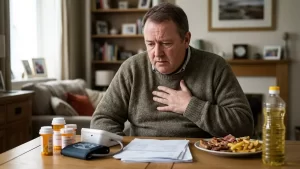
The primary driver behind these statistics is low-density lipoprotein (LDL) cholesterol, widely known as “bad” cholesterol. When LDL levels remain chronically elevated, these waxy particles penetrate the inner linings of the arterial walls, forming rigid fatty plaques. Over time, this quiet, symptomless accumulation narrows the pathways through which blood must flow, dramatically increasing the long-term risk of sudden heart attacks and strokes. Because this process happens silently beneath the surface, finding innovative ways to assist the body in clearing these lipids is paramount.
Understanding the Liver’s Natural Cleanup Crew
The human liver serves as the ultimate internal purification system for regulating circulating lipids. To clear bad cholesterol from your bloodstream, the liver relies on specialized cellular tools known as LDL receptors.
How Receptors Act as Docking Stations
Think of these receptors as microscopic docking ports scattered across the outer surface of liver cells. As blood pumps through the liver, these docks grab circulating LDL particles out of the bloodstream and pull them safely inside the cell body, where they can be broken down, processed, and excreted.

How Existing Medications Assist the System
The math behind a healthy lipid profile is straightforward: the more active receptors your liver displays on its cell surfaces, the faster and more efficiently it can vacuum up bad cholesterol from your blood. This core principle explains how standard modern therapeutics function:
Statins: These widely prescribed pills work primarily by blocking a specific liver enzyme responsible for manufacturing cholesterol, forcing the liver to generate more surface receptors to gather cholesterol from external blood sources instead.
PCSK9 Inhibitors: These targeted biologics work by preventing the premature destruction of existing LDL receptors, allowing individual docking stations to stay active on the cell surface for a much longer period.
The Hidden Molecular Switch: Enter the ‘Ral’ Protein
The recent study, published in the journal Nature and spearheaded by Dr. Alan Saltiel at the University of California San Diego School of Medicine, has unveiled a missing piece of this cellular puzzle. The research team discovered that a specific protein named “Ral” serves as a hidden switch that actively disrupts the liver’s natural cleaning cycle when a person consumes a high-fat diet over an extended period.
Under ordinary health conditions, LDL receptors operate on a continuous, efficient recycling loop. After a receptor captures an LDL particle and pulls it into the cell, the receptor is supposed to untether itself, travel back to the cell’s outer boundary, and resume its post to catch another particle. A single receptor can repeat this round-trip journey many times.
However, when a person’s dietary cholesterol intake remains consistently high, the intracellular environment shifts. This chronic overload causes the Ral protein to become hyperactive.
Once Ral is locked into the “on” position, it sets off an internal cellular traffic jam. Instead of allowing the empty LDL receptors to migrate smoothly back to the cell surface where they are desperately needed, the hyperactive Ral protein reroutes the receptors inward toward internal breakdown compartments, causing them to be destroyed prematurely.
“This work explains a critical piece of that puzzle,” noted Dr. Saltiel, highlighting how a rich diet doesn’t just add more fat to the bloodstream—it actively dismantles the body’s natural cellular machinery designed to clear that fat away.
Identifying the Executioner Enzyme: Cathepsin A
Going a step further, the UC San Diego research team successfully traced the exact pathway to identify the internal executioner responsible for tearing the misrouted receptors apart: an enzyme known as cathepsin A, or CTSA.
Enzymes are specialized proteins that accelerate specific chemical reactions within the body. In this newly mapped pathway, CTSA acts as the biological shredder that systematically dismantles the trapped LDL receptors once the Ral protein sends them down the wrong cellular path.
To test if this destruction could be halted, the researchers introduced a targeted, small-molecule inhibitor designed specifically to block CTSA activity. The results in the laboratory were profoundly encouraging. By neutralizing the CTSA enzyme, the internal destruction loop was broken, and the LDL receptors became structurally stable within the liver cells. When tested in animal models, this precise approach successfully restored the liver’s natural recycling capabilities, resulting in superior blood cholesterol clearance and a significant drop in circulating bad LDL levels.
An Unexpected Advantage: The Fast-Track Potential
Under normal circumstances, discovering a new biological pathway in a laboratory is a long way from helping human patients. Moving a brand-new chemical compound from a basic lab bench through safety testing, animal models, and initial human clinical trials typically takes up to a decade or more.
However, this specific discovery features an incredibly rare clinical twist. A highly effective CTSA inhibitor had already been fully developed years prior by a pharmaceutical firm exploring an entirely separate medical use case involving heart failure.
While that specific heart failure program was eventually shelved for strategic corporate reasons, the experimental drug had already successfully advanced through rigorous Phase 1 clinical trials. This means the compound has already been thoroughly tested for baseline safety and tolerability in human volunteers.
Because the initial safety hurdles have already been cleared, researchers may be able to completely bypass years of early development and leap directly into a Phase 2 clinical trial. This next phase will focus on the key question: can blocking the CTSA enzyme safely and effectively lower bad cholesterol levels in human patients?
A Complementary Weapon for Challenging Cases
It is vital to approach these findings with realistic peer-to-peer candor: this scientific insight does not mean a miracle cure is hitting pharmacy shelves tomorrow morning. The most robust data gathered so far stems from mouse models and isolated human cellular lines, not from a completed, large-scale clinical trial in human patients. Many promising compounds perform flawlessly in a controlled laboratory setting only to falter when introduced to the immense complexity of a diverse human population.
Nevertheless, this mechanism is generating immense excitement among cardiologists because it opens up a completely unique therapeutic avenue.
| Medication Class | Primary Cellular Target | Treatment Mechanism |
| Statins | HMG-CoA Reductase Enzyme | Halts internal liver cholesterol production to force receptor creation. |
| PCSK9 Inhibitors | PCSK9 Extracellular Protein | Prevents external degradation of receptors circulating in the blood. |
| Experimental CTSA Inhibitors | Cathepsin A Intracellular Enzyme | Stops the internal recycling breakdown triggered by a high-fat diet. |
A significant portion of the population suffers from severe genetic conditions like familial hypercholesterolemia, leaving them unable to achieve safe blood lipid levels even when taking maximum doses of existing medications. Other individuals are forced to abandon standard therapies due to uncomfortable side effects like chronic muscle pain.
Because the newly mapped Ral-CTSA pathway operates completely independently of the pathways targeted by statins or PCSK9 inhibitors, a future CTSA-based drug could eventually be prescribed alongside current treatments. This would give modern physicians a multi-pronged strategy to protect cardiovascular health rather than trying to force every patient into a single, rigid treatment template.
Looking to the Future of Heart Health
The discovery of the Ral-CTSA pathway marks an important milestone in our understanding of metabolic health. It reveals that consuming a high-cholesterol diet causes a double-edged blow: it directly floods the bloodstream with harmful lipids while simultaneously triggering an internal cellular attack that breaks down the liver’s primary cleanup tools.
While we await the launch of targeted Phase 2 human trials to see if this molecular shield fulfills its clinical promise, the best defense remains a proactive blend of balanced nutrition, consistent movement, and existing medical guidance. By continuously mapping the hidden traffic patterns of our cells, science brings us one step closer to a future where cardiovascular disease no longer holds its position as the world’s leading killer.
Frequently Asked Questions
Does this new liver discovery mean that diet no longer matters for cholesterol management?
Absolutely not. Diet remains a cornerstone of cardiovascular health. In fact, this study proves that what you eat matters more than we previously realized. A high-cholesterol diet doesn’t just add fat to your blood; it actively signals the “Ral” protein to destroy the liver’s natural filtration receptors, directly crippling your body’s ability to clear out bad cholesterol.
How soon will a CTSA inhibitor drug be available at local pharmacies?
While the compound has an advantage because it already passed early Phase 1 human safety trials, it must still successfully complete Phase 2 and Phase 3 clinical trials to prove it is effective and safe for lowering cholesterol in large human populations. This clinical testing and FDA approval process typically takes several years.
Can I get a prescription for a CTSA inhibitor if statins cause me severe muscle pain?
Not yet, as these drugs are currently strictly in the experimental research phase and are not approved for public medical use. If you are experiencing difficult side effects from your current statin prescription, speak openly with your physician about existing alternatives, such as ezetimibe, bile acid sequestrants, or PCSK9 inhibitors.
What is the primary difference between LDL and HDL cholesterol?
LDL (Low-Density Lipoprotein) is known as “bad” cholesterol because excess amounts can accumulate inside arterial walls, creating dangerous plaques that restrict blood flow. HDL (High-Density Lipoprotein) is called “good” cholesterol because it acts as a scavenger, collecting loose cholesterol from the blood and returning it to the liver to be broken down and eliminated.
Why do some people have high cholesterol even when they follow a strict, healthy diet?
While diet plays a substantial role, baseline cholesterol production is heavily dictated by genetics. Conditions like familial hypercholesterolemia can cause the liver to naturally produce too few LDL receptors or overproduce cholesterol internally, making it incredibly difficult to reach safe levels without the assistance of targeted medical therapies.