
Table of Contents
- 1. The Science Behind the Shifting Hues
- 1.1. The Critical Role of Soil pH and Aluminum
- 1.2. The White Hydrangea Exception
- 2. The Crucial First Step: Test Your Ground Baseline
- 2.1. How to Gather an Accurate Sample
- 2.2. Deciphering the Numbers
- 3. How to Turn Your Hydrangeas True Blue
- 3.1. Step-by-Step Acidification
- 4. How to Coax Your Flowers into Brilliant Pink
- 4.1. Simple Steps for Pink Petals
- 5. Aiming for the Whimsical Purple Sweet Spot
- 6. Golden Rules for Color Modification Success
- 6.1. Consider Potted Environments for Easier Control
- 6.2. Practice Patience and Avoid Haste
- 6.3. Prioritize Overall Plant Health
- 7. Crafting a Personalized Garden Masterpiece
- 8. Frequently Asked Questions
- 8.1. Can I change the color of a white hydrangea by adding aluminum sulfate?
- 8.2. Are coffee grounds enough to turn my pink hydrangeas blue?
- 8.3. How long does it take for a hydrangea to completely change its color?
- 8.4. Is it safe to use aluminum sulfate on all types of hydrangeas?
- 8.5. Why does my hydrangea have blue, purple, and pink flowers all on the same bush?
How to Change Hydrangea Colors: The Ultimate Soil pH Guide
Few garden shrubs capture the imagination quite like hydrangeas. Their massive, billowy flower heads and lush green foliage create a stunning focal point in any landscape. But what truly sets these remarkable plants apart is their unique, almost magical ability to shift their floral hues based entirely on what is happening beneath the soil surface.
If you have ever planted a vibrant pink hydrangea only to watch it fade into a soft sky blue a couple of seasons later, you aren’t imagining things. This striking transformation isn’t a random quirk of nature; it is a direct result of soil chemistry.
The best part? You don’t have to leave your garden’s color palette up to chance. With a basic understanding of soil pH and a little patience, you can successfully steer your hydrangeas toward brilliant blues, romantic pinks, or whimsical purples.
How to Change Hydrangea Colors The Ultimate Soil pH Guide
The Science Behind the Shifting Hues
To successfully alter the appearance of your shrubs, you first need to understand the underlying biological and chemical mechanisms at play.
The Critical Role of Soil pH and Aluminum
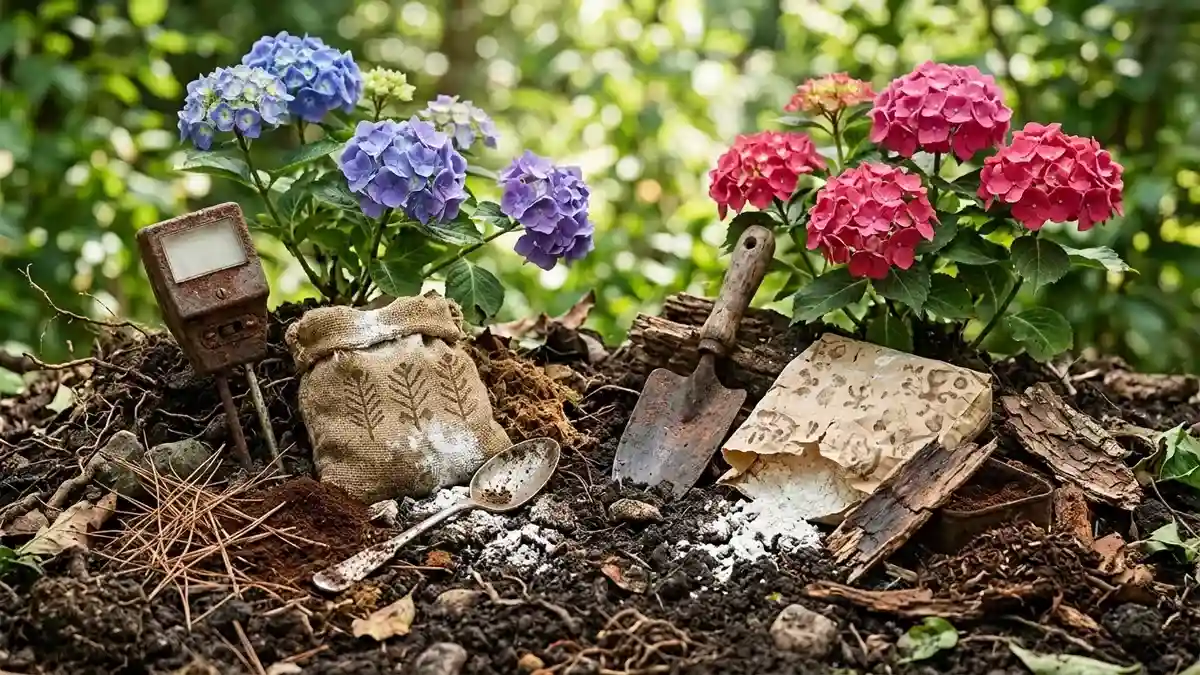
The secret to the color-changing act lies in the interplay between soil pH (the measurement of how acidic or alkaline your soil is) and the presence of a naturally occurring element: aluminum.
Certain varieties of hydrangeas—specifically Bigleaf (Hydrangea macrophylla) and Mountain hydrangeas (Hydrangea serrata)—contain pigments that react chemically to aluminum absorption. However, a plant can only absorb this element if the soil condition is right.
Acidic Soil (pH below 6.0): In highly acidic environments, aluminum becomes chemically soluble. This allows the roots to easily drink it in, transporting the element up to the flower buds and turning the petals a deep blue or lavender-blue.
Neutral to Alkaline Soil (pH 6.0 to 7.0+): When the soil shifts toward a neutral or alkaline baseline, the aluminum binds tightly to other minerals and becomes completely unavailable to the plant. Without access to aluminum, the flowers naturally revert to their default shades of bright pink, hot pink, or crimson red.
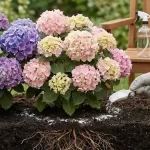
The White Hydrangea Exception
It is important to note that not all varieties participate in this colorful game of chemistry. White-blooming varieties, such as the popular Annabelle (Hydrangea arborescens) or Limelight (Hydrangea paniculata), completely lack the specific pigments required to interact with aluminum. No matter how much you manipulate your ground chemistry, these pristine white blossoms will retain their constant, elegant color from opening to fade.
The Crucial First Step: Test Your Ground Baseline
Before you run out to purchase soil amendments, you must accurately determine your starting point. Trying to alter your garden’s chemistry without a baseline test can accidentally damage your plants’ root systems or throw off your soil’s natural microbial balance.
How to Gather an Accurate Sample
Pick up an inexpensive home testing kit or a digital pH probe from your local nursery. To get an accurate reading, clear away any surface mulch and dig down roughly 6 inches into the active root zone of your shrub. Collect a small dirt sample, clear out any stray rocks or roots, and follow your test kit’s specific instructions.
Deciphering the Numbers
Once you receive your results, you can accurately predict what your current landscape will produce:
Below 5.5: Highly acidic conditions; expect true blue blossoms.
5.5 to 6.0: Transitional, mildly acidic conditions; likely to yield purple, violet, or multi-toned flowers.
6.0 to 6.5+: Neutral to alkaline conditions; expect rich pink to deep rose-colored petals.
How to Turn Your Hydrangeas True Blue
If you are dreaming of a cool, serene sea of blue and violet blooms, your primary objective is to increase the acidity of your garden bed while ensuring plenty of aluminum is accessible.
Step-by-Step Acidification
Introduce Aluminum Sulfate: This is the fastest and most efficient way to lower your pH and introduce the necessary minerals. Dissolve 1 tablespoon of high-quality aluminum sulfate into a gallon of water. Apply this solution directly to the base of the plant once a month throughout the active spring and summer growing season.
Incorporate Acidic Organic Matter: Layer the surrounding ground with natural organic materials that break down over time. Excellent choices include pine needles, used coffee grounds, and sphagnum peat moss. These materials gently assist in keeping the environment acidic.
Be Mindful of Your Water Source: Tap water from municipal systems is often intentionally treated to be slightly alkaline to protect city pipes. If possible, irrigate your blue-tinted varieties with collected rainwater to avoid accidentally raising the pH over time.
For the most striking, intense blue results, aim to consistently maintain a steady soil pH level between 5.2 and 5.5.
How to Coax Your Flowers into Brilliant Pink
For those who prefer a warm, romantic aesthetic filled with striking pinks and rich reds, you must reverse the process by raising your soil’s pH and locking away any existing aluminum.
Simple Steps for Pink Petals
Apply Garden Lime: To sweeten the soil and elevate the pH, spread dolomitic agricultural lime around the base of the shrub in the early spring months.
Choose the Right Fertilizer: Opt for fertilizers that feature a high phosphorus content while keeping nitrogen and aluminum levels low. High levels of phosphorus naturally form a chemical bond with aluminum in the dirt, preventing the plant’s root system from taking it in.
Avoid Acidic Mulches: Steer completely clear of oak leaves, pine needles, or peat moss. Instead, use neutral hardwood mulches or standard organic compost that won’t inadvertently lower your hard-earned pH levels.
To achieve robust, long-lasting pink hues, aim to keep your garden bed sitting comfortably in a target zone between 6.0 and 6.4.
| Desired Flower Color | Target Soil pH | Primary Soil Amendment | Additional Care Action |
| True Blue | 5.2 to 5.5 | Aluminum Sulfate | Mulch with pine needles; irrigate with rainwater. |
| Whimsical Purple | 5.5 to 6.0 | None (Let it sit naturally) | Enjoy the unpredictable blend of transitional tones. |
| Brilliant Pink | 6.0 to 6.4 | Garden Lime (Dolomitic) | Use high-phosphorus fertilizers; avoid acidic mulches. |
Aiming for the Whimsical Purple Sweet Spot
What if you want the best of both worlds? Gorgeous purple, plum, and bi-colored violet blooms occur when your ground chemistry settles into the narrow transitional zone between 5.5 and 6.0.
Because this middle ground is chemically delicate, achieving a uniform purple across an entire bush can be beautifully unpredictable. Often, different sections of the same plant will absorb varying amounts of minerals, resulting in a stunning, multicolored display on a single shrub. If you love a touch of whimsical variation, the easiest path is to simply let nature take its course without introducing heavy chemical amendments.
Golden Rules for Color Modification Success
No matter which vibrant color direction you choose to pursue, keep these essential professional gardening tips in mind:
Consider Potted Environments for Easier Control
Trying to alter the chemistry of an entire open garden plot can be a continuous uphill battle, especially if your native regional soil is naturally highly alkaline or heavily acidic. If you find it too difficult to maintain your goals in the ground, try growing your hydrangeas in large decorative outdoor containers. In a pot, you have absolute control over every handful of soil mix and every drop of water the plant receives.
Practice Patience and Avoid Haste
Color transformation is a gradual biological process, not an instantaneous chemical reaction. The amendments you apply must thoroughly dissolve, integrate with the soil microbes, and be slowly taken up through the root system into the developing wood. It often takes a full growing season, or even two, to witness a complete shift in color.
Prioritize Overall Plant Health
A severely stressed, dehydrated, or nutrient-deficient hydrangea will not put on a vivid color show, regardless of how perfect your soil’s pH level is. Maintain a regular deep-watering routine, ensure your shrubs are planted in areas with dappled morning sun and afternoon shade, and protect them from harsh, drying winds.
Always introduce your adjustments slowly and steadily; over-applying chemicals in a desperate bid for faster results will only burn fragile roots and permanently set your garden back.
Crafting a Personalized Garden Masterpiece
Manipulating the hues of your hydrangeas is an incredibly rewarding blending of art and science. By mastering the delicate balance of soil acidity and mineral availability, you gain the creative freedom to design a living landscape that perfectly complements your home’s aesthetic. Test your ground early, treat your plants with care, and enjoy the breathtaking reward of custom-colored autumn and summer blooms.
Frequently Asked Questions
Can I change the color of a white hydrangea by adding aluminum sulfate?
No. White hydrangea varieties like Limelight, Annabelle, or PeeGee do not possess the necessary genetic pigments required to react to soil adjustments. They will remain white or fade into a pale green/pink hue at the end of the season regardless of your soil’s pH.
Are coffee grounds enough to turn my pink hydrangeas blue?
While used coffee grounds are slightly acidic and add beneficial organic matter to your garden, they are usually not powerful enough on their own to drastically drop highly alkaline soil down to the required 5.2 pH level. They should be used as a supplementary mulch alongside an amendment like aluminum sulfate.
How long does it take for a hydrangea to completely change its color?
Soil chemistry shifts happen gradually. Depending on the size of the shrub, your starting pH, and how consistently you apply amendments, it generally takes a full spring and summer season—and sometimes up to two years—to see a distinct color transition.
Is it safe to use aluminum sulfate on all types of hydrangeas?
Aluminum sulfate is safe when used according to package directions on Bigleaf and Mountain hydrangeas. However, applying too much can lead to fertilizer burn or toxic soil conditions. Always dilute it properly in water and avoid applying it to dry, stressed plants.
Why does my hydrangea have blue, purple, and pink flowers all on the same bush?
This beautiful phenomenon happens when the soil immediately surrounding different roots has slightly varied pH levels or uneven distributions of aluminum. It indicates that your soil is currently sitting in the transitional 5.5 to 6.0 pH range, creating a natural mosaic effect across the branches.