
Table of Contents
- 1. Why Louisiana Ranks Last Nationally for Elder Care
- 1.1. 1. Severe Healthcare System Strain
- 1.2. 2. Harsh Environmental Stressors
- 1.3. 3. Economic and Social Isolation
- 2. The Best States for Senior Support
- 3. Conclusion
- 4. Frequently Asked Questions
- 4.1. Why does high spending on Medicare in states like Louisiana not result in better care?
- 4.2. What options do seniors have if they cannot afford to relocate away from a low-ranking state?
- 4.3. Are tax benefits a reliable indicator of a good retirement state?
- 4.4. How can a family verify the actual quality of a local nursing home or assisted living facility?
- 4.5. Is senior poverty worsening on a national level?
Navigating the Grid: Why One U.S. State Ranks Dead Last for Senior Care
Choosing where to grow older is one of the most critical decisions a person can make, impacting everything from daily health outcomes to long-term financial security. A comprehensive study by RetirementLiving.com evaluated all 50 states across interconnected livability metrics—including healthcare system access, nursing home quality, elder poverty, social support networks, and environmental safety.
The data revealed sharp geographic disparities in how older Americans are supported, explicitly naming Louisiana as the worst state in the country for senior care. On the other end of the spectrum, states like Hawaii are setting the national standard for elder wellness.
Navigating the Grid Why One U.S. State Ranks Dead Last for Senior Care
Why Louisiana Ranks Last Nationally for Elder Care
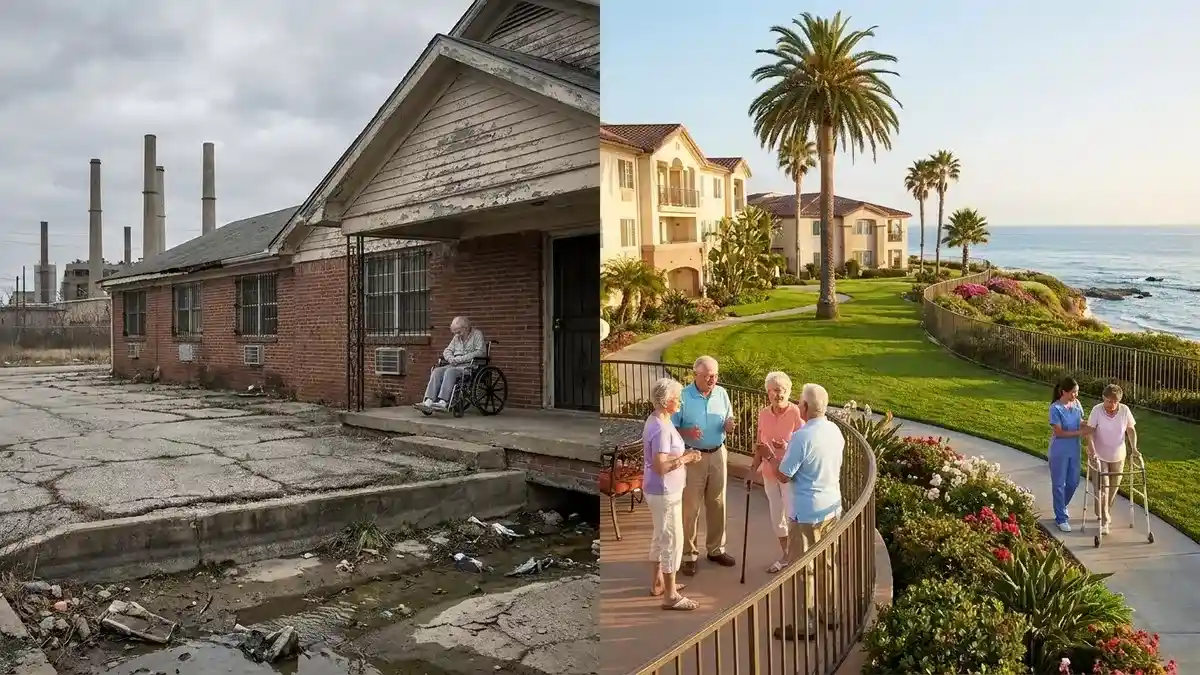
The study highlighted a compounding crisis in the Bayou State, where systemic shortcomings in the healthcare infrastructure intersect with challenging environmental and economic conditions.

[Low Geriatric Provider Density] ➔ [Poor Primary Care Oversight] ➔ [Spike in Preventable Hospitalizations]
1. Severe Healthcare System Strain
Louisiana’s healthcare outcomes for older adults are among the weakest in the nation. The state possesses the lowest-rated nursing home quality metrics in the United States, raising immediate concerns regarding institutional safety and care standards.
Furthermore, a shortage of specialized clinicians—with only 22 registered geriatric providers per 100,000 seniors—means preventative care is often unavailable. This lack of early medical intervention causes Louisiana to suffer from the third-highest rate of preventable hospitalizations in the country. Conditions that could be safely managed at home by a primary care doctor frequently escalate into emergency room visits.
2. Harsh Environmental Stressors
A senior’s physical environment plays a fundamental role in maintaining mobility and respiratory health. Louisiana scored poorly due to below-average air quality and a lack of public parks or green spaces.

More critically, the state ranks near the bottom for water safety, possessing the second-worst drinking water quality scores in the country. For older populations with vulnerable immune systems or underlying chronic illnesses, exposure to waterborne contaminants presents an acute, avoidable health risk.
3. Economic and Social Isolation
Physical and clinical challenges in Louisiana are heavily intensified by socioeconomic instability. The state reports the nation’s absolute highest rate of senior food insecurity—with roughly 14% of older residents lacking consistent access to nutritious food—alongside the third-highest senior poverty rate.
When low financial reserves are paired with high levels of social isolation, seniors face an accelerated trajectory of health decline without a community safety net to intervene.

The Best States for Senior Support
Conversely, the RetirementLiving.com data showcases regions that have successfully built robust, heavily funded support systems tailored to an aging population.
| State | National Rank | Key Strengths and Senior Benefits |
| Hawaii | #1 (Gold Standard) | High-rated nursing care facilities, clean air and water index, and exceptionally low rates of social isolation. |
| Minnesota | #2 | Superb healthcare accessibility, a dense network of geriatric specialists, and high food security for older adults. |
| Utah | #3 | High senior affordability ratings, active aging infrastructure, and lower baseline rates of elder isolation. |
The Upper Midwest and Northeast regions consistently claim the highest spots on the list. These areas generally direct higher state-level budgets toward dedicated senior programming, maintain more rigorous regulatory oversight of long-term care facilities, and boast a higher concentration of specialized clinical professionals.
Conclusion
The latest state-level data demonstrates that growing older in America is highly dependent on geography. While states like Hawaii and Minnesota showcase the protective power of accessible medicine, clean environments, and funded senior resources, Louisiana’s last-place ranking underscores the severe cost of systemic neglect. For families mapping out retirement plans or organizing care for aging parents, looking past real estate costs to critically evaluate a state’s primary care access, environmental safety parameters, and institutional nursing standards is absolutely vital to ensuring a safe, dignified quality of life.
Frequently Asked Questions
Why does high spending on Medicare in states like Louisiana not result in better care?
Public health data indicates that while Medicare spending per capita is exceptionally high in regions like Louisiana and Mississippi, the money is often spent inefficiently on reactive crisis management rather than proactive prevention. Because there is a lack of coordinated primary care, funds are consumed by expensive emergency room visits, prolonged hospital stays, and the over-prescription of high-risk medications that can lead to dangerous complications like falls or internal bleeding.
What options do seniors have if they cannot afford to relocate away from a low-ranking state?
For older adults remaining in lower-tier states, maximizing local community-based resources is essential. Look into local Area Agencies on Aging (AAAs) funded by the Older Americans Act, which provide resources like home-delivered meals (Meals on Wheels), non-emergency medical transportation, and caregiver support. Establishing a strong relationship with a primary care clinic and mapping out local non-profit food pantries can also help buffer the gaps in state-level infrastructure.
Are tax benefits a reliable indicator of a good retirement state?
Not necessarily. Many states market themselves aggressively to retirees by offering “no state income tax” or exempting Social Security benefits. However, states have to generate revenue somehow. Often, a state with no income tax will compensate by imposing incredibly high sales taxes, steep local property taxes, or dealing with highly volatile property and auto insurance markets—the latter of which is a major issue in storm-vulnerable states like Louisiana. Always look at the total cost of living rather than a single tax exemption.
How can a family verify the actual quality of a local nursing home or assisted living facility?
To look past an institutional facility’s marketing fluff, utilize the federal Medicare Care Compare tool available at medicare.gov/care-compare. This public registry scores Medicare-certified nursing homes on a clear 1-to-5 star rating system based on three objective data points: formal health inspection results, nurse staffing hours per resident, and clinical quality measures.
Is senior poverty worsening on a national level?
Yes. The study noted that while overall national access to geriatric clinicians has experienced modest improvements, key metrics like elder poverty, food insecurity, and the overall quality ratings of nursing facilities have steadily deteriorated across multiple regions since 2024. This trend underscores the immense pressure inflation and rising healthcare costs are placing on fixed-income seniors nationwide.
For a deeper dive into the ground-level realities of choosing a place to live out your golden years, you can review this analysis on the 10 Worst States For Retirement. This video breaks down the specific economic traps, healthcare deserts, and insurance crises that can severely disrupt a senior’s quality of life, matching the data highlighted in recent senior care assessments.