
Table of Contents
- 1. The Nutrient Profiles: PSL vs. Masala Chai
- 2. Why Masala Chai Outperforms the PSL, According to Experts
- 2.1. A Powerhouse of Functional Spices
- 2.2. Jitter-Free Sustained Energy
- 3. How to Brew Authentic Masala Chai at Home
- 4. Frequently Asked Questions
- 4.1. Can I make masala chai ahead of time for a busy work week?
- 4.2. Is masala chai safe to drink every day?
- 4.3. What is the best type of milk to use for an authentic texture?
- 4.4. Does store-bought “chai mix” offer the same benefits?
- 4.5. Can I use ground spices if I do not have whole ones?
Why Dietitians Recommend Swapping Your Pumpkin Spiced Latte for Masala Chai
As the crisp autumn air rolls in, our morning beverage cravings naturally shift toward rich, warming flavors. For years, the pumpkin spiced latte (PSL) has reigned supreme as the ultimate symbol of fall comfort. However, behind that inviting seasonal aroma lies a less comforting reality: the typical commercial PSL is heavily laden with refined sugars, calorie-dense syrups, and artificial flavorings that can lead to energy crashes and metabolic strain.
This season, wellness experts and registered dietitians are pointing toward a traditional, health-boosting alternative that delivers all the cozy vibes without the nutritional downside: authentic masala chai. Packed with functional spices and antioxidant-rich black tea, this ancient beverage offers a nourishing way to celebrate the season.

Why Dietitians Recommend Swapping Your Pumpkin Spiced Latte for Masala Chai
The Nutrient Profiles: PSL vs. Masala Chai
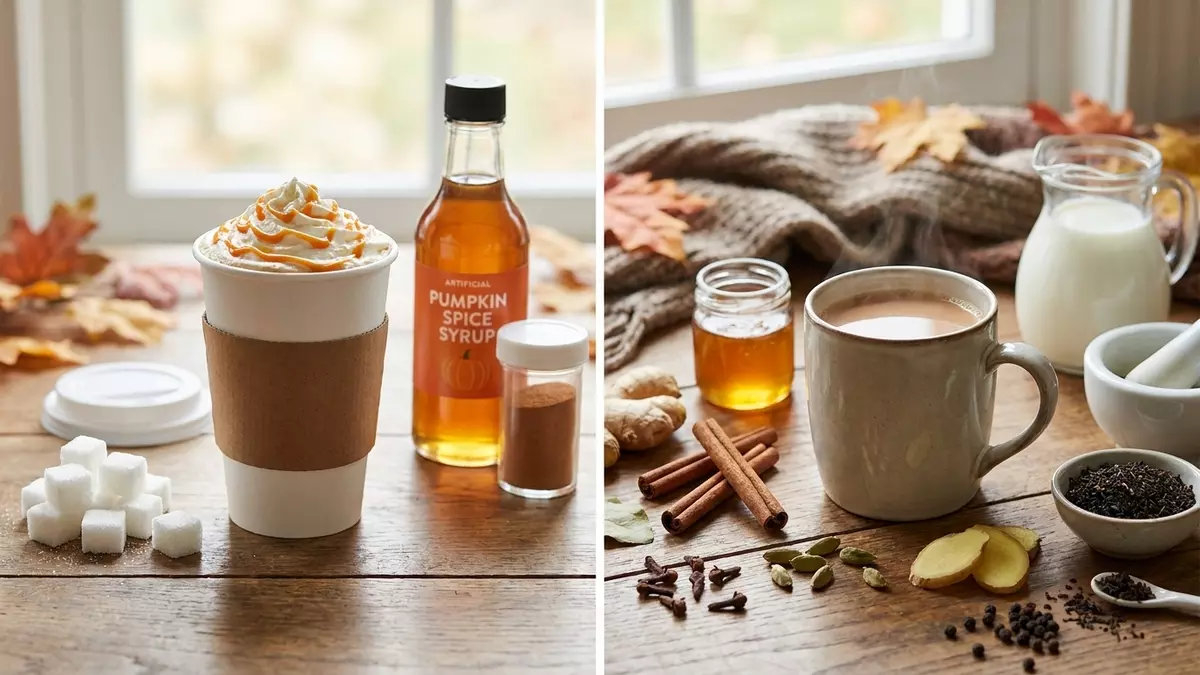
The foundational difference between a standard coffee-shop pumpkin spiced latte and a traditionally brewed masala chai comes down to ingredient integrity. While one relies heavily on processed sugar matrices for flavor, the other uses whole, active botanicals.

| Beverage Metric | Commercial Pumpkin Spiced Latte | Authentic Masala Chai |
| Primary Flavor Source | High-fructose corn syrup & artificial flavorings | Freshly crushed whole spices & black tea leaves |
| Glycemic Impact | High (triggers rapid blood glucose spikes & crashes) | Low to moderate (stabilizes blood sugar levels) |
| Primary Health Value | Minimal (high in empty calories and saturated fat) | High (anti-inflammatory, antioxidant, & digestive aid) |
| Caffeine Delivery | Sharp spike often leading to jitters or anxiety | Smooth, sustained alertness via l-theanine compounds |
Why Masala Chai Outperforms the PSL, According to Experts
Masala chai is far more than just a flavorful seasonal beverage—it is a functional powerhouse deeply rooted in holistic wellness traditions. Here is why medical and nutrition experts recommend making the switch this fall.
A Powerhouse of Functional Spices
Unlike a PSL, which mimics spices using synthetic flavorings, authentic masala chai derives its taste entirely from a aromatic blend of whole spices. Ingredients like cinnamon, ginger, black pepper, cloves, and cardamom are packed with bioavailable compounds that provide real physical benefits:
Inflammation Control: These spices are rich in antioxidants that actively combat oxidative stress and lower systemic inflammation.
Digestive Comfort: Ginger and cardamom have been used for centuries to soothe the gastrointestinal tract, ease bloating, and optimize nutrient absorption.
Immune System Support: As the weather cools down and seasonal bugs circulate, the antimicrobial properties of cloves and black pepper help reinforce your body’s natural defenses.

Jitter-Free Sustained Energy
The caffeine in a pumpkin spiced latte comes from espresso, which enters the bloodstream rapidly and can leave you feeling anxious or hyperactive. Conversely, masala chai utilizes a base of black tea leaves. Black tea contains a unique amino acid called L-theanine, which slows the absorption of caffeine. This synergistic pairing delivers a smooth, prolonged state of mental clarity and alertness without the subsequent afternoon crash.

Furthermore, the natural presence of cinnamon in the tea blend actively improves insulin sensitivity, helping your body regulate blood sugar smoothly throughout the morning.
How to Brew Authentic Masala Chai at Home
To maximize the therapeutic benefits of your morning drink, skip the mass-produced sugary powders or commercial concentrates. Preparing a traditional masala chai from scratch allows you to control the ingredients and unlock the full potency of the spices.
A Note on Tradition: Authentic masala chai is valued just as much for its emotional comfort as its physical attributes. Taking the time to crush whole spices and brew a cup from scratch serves as a grounding morning ritual that builds mental balance and resilience for the day ahead.
Frequently Asked Questions
Can I make masala chai ahead of time for a busy work week?
Yes. You can brew a concentrated batch of the spiced tea base (water and spices only) ahead of time and store it in a sealed glass jar in your refrigerator for up to 5 days. When you are ready to drink, simply mix equal parts of the cold concentrate and your favorite milk in a saucepan, heat gently, and serve.
Is masala chai safe to drink every day?
For most individuals, yes. Masala chai is an excellent daily addition to a balanced diet due to its low glycemic impact and high concentration of health-promoting antioxidants. However, because it contains black tea, it does have a moderate amount of caffeine, so you may want to transition to a decaffeinated base in the late afternoon or evening.
What is the best type of milk to use for an authentic texture?
Traditionally, whole milk is used to create the classic, rich texture of Indian chai. If you prefer a plant-based alternative, barista-edition oat milk or creamy cashew milk offer the best consistency, as they complement the robust warmth of the spices without overpowering the delicate notes of the tea leaves.
Does store-bought “chai mix” offer the same benefits?
Generally, no. Most commercial chai powders, syrups, and pre-packaged lates are heavily processed and list sugar as the primary ingredient, making them metabolically similar to a pumpkin spiced latte. To get the genuine antioxidant and anti-inflammatory benefits, always opt for loose tea leaves and real, physical spices.
Can I use ground spices if I do not have whole ones?
While whole spices yield a cleaner flavor profile and retain higher concentrations of their volatile oils, you can use ground spices in a pinch. If using pre-ground spices, use a fine mesh strainer or a paper coffee filter when pouring your tea to prevent a grainy or sludge-like texture at the bottom of your mug.