
Table of Contents
- 1. The Power of the 30-Minute Target
- 2. What the Science Reveals About Small Steps
- 2.1. The 500-Step Incremental Benefit
- 2.2. Redefining the Daily Baseline
- 3. A Comprehensive Framework for Safe, Effective Walking
- 3.1. 1. Establish a Safer Foundation
- 3.2. 2. Prepare the Mechanics
- 3.3. 3. Incorporate Strategic Pauses
- 3.4. 4. Select the Right Infrastructure
- 4. Listening to the Body: Red Flags vs. Normal Effort
- 5. Balancing the Equation: Aerobic Work Needs Strength
- 6. Conclusion: Emphasizing the Journey Over Intensity
- 7. Frequently Asked Questions
- 7.1. Can I split my 30-minute daily walk into shorter sessions?
- 7.2. What should I do if the weather makes outdoor walking unsafe?
- 7.3. How do I know if my walking shoes provide enough support?
- 7.4. Is it normal to experience mild knee or hip stiffness when starting out?
- 7.5. How quickly will I begin to notice the health benefits of a walking routine?
Why a 30-Minute Daily Walk Is a Game-Changer for Adults Over 70
When it comes to fitness after age 70, there is a common misconception that exercise must be strenuous or complex to deliver meaningful health improvements. Yet, seasoned physical trainers and longevity experts are shifting the narrative away from intensity and focusing squarely on a much simpler metric: consistency.
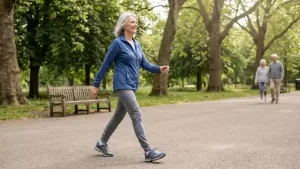
According to personal trainer Rafael Hidalgo, a routine as straightforward as a 20-to-30-minute walk, performed roughly five days a week, is fully capable of moving the needle for cardiovascular health, joint mobility, and overall vitality. The surprising twist is just how quickly these functional benefits manifest when regular, daily repetition takes precedence over physical strain.
Why a 30-Minute Daily Walk Is a Game-Changer for Adults Over 70
The Power of the 30-Minute Target
The recommendations provided by fitness specialists align perfectly with global public health directives. The Centers for Disease Control and Prevention (CDC) advises that adults aged 65 and older accumulate at least 150 minutes of moderate-intensity aerobic activity per week, alongside dedicated strength and balance training.

Breaking this target down into 30-minute sessions five days a week makes fitness highly achievable. In practical terms, moderate walking means moving at a pace that requires mild effort but never feels like a punishment. A reliable baseline is the “talk test”: you should be breathing slightly harder than usual, but still be fully capable of maintaining a fluid conversation with someone walking beside you.
What the Science Reveals About Small Steps
Recent epidemiological research highlights that older adults do not need to hit the arbitrary, highly popularized target of 10,000 steps a day to unlock substantial health benefits.
The 500-Step Incremental Benefit
A milestone study led by Dr. Erin E. Dooley at the University of Alabama at Birmingham School of Public Health, presented via the American Heart Association (AHA), uncovered a powerful correlation among adults aged 70 and older. The data revealed that adding just an additional 500 steps of daily walking—roughly equivalent to a quarter-mile—was associated with a 14% lower risk of experiencing heart disease, stroke, or heart failure.

Redefining the Daily Baseline
Furthermore, a comprehensive study published in JAMA Internal Medicine tracking over 16,000 older women demonstrated that those who averaged roughly 4,400 steps per day experienced significantly lower mortality rates compared to the least active group. Interestingly, the survival benefits began to level off at around 7,500 steps per day, proving that the greatest health dividends are earned during the initial transition from a sedentary lifestyle to light, consistent daily movement.
A Comprehensive Framework for Safe, Effective Walking
To ensure that a daily walking routine builds physical confidence rather than increasing the risk of injury or falls, older adults should approach their routine with structural intentionality.
[Medical Clearance] ➔ [5-10 Min Joint Warm-Up] ➔ [Consistent Walk with Pauses] ➔ [Hydrate & Stretch]
1. Establish a Safer Foundation
For individuals who are managing chronic health conditions or returning to exercise after years of inactivity, the very first step should occur in a clinical setting. A brief medical evaluation ensures that your cardiorespiratory system is prepared for regular activity.
 The Martial Arts Advantage: Harvard Medical School’s Top Exercise Recommendation for Seniors
2. Prepare the Mechanics
Treat your body with the same care you would accord a cold vehicle on a winter morning; never slam on the gas immediately. Dedicate 5 to 10 minutes to gentle, non-weight-bearing mobility movements for the ankles, knees, and hips before increasing your walking pace. This stimulates the flow of synovial fluid, which lubricates the joints and prevents premature wear.
3. Incorporate Strategic Pauses
One of the most valuable, yet frequently overlooked, aspects of walking for longevity is the total acceptance of rest breaks. Taking a brief, two-minute pause on a park bench is not a sign of fitness failure; it is a smart, tactical decision to manage fatigue. Pausing allows your heart rate to recover slightly and helps maintain a clean, stable walking pattern, ensuring that structural fatigue does not compromise your balance.
4. Select the Right Infrastructure
Safety starts from the ground up. The American Academy of Orthopaedic Surgeons emphasizes the critical importance of properly fitted, supportive footwear featuring non-skid, slip-resistant soles. Pair good shoes with predictable terrain by choosing level concrete sidewalks, well-maintained park loops, or compact dirt paths, while actively avoiding loose gravel or uneven surfaces.
Listening to the Body: Red Flags vs. Normal Effort
While a slight increase in heart rate and mild muscle warmth are completely normal responses to exercise, older adults must remain highly vigilant regarding structural warning signs.
| Normal Physiological Response | Immediate Warning Signs (Stop Walking) |
| Deepened breathing (still able to talk easily) | Sudden dizziness, lightheadedness, or loss of balance |
| Mild muscular warmth in the calves and glutes | Acute chest pain, pressure, or tightness |
| Light sweating as the body regulates temperature | Unusual, distressing shortness of breath |
| A natural, healthy sense of physical tiredness | Profound fatigue that feels entirely out of proportion |
If you experience any of the warning signs listed above, stop moving immediately, sit down in a safe location, and seek prompt medical advice if the symptoms do not completely resolve within a few minutes of resting.
Balancing the Equation: Aerobic Work Needs Strength
While a consistent walking routine works wonders for the heart, lungs, and emotional mood, it represents only one tool in a comprehensive wellness toolkit. To maintain long-term physical independence, cardiovascular walking must be paired with functional resistance movements at least two days a week.
Functional Strength Matters: True longevity strength does not require heavy gym equipment. It is built through practical, real-world movements: standing up repeatedly from a sturdy dining chair without using your hands, climbing a flight of stairs using a supportive handrail, or performing gentle wall push-ups.
These basic movements fortify the exact muscle groups required to carry groceries safely, step confidently over an unexpected curb, or get out of bed easily in the middle of the night.
Conclusion: Emphasizing the Journey Over Intensity
If you are over 70 and looking to improve your vitality, the directive for tomorrow morning is refreshingly simple: lace up a pair of supportive shoes, step out the door, and walk at a comfortable, manageable pace. Listen closely to your body’s innate signals, pause to appreciate your surroundings whenever you feel tired, and finish with a tall glass of water and a few gentle stretches for your lower back and legs. You do not need an advanced fitness tracker or a grueling training program. By prioritizing regular, patient consistency over intense effort, you grant your body the steady support it needs to stay strong, mobile, and independent for years to come.
Frequently Asked Questions
Can I split my 30-minute daily walk into shorter sessions?
Absolutely. If walking for 30 consecutive minutes feels too taxing or causes joint discomfort, you can comfortably split the time into three 10-minute walks scattered throughout the day. Research shows that cumulative short bouts of exercise deliver virtually identical cardiovascular and metabolic benefits as one continuous session, making it an excellent strategy for managing daily fatigue.
What should I do if the weather makes outdoor walking unsafe?
Never risk walking outdoors on icy, slick, or excessively hot surfaces. Instead, move your routine indoors. You can walk laps around the interior of a local shopping mall, utilize a steady treadmill at a community center, or even follow a low-impact, indoor walking workout video right in the comfort of your living room.
How do I know if my walking shoes provide enough support?
A proper walking shoe should feature a thick, cushioned sole to absorb joint impact, a firm heel counter to prevent your foot from sliding sideways, and a flexible toe box that allows your foot to roll forward naturally. If you can easily twist the shoe into a wringing shape like a towel, it likely lacks the structural support required for safe, stable walking.
Is it normal to experience mild knee or hip stiffness when starting out?
A small amount of initial stiffness can occur as your joints adapt to increased movement, particularly if you have mild osteoarthritis. This is why a 5-to-10-minute gentle warm-up is so vital. However, if the stiffness transforms into sharp, localized pain that worsens as you walk or persists long after you finish, you should pause your routine and consult an orthopedic specialist.
How quickly will I begin to notice the health benefits of a walking routine?
When consistency beats intensity, structural improvements can appear surprisingly fast. Many older adults report noticeable enhancements in their sleep quality, daily mood, and mental clarity within the very first week of regular walking. Within 4 to 6 weeks, you can expect to notice tangible improvements in your respiratory stamina, leg strength, and overall balance.