
Table of Contents
- 1. Understanding the Hidden Dangers of Sleep Apnea
- 2. Why Obesity and Airway Blockage Are Inseparable
- 3. The SURMOUNT-OSA Trials: A Two-Pronged Approach
- 4. A Precision Tool, Not a Universal Cure
- 4.1. CPAP and Tirzepatide: A Combined Strategy
- 5. Important Considerations and Safety Profiles
- 6. Conclusion: Treating the Patient, Not Just the Symptom
- 7. Frequently Asked Questions (FAQs)
- 7.1. 1. Does tirzepatide cure sleep apnea permanently?
- 7.2. 2. Can I use tirzepatide instead of my CPAP machine?
- 7.3. 3. Are there patients who should not use this medication for sleep apnea?
- 7.4. 4. How long does it take to see improvements in sleep?
- 7.5. 5. Is the drug covered by insurance for sleep apnea?
Beyond Weight Loss: Tirzepatide’s New Role in Treating Sleep Apnea
For millions of people, the nightly ritual of strapping on a CPAP mask is a necessary but often cumbersome burden. Obstructive sleep apnea (OSA) has long been treated primarily through mechanical means—keeping airways open with pressurized air—or through difficult lifestyle adjustments. However, a recent shift in pharmaceutical research is fundamentally changing how we approach this chronic condition.
Tirzepatide, the blockbuster medication already established for type 2 diabetes management and significant weight loss, has officially received U.S. Food and Drug Administration (FDA) approval as a treatment for adults with obesity and moderate to severe obstructive sleep apnea. This development represents more than just a new prescription; it signals a potential pivot toward treating the metabolic roots of sleep disorders rather than just the mechanical symptoms.

Beyond Weight Loss Tirzepatide’s New Role in Treating Sleep Apnea
Understanding the Hidden Dangers of Sleep Apnea
Obstructive sleep apnea is far more than an issue of loud snoring or disrupted rest. It occurs when the muscles and soft tissues in the back of the throat relax excessively during sleep. This causes the airway to narrow or collapse entirely, forcing the body to momentarily stop breathing or breathe shallowly.

These breathing interruptions can occur dozens of times per hour, often without the person ever fully waking up. The physiological fallout is severe:
Chronic Hypoxia: Low oxygen levels throughout the night put immense strain on the cardiovascular system.
Systemic Inflammation: The cycle of intermittent breathing triggers inflammatory responses that damage blood vessels.
Daytime Impairment: Patients often suffer from severe morning headaches, cognitive fog, and excessive daytime sleepiness, which significantly increases the risk of accidents while driving or operating machinery.

Why Obesity and Airway Blockage Are Inseparable
While sleep apnea can be caused by anatomical issues like jaw structure or enlarged tonsils, obesity is arguably the most common clinical driver. Excess adipose tissue—particularly in the neck and throat area—mechanically compresses the airway. When a patient falls asleep and those muscles naturally relax, gravity and excess tissue make it significantly easier for the airway to obstruct.
Historically, the gold standard for treatment has been the Continuous Positive Airway Pressure (CPAP) machine. While CPAP is highly effective at physically keeping the airway open, it does not address the underlying metabolic drivers of the disease. This is where tirzepatide changes the landscape.

The SURMOUNT-OSA Trials: A Two-Pronged Approach
The FDA approval for tirzepatide (marketed as Zepbound for weight management) was spurred by the results of the SURMOUNT-OSA clinical program. The study followed 469 adults with obesity and moderate-to-severe OSA, divided into two distinct groups: those who were already using CPAP therapy and those who could not or would not tolerate it.
Participants received either weekly tirzepatide injections or a placebo over a 52-week period. The results were striking:
Reduced Breathing Events: The primary metric, the apnea-hypopnea index (AHI), showed significantly fewer breathing interruptions in the treatment group compared to the placebo group.
Systemic Health Gains: Beyond just breathing, patients experienced an average weight reduction of 18% to 20%, alongside marked improvements in systolic blood pressure and biomarkers of inflammation.
Oxygenation Levels: Patients showed better oxygen saturation during sleep, suggesting that the reduction in tissue volume directly improved respiratory function.
A Precision Tool, Not a Universal Cure
It is vital to distinguish between who this drug helps and who it does not. Dr. Facundo Nogueira, head of the Sleep Laboratory at Hospital de Clínicas, emphasizes that tirzepatide’s benefits are largely tied to its weight-loss mechanism.
Because the drug functions by regulating gut hormones that control satiety and insulin sensitivity, it is most effective for patients whose apnea is driven by metabolic excess. For patients whose sleep apnea is caused by non-obesity-related factors—such as craniofacial structure or chronic nasal congestion—a weight-loss medication is unlikely to resolve the primary obstruction.
CPAP and Tirzepatide: A Combined Strategy
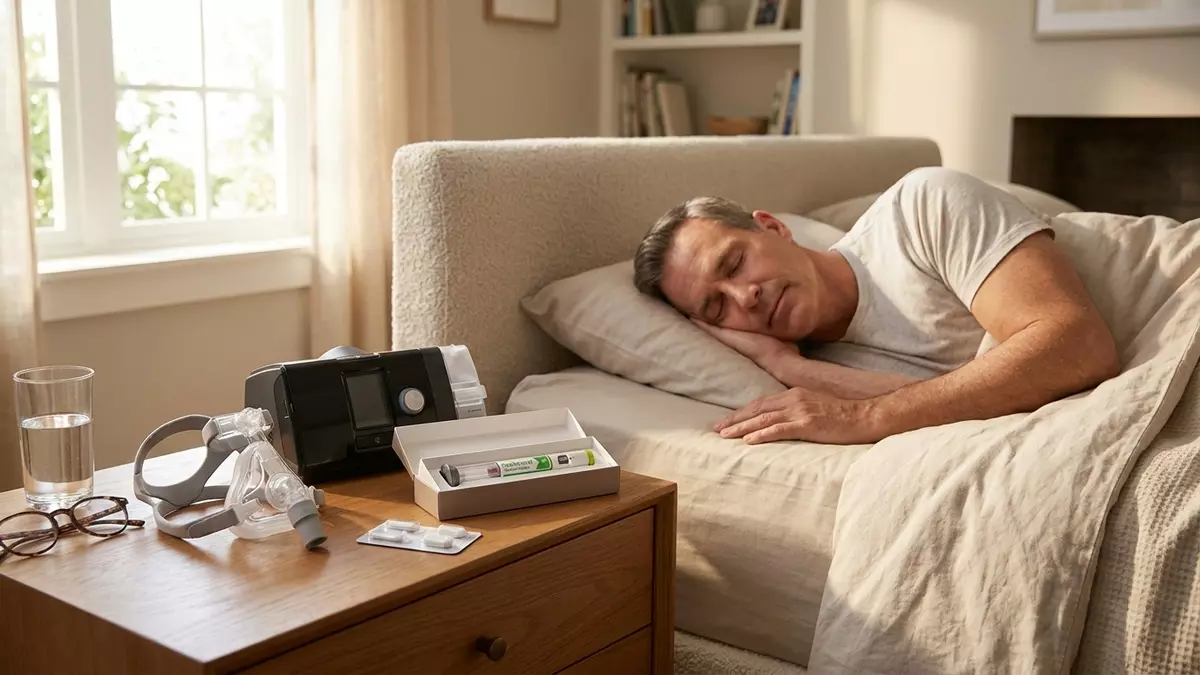
The most exciting implication of this research is not the replacement of existing therapies, but the potential for synergy. Data suggests that patients who utilize both CPAP therapy and tirzepatide see the greatest improvement in cardiovascular outcomes and oxygenation. Rather than an “either/or” scenario, the future of OSA treatment may look like a multi-pronged approach that combines metabolic support with mechanical assistance.
Important Considerations and Safety Profiles
As with any potent medication, tirzepatide is not without its trade-offs. The most commonly reported side effects are gastrointestinal in nature, including nausea, vomiting, diarrhea, constipation, and general stomach upset. While serious complications like pancreatitis are extremely rare, they remain a point of medical focus.
Furthermore, the logistical and financial barriers to accessing these medications remain significant for many patients. As the medical community integrates this drug into standard sleep apnea protocols, insurance coverage and accessibility will be the next major hurdles to clear.
Conclusion: Treating the Patient, Not Just the Symptom
The FDA approval of tirzepatide for sleep apnea represents a departure from the “chasing symptoms” model of medicine. By acknowledging the deep, bi-directional link between metabolic health and airway function, doctors now have a tool to manage a complex cluster of diseases simultaneously.
While a weekly injection is not a shortcut, it is a significant step forward. It allows clinicians to address the “metabolic syndrome” that often accompanies sleep apnea, potentially reducing the patient’s reliance on high-pressure mechanical support over the long term.
Frequently Asked Questions (FAQs)
1. Does tirzepatide cure sleep apnea permanently?
Tirzepatide is a chronic treatment, not a one-time cure. If a patient stops the medication and regains the lost weight, the pressure on their airway will likely return, and their sleep apnea symptoms will likely recur.
2. Can I use tirzepatide instead of my CPAP machine?
This depends on your specific medical case. In the SURMOUNT-OSA trials, the drug showed significant efficacy in patients who were not using CPAP, but patients should always consult their sleep specialist before making any changes to their current therapy. The best results may come from combining both treatments.
3. Are there patients who should not use this medication for sleep apnea?
Yes. Patients without obesity, those with a history of certain thyroid cancers, or those with specific gastrointestinal conditions may not be candidates for this treatment. A thorough evaluation by a physician is necessary to determine if the medication is safe and appropriate for your body.
4. How long does it take to see improvements in sleep?
While metabolic changes begin shortly after starting treatment, improvements in sleep apnea symptoms typically correlate with the amount of weight lost. Most patients in clinical trials began to see measurable improvements in breathing events over the course of the 52-week study.
5. Is the drug covered by insurance for sleep apnea?
Insurance coverage for tirzepatide in the context of sleep apnea is evolving. Because it is a newly approved indication, patients will need to work closely with their healthcare providers to verify their specific plan coverage and navigate the prior authorization process for this use case.