
Table of Contents
- 1. The Ultimate Double Life: When a Fire Starter Joins the Fire Department
- 2. The Anatomy of a Genetic Fracture: Why Repairs Matter
- 3. The Molecular Badge: How pS62-MYC Joins the Repair Crew
- 4. A Ray of Hope for Pancreatic Cancer Therapeutics
- 5. Disarming the Shield: A New Therapeutic Target
- 5.1. Progress in Early Clinical Trials
- 6. Mapping the Future of Oncology
- 7. Frequently Asked Questions (FAQs)
- 7.1. 1. Does the MYC protein cause cancer to form in the human body?
- 7.2. 2. Why is a double-strand DNA break considered so dangerous to a cell?
- 7.3. 3. Why has the pancreatic cancer survival rate historically been so low?
- 7.4. 4. What is the difference between a standard MYC protein and pS62-MYC?
- 7.5. 5. Will therapies targeting MYC completely replace traditional chemotherapy?
Study Confirms How Common Protein Helps Cancer Defy Chemotherapy
For decades, the foundational strategy of cancer treatments like chemotherapy and radiation has relied on a blunt, powerful principle: weaponized cellular destruction. These aggressive therapies flood the body to deliberately fracture the DNA inside rapidly dividing tumor cells. When the genetic blueprints of these malignant cells are shattered beyond repair, the cells lose their ability to replicate and ultimately self-destruct.
However, oncologists have long wrestled with a frustrating medical reality: some tumors manage to withstand this genetic onslaught, aggressively repairing themselves and rendering the treatment ineffective.
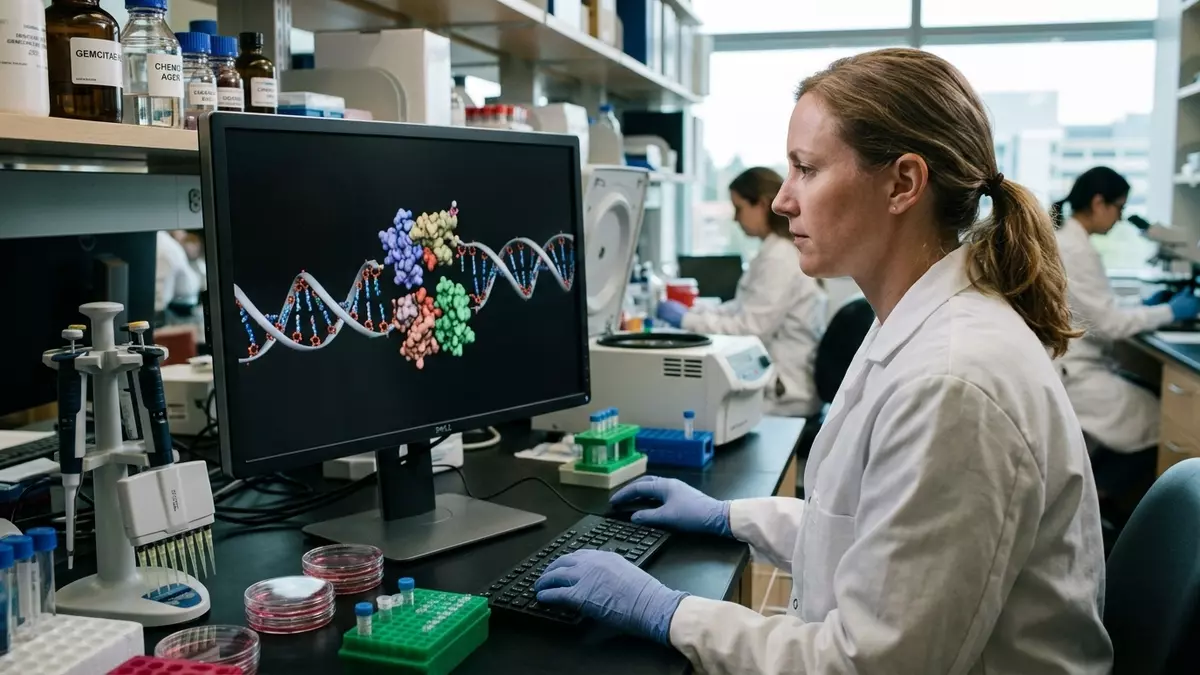
A groundbreaking study offers a profound explanation for this treatment resistance. Researchers have discovered that a notorious protein called MYC—long feared for its ability to accelerate tumor growth—moonlights as a molecular emergency responder. When chemotherapy shatters a cancer cell’s DNA, this protein rushes directly to the fracture site to patch the wounds, handing the tumor a literal lifeline.

Published in the journal Genes & Development, this discovery exposes a stealthy survival mechanism that could transform how we approach some of the most aggressive malignancies, particularly pancreatic cancer.
Study Confirms How Common Protein Helps Cancer Defy Chemotherapy
The Ultimate Double Life: When a Fire Starter Joins the Fire Department
To appreciate the weight of this discovery, it helps to understand the conventional reputation of the MYC protein. In traditional oncology, MYC is classified as a transcription factor—a master switchboard operator sitting inside the cell’s control center that determines which genes are turned on or off.
 A New Osteoarthritis Approach: Electrically Stimulating Muscles to Alter the Joint Environment
In a healthy body, MYC carefully regulates normal cell division and growth. But when a cell becomes cancerous, MYC often becomes hyperactive, frantically ordering the cell to divide, expand, and consume metabolic fuel at a reckless pace.
[ Traditional View of MYC ] ──► Transcription Room ──► Drives Rapid Tumor Growth
                                                                 │
                                                   (New Discovery Adds Second Role)
                                                                 ▼
[ Non-Canonical View of MYC ] ──► DNA Damage Site ──► Recruits BRCA1 & RAD51 ──► Repairs Tumor DNA
The new study, co-authored by senior researcher Rosalie Sears of Oregon Health & Science University and first author Gabriel Cohn (now at the University of Würzburg), investigated a striking paradox. While a hyperactive MYC protein causes massive cellular stress and structural instability that naturally damages DNA, the tumors expressing it remain remarkably resilient to treatment.
The research team discovered that MYC leads a double life. Beyond its traditional role in the control room, a chemically altered variant of the protein physically migrates to the front lines of DNA damage. Once there, it actively coordinates the cellular repair process.

“MYC acts like an arsonist who keeps the local fire department on speed dial,” the researchers noted.
This unexpected capability is what scientists call a “non-canonical” role—a hidden, secondary job description that completely eluded researchers for decades.
The Anatomy of a Genetic Fracture: Why Repairs Matter
DNA functions as the master operating manual for every living cell. Standard chemotherapy drugs are designed to force what are known as double-strand breaks within this manual. Unlike a single-strand nick, which a cell can easily patch by copying the opposing side, a double-strand break snaps both rails of the genetic ladder simultaneously.
When both strands break, the cell loses the local template required to rebuild the missing genetic sequence. If a patient’s treatment regimen induces enough of these double-strand breaks, the internal repair bill becomes too expensive for the cancer cell to pay, forcing it into programmed cell death.
| Treatment Goal | Tumor Defense Mechanism | Medical Outcome |
| Chemotherapy / Radiation | Induces catastrophic double-strand DNA breaks | Destroys tumor’s replication blueprint |
| Hyperactive pS62-MYC | Migrates to the physical break site immediately | Mitigates damage, heals genetic fractures |
| Resulting Dynamic | Cellular damage threshold is never reached | Tumor survives treatment and develops resistance |
If a tumor cell can deploy a specialized crew to patch these double-strand breaks fast enough, it can survive the chemical attack. This survival allows the cell to keep dividing, eventually giving rise to a population of treatment-resistant daughter cells that no longer respond to standard chemotherapy.
The Molecular Badge: How pS62-MYC Joins the Repair Crew
The key to MYC’s transformation from a growth driver to a genetic mechanic lies in a biochemical process called phosphorylation. This occurs when a cell attaches a microscopic chemical tag—specifically a phosphate group—to a protein, completely altering its physical shape and behavior.
In this specific mechanism, the chemical tag attaches to one precise location on the MYC protein, creating a modified version known as pS62-MYC.
Once this molecular badge is pinned to its structure, the protein alters its trajectory:
The Emergency Signal: The pS62-MYC protein migrates straight to the physical double-strand breaks in the DNA.
Calling for Backup: Upon arrival, it locks onto BRCA1 and RAD51, two well-known, heavy-duty DNA repair proteins.
Executing the Patch: Working together, this protein complex rapidly mends the broken strands, allowing the tumor cell to stabilize its genetic manual under highly stressful conditions.
Without this chemical badge, MYC stays confined to its routine role in the cell’s control room. With it, the protein gains an all-access pass to enter the cellular disaster zone, shielding the cancer from the precise damage therapy is trying to inflict.
A Ray of Hope for Pancreatic Cancer Therapeutics
While this mechanism presents a formidable challenge across various tumor types, it is uniquely relevant to pancreatic cancer.
Pancreatic cancer is notoriously aggressive, exceptionally difficult to diagnose in its early stages, and deeply resistant to standard frontline chemotherapy regimens. According to recent data from the Surveillance, Epidemiology, and End Results (SEER) program managed by the National Cancer Institute, the five-year relative survival rate for pancreatic cancer in the United States stands at a sobering 13.7%. Across all stages, roughly only 13 out of 100 diagnosed patients survive five years past their initial diagnosis.
Because pancreatic tumors frequently exhibit exceptionally high levels of MYC activity, this newly discovered escape route explains why these tumors so easily brush off aggressive chemotherapy. The protein provides a shield at the exact moment clinicians are attempting to deliver a decisive blow.
Disarming the Shield: A New Therapeutic Target
For over thirty years, drug developers have labeled MYC as an “undruggable” target. Unlike many proteins that feature deep, well-defined pockets where a custom-designed drug molecule can easily dock and disable it, MYC is smooth, flexible, and structurally elusive. Furthermore, because healthy cells rely on basic MYC functions to grow and maintain tissue, completely shutting down all MYC proteins throughout the body would cause severe, toxic side effects for the patient.
However, mapping this specific DNA repair pathway changes the entire strategy. Instead of attempting to eliminate the MYC protein entirely, scientists can now focus on a far more precise target:
[ Broad Strategy: Unsuccessful ] ──► Eliminate All MYC Proteins ──► Extreme Toxicity to Healthy Cells
[ Precision Strategy: Promised ] ──► Block pS62-MYC Tagging    ──► Disarms Tumor Repair Without Harm
By designing therapies that specifically block the phosphorylation process that creates pS62-MYC, or by disrupting its interaction with BRCA1 and RAD51 at the break site, scientists could strip away the tumor’s shield. This would leave the protein’s normal, healthy functions intact while rendering the cancer completely defenseless against standard chemotherapy.
Progress in Early Clinical Trials
This precision oncology approach is already moving through early testing phases. A notable phase 1 clinical trial published in Nature Medicine evaluated OMO-103, a novel first-in-class MYC inhibitor, in 22 patients living with advanced solid tumors. The trial yielded highly encouraging early signs of anti-drug activity and a manageable safety profile.
Building on that momentum, active early-phase clinical studies are currently evaluating OMO-103 specifically in patients diagnosed with advanced pancreatic ductal adenocarcinoma. By analyzing tumor biopsies taken immediately before and after drug exposure, researchers hope to confirm if blocking this pathway makes tumors vulnerable to treatment.
Mapping the Future of Oncology
This discovery does not mean oncologists will stop using chemotherapy, radiation, or surgery. Instead, it provides a vital map of a major escape route used by resilient tumors.
The next step in clinical research is figuring out how to combine traditional DNA-damaging chemotherapies with new, targeted inhibitors that block pS62-MYC. By hitting the tumor hard with chemotherapy while simultaneously removing its ability to patch itself up, medicine may finally tilt the scales against some of the most treatment-resistant cancers, maximizing tumor destruction while protecting the rest of the patient’s body.
Frequently Asked Questions (FAQs)
1. Does the MYC protein cause cancer to form in the human body?
No, the MYC protein itself is not an enemy; it is a normal, vital component of human biology that helps regulate healthy cell growth, metabolism, and division. Cancer occurs when the genes responsible for controlling MYC mutate, causing the protein to become hyperactive and get stuck in the “on” position, which drives uncontrolled tumor growth.
2. Why is a double-strand DNA break considered so dangerous to a cell?
A single-strand break is easily fixed because the cell can use the intact opposite strand as an exact blueprint to fill in the missing pieces. A double-strand break cuts through both rails of the DNA ladder simultaneously, leaving no local template behind. If a cell cannot repair these breaks quickly, it loses its operational instructions and dies.
3. Why has the pancreatic cancer survival rate historically been so low?
Pancreatic cancer is incredibly stealthy; it rarely produces noticeable symptoms in its early stages, meaning the vast majority of patients are diagnosed only after the tumor has already spread to surrounding organs. Additionally, pancreatic tumors are protected by a dense, fibrous tissue layer and possess advanced internal survival mechanisms—like the pS62-MYC repair pathway—that make them highly resistant to standard chemotherapies.
4. What is the difference between a standard MYC protein and pS62-MYC?
The difference comes down to a process called phosphorylation, where the cell adds a tiny chemical phosphate tag to a specific spot on the MYC protein. A standard MYC protein stays inside the cell’s transcription room to drive growth. Once it receives the pS62-MYC chemical tag, it gains the ability to travel directly to damaged DNA and coordinate with repair proteins like BRCA1.
5. Will therapies targeting MYC completely replace traditional chemotherapy?
No. Future treatment strategies will likely use a combination approach. Chemotherapy or radiation will still be used to inflict devastating DNA damage on the tumor, while a targeted MYC inhibitor will be given alongside it to block the pS62-MYC repair crew, trapping the cancer cell so it cannot survive the treatment.