
Table of Contents
- 1. What Exactly Is a Carnivore-Style Breakfast?
- 2. Shifting Ideals: Performance Over Punishment
- 3. The Magic of Simplicity in a Complex World
- 4. Modulating the Extreme: The “Protein-First” Nuance
- 5. Redefining Daily Habits: The Rise of High-Protein Snacking
- 5.1. What the Clinical Research Says
- 6. Summary: A Balanced Path Forward
- 7. Frequently Asked Questions (FAQs)
- 7.1. 1. Will eating a carnivore breakfast cause an increase in my bad cholesterol?
- 7.2. 2. Can I still perform high-intensity workouts without morning carbohydrates?
- 7.3. 3. How does a carnivore breakfast prevent the afternoon energy crash?
- 7.4. 4. Is it safe to eat organ meats like liver as part of this routine?
- 7.5. 5. Do I have to commit to a full carnivore diet to see the benefits?
The Rise of Carnivore Breakfasts: Why Stars Swear by All-Meat Mornings
The wellness world is undergoing a profound structural shift. For decades, standard nutritional advice for an energetic morning revolved around a bowl of oatmeal, a vibrant fruit smoothie, or a slice of whole-wheat toast. Today, however, some of the most influential figures in fitness and entertainment are aggressively pushing a completely different philosophy.
Led by high-profile figures like Marvel star Chris Hemsworth and podcaster Joe Rogan, the “carnivore breakfast” has exploded into the mainstream wellness spotlight. Trading complex carbohydrates for a plate loaded exclusively with protein and animal fats, this zero-carb morning ritual has ignited massive curiosity worldwide.
Far from being a fleeting internet fad, this meat-heavy morning routine reflects a deeper, cultural transformation in how we approach physical performance, energy stability, and functional health.
The Rise of Carnivore Breakfasts Why Stars Swear by All-Meat Mornings

What Exactly Is a Carnivore-Style Breakfast?
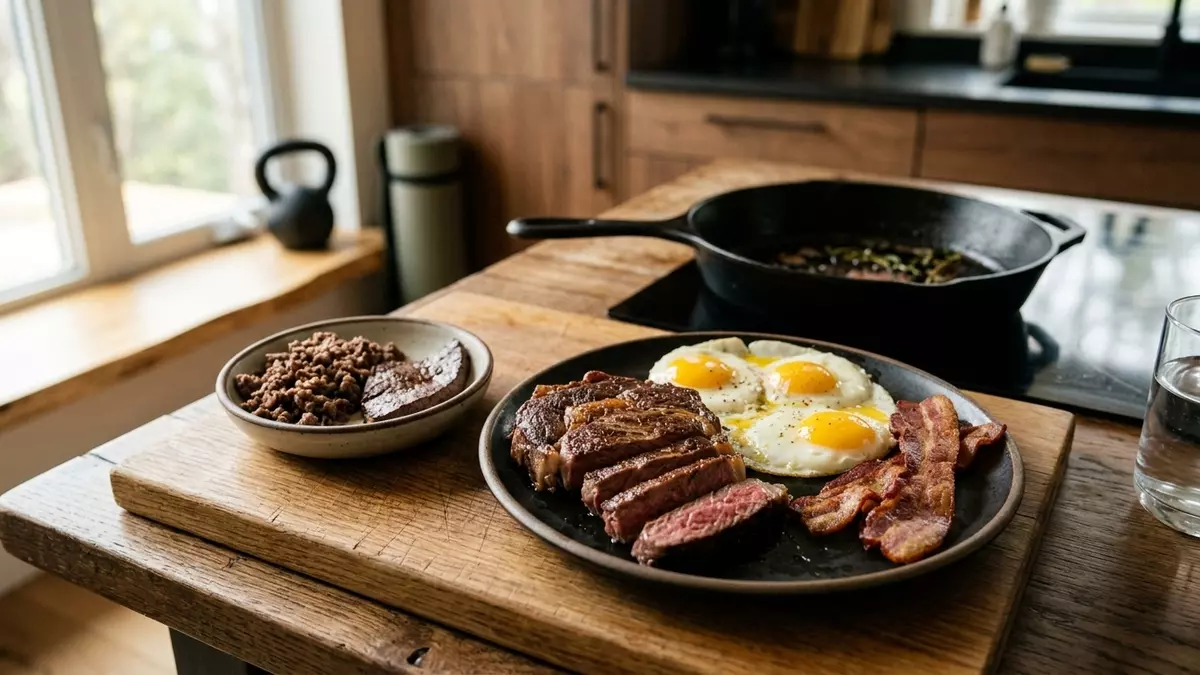
A carnivore-style breakfast is exactly what it sounds like: a morning meal built entirely around animal products, completely devoid of plant matter, grains, or sugars.
Instead of traditional breakfast foods, followers of this routine front-load their day with combinations of:
Premium Proteins: Ribeye steaks, ground beef, and thick-cut bacon.
Whole Eggs: Cooked in butter or beef tallow to maximize healthy fat intake.
Organ Meats: Incorporating nutrient-dense choices like liver or heart for a hyper-concentrated dose of micronutrients.

[Traditional Morning Meal] ──► High Carbs ──► Insulin Spike ──► Energy Crash
[Carnivore-Style Breakfast] ──► High Protein/Fat ──► Sustained Satiety ──► Steady Focus
The underlying philosophy is to start the day in a state of metabolic stability. By intentionally skipping sugars and complex carbohydrates first thing in the morning, individuals bypass the typical insulin spikes and subsequent mid-morning crashes that plague high-carb diets, unlocking a steady stream of sustained physical and mental energy.

Shifting Ideals: Performance Over Punishment
The explosive popularity of carnivore breakfasts highlights a major paradigm shift dominating modern wellness culture. For generations, the prevailing health trends focused on restriction, calorie counting, and drastic weight loss. Celebrity routines were often defined by restrictive juice cleanses, powdered detox teas, and celery-stick snacks designed to maintain a “size zero” physique.
Today, that narrative is being replaced by a focus on strength, skeletal muscle mass, and long-term stamina. Celebrities and athletes are prioritizing lean muscle tissue and physical resilience over mere thinness.
Front-loading the day with high-quality animal protein feels fundamentally more grounded, practical, and functional than starvation-based detoxes ever did. In an era where morning routines have become a modern status symbol, a plate of steak and eggs has become the ultimate visual shorthand for raw discipline and performance-driven energy.
The Magic of Simplicity in a Complex World
Beyond the physical benefits, the carnivore breakfast offers an unexpected psychological advantage: radical simplicity.
Modern nutrition has become incredibly complicated. Between tracking macronutrient percentages on smartphone apps, monitoring continuous glucose readings, analyzing microbiome data, and decoding complex ingredient labels, meal planning can easily feel like a stressful, full-time job.
[ Modern Nutrition Confusion ]                 [ The Carnivore Alternative ]
  ├── Continuous Glucose Monitors
  ├── Microbiome Stool Tests          ──► VS ──►   [ Keep It Primal & Simple ]
  ├── Calorie Tracking Apps                        Just cook meat and eggs.
  └── Multi-Stage Supplement Stacks
An all-meat morning completely strips away this decision fatigue. There are no ingredients to screen, no carbohydrates to calculate, and no complex recipes to execute. The process is clear, accessible, and primal: you simply cook meat and eggs. For busy individuals managing chaotic schedules, this frictionless approach to nutrition is incredibly appealing.
Modulating the Extreme: The “Protein-First” Nuance
While full, all-day carnivore diets remain highly controversial among mainstream dietitians due to the total exclusion of fiber and plant-based antioxidants, the breakfast-only variation offers a more balanced compromise.
Even the most enthusiastic supporters of meat-heavy lifestyles acknowledge that strict dietary extremes can be difficult to sustain. For instance, while organ meats are undeniably rich in fat-soluble vitamins, consuming them daily can quickly become excessive and unpalatable for the average person.
Because of this, many modern practitioners adopt a “protein-first, not protein-only” framework. They actively embrace the dramatic visual aesthetic and metabolic benefits of a meat-centric breakfast to anchor their morning focus, while allowing for more diverse, flexible nutritional choices later in the afternoon and evening. This dialed-down approach delivers the advantages of high-protein satiety without the restrictive burdens of an all-meat lifestyle.
Redefining Daily Habits: The Rise of High-Protein Snacking
The focus on protein doesn’t stop once the morning ends. This emphasis on metabolic strength has naturally transformed how people snack throughout the remainder of the day.
Instead of reaching for low-calorie crackers, pre-packaged granola bars, or processed fruit snacks, individuals looking to maintain steady energy levels are choosing nutrient-dense, muscle-supporting whole foods. High-profile figures like Zendaya and Jennifer Lopez are frequently cited as champions of this balanced, protein-forward approach to snacking.
Popular snack choices driving this trend include:
Savory turkey jerky or grass-fed beef sticks.
Bowls of organic cottage cheese topped with fresh herbs.
Unsweetened Greek yogurt cups rich in natural amino acids.
What the Clinical Research Says
This lifestyle shift is strongly supported by peer-reviewed nutritional science. Research published in the American Journal of Clinical Nutrition highlights that evenly distributing high-quality protein intake across multiple meals throughout the day is significantly more effective at preserving lean muscle mass during fat loss than consuming your entire daily protein requirement in a single sitting.
By utilizing a combination of a carnivore-style breakfast and strategic, high-protein snacks, individuals can effortlessly support their training demands, dodge energy dips, and keep cravings at bay without ever feeling metabolically deprived.
Summary: A Balanced Path Forward
The widespread fascination with carnivore breakfasts proves that people are hungry for simple, effective, and energy-sustaining lifestyle changes. While a 100% all-meat lifestyle might not be the perfect fit for everyone’s long-term health goals, front-loading your morning with high-quality protein and healthy fats offers an undeniable metabolic advantage. By stepping away from sugary, carb-heavy breakfasts and focusing on real, savory fuel, you can unlock the reliable stamina, focus, and strength required to conquer the day ahead.
Frequently Asked Questions (FAQs)
1. Will eating a carnivore breakfast cause an increase in my bad cholesterol?
It depends entirely on your unique genetics and overall metabolic health. Diets high in saturated animal fats can raise LDL (often called “bad” cholesterol) in certain individuals, particularly those classified as hyper-responders. If you intend to adopt a heavy meat-and-egg routine long-term, it is always a smart idea to monitor your comprehensive lipid panels with a healthcare professional.
2. Can I still perform high-intensity workouts without morning carbohydrates?
Absolutely. Many athletes find that after an initial adaptation period, their bodies become highly efficient at utilizing fats and dietary proteins for fuel. However, if your training consists of explosive, short-burst anaerobic movements (like competitive sprinting or Olympic weightlifting), you may eventually want to reintroduce targeted carbohydrates later in the day to fully replenish muscle glycogen stores.
3. How does a carnivore breakfast prevent the afternoon energy crash?
When you consume a carbohydrate-heavy breakfast, your body breaks those carbs down into glucose, causing a rapid spike in blood sugar followed by an insulin surge to clear it out. This rapid drop is what causes the classic 2:00 PM brain fog. A breakfast built on protein and fat causes negligible blood sugar fluctuations, providing a smooth, level supply of energy for hours.
4. Is it safe to eat organ meats like liver as part of this routine?
Organ meats are exceptionally nutrient-dense and offer highly bioavailable forms of vitamin A, B12, iron, and copper. However, because they are so potent, eating them in large quantities every single day can lead to nutrient toxicities (such as vitamin A toxicity). It is generally best to treat organ meats as an occasional supplement rather than the main bulk of your daily breakfast plate.
5. Do I have to commit to a full carnivore diet to see the benefits?
Not at all. In fact, many people find the greatest success by using a hybrid approach. Eating a carnivore-style or protein-first breakfast gives you great morning focus and fullness, while leaving the door open to consume healthy carbohydrates, fiber, vegetables, and fruits during lunch or dinner to maintain a diverse, gut-friendly diet.