
Table of Contents
- 1. The Nutritional Goldmine Hidden in Plain Sight
- 1.1. Vitamins by the Numbers
- 1.2. The Antioxidant and Fiber Shield
- 2. But What About Pesticides and Dirt?
- 3. 4 Other Generational Health Myths We Can Safely Retire
- 3.1. 1. “Sleeping with wet hair or going outside in the cold will give you a virus.”
- 3.2. 2. “Microwaving your food destroys its nutritional value.”
- 3.3. 3. “Cracking your knuckles will cause arthritis later in life.”
- 3.4. 4. “You can easily catch infectious diseases from public toilet seats.”
- 4. The Takeaway: Evolving with the Evidence
- 5. Frequently Asked Questions (FAQ)
- 5.1. 1. Are there any specific fruits or vegetables that I should always peel?
- 5.2. 2. Is it safe to eat the skin of kiwi fruit?
- 5.3. 3. Does cooking vegetables with the skin on change how the nutrients are absorbed?
- 5.4. 4. Can children digest fruit and vegetable skins easily?
- 5.5. 5. If I buy conventional (non-organic) produce, is it safer to peel it?
The Peel Paradox: Why Your Grandma’s Vegetable Prep Is Lowering Your Nutrient Intake
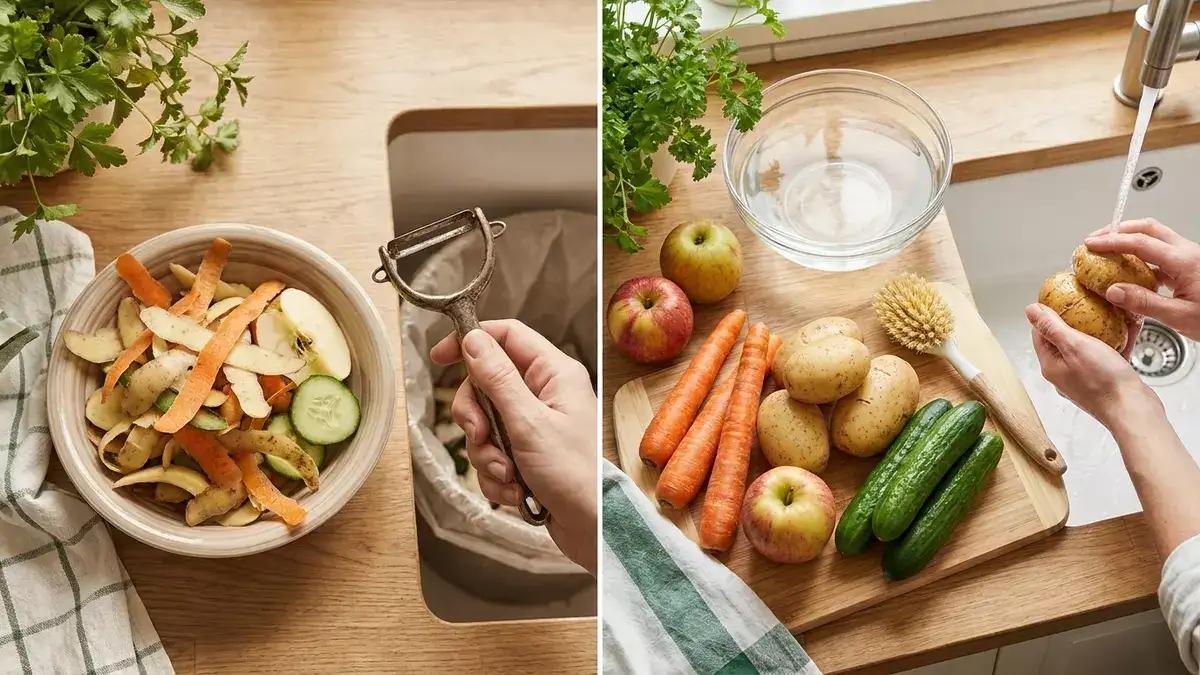
Kitchen habits die hard. For generations, the standard procedure for preparing a meal has involved pulling out a vegetable peeler the moment an apple, potato, carrot, or cucumber hits the cutting board. Passed down from parents and grandparents, this ritual was built on a simple, well-intentioned premise: the skin is dirty, tough, or less healthy, so removing it is the safest bet for your family.
However, modern nutritional science has revealed that this time-honored advice is completely outdated. According to dietitians and gastroenterologists, that old habit of peeling away the exterior layers of your produce is systematically stripping away the most nutrient-dense, antioxidant-rich portion of the food.
Unpacking the true anatomy of a vegetable, alongside a few other stubborn, generational health myths, reveals just how much our daily habits can benefit from a modern medical update.
The Peel Paradox Why Your Grandma’s Vegetable Prep Is Lowering Your Nutrient Intake
 The Biological Reality of Gray Hair
The Nutritional Goldmine Hidden in Plain Sight
When you drop fruit and vegetable peels into the trash can or compost bin, you aren’t just throwing away waste—you are discarding a highly concentrated biological matrix of vitamins, minerals, and dietary fiber.
Because the skin of a plant interfaces directly with the outside world, it serves as the plant’s natural shield. To protect itself from environmental stressors, pests, and solar radiation, the plant concentrates its defensive compounds heavily within its outer walls.
Vitamins by the Numbers
The difference in nutrient density between a plant’s skin and its interior flesh is stark. Take the everyday apple: its skin contains significantly higher concentrations of Vitamin K, Vitamin A, and Vitamin C than the pale flesh underneath.

The same rule applies to the humble potato. When you boil or roast a potato with its jacket fully intact, the skin acts as a protective barrier that seals in the interior nutrients. A skin-on potato delivers a massive boost of dietary fiber and preserves delicate, water-soluble Vitamin C that would otherwise leach out into the cooking water.
                  [ Outer Skin / Peel ]
                            │
       ┌────────────────────┴────────────────────┐
       ▼                                         ▼
[Concentrated Antioxidants]             [Insoluble Fiber]
       │                                         │
       ▼                                         ▼
 Cellular Protection                     Sustained Satiety &
 & Lower Inflammation                    Blood Sugar Control
The Antioxidant and Fiber Shield
Furthermore, plant skins are loaded with polyphenols and antioxidants—compounds that clinical research links to lower systemic inflammation and enhanced cellular repair in humans.
From a structural standpoint, the peel provides a dense dose of insoluble fiber. This fiber adds crucial bulk to your digestive tract, slowing down the absorption of fructose (natural fruit sugars). This gradual digestion prevents rapid blood sugar spikes, stabilizes your insulin response, and keeps you feeling full and satisfied for hours after eating, making it a simple, built-in tool for weight management.

But What About Pesticides and Dirt?
The most common defense for strict peeling is a fear of surface contaminants, bacteria, and agricultural pesticides. While these concerns are entirely valid, peeling is a blunt and unnecessary solution.
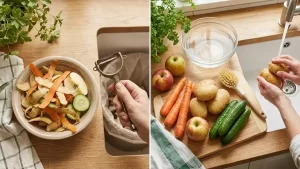
The Expert Recommendation: Instead of peeling, subject your produce to a thorough washing protocol. Rinsing fruits and vegetables under cold, running water while using a firm vegetable brush removes the vast majority of surface dirt, loose microbes, and water-soluble pesticide residues.
If you are highly concerned about chemical residues, an incredibly effective, science-backed approach is to soak your produce in a basic solution of water and baking soda for 10 to 12 minutes before rinsing. Unless the skin is completely unpalatable, excessively tough, or waxed, leaving it intact is always the superior choice for your health.
4 Other Generational Health Myths We Can Safely Retire
The mandate to peel our vegetables isn’t the only piece of traditional advice that has failed to stand up to modern medical scrutiny. Many everyday health assumptions are passed along simply because they sound logical on the surface. Here are four common myths that doctors want you to let go of today:
1. “Sleeping with wet hair or going outside in the cold will give you a virus.”
Your grandmother was right to look out for your comfort, but wrong about the biology. Exposure to cold air, damp environments, or wet hair cannot physically cause an upper respiratory infection. Colds and flus are caused entirely by microscopic viruses (like rhinovirus or influenza), which are transmitted via airborne droplets or surface contact with infected individuals. The only minor risk of a wet pillow is that trapped moisture can encourage fungal or bacterial growth, which might irritate your scalp or facial skin.
2. “Microwaving your food destroys its nutritional value.”
This is a classic case of reverse logic. In reality, microwaving is often the best method for preserving delicate vitamins and minerals in vegetables. Nutritional degradation happens when food is exposed to high heat for long periods, or when it is submerged in large amounts of water (like boiling, which causes nutrients to bleed out into the pot). Because microwaves cook food incredibly fast and require minimal added moisture, they lock in more heat-sensitive vitamins (like Vitamin C and B vitamins) than almost any other cooking method.
3. “Cracking your knuckles will cause arthritis later in life.”
While the sound can certainly irritate anyone sitting near you, knuckle cracking does not damage your joints. The popping sound you hear isn’t bones grinding together; it is the sound of tiny gas bubbles forming and rapidly collapsing within the synovial fluid that lubricates your joints when the joint space is temporarily expanded. Long-term observational studies have found zero correlation between regular knuckle cracking and the development of osteoarthritis.
4. “You can easily catch infectious diseases from public toilet seats.”
The fear of public restrooms is widespread, but the actual risk of contracting an infection from skin-to-seat contact is extraordinarily close to zero. The human skin acts as an incredibly effective, unbroken barrier against environmental pathogens, and standard gastrointestinal or sexually transmitted viruses cannot survive long on dry, cold plastic surfaces. The real vector for germs in a public restroom is the door handle, the flush valve, or the sink faucet. Washing your hands thoroughly with soap and water for 20 seconds is infinitely more important than lining a seat with paper covers.
The Takeaway: Evolving with the Evidence
Medical research and nutritional science are constantly evolving, systematically separating harmless cultural traditions from fact-based health strategies.
The next time you prepare a meal, step away from the peeler. Give your apples, carrots, cucumbers, and potatoes a vigorous scrub, leave the skins exactly where nature intended them to be, and enjoy a faster prep time alongside a massive, built-in upgrade to your daily antioxidant intake.
Frequently Asked Questions (FAQ)
1. Are there any specific fruits or vegetables that I should always peel?
Yes. You should always peel produce with skins that are completely indigestible, fibrous, or bitter, such as bananas, avocados, mangoes, pineapples, citrus fruits (unless using the zest), and winter squashes like butternut or spaghetti squash. Additionally, if you notice an apple or pear has a thick, heavy layer of artificial food-grade wax, peeling may be preferred if a thorough scrub cannot remove it.
2. Is it safe to eat the skin of kiwi fruit?
Surprisingly, yes. While the fuzzy texture can be off-putting to some, kiwi skin is entirely edible and exceptionally nutritious. Leaving the skin on a kiwi triples the total fiber content of the fruit and preserves a massive dose of Vitamin E and folate. If you want to try it, look for organic gold kiwis, which have much smoother, less furry skin than traditional green varieties.
3. Does cooking vegetables with the skin on change how the nutrients are absorbed?
Yes, for the better. Cooking vegetables like potatoes, carrots, or beets with their skins intact prevents water-soluble vitamins (such as Vitamin C and various B vitamins) from dissolving into the cooking water. It keeps the nutrients trapped inside the flesh, ensuring that you actually consume them rather than pouring them down the kitchen drain.
4. Can children digest fruit and vegetable skins easily?
For older infants and young children, raw, thick skins can sometimes present a mild choking hazard or be difficult to chew. However, instead of discarding the peel completely, you can steam or bake fruits and vegetables (like apples or pears) with the skin on until they are completely soft, then blend or mash them. This breaks down the tough structural fibers while keeping the vital micronutrient profile intact for growing bodies.
5. If I buy conventional (non-organic) produce, is it safer to peel it?
While organic farming restricts synthetic pesticides, conventional produce is still highly regulated and checked for safety. Peeling conventional produce does reduce surface pesticide levels further, but it also eliminates the main source of the food’s nutritional value. A superior strategy is to leave the skin on but utilize a thorough 10-minute soak in a water and baking soda solution, which is proven to degrade and remove the vast majority of common agricultural residues.