
Table of Contents
- 1. The Biological Power of a Nutritious Morning Routine
- 1.1. 1. Effortless Weight Management
- 1.2. 2. Robust Protection Against Cardiovascular Disease
- 1.3. 3. Fortified Brain Health and Neuroprotection
- 1.4. 4. Precision Blood Sugar Regulation
- 2. Lessons from the Blue Zones: A Centenarian’s Plate
- 3. The Ultimate Longevity Grocery List for Your Morning Meal
- 4. Two Centenarian-Inspired Breakfast Frameworks
- 5. Conclusion
- 6. Frequently Asked Questions (FAQ)
- 6.1. Can I drink coffee at breakfast if I want to maximize my longevity?
- 6.2. Is it acceptable to eat eggs every morning for breakfast?
- 6.3. What if I naturally prefer intermittent fasting and skip breakfast?
- 6.4. Why is fermented food like natto or miso so vital for long life?
- 6.5. How can I make my oatmeal taste good without using refined sugar?
The Ultimate Longevity Breakfast: What to Eat to Live to 100, According to Experts
Reaching the incredible milestone of 100 years of age is a feat that requires a combination of genetics, patience, and deliberate daily habits. While there is no single magic pill for extreme longevity, nutritionists and aging researchers increasingly agree that how you break your overnight fast sets the biological stage for a long, vibrant life.
Breakfast is far more than just a morning routine; it is the foundational meal that reactivates your metabolism after hours of sleep. In regions of the world famed for their high concentration of centenarians—often referred to as the “Blue Zones”—the first meal of the day is approached with deep consciousness and intention.
Skipping breakfast or fueling your body with refined sugars can destabilize blood glucose levels, trigger chronic fatigue, and impair mental focus. Conversely, a nutrient-dense, whole-food breakfast helps ward off metabolic dysfunction and chronic illnesses, directly extending both your lifespan and healthspan.

The Ultimate Longevity Breakfast What to Eat to Live to 100, According to Experts
The Biological Power of a Nutritious Morning Routine
Multiple clinical studies support the link between a balanced morning meal and a drastically reduced risk of age-related diseases. Longevity experts, including celebrated nutritionist Michiko Tomioka, emphasize that building your breakfast around natural, unrefined ingredients forms a powerful shield for your body.
A scientifically balanced breakfast delivers four profound health transformations that pave the path toward becoming a centenarian.

1. Effortless Weight Management
Starting your day with complex carbohydrates and clean protein naturally regulates your satiety hormones. By stabilizing your appetite early in the day, you significantly minimize the urge to overeat or snack on high-calorie foods later in the afternoon, lowering the statistical risk of obesity and its metabolic complications.
2. Robust Protection Against Cardiovascular Disease
Cardiovascular issues remain a leading threat to long-term survival. Incorporating high-fiber ingredients into your morning routine actively binds to dietary cholesterol in the digestive tract, facilitating its removal. This process successfully lowers low-density lipoprotein (LDL) or “bad” cholesterol, keeping your arteries flexible and clear.
3. Fortified Brain Health and Neuroprotection
Your brain requires clean fuel to resist premature aging. A breakfast rich in dietary antioxidants and monounsaturated healthy fats protects delicate neurons from oxidative stress. Over a lifetime, this structural defense reduces systemic neuroinflammation, lowering the risk of cognitive decline and neurodegenerative conditions like Alzheimer’s disease.

4. Precision Blood Sugar Regulation
Flooding your system with sugary pastries or processed cereals creates sharp spikes and subsequent crashes in blood glucose. Over time, this rollercoaster stresses the pancreas and leads to insulin resistance. A macro-balanced breakfast creates a slow, steady release of glucose into the bloodstream, preserving insulin sensitivity and preventing type 2 diabetes.
Lessons from the Blue Zones: A Centenarian’s Plate
The concept of “Blue Zones”—pioneered by researcher and journalist Dan Buettner—identifies specific geographic pockets where people routinely live past 100 with exceptional vitality. These regions include Okinawa (Japan), Ikaria (Greece), Sardinia (Italy), Nicoya (Costa Rica), and Loma Linda (California).
   [ The Blue Zone Dietary Blueprint ]
  =========================================
  [ Plant-Based Whole Foods ] ---------> 90%
  [ Legumes, Grains, Fruits, Veggies ]
  -----------------------------------------
  [ Small Portions of Clean Meat ] ----> 10%
  [ Refined Sugars & Processed Foods ] -> 0%
Centenarians in these diverse regions share a striking commonality: their morning meals are completely devoid of processed boxes and synthetic additives. Instead, their plates focus heavily on plant-derived, fiber-packed ingredients, while meat portions are kept small and infrequent.
The Ultimate Longevity Grocery List for Your Morning Meal
To replicate the health profiles of the world’s longest-living populations, focus on integrating these highly recommended, expert-approved foods into your morning routine.
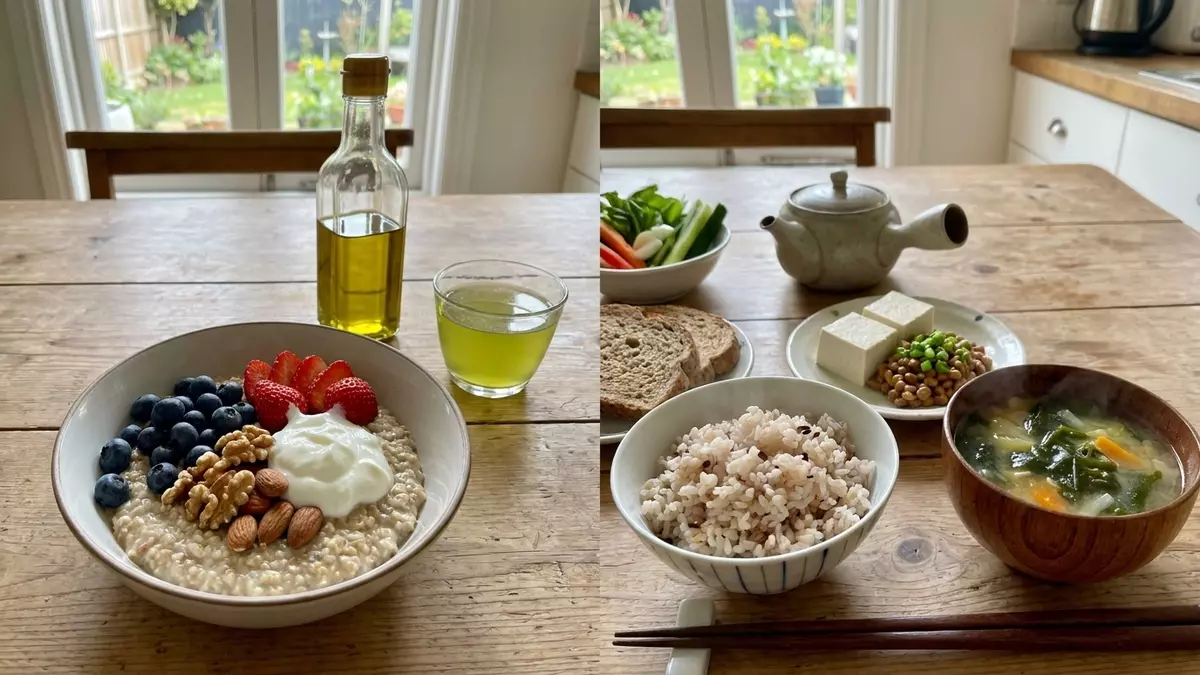
Oatmeal & Whole Grains: Packed with beta-glucan, a soluble fiber renowned for optimizing heart health and feeding beneficial gut microbes.
Fresh Fruits & Vegetables: Nature’s premier source of cellular antioxidants, vitamins, and hydrating minerals.
Traditional Tofu & Natto: Staple components of the Okinawan diet. Fermented soybeans (natto) are rich in Vitamin K2 and nattokinase, enzymes critical for bone density and clear circulatory pathways.
Multigrain Rice & Miso Soup: Probiotic-rich traditional staples that nurture the gut microbiome and boost immune resilience.
Extra Virgin Olive Oil & Nuts: Sources of premium monounsaturated fats and vitamin E that lubricate joints and shield the brain.
Natural or Greek Yogurt: Delivers clean, easily digestible protein alongside live active cultures for gastrointestinal health.
Green Tea: Brimming with catechins and epigallocatechin gallate (EGCG), powerful compounds that stimulate cellular repair and combat chronic inflammation.
Two Centenarian-Inspired Breakfast Frameworks
You do not have to move to a remote island to eat like a centenarian. You can easily rotate between these two highly effective, culturally inspired morning frameworks to upgrade your longevity.
| Option A: The Mediterranean / Western Matrix | Option B: The Eastern / Okinawan Matrix |
| Base: Steel-cut oatmeal prepared with water or nut milk. | Base: A modest bowl of warm multigrain or brown rice. |
| Fats & Protein: A handful of raw walnuts or almonds, topped with a dollop of unsweetened Greek yogurt. | Proteins: A serving of warm tofu or a portion of traditional fermented natto. |
| Antioxidants: A cup of fresh, wild blueberries or sliced strawberries. | Liquids: A steaming bowl of probiotic miso soup packed with seaweed and green onions. |
| Beverage: A cup of organic green tea or antioxidant-rich herbal infusion. | Beverage: Freshly brewed green tea or toasted jasmine tea. |
Conclusion
Living to 100 is not a matter of luck; it is a masterpiece built from small, daily acts of self-care. Reforming your morning meal to mirror the clean, plant-forward, fiber-rich diets of the world’s Blue Zones is one of the most powerful changes you can make. By swapping out processed convenience foods for genuine, whole ingredients like whole grains, fresh produce, healthy fats, and fermented proteins, you supply your body with the cellular building blocks it needs to thrive for a century.
Frequently Asked Questions (FAQ)
Can I drink coffee at breakfast if I want to maximize my longevity?
Yes! Black coffee is highly celebrated in several Blue Zones, particularly in Ikaria, Greece. It is naturally rich in essential antioxidants that support vascular flexibility. The key is to enjoy it clean—avoid overloading your morning cup with heavy refined sugars, artificial sweeteners, or chemical creamers.
Is it acceptable to eat eggs every morning for breakfast?
Eggs can certainly be a part of a longevity-focused diet, as they provide high-quality protein and choline for brain health. However, keep moderation in mind. Centenarians in the Blue Zones typically consume eggs as a high-value accent rather than the main feature, averaging roughly two to four eggs per week.
What if I naturally prefer intermittent fasting and skip breakfast?
While breakfast is highly effective for jump-starting metabolism and balancing hormones, some individuals naturally thrive on an altered eating window. If you choose to skip a morning meal, ensure that your first meal of the day still strictly adheres to whole-food, nutrient-dense parameters rather than breaking your fast with heavy, processed carbohydrates.
Why is fermented food like natto or miso so vital for long life?
Fermented foods are living history for your gut. They flood your gastrointestinal tract with trillions of beneficial bacteria, optimizing your microbiome. Since roughly 70% of your immune system resides in your gut, maintaining a healthy microbiome through foods like miso directly translates to lower systemic inflammation and better defense against diseases as you age.
How can I make my oatmeal taste good without using refined sugar?
You can naturally elevate the flavor profile of your morning grains without touching processed sugar. Try adding a dash of Ceylon cinnamon, a splash of pure vanilla extract, a handful of naturally sweet organic raisins, or mashing a ripe banana directly into the oats while they simmer.