
Table of Contents
- 1. 1. Master the Balance of Filtered Light
- 1.1. Ideal Window Placements
- 1.2. Spotting Light Issues
- 2. 2. Perfect Your Watering Routine
- 2.1. The Touch Test
- 2.2. The Importance of Water Quality
- 3. 3. Elevate Indoor Humidity Levels
- 3.1. Creative Ways to Boost Moisture
- 4. 4. Build a Lightweight, Rich Soil Blend
- 4.1. The Ultimate Maranta Mix Recipe
- 5. 5. Feed Strategically and Lightly
- 5.1. Dilution is Key
- 6. 6. Maintain Stable, Warm Temperatures
- 6.1. Protecting Against Drafts
- 7. 7. Prune Regularly for a Fuller Shape
- 7.1. How to Prune and Propagate
- 8. 8. Keep the Foliage Dust-Free
- 9. 9. Repot Cautiously Every 1 to 2 Years
- 9.1. Choosing the Right Pot
- 10. 10. Learn to Read Your Plant’s Movements
- 11. Conclusion
- 12. Frequently Asked Questions
- 12.1. Why are the edges of my prayer plant leaves turning brown and crispy?
- 12.2. Is the prayer plant safe for homes with cats and dogs?
- 12.3. Why are my prayer plant’s leaves turning yellow?
- 12.4. Can I use tap water to water my prayer plant?
- 12.5. Why has my prayer plant stopped folding its leaves at night?
10 Essential Tips for a Stunning Prayer Plant This Season
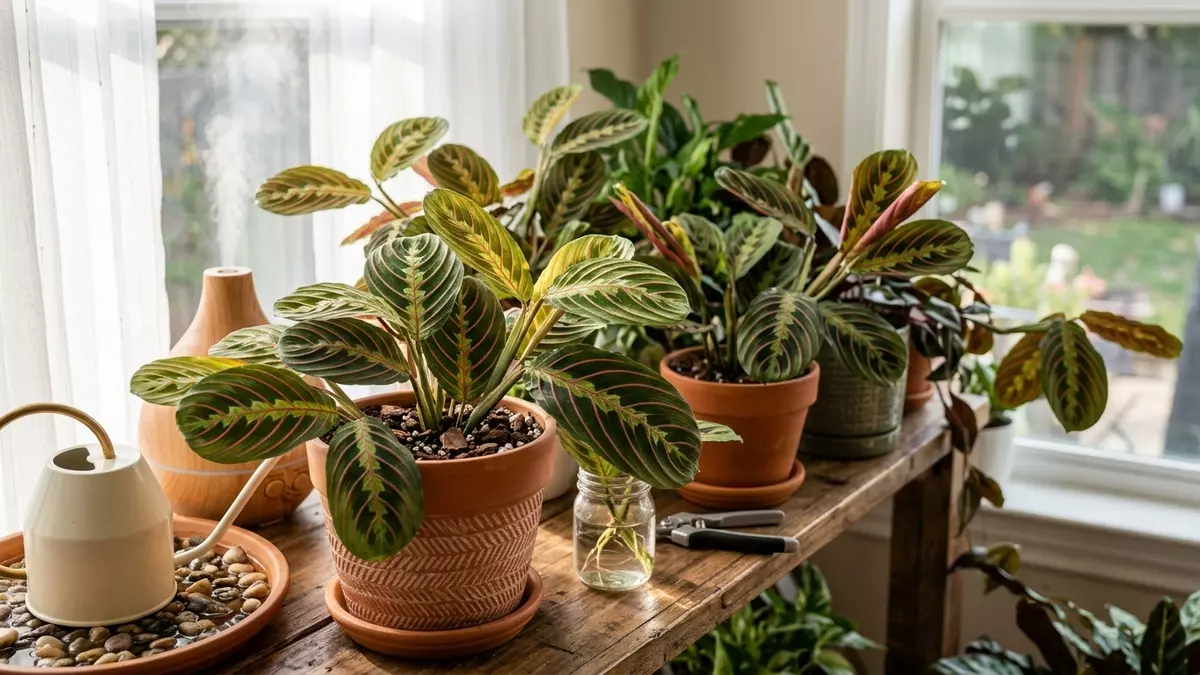
There is an undeniable, captivating magic to the prayer plant (Maranta leuconeura). With foliage that looks as though an artist meticulously detailed every leaf with vibrant red veins, deep greens, and creamy undertones, it easily steals the spotlight in any indoor garden.
However, its most enchanting feature is its movement. Through a natural phenomenon called nyctinasty, the prayer plant spreads its leaves wide to absorb daylight, then gracefully folds them upward as dusk falls, mimicking hands clasped in silent reflection.
While this daily ritual makes the prayer plant feel incredibly alive, it is also a species that demands a bit of specialized attention. Hailing from the warm, damp understory of Brazilian rainforests, these tropical beauties require indoor conditions that mirror their native habitat. By mastering a few core care techniques—including dialed-in humidity, filtered lighting, and a well-aerated soil mix—you can transform a finicky specimen into a thriving, lush masterpiece.

10 Essential Tips for a Stunning Prayer Plant This Season
1. Master the Balance of Filtered Light
In their native rainforest environments, prayer plants thrive on the forest floor, nestled securely beneath a dense overhead canopy. This means they are biologically adapted to receive dappled, gentle sunlight rather than direct, harsh rays.
Ideal Window Placements
To keep your plant happy indoors, position it where it can enjoy bright, indirect light. An east-facing window is an excellent choice, as it offers soft morning sun that won’t scorch the foliage. Alternatively, a north-facing window provides a steady, reliable stream of indirect illumination throughout the day.
Spotting Light Issues
If you only have intense southern or western exposures available, make sure to diffuse the light with a sheer curtain.
Too much light: Will quickly bleach the vibrant patterns on the leaves or cause permanent scorch marks.
Too little light: Causes the plant’s growth to stall, and the rich, signature colors will begin to fade into a dull, uniform green.

2. Perfect Your Watering Routine
Prayer plants are highly sensitive to moisture fluctuations. They thoroughly dislike sitting in stagnant, waterlogged soil, but they will protest just as quickly if their roots dry out completely. The goal is to achieve a consistent state of even dampness.
The Touch Test
Before reaching for your watering can, press your finger into the top inch of the soil. If it feels dry to the touch, it is time to water. Always ensure your plant resides in a container equipped with functional drainage holes; without them, trapped moisture will suffocate the root system, ultimately triggering destructive root rot.
The Importance of Water Quality
If you notice the edges of your prayer plant’s leaves turning crisp or brown, the issue might lie in your tap water. These plants are exceptionally vulnerable to municipal water additives like chlorine, fluoride, and heavy minerals. To keep the foliage pristine, opt for distilled water, filtered water, or harvested rainwater.
3. Elevate Indoor Humidity Levels
Because they originate in the tropics, prayer plants thrive best when relative humidity levels hover between 60% and 70%. Standard indoor air—especially during the winter months when home heating systems are running—is often far too dry, causing the plant to suffer.
Creative Ways to Boost Moisture
When exposed to arid air, a prayer plant’s leaves will quickly curl inward or develop dry, brittle edges. You can easily elevate the microclimate around your plant by using these proven methods:
Humidifiers: Placing a small ultrasonic humidifier nearby is the most effective way to maintain stable moisture levels.
Pebble Trays: Set the nursery pot on top of a tray filled with pebbles and water. As the water evaporates, it creates a localized humidity bubble around the foliage.
Plant Grouping: Clustering your prayer plant together with other tropical houseplants allows them to collectively trap moisture through transpiration.
4. Build a Lightweight, Rich Soil Blend
Standard, dense potting soils from the garden center retain far too much water and quickly compact around delicate root systems. To keep your prayer plant thriving, you need a custom substrate that balances moisture retention with exceptional aeration.
The Ultimate Maranta Mix Recipe
A highly effective DIY blend consists of:
40% Peat Moss or Coco Coir: To hold onto clean moisture without compacting.
30% Perlite or Pumice: To create vital air pockets and encourage swift drainage.
30% Orchid Bark or Leaf Mold: To provide a chunky texture that mimics the natural forest floor.
For an added boost of gentle, long-lasting nutrition, toss a handful of organic worm castings or rich compost into the mix. This keeps the medium fertile and fluffy, allowing the roots to breathe and expand effortlessly.
5. Feed Strategically and Lightly
Prayer plants are not aggressive feeders, but they do appreciate a steady supply of nutrients during their active growing phase. Over-fertilizing can easily burn their sensitive roots, so a conservative approach is always best.
Active Season (Spring & Summer) ---> Feed every 2-4 weeks (Diluted)
Dormant Season (Fall & Winter)   ---> Reduce or pause feeding entirely
Dilution is Key
During the spring and summer, when you notice new leaves unfurling regularly, apply a balanced liquid houseplant fertilizer (such as a 10-10-10 NPK formula). However, you should always dilute the solution to a quarter or half of the manufacturer’s recommended strength.
If you prefer sustainable, organic options, treating your plant to a feeding of compost tea or worm casting tea every four to six weeks provides an incredibly gentle nutritional lift. In the winter, when the plant’s metabolism naturally decelerates, pause fertilization entirely.
6. Maintain Stable, Warm Temperatures
Unsurprisingly, these tropical natives prefer a warm environment. They do best when indoor temperatures stay consistently between 65°F and 80°F (18°C to 27°C).
Protecting Against Drafts
Sudden temperature drops or sharp spikes will shock your prayer plant, leading to dropped leaves or sudden drooping. Keep your plant well away from drafty exterior doors in the wintertime, and ensure it isn’t sitting directly in the blast radius of air conditioning vents or space heaters. If the environment remains stable and warm, the root system will remain active and support robust top growth.
7. Prune Regularly for a Fuller Shape
Left to their own devices, prayer plant stems can occasionally become long, leggy, and sparse. Regular, mindful pruning is the secret to maintaining a beautifully compact, bushy appearance.
How to Prune and Propagate
Every few months, inspect your plant and trim away any faded, yellowing older leaves or overly stretched stems. Always use a clean, sharp pair of shears and make your cuts right below a leaf node.
Don’t throw those cuttings away! Prayer plant stems root incredibly fast in a jar of clean water, allowing you to easily propagate new plants to expand your collection or share with friends.
[Leaf Node] ---> Cut just below this point ---> Place in water ---> Roots develop
8. Keep the Foliage Dust-Free
The exquisite patterning of a prayer plant is its crowning glory. However, a layer of household dust can quickly coat the leaves, dulling their natural luster and obstructing their ability to photosynthesize efficiently.
| Cleaning Action | Benefit to Plant |
| Damp Cloth Wipe | Removes dust barrier, restoring leaf vibrancy and maximizing light absorption. |
| Gentle Misting | Cleans hard-to-reach areas and offers a temporary hydration boost. |
Every couple of weeks, take a soft, damp microfiber cloth and gently wipe down the surface of each leaf. While occasional misting can complement this routine by clearing off debris, remember that misting alone cannot replace the sustained benefits of a dedicated humidifier.
9. Repot Cautiously Every 1 to 2 Years
While prayer plants don’t mind being slightly snug in their containers, they will eventually exhaust the nutrients in their soil and outgrow their space.
Choosing the Right Pot
Plan to repot your plant every one to two years, ideally during the early spring when its energy is surging. When transitioning to a new container, select a pot that is only one size larger (roughly 1 to 2 inches wider in diameter) than the current one. Moving a prayer plant into an excessively large pot leaves too much unoccupied soil around the roots, which holds onto excess water and dramatically increases the risk of root rot.
10. Learn to Read Your Plant’s Movements
The daily opening and closing rhythm of your prayer plant is an excellent, built-in health diagnostic tool. Paying close attention to how dynamically those leaves move will tell you exactly how the plant is feeling.
If your plant suddenly stops its evening folding routine and remains static, it is often broadcasting a subtle cry for help. A lack of movement typically indicates environmental stress, such as insufficient ambient humidity, underwatering, or a lack of adequate indirect light. By tuning into these daily shifts, you can intercept care issues early on, making corrections well before any serious damage occurs.
Conclusion
Cultivating a breathtaking prayer plant comes down to consistent, mindful replication of its wild rainforest home. By providing filtered light, clean water, elevated humidity, and a light, airy soil mix, you give this tropical gem everything it needs to put on a spectacular show. Enjoy the meditative process of watching its leaves dance throughout the day, and let its unique rhythm bring a touch of living art into your home.
Frequently Asked Questions
Why are the edges of my prayer plant leaves turning brown and crispy?
This is typically caused by low humidity or poor water quality. Ensure your indoor humidity is at least 50-60%, and switch from tap water to distilled, filtered, or rainwater to avoid mineral burn.
Is the prayer plant safe for homes with cats and dogs?
Yes! Prayer plants (Maranta leuconeura) are completely non-toxic to pets, making them an excellent choice for households with curious four-legged friends.
Why are my prayer plant’s leaves turning yellow?
Yellow leaves are most frequently a sign of overwatering or soil that is retaining too much moisture. Ensure your pot has proper drainage, allow the top inch of soil to dry out before watering again, and check that your soil mix isn’t too dense.
Can I use tap water to water my prayer plant?
It is not recommended. Tap water often contains chlorine, fluoride, and hard minerals that can accumulate in the soil and cause unsightly chemical burns on the leaf margins.
Why has my prayer plant stopped folding its leaves at night?
If your plant stops moving, it is likely experiencing stress. The most common culprits are low lighting conditions, severely dry air, or underwatering. Check its environment and adjust your care routine to restore its natural rhythm.