
Table of Contents
- 1. The Scope of the Cholesterol Challenge
- 2. Why An “Addition-First” Mindset Wins for Long-Term Health
- 3. Fatty Fish: The Biological Shield Against High Triglycerides
- 3.1. The Impact of Omega-3s on Blood Fats
- 4. Demystifying the Lipid Panel: LDL, HDL, and Triglycerides
- 5. The Flexible Reality of a Mediterranean Eating Pattern
- 6. Fresh versus Smoked Seafood: Navigating Convenience and Sodium
- 7. Practical Additions to Transform Your Plates
- 8. Conclusion: Sustainable Progress Over Instant Perfection
- 9. Frequently Asked Questions (FAQ)
3 Surprising Seafood Choices for Better Heart Health This Year
Receiving a high cholesterol diagnosis often feels like a strict sentence to a lifetime of bland, uninspiring meals. The immediate reaction for many individuals is to scan a list of dietary restrictions, crossing off favorite foods in an effort to protect their cardiovascular system. However, a refreshing perspective from clinical dietitians suggests that the secret to managing lipid levels does not lie in deprivation.
Instead of focusing on what you must eliminate, the journey to a healthier heart should begin with what you can add to your plate. Shifting your focus toward nutrient-dense, flavorful foods makes sustainable wellness entirely achievable. At the center of this dietary shift is a renewed emphasis on healthy fats, particularly those sourced from specific varieties of fatty fish. While salmon frequently dominates the heart-health conversation, expanding your grocery cart to include other sustainable, omega-3-rich seafood options can dramatically improve your lipid profile while keeping your meals enjoyable.
The Scope of the Cholesterol Challenge
Managing cholesterol is a critical health priority for millions of people. According to data from the Centers for Disease Control and Prevention (CDC), approximately 86 million adults in the United States suffer from high or borderline-high cholesterol levels.
86 Million U.S. Adults ──> Have Elevated or Borderline-High Cholesterol ──> Higher Cardiovascular Risks
The most dangerous aspect of elevated cholesterol is its silent nature. It builds up gradually inside the arterial walls without producing noticeable early symptoms, often remaining undetected until a routine blood panel or a sudden cardiovascular event occurs.

3 Surprising Seafood Choices for Better Heart Health This Year
Why An “Addition-First” Mindset Wins for Long-Term Health
Psychologically, strict dietary prohibitions rarely work over long periods. When people are given a long list of forbidden foods, it creates a sense of restriction that is difficult to sustain. Clinical dietitian Monika Stromkie-Złomaniec emphasizes that building a supportive grocery list is far more effective than maintaining a punishment list.
By prioritizing the addition of protective, wholesome ingredients, you naturally crowd out less healthy options without feeling deprived. This positive approach to nutrition fosters long-term habits that seamlessly integrate into your daily routine.

Fatty Fish: The Biological Shield Against High Triglycerides
Incorporating fatty fish into your weekly meal planning is one of the most effective ways to support cardiovascular health. Varieties like salmon, herring, halibut, sprat, sardines, and select types of tuna are loaded with long-chain omega-3 fatty acids—a class of polyunsaturated fats that offer extensive heart benefits.
The Impact of Omega-3s on Blood Fats
The primary benefit of consuming these marine fats is their targeted impact on triglycerides, which are a specific type of fat circulating in your bloodstream. According to the National Institutes of Health (NIH) Office of Dietary Supplements, the data surrounding omega-3 intake is compelling:
For every additional gram of long-chain omega-3 fatty acids consumed per day, individuals experience an average drop of approximately six points in their blood triglyceride measurements. This biological effect is even more pronounced in individuals who start with highly elevated baseline levels.

Furthermore, introducing these seafood choices into your regular diet acts as a direct replacement for protein sources that are heavy in saturated fats, such as marbled red meats or heavily processed provisions. Saturated fats are notorious for driving low-density lipoprotein (LDL) levels upward. Swapping them out for clean seafood alternatives directly shields your blood vessels from unnecessary strain.
Demystifying the Lipid Panel: LDL, HDL, and Triglycerides
To fully appreciate how your food choices protect your body, it helps to understand the key players listed on a standard lipid panel:
LDL (Low-Density Lipoprotein): Frequently referred to as “bad” cholesterol, high concentrations of LDL can lead to a gradual accumulation of waxy plaque inside your arteries. Over time, this narrowing restricts blood flow and significantly increases the risks of heart attacks and strokes.
HDL (High-Density Lipoprotein): Known as “good” cholesterol, HDL serves as a biological clean-up crew. It binds to excess cholesterol circulating in the bloodstream and transports it back to the liver, where it can be safely broken down and eliminated from the body.
Triglycerides: While technically distinct from cholesterol, triglycerides are an important marker of metabolic and cardiovascular health. When elevated alongside high LDL or low HDL, they signal an unbalanced dietary pattern that requires deliberate nutritional intervention.
The Flexible Reality of a Mediterranean Eating Pattern
Medical authorities, including Harvard Health, widely recognize the Mediterranean diet as a gold standard for longevity and disease prevention. Adopting this lifestyle is associated with a significantly reduced risk of developing heart disease, type 2 diabetes, metabolic syndrome, certain forms of cancer, and age-related frailty.
However, a common misconception prevents many people from trying it. Adopting a Mediterranean pattern does not mean you must prepare elaborate coastal meals or buy fresh tomatoes and eggplants out of season.
At its core, this approach serves as a flexible nutritional compass rather than a rigid, unforgiving script. It simply means centering your everyday meals around foundational pillars:
An abundance of seasonal vegetables and fresh fruits
Heart-healthy legumes, beans, and lentils
Fiber-rich whole grains
Monounsaturated fats from extra virgin olive oil and raw nuts
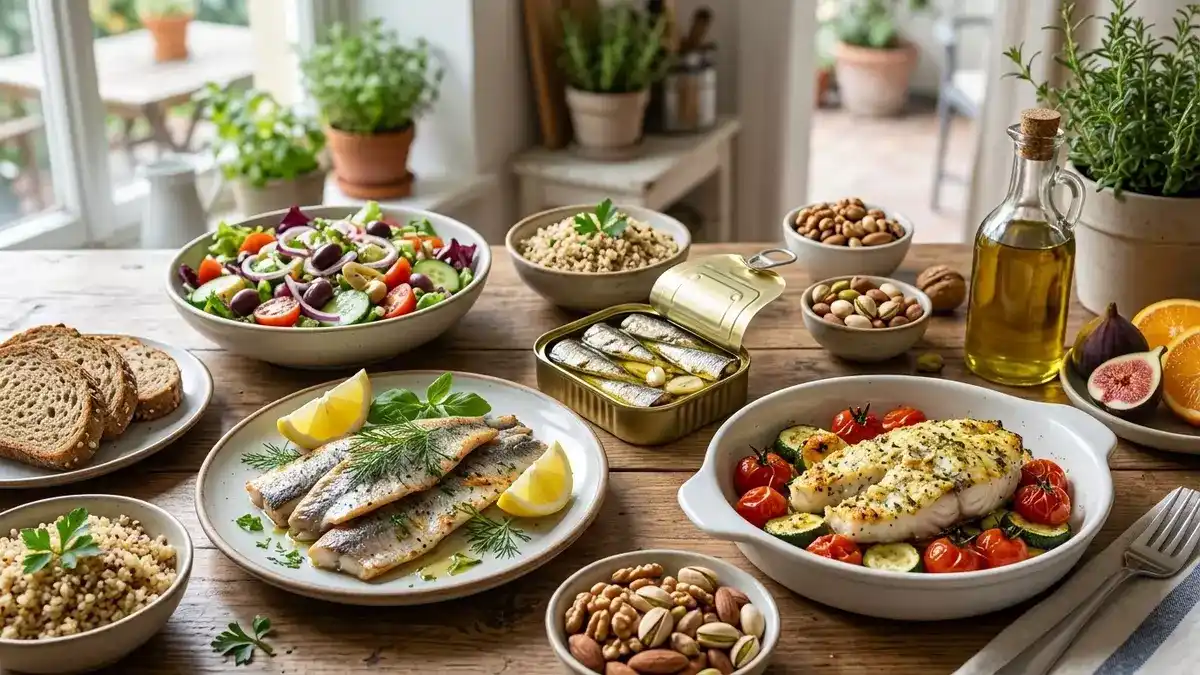
A consistent, bi-weekly rotation of fatty fish and seafood
Fresh versus Smoked Seafood: Navigating Convenience and Sodium
In a busy schedule, convenience often dictates our food choices. From a practical standpoint, fish fits into a fast-paced lifestyle because it can be enjoyed in various forms, whether fresh, frozen, canned, or smoked. Preparing a quick sandwich using preserved fish is often much more realistic than cooking a raw fillet from scratch after a long workday.
However, individuals managing specific health conditions must navigate these options carefully:
| Seafood Type | Key Benefits | Important Health Considerations |
| Fresh or Frozen Fillets | Maximum nutrient density; zero added sodium. | Requires active cooking and preparation time. |
| Low-Sodium Canned Fish | Shelf-stable; highly affordable; ready to eat. | Must check labels to ensure minimal salt content. |
| Smoked Fish Varieties | Rich flavor; zero cooking required; highly convenient. | High sodium content can elevate blood pressure (hypertension). |
While smoked options deliver an identical dose of omega-3 fatty acids, their elevated salt content can aggravate hypertension. For individuals actively managing high blood pressure, relying primarily on fresh portions, quick frozen fillets, or low-sodium canned alternatives is the safest path forward.
Practical Additions to Transform Your Plates
To round out your heart-protective routine, the National Heart, Lung, and Blood Institute recommends pairing your seafood intake with foods rich in soluble fiber, plant stanols, and plant sterols. When these elements gather in your digestive tract, they bind to dietary cholesterol and help escort it out of your system before it can enter your bloodstream.
Building this type of plate is incredibly simple. Start your morning with a warm bowl of steel-cut oatmeal topped with walnuts. For lunch, toss a handful of lentils or black beans into a crisp vegetable salad dressed with olive oil. At dinner, complement a baked fish fillet with roasted root vegetables or a side of quinoa. These small, repetitive additions eventually become second nature, systematically transforming your health profile one meal at a time.
Conclusion: Sustainable Progress Over Instant Perfection
Protecting your heart does not require a dramatic, overnight transformation or a lifetime of plain, unappealing food. True success comes from consistently making small, health-promoting choices. By shifting your mindset away from food restrictions and actively adding nutrient-dense fatty fish, soluble fibers, and whole grains to your weekly routine, you naturally cultivate a resilient cardiovascular system. True wellness is built on a sustainable lifestyle that feels like normal, everyday eating—not a restrictive sentence.
Frequently Asked Questions (FAQ)
Are smaller fatty fish like herring and sprat as nutritious as salmon?
Yes, absolutely. In fact, smaller fatty fish like herring, sprat, and sardines are often considered nutritional powerhouses. Because they sit lower on the marine food chain, they accumulate significantly fewer heavy metals like mercury over their lifespans compared to larger, older fish. They are packed with omega-3 fatty acids, calcium, and vitamin D, making them a highly sustainable and affordable choice for heart health.
How many times a week should I eat fatty fish to help lower my cholesterol?
To support optimal cardiovascular health, the American Heart Association officially recommends consuming at least two servings of fatty fish per week, with each serving weighing roughly 3.5 ounces cooked.
Can I get the same heart benefits from taking omega-3 fish oil supplements?
While high-quality omega-3 supplements can help lower triglycerides, getting your nutrients from whole foods is always superior. Whole fish provides a complete package of lean proteins, selenium, vitamin D, and essential minerals that work together to protect your heart. Additionally, replacing a saturated-fat meal with a fish dish offers double the benefit by removing a negative element while adding a positive one.
Is frozen fish just as healthy as fresh fish from the seafood counter?
Yes. Most commercial fish are flash-frozen directly on the boat immediately after harvest, which locks in their nutritional value, freshness, and omega-3 content. Frozen fish is often more affordable, has a much longer shelf life, and reduces food waste, making it an excellent option for healthy meal prepping.
What are plant sterols and stanols, and how do they lower cholesterol?
Plant sterols and stanols are naturally occurring compounds found in fruits, vegetables, whole grains, legumes, nuts, and seeds. Because their chemical structure looks very similar to cholesterol, they compete for absorption in your digestive tract. This effectively blocks your body from absorbing a portion of dietary cholesterol, helping to lower your circulating LDL levels naturally.