
Table of Contents
**Simple Strength Tests That Predict Longevity in Women Over 60**
Most health advice for older adults focuses heavily on walking more, hitting step goals, or keeping your heart strong. But groundbreaking new research suggests two incredibly simple everyday movements may be even stronger predictors of healthy aging and longevity: how firmly you can grip something and how quickly you can stand up from a chair.
A major study involving more than 5,400 women ages 63 to 99 found that those with stronger handgrips and faster sit-to-stand times had a significantly lower risk of death over an eight-year follow-up period. The results held even after researchers accounted for daily physical activity levels and time spent sitting. This research highlights that muscle strength — particularly functional strength — may be one of the most important markers of long-term health in older women.
Simple Strength Tests That Predict Longevity in Women Over 60

### The Landmark Study on Strength and Survival
Published in February 2026 in *JAMA Network Open*, the analysis came from the University at Buffalo and drew on data from the Women’s Health Initiative. Researchers followed 5,472 women for up to eight years. During that time, nearly 2,000 participants passed away from all causes.
Women who performed better on two quick tests showed meaningfully lower mortality risk:
– **Handgrip strength** (measured by squeezing a handheld device)
– **Chair stand test** (how quickly someone can stand up from a seated position five times without using their arms)

Study leader Michael LaMonte emphasized the real-world importance: “When we no longer can get out of the chair and move around, we are in trouble.” The findings remained significant even after adjusting for age, medical conditions, inflammation markers, walking speed, and daily movement patterns measured by wearable sensors.
Every roughly 15-pound increase in grip strength was associated with about a 12% lower risk of death in one analysis. Faster chair stand times also correlated with better outcomes, though the link was somewhat weaker after full statistical adjustments.
### Why Grip Strength and Chair Stands Matter So Much
These two tests might seem basic, but they reflect something profound about functional fitness — the ability to perform everyday tasks that keep life full and independent.
**Handgrip strength** measures overall muscle power and nervous system health. It correlates with total-body strength, protein status, and even cognitive function. Everyday activities like opening jars, carrying groceries, or holding a grandchild all depend on it.
**The chair stand test** reveals lower-body power, balance, and coordination. Rising from a chair repeatedly mimics real-life movements like getting up from the dinner table, standing after a movie, or moving from a car seat. Difficulty here often signals declining mobility long before other symptoms appear.
What makes this study particularly powerful is that the benefits appeared even in women who didn’t meet official exercise guidelines. Strength seems to offer protection beyond just “being active,” suggesting it’s a unique marker of resilience in aging bodies.
### How This Research Improves on Previous Studies
Earlier research, including a 2018 *BMJ* analysis of nearly 500,000 adults and the 2006 Health, Aging and Body Composition study, also linked grip strength to longevity. However, this newer study stands out because it used objective motion sensors to track actual daily movement rather than relying on self-reported activity, which can be unreliable.
Researchers carefully controlled for inflammation (via C-reactive protein), walking speed, sitting time, and chronic conditions. The association between strength and lower mortality risk still held, reinforcing that building and maintaining muscle power deserves serious attention in women’s health after 60.
The American Heart Association has also recognized resistance training as an important tool for cardiovascular health in older adults, making strength work a smart complement to aerobic exercise.
### Practical Ways Women Over 60 Can Build Functional Strength
The beauty of these findings is that improving grip strength and sit-to-stand ability doesn’t require a gym membership or fancy equipment. Many effective exercises can be done safely at home.
**For Grip Strength:**
– Squeeze a stress ball or tennis ball for 10–15 repetitions, several times daily
– Practice carrying weights (like grocery bags or light dumbbells) for short distances
– Try hand grippers or even wringing out wet towels
– Incorporate activities like gardening or knitting that naturally challenge your hands
**For Chair Stands and Lower Body Power:**
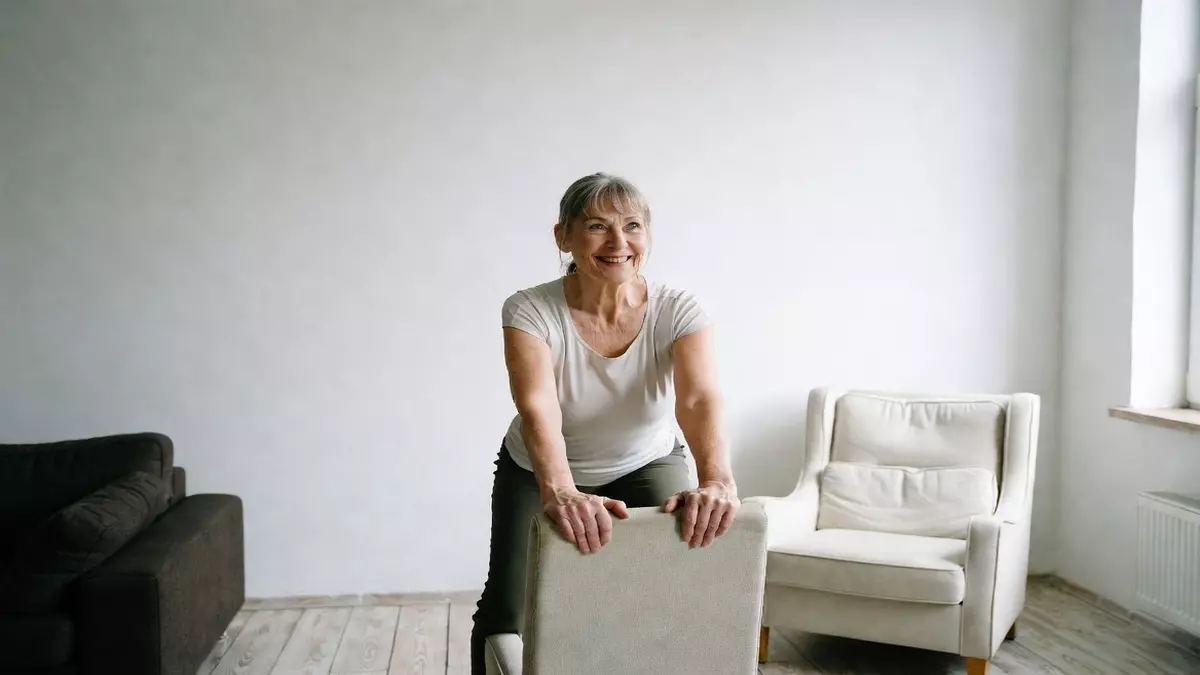
– Practice the chair stand test itself as an exercise — aim to improve your time gradually
– Do bodyweight squats or sit-to-stand movements with support if needed
– Use resistance bands for leg exercises while seated or standing
– Try slow, controlled step-ups onto a low sturdy platform
Start slowly and progress gradually. Even two or three short strength sessions per week can produce meaningful improvements. Always warm up, focus on proper form, and stop if you feel pain (beyond normal muscle effort).
### Safety First: How to Start Strength Training After 60
Before beginning any new exercise routine, especially if you have balance concerns, joint issues, or chronic conditions, consult your healthcare provider. A physical therapist can also provide personalized guidance to ensure exercises are safe and effective.
Key safety tips:
– Begin with bodyweight or very light resistance
– Prioritize good posture and controlled movements
– Include balance exercises alongside strength work
– Allow adequate recovery time between sessions
– Stay consistent rather than pushing too hard on any single day
Many women find that combining strength training with walking creates excellent overall results. The goal isn’t to become a bodybuilder — it’s to maintain the functional strength needed for an active, independent life.
### Beyond Strength: Supporting Factors for Healthy Aging
While grip strength and chair stands emerged as powerful predictors, the study reinforces that a holistic approach works best. Quality sleep, stress management, proper nutrition (especially adequate protein), and social connections all play important roles in maintaining strength and vitality.
Women who combine regular strength work with good sleep and nourishing meals often report feeling more energetic and capable in their daily lives. These small wins compound over years, supporting both physical independence and mental well-being.
### The Takeaway: Strength Is a Longevity Superpower
This research sends a clear, empowering message: simple, functional strength matters profoundly for women as they age. Improving your ability to grip firmly and rise quickly from a chair isn’t just about fitness — it’s about protecting your independence, vitality, and longevity.
You don’t need to transform overnight. Small, consistent efforts to build and maintain muscle power can pay significant dividends in how you feel and function for years to come. The women in this study remind us that strength is one of the most practical investments we can make in our future health.
Start with a simple self-test today: How many times can you stand from a chair in 30 seconds? How strong is your handshake? Use these as motivating benchmarks and watch how small improvements translate into big gains in confidence and capability.
Your future self will thank you for every chair stand, every grip squeeze, and every intentional choice to stay strong.
### FAQ: Grip Strength, Chair Stands, and Longevity in Women Over 60
**How can I test my own grip strength at home?**
While clinical tools are most accurate, you can get a general idea by seeing how firmly you can squeeze a hand dynamometer (available online) or even a tennis ball. Track improvements over time.
**What is a good chair stand score for women over 60?**
Being able to complete five stands in under 12–15 seconds is generally considered good, but the most important factor is gradual improvement rather than hitting a perfect number.
**How often should women over 60 do strength training?**
Two to three sessions per week is ideal. Focus on major muscle groups with proper recovery days in between.
**Can strength training help if I’m already quite frail?**
Yes, but start very gently under professional guidance. Even small improvements in strength can significantly improve quality of life and safety.
**Does muscle strength matter more than cardio for longevity?**
Both are important. This research shows strength offers unique benefits that complement aerobic activity.
**What’s the best protein intake for maintaining strength after 60?**
Many experts recommend 1.2–1.6 grams of protein per kilogram of body weight daily, spread across meals, to support muscle maintenance.
**Are there risks to strength training for older women?**
When done properly with good form and appropriate progression, the benefits far outweigh the risks for most people. Always prioritize safety and consult professionals when needed.
The evidence is clear: building and maintaining simple functional strength may be one of the smartest things women over 60 can do for a longer, healthier, and more independent life. Start today with small, sustainable steps — your grip and your future self will be stronger for it.