
Table of Contents
Building Strength After 45: The Power of the Reverse Lunge
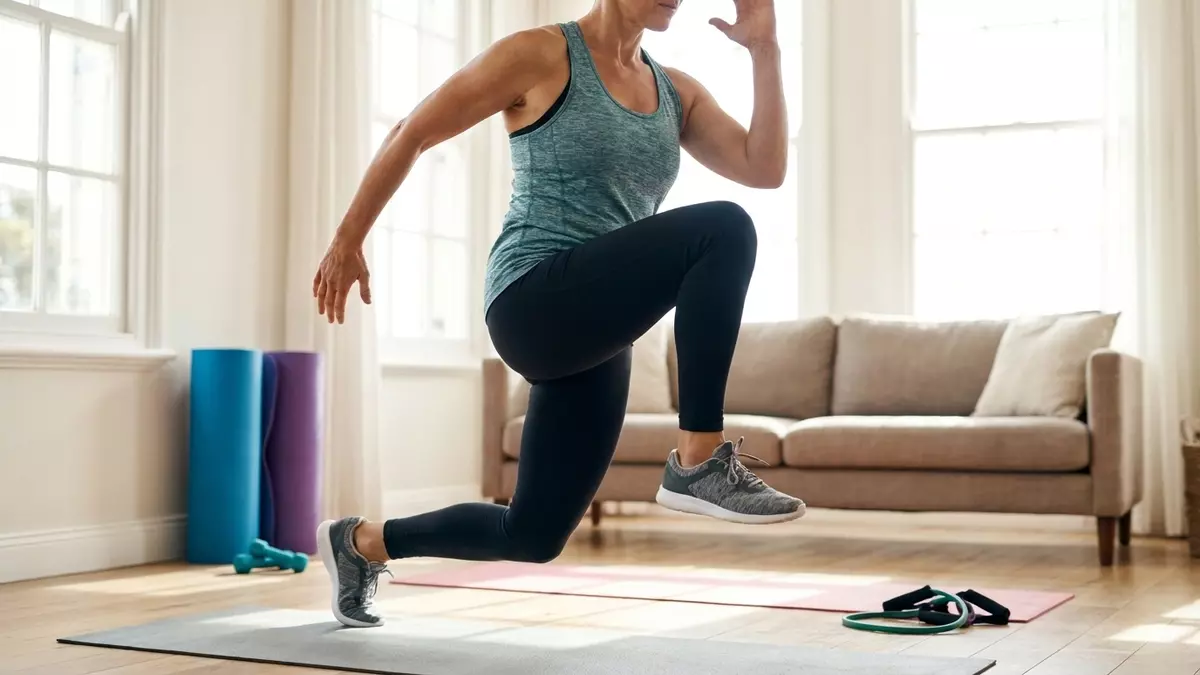
As we enter our mid-40s and beyond, the priority for fitness shifts. It is no longer just about high-intensity burn; it is about muscle preservation, joint health, and functional mobility. You don’t need a gym membership or a rack of heavy weights to achieve this. One of the most effective, accessible movements for midlife strength is the reverse lunge with knee drive.
This dynamic exercise is a favorite among fitness experts because it combines strength, balance, and coordination into a single, seamless motion. Here is why it should be the cornerstone of your home workout routine.
Building Strength After 45: The Power of the Reverse Lunge

Why the Reverse Lunge with Knee Drive?
The reverse lunge with knee drive is a “compound movement,” meaning it engages multiple muscle groups at once—specifically the quadriceps, hamstrings, glutes, and calves. By adding the knee drive at the end of the movement, you also recruit your core and hip flexors.
The Benefits for Midlife Fitness:
Joint-Friendly: Unlike a forward lunge, which can put significant pressure on the knees, stepping backward shifts your weight onto your heel and glutes. This makes it far more comfortable for those dealing with knee sensitivity.
Balance and Coordination: As we age, our proprioception—the body’s ability to sense its position in space—can decline. This exercise forces you to stabilize on one leg, directly combating balance issues.
Core Activation: Because you are moving your body through space, your core has to “brace” to keep you upright. This turns a leg exercise into a full-body stability challenge.
Zero Equipment Required: Whether you are in your living room or a hotel room, this move is always ready.

How to Perform It Perfectly
Start Tall: Stand with your feet hip-width apart.
Step Back: Take a controlled step backward with your right foot. Lower your hips until both knees are bent at approximately a 90-degree angle. Ensure your front knee stays behind your toes.
Drive Forward: Push through your front heel to return to the starting position. Without letting that right foot touch the floor, explosively drive your right knee upward toward your chest.
Balance: Hold that balance for a split second before placing the foot back on the ground. Repeat on the other side.

Building a Complete Home Routine
To build a sustainable routine, pair the reverse lunge with movements that support your core, chest, and overall stability. Aim to perform 2–3 sets of 10–12 repetitions for each of the following:
Plank Shoulder Taps: Improves core strength and shoulder stability.
Glute Bridge March: A fantastic way to isolate the glutes without straining the lower back.
Incline Pushups: Use a sturdy countertop or couch arm to make pushups more manageable and joint-friendly.
Bird Dog: This is the gold standard for spine stability and coordination.
Chair Squats: Use a chair as a safety guide to perfect your squat form without the risk of losing your balance.
Side Planks: Critical for protecting your spine and strengthening the lateral core.
The Philosophy of Consistency
At 45 and beyond, consistency is your greatest asset. Pushing yourself to the point of injury is counterproductive; performing a gentle, controlled routine 3–4 times per week is infinitely more effective than one “killer” workout that leaves you sore for days.
Listen to your body. If a movement feels uncomfortable, scale it back. If you are just starting, focus on the range of motion of the lunge before worrying about the speed of the knee drive. By building these habits now, you are not just working out for today—you are building the strength, mobility, and confidence necessary for a healthy, active future.
Frequently Asked Questions (FAQ)
Is the knee drive necessary?
The knee drive is optional. If you are struggling with balance, practice the reverse lunge first. Once you feel stable and strong, add the knee drive to increase the intensity and core engagement.
What if my knees still hurt?
If reverse lunges are painful, try chair squats or glute bridges first. You may need to strengthen your glutes and hamstrings before transitioning to single-leg lunging movements.
How often should I do this routine?
3 to 4 times a week is ideal. This gives your muscles the necessary time to recover and adapt to the load, which is essential for muscle growth after 45.
Do I need heavy weights?
No. The beauty of this routine is its reliance on body weight. As you get stronger, you can increase the intensity by slowing down the movement (taking 3 seconds to lower yourself) rather than adding external weight.
What if I can’t do a full lunge?
Limit the range of motion. Instead of dropping your back knee all the way to the floor, only go halfway down. As you gain strength and confidence, you can gradually increase the depth of the lunge.