
Table of Contents
- 1. The Math Behind the Adjustment: A Calculation Error Revealed
- 2. Legal Battles and the Depletion of Emergency Funds
- 3. State Operational Challenges and System Delays
- 4. Conclusion
- 5. Frequently Asked Questions
- 5.1. Do I need to reapply to receive the updated 65% SNAP benefit?
- 5.2. Why can’t the government use other emergency funds to pay the remaining 35%?
- 5.3. What should I do if my November SNAP benefits are delayed?
- 5.4. Will I have to pay back the extra 15% if the government changes the rules again?
- 5.5. What will happen to my SNAP benefits in December if the shutdown continues?
Nov. SNAP Update: 65% Benefits Released Amid Government Shutdown
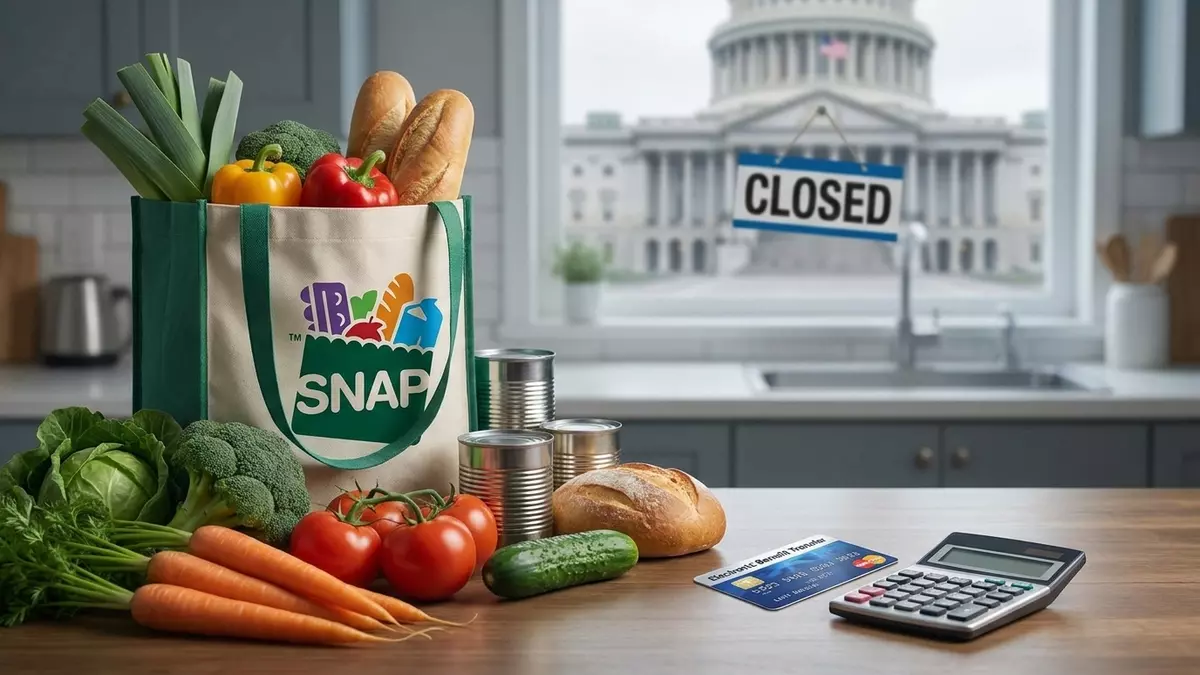
Millions of low-income Americans who rely on the Supplemental Nutrition Assistance Program (SNAP) will receive a higher portion of their November food benefits than initially projected. The U.S. Department of Agriculture (USDA) confirmed that beneficiaries will now receive up to 65% of their normal monthly allotments, reversing an earlier directive that would have slashed payments exactly in half.
The adjustment comes amid the ongoing, record-breaking federal government shutdown. The lapse in federal appropriations has paralyzed key public services, forced widespread furloughs, and left anti-hunger programs entirely dependent on dwindling emergency reserves. While the update offers modest relief to the roughly 42 million Americans affected, state administrators warn that navigating the shifting federal directives remains a logistical nightmare.

Nov. SNAP Update 65% Benefits Released Amid Government Shutdown
The Math Behind the Adjustment: A Calculation Error Revealed
The sudden shift from a 50% payout to 65% was triggered by a federal agency oversight. According to a court declaration filed by Patrick Penn, who oversees food and nutrition services at the USDA, the department revised its initial distribution framework after identifying a significant calculation error.

The Justice Department elaborated in a parallel filing that the USDA realized the discrepancy after conducting secondary mathematical simulations on its available reserves.
[Initial Guidance] 50% Cut (50% Benefit Distributed)
       ➔ [USDA Error Recalculation]
[Updated Guidance] 35% Cut (65% Benefit Distributed)
By adjusting the benefit calculation, the USDA determined it could distribute up to 65% of maximum monthly allotments rather than enforcing the steeper 50% reduction originally communicated to state agencies. Consequently, state administrators received sudden counter-instructions to halt their previous metrics and recalculate the exact distribution amounts for every eligible household within their jurisdictions.
Legal Battles and the Depletion of Emergency Funds
The administration’s scramble to distribute partial benefits follows intense legal pressure from local governments, civil rights organizations, and non-profit advocacy groups. When federal funding lapsed, the USDA initially warned states that zero SNAP benefits would be distributed for the month of November, citing a lack of explicit authorization from Congress.

This prompted immediate, high-stakes lawsuits. Plaintiffs argued that the executive branch was legally obligated to tap into emergency reserves to prevent a catastrophic hunger crisis. A federal judge in Rhode Island sided with the anti-hunger groups, ordering the USDA to deploy its existing contingency fund.
Total Monthly SNAP Cost: ~$8.5 Billion - $9 Billion
Available Contingency Reserve: ~$4.6 Billion (Allocated to fund up to 65% of benefits)
The USDA agreed to comply with the court mandate, confirming it will completely drain the remaining $4.6 billion in emergency reserves to fund the adjusted 65% benefit levels. However, agency officials explicitly warned that these contingency funds will be entirely exhausted by the end of November, leaving the program with a zero-dollar balance moving into December unless a broader federal budget deal is reached.
State Operational Challenges and System Delays
While the increase to 65% provides temporary breathing room for families, state agencies are facing severe administrative bottlenecks trying to implement the change.

| State | Estimated System Recalculation Timeline |
| Pennsylvania | Requires 9 to 12 days to safely restructure electronic benefit networks. |
| Minnesota | Anticipates at least 6 weeks to reprogram legacy computer systems for partial distribution. |
| Massachusetts / New York | Attempting fast-tracked processing to clear backlogs within days. |
Because electronic benefit transfer (EBT) networks are designed around static, fully funded benefit formulas, flashing a sudden 35% reduction across millions of individual accounts requires extensive code overrides. In many regions, the processing delay means families may not see the value loaded onto their EBT cards until late in the month, prompting local officials to advise families to budget carefully and utilize local food pantries to bridge the gap.
Conclusion
The decision to elevate November SNAP payouts to 65% highlights the severe strain the ongoing government shutdown is placing on the nation’s primary social safety net. While the correction of the USDA’s calculation error temporarily prevents a total collapse in food assistance, it represents a short-term patch rather than a sustainable cure. With the federal contingency funds scheduled to hit zero by the end of the month, the survival of the program hinges entirely on whether Congress and the White House can resolve their budgetary impasse before December arrives.
Frequently Asked Questions
Do I need to reapply to receive the updated 65% SNAP benefit?
No, individual recipients do not need to file a new application or contact their local caseworker to receive the updated amount. State agencies are automatically applying the federal recalculations to all existing, active SNAP cases.
Why can’t the government use other emergency funds to pay the remaining 35%?
According to USDA court filings, the agency chose to preserve its alternate emergency reserves to protect other vulnerable nutritional programs. Tapping into remaining emergency lines to fully fund SNAP would completely strip funding from child nutrition initiatives, such as public school free lunch programs, through the remainder of the fiscal year.
What should I do if my November SNAP benefits are delayed?
Because individual states require varying amounts of time to reprogram their electronic benefit distribution software, payment dates are fluctuating nationwide. If your funds have not arrived on your standard distribution date, monitor your state’s Department of Human Services portal for localized schedule updates, and reach out to regional community food banks or 211 resource hotlines for immediate emergency grocery assistance.
Will I have to pay back the extra 15% if the government changes the rules again?
No. The 65% allocation represents the official, legally binding recalculation of the available federal contingency fund authorized by the courts for November. Beneficiaries are legally entitled to spend the full amount loaded onto their EBT cards without fear of retroactive overpayment penalties.
What will happen to my SNAP benefits in December if the shutdown continues?
The outlook for December remains highly critical. Because the USDA is completely draining its final $4.6 billion contingency reserve to hit the 65% mark this month, there will be no federal emergency funding left to backstop the program next month. If Congress fails to pass an appropriations bill or a temporary continuing resolution to reopen the government before late November, SNAP disbursements will face a total nationwide freeze.