
Table of Contents
- 1. The Biological Truth: What Makes Hair Shiny?
- 2. Step 1: Identify Your Hair Type’s Unique Moisture Blueprint
- 2.1. 1. Chronically Dry Hair
- 2.2. 2. Oily or Greasy Hair
- 2.3. 3. Combination (Mixed) Hair
- 2.4. 4. Curly and Coily Textures
- 2.5. 5. Fine and Thin Strands
- 3. Step 2: Establish the Foundation Hydration Routine
- 3.1. The Targeted Wash Strategy
- 3.2. The Proper Way to Condition
- 4. Step 3: Upgrade with Advanced Deep Treatments
- 4.1. 1. Weekly Repair Masks
- 4.2. 2. Specialized Hair Oils and Serums
- 5. Step 4: Holistic Lifestyle and Styling Adjustments
- 5.1. Fuel Keratin Production from Within
- 5.2. Control and Minimize Heat Exposure
- 5.3. Trim Away Split Ends Regularly
- 6. Embracing a Consistent Routine
- 7. Frequently Asked Questions (FAQs)
- 7.1. 1. Can over-moisturizing your hair actually cause damage?
- 7.2. 2. How can I tell the difference between hair that needs moisture and hair that needs protein?
- 7.3. 3. Will using a silk or satin pillowcase make my hair shinier?
- 7.4. 4. What is hair porosity and how does it affect daily hydration?
- 7.5. 5. Why does my hair look incredibly shiny right after using a flat iron?
4 Steps to Get Mirror-Shiny, Hydrated Hair This Week
Radiant, bouncy, and mirror-shiny hair is the ultimate symbol of optimal hair health. When your hair strands are perfectly hydrated, they do more than just look visually stunning—they become remarkably soft to the touch, effortless to manage, and structurally fortified against environmental stressors like pollution, UV rays, and friction.
However, achieving that elusive glass-like shine requires more than just applying a random glossing spray. True sheen is an architectural feature of a healthy strand. To unlock your hair’s full potential, you must establish a methodical care routine that infuses moisture deep into the inner cortex and seals the outermost protective layer.
4 Steps to Get Mirror-Shiny, Hydrated Hair This Week

The Biological Truth: What Makes Hair Shiny?
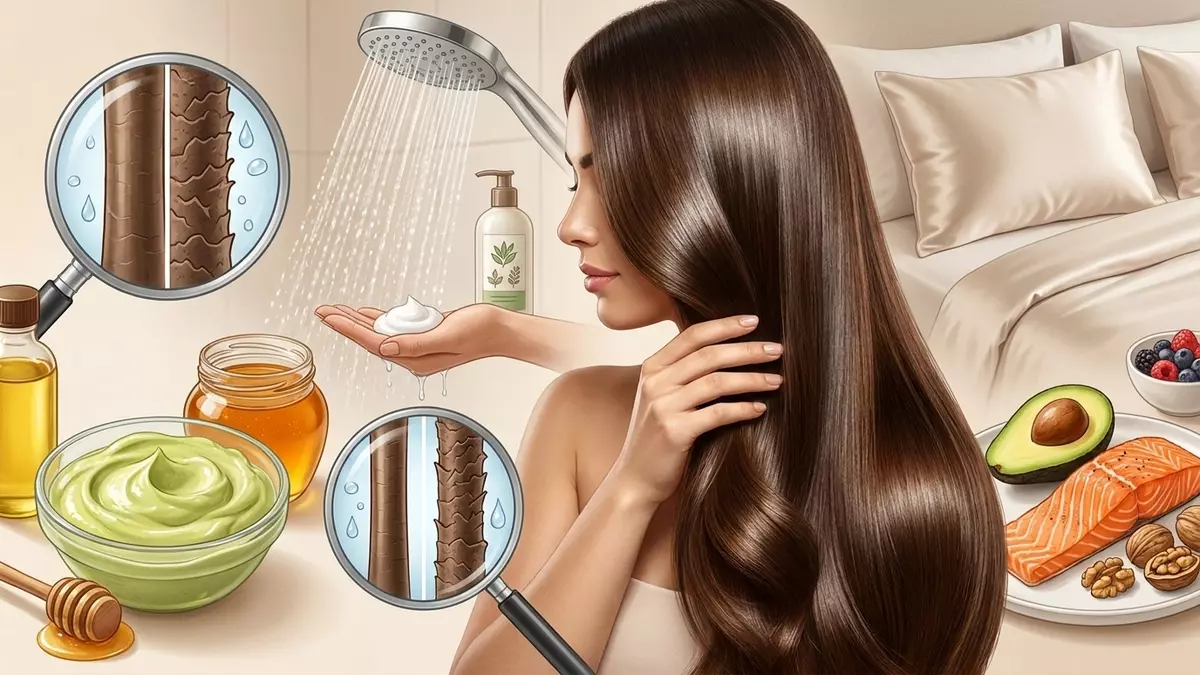
To understand how to maximize shine, it helps to look at a single strand of hair under a microscope. The outermost layer of your hair is called the cuticle, which is made up of overlapping cellular scales that resemble shingles on a roof.
When your hair lacks adequate moisture, these cuticle scales lift, warp, and roughen up. When light hits a rough cuticle, it scatters in different directions, making your hair look dull, dry, and frizzy. Conversely, when your hair is deeply hydrated, those overlapping shingles lay perfectly flat and smooth. A flat surface acts like a pristine mirror, reflecting light evenly back to the eye to create an intense, healthy shine.
Step 1: Identify Your Hair Type’s Unique Moisture Blueprint
Before rushing out to purchase new hair care products, you must diagnose the specific structural condition of your hair. Applying a heavy, dense butter to delicate, fine strands will weigh it down, while a lightweight mist will completely starve thick, coarse curls.

1. Chronically Dry Hair
This hair type feels rough, stiff, and brittle to the touch, and it is highly prone to split ends and breakage. Dry hair possesses a highly porous structure that struggles to hold onto moisture, requiring rich, heavy conditioning agents and regular deep-treatment masks to rebuild its defenses.
2. Oily or Greasy Hair
Characterized by an overproduction of sebum (natural oils) from the scalp, this hair type often looks heavy, limp, and dull just a day after washing. The secret here is to use lightweight, clarifying formulas that cleanse the scalp thoroughly without stripping the protective mid-lengths and ends.
3. Combination (Mixed) Hair
A incredibly common issue where the scalp and roots are oily, but the mid-lengths and ends are parched, straw-like, and split. This requires a balanced, targeted approach: purifying the scalp while directing deep moisture exclusively to the lower half of the strands.
4. Curly and Coily Textures
Because of its spiraled shape, natural scalp oils cannot easily travel down the twists of a curly strand. This makes curly hair naturally drier, more porous, and more vulnerable to frizz than straight hair, meaning it demands deep, leave-in hydration and structural curl-defining creams.
5. Fine and Thin Strands
Fine hair is highly delicate and vulnerable to structural dryness, but it easily becomes overwhelmed by heavy products. It requires weightless, fluid hydrators that nourish the interior of the strand without flattening your natural volume.
Step 2: Establish the Foundation Hydration Routine
Transforming the physical texture of your hair begins in the shower. By modifying how you wash and condition your hair, you can systematically flatten your cuticles.
The Targeted Wash Strategy
Always choose a shampoo tailored precisely to your structural hair needs. Look for high-performing, clean ingredients such as hyaluronic acid (which holds up to 1,000 times its weight in water), aloe vera vera juice, plant-derived ceramides, and pure coconut oil.
When washing, focus your product application strictly on your scalp and roots where sweat and sebum accumulate. Avoid scrubbing the ends of your hair like a fabric; as the suds rinse down the lengths of your strands, they will safely cleanse the hair without stripping its internal moisture.
The Golden Water Rule: Never wash your hair with hot water. High temperatures strip away the vital protective lipid barrier of your scalp and force the hair cuticle wide open, inviting moisture to escape. Always wash and rinse your hair with lukewarm water, and finish with a brief splash of cool water to lock the cuticle flat before stepping out of the shower.
The Proper Way to Condition
Conditioner is a non-negotiable step for every single hair type, including oily and fine hair. While shampoo opens the cuticle to clean, conditioner functions to soften those scales, seal the moisture inside, and eliminate the friction that causes tangles and breakage.
Apply your conditioner starting at the tips of your hair and working upward, stopping at the mid-lengths. Never apply conditioner directly to your scalp or roots, as this can clog hair follicles and leave your hair looking flat and greasy. Let the formula sit on your hair for two to three minutes to fully penetrate the strand before rinsing it out completely.
Step 3: Upgrade with Advanced Deep Treatments
If your hair is recovering from chemical processing, dye, or heat damage, a standard wash-and-care routine isn’t enough. You need to incorporate concentrated moisture upgrades.
1. Weekly Repair Masks
A high-quality hair mask is an intensive therapy designed to deposit concentrated nutrients deep into the hair shaft. You can opt for professional commercial masks packed with hydrolyzed proteins, or experiment with nutrient-dense homemade masks using fresh ingredients from your kitchen:
+--------------------------------------------------------------------------+
|                        DIY HYDRATION MASK RECIPE                         |
+-------------------+------------------------------------------------------+
| 1 ripe Avocado    | Loaded with monounsaturated fatty acids to coat and  |
|                   | soften rough textures.                               |
+-------------------+------------------------------------------------------+
| 2 tbsp Raw Honey  | A natural humectant that pulls moisture directly     |
|                   | out of the air into the hair strand.                 |
+-------------------+------------------------------------------------------+
| 1 tbsp Argan Oil  | Rich in Vitamin E to seal the cuticle and deliver a   |
|                   | brilliant, protective sheen.                          |
+-------------------+------------------------------------------------------+
| Instruction       | Blend smoothly, apply from mid-lengths to ends, leave |
|                   | for 20 minutes under a shower cap, then rinse well.  |
+-------------------+------------------------------------------------------+
2. Specialized Hair Oils and Serums
Natural botanical oils act as exceptional natural glossers and sealants. Argan oil is excellent for adding a lightweight, glassy finish to fine or medium hair; jojoba oil closely mimics your scalp’s natural sebum, making it perfect for balancing combination hair; and sweet almond oil softens coarse textures beautifully. Apply a few drops to your damp ends after washing, or use it as an intensive overnight treatment before wash day.
Step 4: Holistic Lifestyle and Styling Adjustments
Shine is a long-term indicator of overall bodily wellness. To maintain a vibrant, glossy mane, you must support your hair’s growth cycles from the inside out.
Fuel Keratin Production from Within
Your hair is structurally composed of a tough protein called keratin. To build strong, shiny hair fibers, your body requires a steady stream of amino acids, vitamins, and minerals. Ensure your daily diet features plenty of:
Omega-3 Fatty Acids: Found in salmon, walnuts, and chia seeds to nourish the scalp barrier.
Biotin and Zinc: Sourced from eggs, legumes, and lean seafood to support strong hair growth.
Vitamins A, C, and E: Found in avocados, berries, and spinach to protect hair cells from aging.
Pure Water: Dehydration immediately impacts your hair, turning flexible strands brittle and dry. Drink plenty of water daily to keep your hair hydrated from within.
Control and Minimize Heat Exposure
Intense heat from blow dryers, flat irons, and curling tools can literally boil the moisture inside your hair shaft, causing permanent structural damage and a dull appearance. Whenever possible, allow your hair to air-dry naturally.
If you must use heat styling tools, always apply a high-quality heat protectant spray first to create a thermal shield over the cuticle. Keep your tools on their lowest heat settings, and never hold a blow dryer closer than six inches from your scalp.
Trim Away Split Ends Regularly
Once a hair strand splits at the tip, that damage will slowly travel straight up the hair shaft, shredding the cuticle layer and preventing moisture from staying inside the strand. Schedule a professional trim every 6 to 8 weeks. Removing damaged, frayed ends keeps your hair healthy, prevents tangles, and ensures your hydration products can work effectively.
Embracing a Consistent Routine
Unlocking a deep, mirror-like shine isn’t about finding a single miracle product; it’s about treating your hair cuticles with consistent care. By identifying your structural hair type, washing with lukewarm water, protecting your strands from heat damage, and nourishing your body with nutrient-dense foods, you create the ideal environment for your hair to thrive. Treat your hair with patience, listen to its unique needs, and you will enjoy a soft, vibrant, and radiantly shiny mane that turns heads wherever you go.
Frequently Asked Questions (FAQs)
1. Can over-moisturizing your hair actually cause damage?
Yes, this is a real condition known as hygral fatigue. It occurs when hair is continuously drenched with moisture without a proper balance of protein. When hair absorbs water, it expands, and when it dries, it contracts. Constant expansion and contraction stretches and weakens the internal structure of the strand, leaving your hair feeling mushy, limp, gummy, and highly prone to breakage. Always balance deep hydration treatments with occasional protein-strengthening products.
2. How can I tell the difference between hair that needs moisture and hair that needs protein?
Perform a simple stretch test. Take a single wet strand of hair and gently pull it between your fingers. If the strand stretches slightly and then returns to its original length without breaking, your hair is perfectly balanced. If the hair stretches endlessly like wet spaghetti and then snaps or feels mushy, it desperately needs protein. If the strand has zero elasticity, feels brittle, and snaps instantly when pulled, it is parched and requires intense moisture.
3. Will using a silk or satin pillowcase make my hair shinier?
Yes, absolutely. Standard cotton pillowcases possess rough, absorbent fibers that create constant friction against your hair cuticles as you toss and turn at night. This friction roughs up the cuticle scales and drinks up your hair’s natural oils. Switching to a smooth silk or satin pillowcase allows your hair to glide effortlessly across the surface without friction, preserving your styling work, locking in moisture, and boosting your natural shine.
4. What is hair porosity and how does it affect daily hydration?
Hair porosity refers to your strand’s ability to absorb and retain moisture, and it is largely dictated by genetics and heat damage. High porosity hair has wide-open gaps in the cuticle; it absorbs water quickly but loses it just as fast, requiring heavy oils and butters to seal the gaps. Low porosity hair has tightly bound cuticle scales that tightly block water out; it requires warm water to open the scales and lightweight, fluid formulas that won’t sit on top of the strand.
5. Why does my hair look incredibly shiny right after using a flat iron?
A flat iron uses intense heat and physical pressure to manually flatten down your hair cuticles, creating a temporary, ultra-smooth surface that reflects light beautifully. However, this is a structural illusion. If you flat iron your hair without applying a heat protectant, the intense heat will dry out the core moisture of the strand, leading to more raised cuticles, severe frizz, and a dull appearance once the hair is washed again.