
Table of Contents
- 1. Understanding Sarcopenia: The Silent Muscle Drain
- 2. Why Strength Training Is a Necessity Later in Life
- 2.1. The Biological Domino Effect of Resistance Work
- 3. The Tufts University Research: Consistency Over Heavy Lifting
- 4. A Step-by-Step Guide for Older Adults to Start Safely
- 4.1. 1. Begin with Bodyweight Fundamentals
- 4.2. 2. Transition to Light, Accessible Implements
- 4.3. 3. Seek Out Specialized, Age-Friendly Communities
- 5. Overcoming Obstacles and Maintaining Long-Term Consistency
- 6. Conclusion: The Ultimate Investment in Your Future Self
- 7. Frequently Asked Questions (FAQs)
- 7.1. 1. Is it safe for someone in their 70s or 80s to start strength training for the first time?
- 7.2. 2. How many times a week should an older adult perform strength exercises?
- 7.3. 3. Can strength training help reduce the chronic pain associated with arthritis?
- 7.4. 4. What is the difference between strength training and cardiovascular exercise?
- 7.5. 5. Will I lose my flexibility if I start lifting weights or using resistance bands?
Resistance Training Helps Older Adults Maintain Lifelong Independence
Aging brings unavoidable transformations to the structural and biological mechanics of the human body. One of the most significant yet frequently overlooked changes occurs within our skeletal muscle tissue. Over time, individuals may find that ordinary physical tasks—such as carrying heavy grocery bags, walking up a flight of stairs, or rising from a deep sofa—gradually require significantly more effort.
For decades, society viewed this physical decline as a completely unpreventable consequence of growing older. However, pioneering research in gerontology and sports medicine proves that we have immense control over this process.
According to Dr. Roger Fielding, a prominent exercise and aging specialist at Tufts University whose work is funded by the National Institutes of Health (NIH), incorporating consistent resistance training into your daily routine can drastically slow down, halt, and even partially reverse age-related muscle loss. By shifting our perspective on physical activity later in life, we can preserve our mobility, protect our skeletal structure, and safeguard our personal autonomy for decades to come.

Resistance Training Helps Older Adults Maintain Lifelong Independence
Understanding Sarcopenia: The Silent Muscle Drain
To appreciate the critical necessity of strength training as we age, it is essential to define the biological challenge we are fighting. Beginning around the age of 30, the human body enters a slow but steady state of muscle degradation known medically as sarcopenia.
What is Sarcopenia?
Also ReadThe Martial Arts Advantage: Harvard Medical School’s Top Exercise Recommendation for Seniors
Sarcopenia is the progressive and generalized loss of skeletal muscle mass, quality, and physical function associated with the natural aging process. If left unmanaged, this condition can lead to a state of physical frailty, an increased risk of severe injuries, and a substantial drop in overall quality of life.
Sarcopenia is a hidden threat because it develops incrementally. In its early stages, you might not notice a minor reduction in muscle tissue. However, as the decades progress, the cumulative loss becomes highly apparent, leading to structural instability and a sudden decline in functional movement.
[ Natural Aging Process ] ──► Triggers Sarcopenia (Muscle Loss)
                                         │
                                         ▼
[ Decreased Functional Power ] ──► Balance Difficulties & Limited Mobility
                                         │
                                         ▼
[ High Risk Factor ] ──► Frequent Falls, Frailty, & Loss of Independence
Why Strength Training Is a Necessity Later in Life
While regular physical exercise delivers profound cardiovascular and psychological benefits to individuals of all ages, its specific impact becomes an absolute survival tool during our later years. Dr. Fielding emphasizes that the loss of raw muscle mass is directly tied to a dangerous cascade of physical limitations.

When an older adult experiences a severe decline in muscular power, simple daily patterns begin to break down. They may experience balance issues while walking, find themselves struggling to stand up from a standard chair, or feel unstable navigating uneven sidewalks.
If this physical trajectory is left unchecked, the functional loss eventually crosses a critical threshold where an individual can no longer safely manage their own home, run basic errands, or live independently.
The Biological Domino Effect of Resistance Work
Incorporating targeted strength training into your routine halts this downward spiral by triggering a highly beneficial biological cascade throughout the entire body:
Sustaining Muscle Architecture: Resistance exercises force muscle fibers to repair and rebuild, preserving vital lean tissue mass.
Enhancing Balance and Neuromuscular Coordination: Strength training sharpens the communication pathways between the brain and skeletal muscles, vastly improving real-time spatial awareness and preventing debilitating falls—the leading cause of injury-related hospitalizations among older adults.
Fortifying Bone Mineral Density: Placing a mechanical load on your bones through resistance training signals the body to deposit more minerals into the skeletal matrix, actively combatting osteoporosis and reducing the risk of fractures.
Optimizing Metabolic Health: Skeletal muscle serves as the body’s primary sink for processing blood sugar. Maintaining a healthy muscle mass mass significantly improves insulin sensitivity and helps regulate overall metabolic stability.
The Tufts University Research: Consistency Over Heavy Lifting
Dr. Fielding’s extensive clinical research at Tufts University, heavily supported by the National Institute on Aging (NIA), provides robust scientific evidence confirming that regular strength training is a safe, reliable path to healthy longevity.
A vital takeaway from his findings is a reassuring truth for beginners: building functional strength does not require lifting heavy, intimidating iron weights at a hardcore gym.
[ The Longevity Fitness Philosophy ]
  ├── Prioritize Habitual Consistency over Raw Intensity
  ├── Engage in Multi-Joint, Functional Movements
  └── Progressively Challenge Muscle Groups in Safe Ranges
The goal of age-friendly strength training is simply to introduce a controlled, manageable stressor that actively challenges your muscle fibers, forcing them to adapt and grow more resilient. Success is entirely driven by habitual consistency, proper alignment, and moving your body through safe, intentional ranges of motion.
A Step-by-Step Guide for Older Adults to Start Safely
If you have never picked up a dumbbell or participated in a structured fitness routine, the idea of starting strength training can understandably feel overwhelming. However, fitness is an accessible journey that can be tailored to any baseline capability.
1. Begin with Bodyweight Fundamentals
You do not need specialized fitness equipment to start building muscle. Your own body weight serves as an exceptional starting resistance. High-value movements to practice at home include:
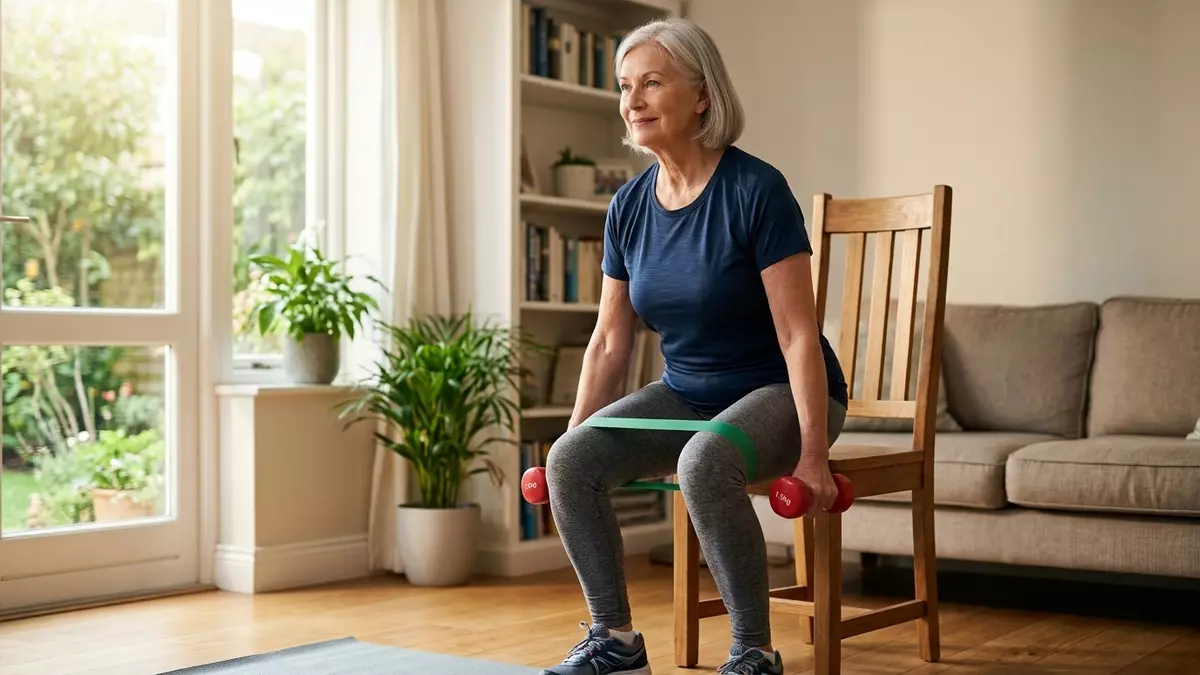
Chair Squats: Practicing the exact motion of sitting down into a sturdy chair and standing back up without utilizing your hands for assistance.
Wall Pushups: Standing a few feet away from a flat wall, placing your hands flat against the surface, and lowering your chest toward the wall to build upper-body and core stability.
Standing Balance Holds: Holding onto the back of a secure counter or chair and practicing lifting one foot off the ground to train the stabilizing muscles in your hips and ankles.
2. Transition to Light, Accessible Implements
As these foundational movements become easier and your baseline confidence increases, you can gradually introduce light resistances to keep your muscles adapting. Excellent home-friendly options include adjustable ankle weights, looping resistance bands, or simply using everyday household objects like full water bottles or canned goods.
3. Seek Out Specialized, Age-Friendly Communities
If you prefer a social, structured environment, look for fitness programs specifically tailored for older adults at local community centers, senior centers, or your neighborhood YMCA. These specialized classes are led by certified instructors who prioritize structural safety, joint preservation, and incremental, personalized progression.
[ Step 1: Bodyweight Basics ] ──► [ Step 2: Light External Resistance ] ──► [ Step 3: Progressive Longevity Classes ]
Overcoming Obstacles and Maintaining Long-Term Consistency
Building a new habit is less about sudden bursts of willpower and more about designing a sustainable lifestyle plan. To make strength training a permanent, rewarding fixture in your life, consider utilizing these practical strategies:
Anchor Your Workouts to Personal Goals: Connect your physical efforts to deep, emotional motivators. Remind yourself that you are getting stronger so you can garden without back pain, easily lift your grandchildren, enjoy traveling independently, or remain securely in your own home.
Form a Fitness Alliance: Partner up with a close friend, neighbor, or spouse. Exercising with a companion introduces a powerful layer of social enjoyment and mutual accountability that makes it significantly harder to skip sessions.
Listen Close to Your Physical Signals: It is completely normal to experience mild, temporary muscle soreness a day or two after a new workout. However, you should never push through sharp, localized joint pain. Progress slowly, prioritize rest, and always consult with your primary healthcare physician before embarking on a new exercise program if you have underlying medical conditions.
Conclusion: The Ultimate Investment in Your Future Self
Ultimately, adding strength training to your daily routine is the single most powerful investment you can make to ensure a high quality of life as you age. It is a scientifically proven strategy to slow down the clock, protect your physical freedom, and ensure you remain the author of your own life story.
By starting small, focusing on consistency, and celebrating the incremental gains in your balance and stamina, you can look forward to a vibrant, active, and fully independent future.
Frequently Asked Questions (FAQs)
1. Is it safe for someone in their 70s or 80s to start strength training for the first time?
Yes, absolutely. Clinical studies consistently show that individuals can successfully build muscle tissue and improve their physical balance at any stage of life, even well into their 90s. The key to safety is starting with gentle, low-impact bodyweight exercises and slowly increasing the challenge as your body adapts.
2. How many times a week should an older adult perform strength exercises?
For optimal health benefits and sufficient muscle recovery, experts generally recommend scheduling two to three strength training sessions per week. It is ideal to space these workouts out so you have at least one full day of rest between sessions to allow your muscles to repair and grow stronger.
3. Can strength training help reduce the chronic pain associated with arthritis?
Yes. When you strengthen the muscles surrounding an arthritic joint (such as the quadriceps and hamstrings surrounding a worn knee), those muscles absorb a substantial portion of the mechanical shockwaves generated during daily walking. This offloads direct pressure from the damaged joint capsule, which frequently reduces chronic inflammation and daily pain.
4. What is the difference between strength training and cardiovascular exercise?
Cardiovascular exercise (such as walking, cycling, or swimming) primarily challenges and conditions your heart, lungs, and blood vessels to improve stamina. Strength training (such as bodyweight exercises or working with resistance bands) targets specific skeletal muscles, applying a mechanical workload to increase muscle mass, improve bone density, and enhance structural balance.
5. Will I lose my flexibility if I start lifting weights or using resistance bands?
No, this is a common myth. When performed correctly through a full, natural range of motion, resistance training actively improves functional mobility and joint flexibility. Strengthening muscles in elongated positions helps stabilize joints and prevents the chronic shortening of tissues that causes age-related stiffness.