
Table of Contents
- 1. The Biomechanics of a Safety-First Gait
- 2. The Ankle Paradox: Pressing the Gas and Brake Simultaneously
- 2.1. What is Muscle Co-Contraction?
- 2.2. The Real Cost of Stiffened Joints
- 3. Inside the Lab: Tracking the Mechanics of Movement
- 3.1. The Role of Shifting Proprioception
- 4. The True Danger of a Cautious Walking Style
- 5. Reclaiming Your Stride: Targeted Balance and Coordination Training
- 6. Conclusion: Noticing the Signals of Longevity
- 7. Frequently Asked Questions (FAQ)
How Aging Changes the Way We Walk and Impacts Independence
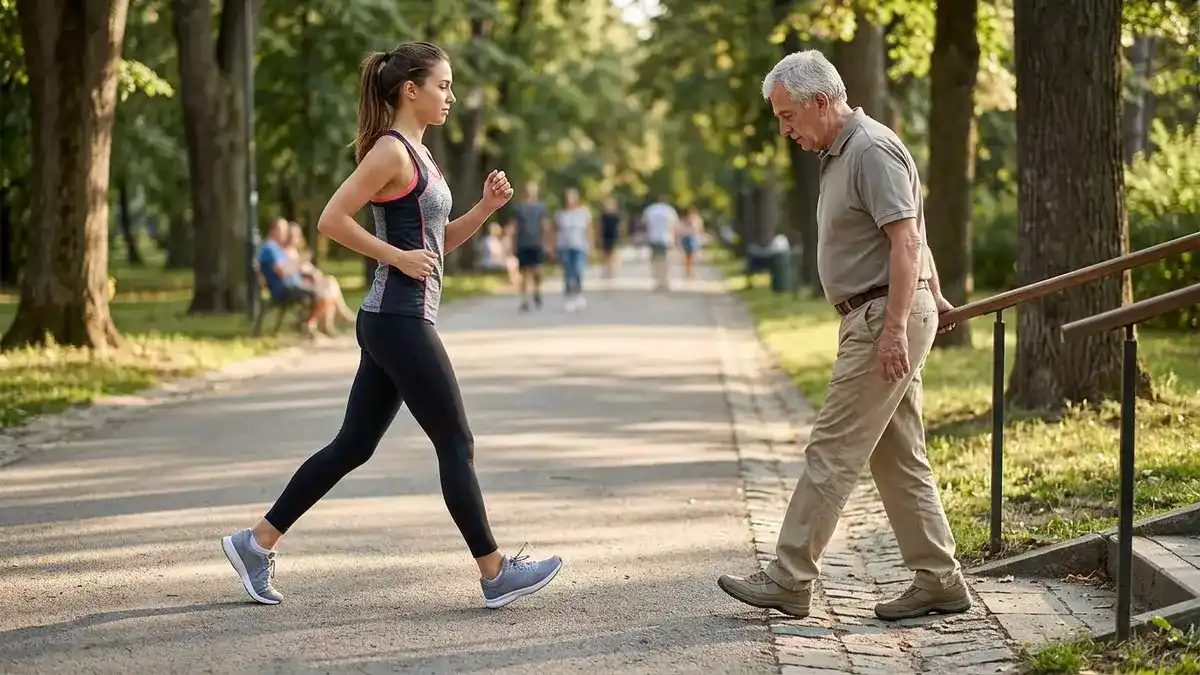
You might first notice it on a steep flight of stairs, or perhaps you observe it in an aging parent who now instinctively pauses to grip the handrail before stepping forward. To the casual observer, walking appears to be a completely seamless, automated human action. In reality, bipedal locomotion is an incredibly complex neurological and musculoskeletal feat. Every single step requires a continuous stream of real-time communication between your brain, nervous system, and lower-extremity muscles.
As the human body undergoes the natural process of aging, it quietly rewrites its entire movement script. A compelling study led by researchers at Flinders University in collaboration with the University of Canberra has cast a bright light on this invisible transition. The research indicates that as we get older, our bodies systematically abandon a smooth, energy-efficient walking style in favor of a highly cautious, defensive gait designed purely to keep us upright.
Understanding this biological trade-off does more than satisfy scientific curiosity. Your walking pattern serves as a direct mirror reflecting your underlying muscle strength, neurological processing speed, joint stability, and long-term independence. By learning to recognize these biomechanical shifts early on, you can take proactive, targeted steps to preserve your mobility and safeguard your autonomy for years to come.
How Aging Changes the Way We Walk and Impacts Independence

The Biomechanics of a Safety-First Gait
The evolutionary goal of a youthful walking style is biological conservation. When a healthy young adult walks, their muscles and joints operate like a series of efficient pendulums and springs, recycling kinetic energy from one step to the next to move forward with minimal caloric effort.
However, the new Australian study reveals that our internal motor planning priorities shift dramatically with age. Dr. Cody Lindsay of the Flinders Caring Futures Institute, alongside co-investigators Ceridwen R. Radcliffe and Maarten A. Immink, analyzed the precise walking metrics of 107 healthy adults spanning a vast age demographic from 26 to 86 years old. The research team summarized this core evolutionary shift clearly: as the body ages, it systematically prioritizes stability over efficiency.
This transition is not caused by the brain suddenly “forgetting” how to execute a normal stride. Instead, it is a highly calculated, protective adaptation.

Consider the vast difference in stakes between age groups:
Younger Adults: If a 25-year-old stumbles over an uneven sidewalk tile, their rapid neurological reflexes instantly kick in. They catch themselves, step forward, and keep moving without a second thought.
Older Adults: If an older adult experiences an identical trip, the consequences can be life-altering. A single fall can easily result in complex bone fractures, a lengthy hospital stay, a permanent decline in physical capacity, or a devastating loss of psychological confidence.
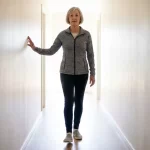
To avoid this risk, the aging nervous system intentionally chooses a walking pattern that is far more stable, but significantly more physically exhausting.
The Ankle Paradox: Pressing the Gas and Brake Simultaneously
To uncover the exact mechanics behind this cautious walking style, the research team looked closely at the ankle joint. The ankle behaves as the primary workhorse of human locomotion. It is tasked with three monumental jobs during a single stride: absorbing the jarring shock of the initial heel strike, micro-adjusting to maintain side-to-side balance on changing terrain, and flexing dynamically to propel the body forward into the next step.
What is Muscle Co-Contraction?
The study discovered that older adults increasingly rely on a phenomenon known as muscle co-contraction to get around. In a youthful gait, opposing muscle groups take turns firing; as the calf muscle contracts to push off, the muscles on the front of the shin relax to allow the joint to move smoothly.
During co-contraction, however, both the pushing and braking muscle groups tighten simultaneously around the joint.
A Driving Analogy: Walking with chronic muscle co-contraction is the biological equivalent of driving a vehicle while pressing the gas pedal and the brake pedal down at the exact same time.
The Real Cost of Stiffened Joints
While tightening these opposing muscles succeeds in making the ankle joint incredibly rigid, safe, and stable against unexpected trips, it extracts a heavy physical toll. This structural stiffness requires a massive expenditure of metabolic energy while severely dampening the leg’s natural forward propulsion. This exact mechanical conflict explains why older adults naturally develop shorter steps and a slower walking velocity, and why they frequently experience physical exhaustion much sooner during ordinary daily tasks than they used to.
Inside the Lab: Tracking the Mechanics of Movement
The investigative team did not simply observe participants walking down a standard hallway with the naked eye. To capture the true nuances of aging muscle behavior, they engineered a high-resolution laboratory testing environment utilizing three distinct diagnostic technologies:
3D Motion Capture Technology: Specialized cameras tracked reflective markers placed across the participants’ lower bodies, mapping out precise joint angles and changes in stride length down to the millimeter.
Subsurface Force Plates: Embedded directly into the floor, these sensitive plates calculated the exact directional force and power the foot exerted against the earth during push-off.
Surface Electromyography (sEMG) Sensors: Placed directly over key lower-leg muscle groups, these sensors logged the exact microsecond a muscle fired and measured the intensity of its electrical contraction.
The final lab data painted a highly consistent picture. Older participants displayed heavy ankle stiffening during the early and middle phases of a step—the exact moments when the foot is transitioning weight and is most vulnerable to a lateral balance loss. Concurrently, the force plates tracked a significantly weaker mechanical push-off during the final phase of the stride, proving that the stiffened joint was incapable of generating efficient forward drive.
The Role of Shifting Proprioception
This systemic stiffening is further compounded by a age-related decline in proprioception—your nervous system’s subconscious awareness of where your limbs are positioned in space without you having to look at them. As the sensory receptors in our joints and tendons naturally lose their sharpness over the decades, the brain compensates for this fuzzy spatial data by ordering the lower leg muscles to lock down the ankle joint as a defensive safety mechanism.
The True Danger of a Cautious Walking Style
Altering your walking pattern to be more slow and cautious is an intelligible defense mechanism, but letting it progress unaddressed introduces serious long-term health risks.
According to data compiled by the Centers for Disease Control and Prevention (CDC), falls stand as the leading cause of both fatal and nonfatal injuries among American adults aged 65 and older. Every single year, more than 14 million older adults report a fall.
14 Million Older Adult Falls Annually ──> 37% Require Medical Intervention ──> Fear of Falling ──> Restricted Movement ──> Muscle Wasting
The medical statistics surrounding these incidents require serious attention:
Approximately 37 percent of older adults who experience a fall sustain an injury severe enough to require direct medical care or restrict their physical activity for at least one full day.
The psychological aftermath of a fall can trigger a highly destructive lifestyle loop.
When an individual develops an intense fear of falling, their natural reaction is to scale back their daily activities, avoid stairs, and leave the house less often. However, this restriction leads directly to accelerated muscle wasting, stiffer joints, and degraded balance reflexes. Ultimately, the very caution designed to protect the individual can trap them in a downward spiral that shrinks their world and compromises their independent living status.
Reclaiming Your Stride: Targeted Balance and Coordination Training
The ultimate takeaway from modern gait research is incredibly empowering: a slower, stiffer walk is an invitation to intervene, not an unavoidable destiny. Reversing this trend requires moving far beyond the simplistic advice to just “walk faster” or “try harder.” Because the root issue is tied to neurological timing and joint rigidity, your physical interventions must prioritize balance, coordination, and joint flexibility alongside raw muscle power.
Comprehensive clinical meta-analyses, including an extensive Cochrane systematic review, demonstrate that structured, community-based exercise programs can reduce the overall incidence of falls among older adults by a substantial 23 percent.
To build a resilient, efficient stride at home, integrate these four functional habits into your weekly wellness routine:
Practice Disciplined Tai Chi or Yoga: These ancient movement modalities are premier tools for gait rehabilitation. They force the body to execute slow, deliberate weight transfers, directly sharpening your nervous system’s spatial proprioception while stretching and conditioning the connective tissues surrounding the ankle joint.
Perform Daily Sit-to-Stand Transitions: Using a sturdy kitchen chair, practice standing up and sitting back down slowly without using your hands for assistance. This simple movement builds targeted power in your glutes, quadriceps, and core, providing the foundational strength needed to recover from an unexpected trip.
Incorporate Focused Heel and Toe Raises: Stand near a wall or kitchen counter for balance support. Slowly lift up onto the balls of your feet, hold for two seconds, lower down, and then pull your toes up off the ground. This exercise directly strengthens the calf and shin muscles, combating the urge to stiffen the ankle by retraining the joints to flex through their full, natural range of motion.
Navigate Guided Uneven Surfaces: Under proper supervision or using supportive balance mats, practice walking across variable textures. This challenges the nervous system to process changing sensory inputs, breaking up the pattern of muscle co-contraction.
Conclusion: Noticing the Signals of Longevity
In the grand scheme of biological longevity, raw walking speed belongs largely to youth. As we journey into our later decades, the human body naturally decides that completing a journey safely matters infinitely more than crossing the finish line first.
A slower, more stable stride is a beautiful testament to your body’s innate intelligence and its commitment to protecting you from harm. However, when joint stiffness and a fear of falling begin to systematically limit your daily routines, it is a clear physical signal that your balance infrastructure needs targeted support. By embracing functional strength movements, focusing on ankle mobility, and staying active, you can ensure that every step you take remains steady, confident, and free from fear.
Frequently Asked Questions (FAQ)
What is the difference between a normal age-related change in walking and a symptom of a serious neurological disease?
A normal change in walking involves a slight, uniform slowing of pace and shorter steps to maximize safety. However, if you or a loved one develops highly asymmetric walking patterns (such as shuffling one foot while the other moves normally), experiencing sudden freezing spells where the feet feel glued to the floor, or displaying a total absence of natural arm swinging, you should schedule a swift clinical evaluation with a neurologist to rule out conditions like Parkinson’s disease.
Can wearing the wrong type of footwear accelerate ankle stiffness as we age?
Yes, absolutely. Footwear plays a massive role in gait mechanics. Wearing shoes with excessively thick, highly cushioned, pillow-like soles can block the sensory receptors in the bottom of your feet from reading the texture and angle of the ground, which forces the brain to over-stiffen the ankle joint out of caution. Opt for supportive shoes that feature a wide toe box, minimal heel drop, and a firm, non-slip sole to maximize your natural balance feedback loops.
How does an old knee or hip injury impact how my ankles move when I walk?
The human lower body operates as a continuous kinetic chain. If you have a stiff knee or a weak hip from an old injury, your body will naturally alter its movement geometry to shield that painful joint. This compensation often forces the ankle on the opposite side to work significantly harder, increasing the rate of muscle co-contraction and causing uneven muscle fatigue across your legs.
Is it safe to use a walking cane or a walker if I notice my balance starting to decline?
Utilizing a mobility aid like a cane or a rollator walker is an excellent way to maintain your independence, protect your safety, and confidently navigate public spaces. However, it is highly recommended to work alongside a physical therapist to properly fit the equipment to your height and learn correct posture techniques. Using an improperly sized aid can cause you to hunch forward, which shifts your center of gravity and inadvertently increases your risk of falling.
How often should I practice balance exercises to see a noticeable improvement in my walk?
Because balance is a highly neurological skill that relies on continuous brain-to-muscle signaling, consistency is far more important than intensity. Practicing simple balance movements—such as standing on one leg while brushing your teeth, doing heel raises at the kitchen counter, or attending a Tai Chi class—for just 10 to 15 minutes a day, four to five times a week, can yield substantial improvements in your stability and walking confidence within a few months.