
Table of Contents
Why Yoga and Tai Chi Are Essential for Healthy Aging
As we age, maintaining physical independence becomes the primary goal of any fitness routine. While strength training is critical for muscle mass, flexibility and stability are the two pillars that protect us from injury and maintain our quality of life. According to the Mayo Clinic, practices like yoga and tai chi are far more than just “relaxing activities”—they are evidence-based tools designed to improve range of motion and drastically reduce the risk of falls in older adults.
Why Yoga and Tai Chi Are Essential for Healthy Aging
Why Stretching Is More Than Just a Warmup
We often view stretching as an afterthought—a quick “pull and release” before hitting the gym. However, Mayo Clinic experts emphasize that regular, structured stretching is a vital maintenance program for the human body. As we age, our muscles and connective tissues naturally lose elasticity. Stretching counters this tightening, ensuring that our joints can move through their full range of motion.
The Proven Benefits of Flexibility:
Enhanced Mobility: Allows you to perform daily tasks, like reaching overhead or bending to tie your shoes, with ease.
Injury Prevention: More flexible muscles and joints are less prone to strains and tears.
Improved Posture: By lengthening muscles that have become chronically tight, you can alleviate the “slump” that often accompanies aging.
Increased Blood Flow: Stretching helps nourish muscle tissues, supporting recovery and function.
The Art of Safe Stretching
Technique is everything. Stretching incorrectly—or forcing your body into positions it isn’t ready for—can lead to injury. Follow these Mayo Clinic-approved guidelines to get the most out of your routine:
Warm Up First: Never stretch “cold” muscles. Start with 5 to 10 minutes of light movement, like walking or cycling, to increase your body temperature.
Aim for Symmetry: Don’t obsess over being hyper-flexible. Your goal should be symmetry; ensure you are equally flexible on both sides of your body to avoid creating muscular imbalances.
No Bouncing: Bouncing movements (ballistic stretching) can lead to micro-tears in the muscle. Always use slow, static stretches.
The “Tension, Not Pain” Rule: You should feel gentle tension, but never sharp pain. If it hurts, ease off immediately.
Hold and Breathe: Hold each stretch for 30 to 60 seconds while breathing steadily. This allows the nervous system to relax, signaling the muscle to lengthen.
Consistency is Non-Negotiable: Flexibility gains are “use it or lose it.” Aim for at least two to three sessions per week to maintain your progress.
Why Yoga and Tai Chi Work So Well
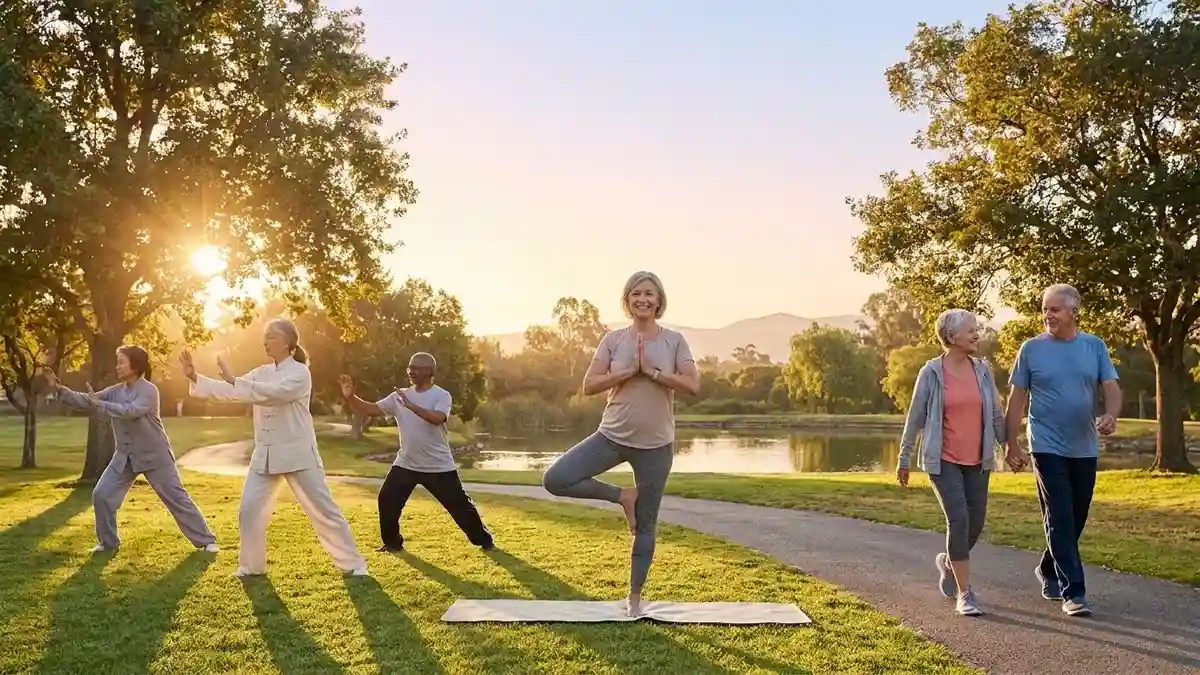
For many older adults, traditional stretching can feel monotonous. This is where movement-based practices like yoga and tai chi shine. They integrate stretching into controlled, rhythmic motions that mimic the way we actually move in the real world.
Tai Chi: Often called “meditation in motion,” tai chi is exceptionally effective for balance. By focusing on weight shifting and slow, deliberate movements, it trains the body to remain stable even when your center of gravity is challenged.
Yoga: Yoga combines deep stretching with strengthening holds. It is particularly effective for building core stability and increasing flexibility in the hips, back, and shoulders—the very areas that become stiffest with age.
These practices build dynamic stability. Unlike static stretching, where you stay in one place, yoga and tai chi teach your body how to stay balanced while in motion, which is the ultimate defense against falls.
Start Your Journey
You don’t need to be an expert to reap the rewards of these practices. If you are new to them, look for classes labeled “Gentle Yoga,” “Chair Yoga,” or “Tai Chi for Arthritis.” These programs are specifically modified to be accessible for all mobility levels, ensuring that you can safely build your strength and balance at your own pace.
By incorporating these gentle movements into your week, you are investing in your future self—ensuring that you remain active, confident, and independent for years to come.
Frequently Asked Questions (FAQ)
Can I hurt myself doing yoga?
As with any exercise, injuries are possible if you push too hard. Always look for classes geared toward older adults or beginners, and don’t be afraid to use props like yoga blocks or chairs for extra support.
How soon will I notice a difference in my balance?
Many people feel “looser” and more aware of their posture after just a few sessions. For significant improvements in stability and fall prevention, consistency over 8 to 12 weeks is the key.
Is tai chi too difficult for someone with bad knees?
On the contrary, tai chi is often recommended by physical therapists for knee health because it emphasizes proper alignment and slow, controlled weight bearing that strengthens the muscles supporting the joint without high-impact stress.
Do I have to do this every day?
While daily practice is great, you don’t need to do a full hour-long session every day. 10 to 15 minutes of dedicated stretching or light movement 3 times a week is often enough to maintain noticeable improvements.
What should I do if a stretch feels “tight”?
“Tight” is exactly what you are looking to address! Spend extra time—up to 60 seconds—on that area, breathing deeply. Over time, that tightness will soften as the tissue becomes more pliable.