
Table of Contents
**South Korea’s Massive Illite Discovery: World’s Largest Deposit Found in Yeongdong**
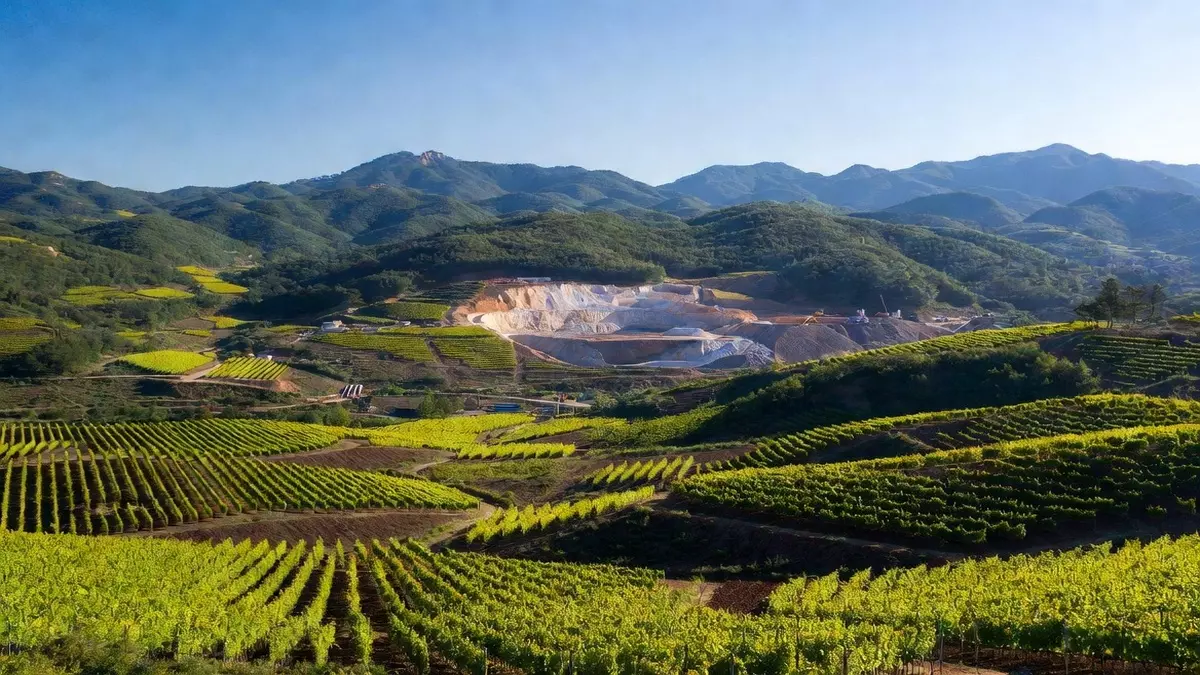
South Korea has confirmed one of the most significant mineral discoveries in recent years. Beneath the quiet wine-producing region of Yeongdong County lies the world’s largest known deposit of illite — a versatile clay mineral with applications ranging from cosmetics and oil drilling to advanced battery technology.
According to local officials and geological surveys conducted with the Korea Institute of Geoscience and Mineral Resources, the deposit contains approximately 104.5 million metric tons (about 115 million U.S. tons) of commercially viable illite. This dwarfs China’s known reserves of roughly 5.5 million tons, positioning South Korea as a major potential player in the global illite market.
This remarkable find is more than just a geological milestone. It represents a strategic opportunity for domestic industry, technological innovation, and economic growth in a resource-dependent nation.

South Korea’s Massive Illite Discovery World’s Largest Deposit Found in Yeongdong
### Understanding Illite: Properties and Wide-Ranging Uses
Illite is a fine-grained, plate-like clay mineral commonly found in shale and sandstone formations. Its microscopic structure gives it unique physical and chemical properties that make it valuable across multiple industries.

**Key Characteristics of Illite:**
– Excellent heat resistance (up to approximately 1,110°F / 600°C)
– Strong absorption capabilities for heavy metals and impurities
– Natural thickening and stabilizing qualities
– Soft texture ideal for cosmetic and personal care formulations
These traits explain why illite appears in everyday products. In cosmetics, it serves as a gentle exfoliant and oil absorber in face masks and powders. In oil drilling, it acts as a key component in drilling fluids to stabilize boreholes. Farmers use it in animal feed and fertilizers to improve nutrient retention and soil quality. It also functions as a filler in paints, paper, and construction materials.
The mineral’s versatility makes large, high-quality deposits particularly valuable in today’s resource-conscious world.

### Why This Discovery Matters for Battery Technology
One of the most exciting aspects of Yeongdong’s illite is its potential role in next-generation energy storage. Solid-state batteries — widely viewed as a safer, higher-performing successor to current lithium-ion technology — require advanced materials to improve ion conductivity and stability.
A 2024 research study by scientists from Cheongju University and Hankyong National University tested illite from the Yeongdong region as a filler in polymer-based solid electrolytes. The treated illite demonstrated improved lithium-ion movement in laboratory settings, addressing one of the major technical hurdles in solid-state battery development.
While commercial applications are still in early stages, this connection to the rapidly growing electric vehicle and renewable energy sectors adds significant long-term value to the deposit. As global demand for safer, more efficient batteries intensifies, domestic supplies of specialized materials like illite could reduce reliance on imports and strengthen South Korea’s position in the clean energy supply chain.
### How Yeongdong Prepared for This Moment
Yeongdong County did not stumble upon this discovery by chance. Local leaders showed foresight years ago by securing mining rights over approximately 5,000 acres in 2017. They have since worked to develop a local illite industry, incorporating the mineral into regional products such as cosmetics, fertilizers, building materials, and wellness-focused tourism experiences.
The recent comprehensive survey involved advanced geological investigation techniques, including drilling, physical exploration, and 3D modeling. These efforts confirmed substantial reserves across Yeongdong and neighboring Yanggang areas, providing a solid foundation for future development.
### Economic and Strategic Implications for South Korea
South Korea imports the vast majority of its raw materials. A domestic source of high-quality illite on this scale offers multiple advantages:
– Reduced dependency on foreign suppliers
– New opportunities for local manufacturing and exports
– Support for key industries including cosmetics, agriculture, energy, and construction
– Potential job creation in mining, processing, and research sectors
County officials are already planning next steps, including the establishment of a standardization support center and efforts to have Yeongdong illite recognized as an international reference material. Such initiatives could help ensure consistent quality and build international buyer confidence.
### Environmental and Sustainability Considerations
Responsible development will be crucial. Modern mining practices, combined with South Korea’s strict environmental regulations, can help minimize ecological impact. The region’s existing focus on wine production and tourism also suggests a balanced approach that protects local landscapes while developing mineral resources.
Illite’s natural ability to absorb heavy metals could even support environmental cleanup efforts in other sectors, creating additional positive applications.
### Challenges and Future Outlook
Transforming a large clay deposit into a thriving industry involves several hurdles. Key priorities include:
– Developing efficient, high-quality processing facilities
– Meeting international certification standards
– Building reliable supply chains and global partnerships
– Investing in research to unlock higher-value applications, particularly in battery technology
Success will depend on collaboration between local government, research institutions, and private industry. If managed well, Yeongdong could evolve from a charming wine destination into a significant contributor to South Korea’s advanced materials sector.
### How This Discovery Fits Into Global Resource Trends
The world is experiencing growing demand for specialized minerals that support green technologies and sustainable manufacturing. While much attention focuses on lithium, cobalt, and rare earth elements, industrial minerals like illite play essential supporting roles.
South Korea’s find comes at an opportune time as nations seek to diversify supply chains and reduce geopolitical risks in critical materials. The deposit’s scale — more than 20 times larger than major overseas competitors — gives the country a competitive edge in multiple markets.
### Conclusion
The confirmation of the world’s largest illite deposit in Yeongdong marks an exciting chapter for South Korea. What began as a local resource survey has revealed a massive strategic asset with potential benefits across cosmetics, agriculture, energy storage, and industrial manufacturing.
For Yeongdong County, this discovery offers a chance to build sustainable prosperity while preserving its unique cultural identity. For the nation as a whole, it represents progress toward greater resource independence and technological leadership.
As processing capabilities develop and research continues — particularly into battery applications — this quiet wine region may soon play a much larger role on the global stage. The coming years will reveal how effectively South Korea can transform this remarkable geological gift into lasting economic and technological advantages.
This discovery reminds us that sometimes the most valuable resources are found not in distant lands, but closer to home — waiting to be thoughtfully developed for the future.
### Frequently Asked Questions
**How large is South Korea’s new illite deposit compared to other countries?**
The Yeongdong deposit contains approximately 104.5 million metric tons, making it over 20 times larger than China’s known reserves of about 5.5 million tons.
**What industries benefit most from illite?**
Illite is widely used in cosmetics, oil drilling fluids, animal feed, fertilizers, paints, paper manufacturing, and emerging battery technologies.
**Can illite from Yeongdong be used in electric vehicle batteries?**
Research shows promising results as a filler material in solid-state battery electrolytes. While still in development, it could play a supporting role in safer, next-generation batteries.
**When will mining begin in Yeongdong?**
The county has held mining rights since 2017. Commercial-scale operations will depend on processing facility development and market demand, with initial focus on research and standardization.
**Is illite mining environmentally friendly?**
When conducted with modern techniques and strict regulations, impact can be minimized. Illite’s natural properties may also support environmental applications like heavy metal absorption.
**How might this discovery affect South Korea’s economy?**
It could reduce import dependency, create jobs, boost exports, and support key sectors including clean energy, cosmetics, and advanced manufacturing.
**What makes Yeongdong’s illite special?**
Beyond its enormous size, the deposit’s quality and purity make it suitable for high-value applications. Local efforts to standardize and certify the material aim to establish it as a trusted global source.