
Table of Contents
- 1. The Metabolic Importance of a Nutritious Breakfast
- 1.1. Precision Weight Control
- 1.2. Cardiovascular Protection
- 1.3. Advanced Cognitive Preservation
- 1.4. Blood Glucose Stabilization
- 2. Ancient Wisdom: The Traditional Japanese Longevity Breakfast
- 2.1. The Power of Soy and Fermentation
- 2.2. Whole Multi-Grains
- 3. Lessons from the Global “Blue Zones”
- 4. The Ultimate Longevity Breakfast Shopping List
- 5. Two Ways to Build a 100-Year Breakfast
- 5.1. Option 1: The Western Longevity Bowl
- 5.2. Option 2: The Eastern Longevity Platter
- 6. Conclusion: Start Your Century Today
- 7. Frequently Asked Questions
- 7.1. Is it bad to drink coffee at breakfast if I want to live to 100?
- 7.2. I don’t like the taste or texture of natto. What can I eat instead?
- 7.3. Can I use quick-cooking instant oatmeal packets for my longevity breakfast?
- 7.4. Why is plant protein prioritized over eggs or bacon in longevity diets?
- 7.5. How soon after waking up should I eat my longevity breakfast?
The Longevity Breakfast: What Centenarians Eat to Live to 100
Reaching the incredible milestone of 100 years old is an ambitious goal, but modern science and centuries of ancestral wisdom prove that it is entirely achievable. While genetics play a minor role, your daily habits—specifically how you fuel your body—dictate your long-term health trajectory.
Many nutritionists consider breakfast to be the most critical meal of the day, acting as the structural foundation for your metabolism. After enduring hours of fasting while you sleep, your body wakes up requiring premium nutrients to reactivate cellular repair, balance hormones, and stabilize blood sugar.
In cultures where longevity is the norm, such as the famous “Blue Zones,” the first meal of the day is treated with immense intention. Skipping this window or fueling it with refined sugars can disrupt your glucose levels, cause mid-morning fatigue, and trigger systemic inflammation.

To help you optimize your morning routine for a century of vitality, here is a comprehensive look at the ultimate longevity breakfasts backed by experts and the oldest living populations on Earth.
The Longevity Breakfast What Centenarians Eat to Live to 100
The Metabolic Importance of a Nutritious Breakfast
A healthy breakfast does more than just quiet a growling stomach; it acts as a long-term preventative shield against chronic illness. Consuming a balanced combination of fiber, healthy fats, and clean protein in the morning alters how your body processes energy all day.

Precision Weight Control
Eating a nutrient-dense breakfast naturally regulates your appetite hormones, such as ghrelin and leptin. By stabilizing these signals early, you significantly lower the urge to overeat or crave high-calorie, processed snacks later in the afternoon. This consistent caloric control dramatically decreases the risk of developing mid-life obesity and metabolic syndrome.
Cardiovascular Protection
Centenarian-approved breakfasts are universally rich in soluble fiber. Foods like oatmeal and whole grains act almost like a sponge in your digestive tract, binding to LDL (“bad”) cholesterol and escorting it out of your body. This natural mechanism keeps your arteries clear, improves circulation, and minimizes the long-term risk of heart disease.
Advanced Cognitive Preservation
Your brain requires a steady stream of antioxidants and healthy essential fats to defend itself against oxidative stress. Incorporating components like raw nuts, seeds, or extra virgin olive oil into your morning routine protects delicate neural pathways from premature aging, significantly reducing the risk of neurodegenerative conditions like Alzheimer’s disease.

Blood Glucose Stabilization
When you skip breakfast or reach for a sugary pastry, your body suffers from sharp spikes and subsequent drops in glucose. A balanced, low-glycemic breakfast keeps your blood sugar on a smooth, level plane. This prevents the development of insulin resistance, which is the primary driver behind type 2 diabetes and accelerated systemic aging.
Ancient Wisdom: The Traditional Japanese Longevity Breakfast
To understand what it takes to live past 100, we must look to experts who have witnessed it firsthand. Michiko Tomioka, a registered dietitian and longevity expert, emphasizes that a diet built around whole, unadulterated plant foods is the absolute secret to a extended lifespan.
Tomioka points to her own family in Nara, Japan—which includes thriving elders aged 95 and 88—who attribute their sharp minds and physical agility to a traditional, daily breakfast. Rather than cold cereal or toast, their morning meal mimics a nourishing lunch or dinner, rich in traditional fermented foods and clean proteins.
The Power of Soy and Fermentation
A cornerstone of the Japanese longevity breakfast is a combination of miso soup, tofu, and natto (traditional fermented soybeans). Natto is a potent superfood packed with nattokinase, a unique enzyme known to support cardiovascular health and prevent blood clots. These fermented foods deliver millions of beneficial probiotics straight to your gut, reinforcing your immune system and maximizing nutrient absorption.
Whole Multi-Grains
Instead of refined white flour, long-lived individuals rely on multigrain rice or barley blends. These complex carbohydrates digest at a slow, measured pace, supplying the brain and muscles with steady energy for hours without inducing an energy crash.
Lessons from the Global “Blue Zones”
The term “Blue Zones” refers to the specific geographic regions across the globe where people routinely live vibrant lives well past the age of 100 without chronic debilitating diseases. These regions include:
Okinawa, Japan
Ikaria, Greece
Sardinia, Italy
Nicoya, Costa Rica
Loma Linda, California (USA)
Dan Buettner, the acclaimed researcher and journalist who dedicated his career to studying these demographic hotspots, notes that while these populations are scattered across different continents, their breakfast habits share an identical philosophy: they are strictly plant-forward and centered on fresh, locally sourced ingredients.
Centenarians in the Blue Zones feast on unrefined whole grains, legumes, seasonal fruits, wild vegetables, and healthy monounsaturated fats. Meat is treated as a rare luxury or a minor garnish, while processed chemicals and refined white sugars are entirely absent from their pantries.
The Ultimate Longevity Breakfast Shopping List
If you want to remodel your kitchen routine to support a 100-year life, make sure your weekly grocery cart features these highly recommended, nutrient-dense staples:
Oatmeal (Steel-cut or rolled): For a heavy dose of heart-healthy beta-glucans.
Fresh Berries and Leafy Greens: Packed with life-extending antioxidants and polyphenols.
Plain Greek Yogurt or Skyr: High in clean protein and gut-strengthening probiotics.
Silken or Firm Tofu: A clean, plant-based protein that takes on any flavor.
Natto and Miso: Fermented powerhouses for optimal gut and heart function.
Multigrain Rice or Ancient Grains: Complex fuel for steady, clean energy.
Extra Virgin Olive Oil, Nuts, and Seeds: Healthy fats that preserve brain architecture.
Green Tea or Clean Herbal Infusions: Rich in catechins that repair cellular damage.
Two Ways to Build a 100-Year Breakfast
You do not have to move across the world to eat like a centenarian. Here are two easy ways to structure your morning meal using these longevity concepts.
Option 1: The Western Longevity Bowl
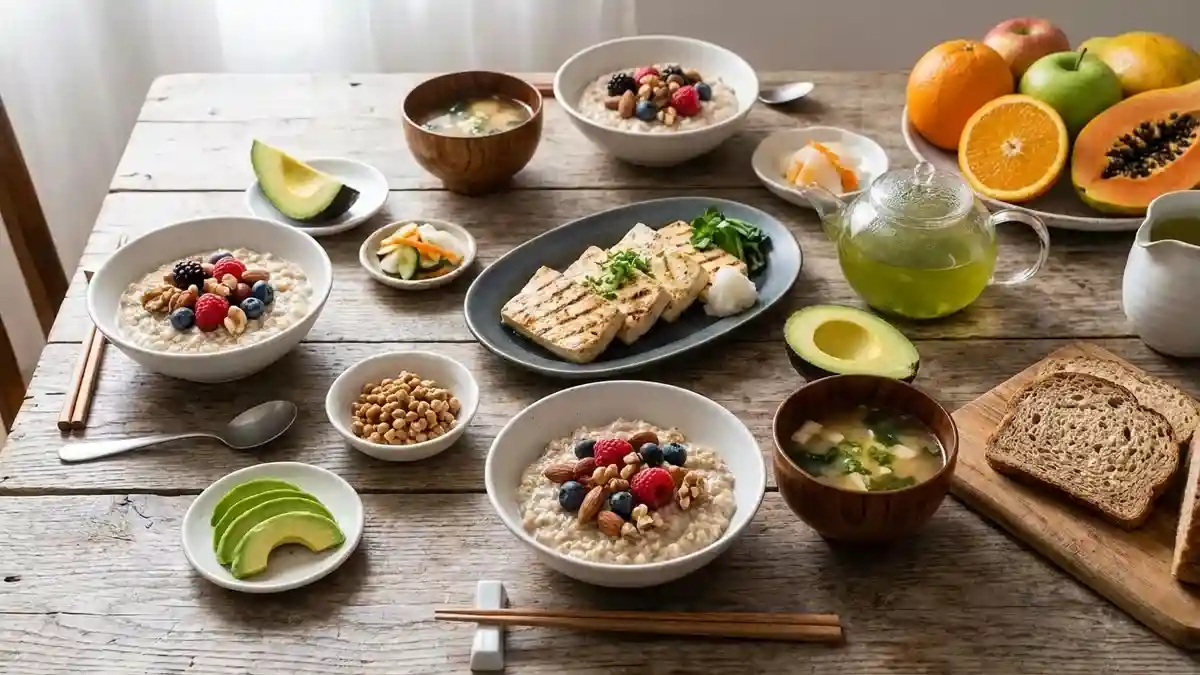
Base a bowl around slow-cooked steel-cut oatmeal. Stir in a spoonful of ground flaxseeds and top it with a generous handful of wild blueberries and walnuts. Drizzle a tiny bit of raw honey or a splash of unsweetened almond milk. Pair this with a hot cup of organic green tea. This combination floods your system with clean fiber, omega-3 fatty acids, and cellular-repairing antioxidants.
Option 2: The Eastern Longevity Platter
Prepare a small bowl of steamed multigrain brown rice. Serve it alongside a warm bowl of traditional miso soup loaded with cubed firm tofu and mineral-rich seaweed. If you are adventurous, add a small side of fermented natto. This savory, plant-based start provides highly bioavailable proteins and crucial probiotics that keep your digestive tract and metabolism running beautifully.
Conclusion: Start Your Century Today
Reaching your 100th birthday is built one morning at a time. By replacing hyper-processed breakfast foods with whole, living, plant-forward ingredients, you actively slow down the internal biological clock. Embrace the timeless wisdom of the world’s Blue Zones: eat deliberately, prioritize plant proteins, protect your gut, and let your first meal of the day set a peaceful, healthy tone for the rest of your life.
Frequently Asked Questions
Is it bad to drink coffee at breakfast if I want to live to 100?
Not at all. In fact, black coffee is consumed regularly in several Blue Zones, such as Ikaria and Sardinia. It is incredibly rich in antioxidants that support heart and brain health. The key is avoiding the addition of artificial creamers, sugary syrups, or heavy doses of refined sugar, which turn a healthy beverage into a metabolic hazard.
I don’t like the taste or texture of natto. What can I eat instead?
Natto can be an acquired taste due to its pungent aroma and sticky texture. If you want the same fermented, gut-boosting benefits without eating natto, swap it out for organic tempeh, traditional miso paste stirred into warm water, unpasteurized sauerkraut, or a serving of plain, unsweetened Greek yogurt.
Can I use quick-cooking instant oatmeal packets for my longevity breakfast?
It is highly recommended to skip pre-packaged instant oatmeal. These varieties are highly processed, strip away beneficial fiber, and are usually loaded with artificial flavorings and hidden sugars that cause insulin spikes. Stick to 100% whole rolled oats or steel-cut oats, which digest slowly and keep your blood sugar perfectly stable.
Why is plant protein prioritized over eggs or bacon in longevity diets?
While eggs can be a fine source of protein in moderation, traditional longevity diets like those in the Blue Zones rely heavily on plant-based proteins (such as tofu, lentils, and nuts). Plant proteins come naturally packaged with dietary fiber, vitamins, and zero cholesterol, which significantly reduces systemic inflammation and protects your cardiovascular system over decades of life.
How soon after waking up should I eat my longevity breakfast?
There is no rigid timeframe, but aiming to eat within one to two hours of waking up helps reset your metabolic clock and balances your cortisol (stress hormone) levels. If you practice intermittent fasting, simply ensure that when you do break your fast, your first meal consists of the whole, nutrient-dense foods outlined in this guide rather than processed carbs.