
Table of Contents
- 1. The Blanket as a Psychological Shield
- 2. The Thermoregulatory Challenge of Summer Sleep
- 3. Deep Pressure Touch: The Science of the Weighted Blanket
- 3.1. 1. Neurological Calming Across Diverse Groups
- 3.2. 2. The Power of Structured Pressure
- 4. Sleep, Hyperarousal, and the Trauma Response
- 5. The “One-Leg Out” Compromise: A Perfect Human Strategy
- 6. Practical Strategies for Hot Summer Nights
- 6.1. A Crucial Note on Weighted Blanket Safety
- 7. Accepting Your Sleep Rituals
- 8. Frequently Asked Questions (FAQs)
- 8.1. Why does a blanket make me feel secure even when I am consciously aware I am safe in my own home?
- 8.2. Can using a blanket in extreme heat cause dangerous heat exhaustion while sleeping?
- 8.3. Does the color or texture of my summer blanket impact how well I sleep?
- 8.4. Is the “one-leg out” trick scientifically proven to cool the body?
- 8.5. How heavy should a weighted blanket be if I want to try one for my insomnia?
The Neuroscience of Comfort: Why We Sleep Under Blankets in the Heat
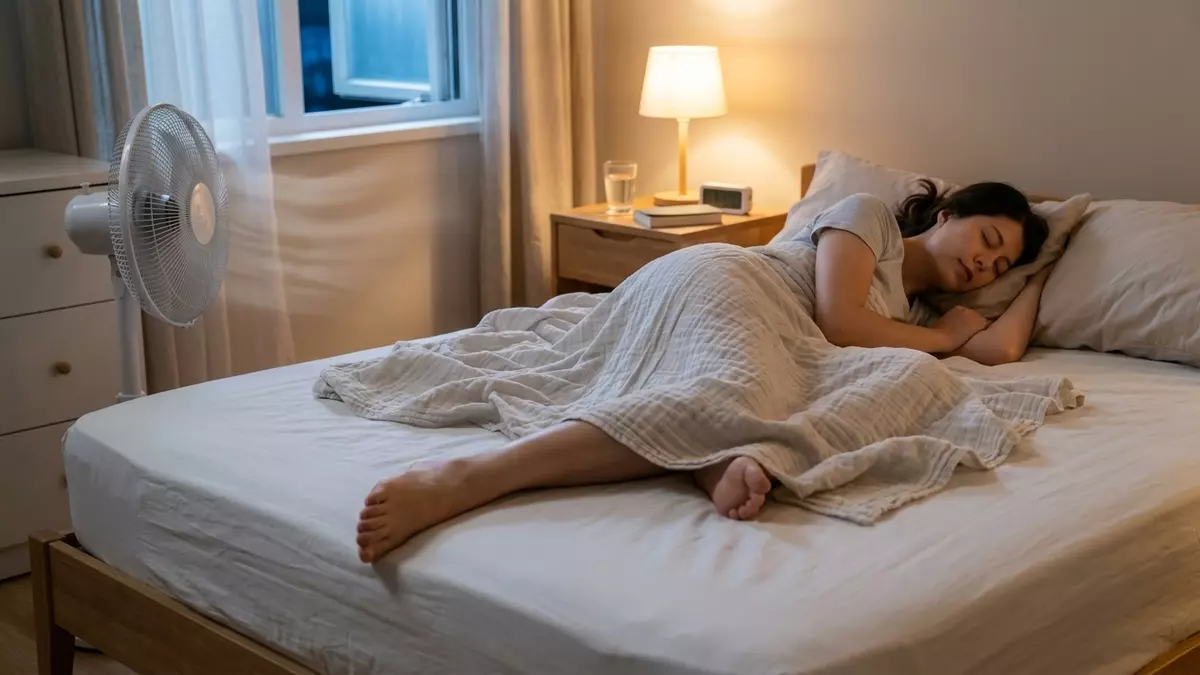
On the most scorching summer nights, bedtime can transform into a frustrating battle with the elements. You crack open the windows to catch a faint breeze, position a fan to blow directly across the mattress, crank the air conditioning, and yet—inexputably—you still find yourself reaching for a blanket to pull over your torso.
To an outside observer, this habit appears entirely contradictory. Why would any rational person add an insulating layer when their immediate environment feels like a sauna?
The explanation has far less to do with ambient temperature and far more to do with your neurobiology. According to Eva García, a prominent psychiatrist known widely across digital platforms as @dravapsiquiatra, this behavior is deeply rooted in evolutionary survival. As she noted in a social media post highlighted by La Vanguardia, sleeping with a fabric covering when you are already hot is not a strange or broken habit; it is your central nervous system actively searching for safety. Understanding this biological drive shifts the conversation from a quirky bedtime routine to a fascinating look at how our brains process stress, security, and sleep.
The Neuroscience of Comfort Why We Sleep Under Blankets in the Heat

The Blanket as a Psychological Shield
At its most fundamental level, the act of pulling a sheet or blanket over your body sends an immediate, powerful signal of shelter straight to the brain. It operates on the exact same psychological wavelength as closing your bedroom door, locking the front entrance, or drawing the curtains before turning off the lights. The fabric serves as a tactile boundary between your vulnerable, unconscious sleeping self and the unpredictability of the outside world.
[External Stress / Vulnerability] ──► Brain Perceives Exposure
                                            │
                                            ▼
[Pulling Fabric Over Body]        ──► Sends Signal of Shelter
                                            │
                                            ▼
[Nervous System Settles]          ──► Parasympathetic Activation (Sleep Ready)
For some individuals, this boundary carries profound emotional weight. Those who grew up in chaotic, unpredictable, or emotionally unstable households often develop an intense, subconscious reliance on these physical boundaries. In these instances, the bedtime blanket evolves into a reliable, unchanging stand-in for the comfort, stability, and protection that may have been lacking during their formative developmental years.
The Thermoregulatory Challenge of Summer Sleep
While the psychological need for a blanket is incredibly strong, environmental heat remains a formidable barrier to quality rest. The National Sleep Foundation notes that human core body temperature naturally drops as the sleep cycle initiates, acting as a metabolic green light for the brain to transition into deep rest. To facilitate this natural cooling process, experts firmly recommend maintaining a bedroom ambient temperature tailored between 60° and 67°F.

When a heatwave hits or your utility bill limits how high you can crank the AC, the air in your bedroom can quickly become heavy and stagnant. This creates a fascinating behavioral standoff:
The Biological Need: Your body must shed heat to achieve deep, restorative REM and slow-wave sleep.
The Psychological Need: Your nervous system demands the feeling of being covered, contained, and protected from exposure before it will allow the brain to switch off its internal alarm system.

Faced with this conflict, the nervous system almost always prioritizes safety over thermal perfection. We choose to sweat slightly under a sheet rather than feel exposed and anxious in the dark.
Deep Pressure Touch: The Science of the Weighted Blanket
To truly understand why the weight of a simple blanket possesses such a calming influence, we have to look at the clinical literature surrounding Deep Pressure Touch (DPT). This therapeutic concept refers to the distribution of firm, gentle, and steady physical pressure across the human body—closely mimicking the comforting sensation of a firm, prolonged hug or the swaddling of a newborn infant.
                  [ Deep Pressure Touch (DPT) ]
                                │
         ┌──────────────────────┴──────────────────────┐
         ▼                                             ▼
[Physiological Impact]                        [Clinical Outcomes]
  • Calms Autonomic Arousal                     • Better Sleep Quality
  • Shifts Away From Fight-or-Flight             • Reduced Negative Emotions
  • Promotes Grounding Sensation                • Lower Nighttime Anxiety
A comprehensive scientific review conducted by researcher Jie Yu and colleagues at the Zhejiang University School of Medicine took a deep dive into the relationship between weighted blankets and sleep metrics. Their findings, published in Frontiers in Psychiatry, brought several critical insights to light:
1. Neurological Calming Across Diverse Groups
The researchers discovered that the structured application of deep pressure consistently yielded better sleep quality and a marked reduction in negative emotions. This positive neurological shift was especially pronounced in clinical populations characterized by baseline nervous system hyperactivity, including individuals living with chronic insomnia, Attention-Deficit/Hyperactivity Disorder (ADHD), and Autism Spectrum Disorder (ASD).
2. The Power of Structured Pressure
A pilot randomized controlled trial published in BMC Psychiatry followed 102 adults diagnosed with clinical insomnia over a strict one-month period. The participants assigned to use weighted blankets reported vastly superior improvements in subjective sleep quality compared to those utilizing standard, lightweight bedding.
While objective wrist-worn activity trackers displayed a more complex, mixed pattern of movement, the psychological benefit was undeniable. Earlier randomized controlled trials focusing on specialized weighted chain blankets corroborated this, showing massive benefits for adults managing concurrent psychiatric diagnoses and severe sleep fragmentation.
Sleep, Hyperarousal, and the Trauma Response
This universal quest for nighttime safety fits perfectly into broader clinical mental health frameworks. The National Institute of Mental Health (NIMH) characterizes symptoms like feeling constantly tense, remaining hyper-vigilant, or feeling perpetually “on edge” as classic arousal markers of Post-Traumatic Stress Disorder (PTSD)—a condition that fundamentally alters how the brain evaluates environmental safety after experiencing frightening, stressful, or dangerous events.
To a hyper-aroused nervous system, an open, uncovered bed can feel incredibly dangerous. The brain interprets the lack of a physical covering as total exposure to potential threats.
It is vital to emphasize that not every person who demands a blanket during a summer heatwave is suffering from underlying trauma. Rather, this nearly universal behavior simply illustrates how our bedtime habits reflect the deep, primitive need to feel secure, anchored, and entirely settled the moment the lights go out.
The “One-Leg Out” Compromise: A Perfect Human Strategy
One highly specific behavior highlighted in psychiatric discussions resonates with millions of sleepers worldwide: the act of covering the entire body while leaving a single leg or foot sticking out from under the covers.
                       [ The Sleep Compromise ]
                                  │
         ┌────────────────────────┴────────────────────────┐
         ▼                                                 ▼
[ Core Body Covered ]                             [ Single Leg Exposed ]
  • Delivers Psychological Security                 • Radiates Excess Core Heat
  • Satisfies Nervous System Safety                 • Functions as a Biological Radiator
This is not a random, accidental movement; it is a highly sophisticated, intuitive compromise orchestrated by your subconscious mind. The covered portion of your body satisfies the nervous system’s primitive demand for physical protection and containment.
Meanwhile, the exposed limb acts as a biological radiator. Because the hands and feet contain specialized blood vessels designed to release heat quickly, sticking one leg out allows your body to dump excess core temperature into the room without forcing you to abandon your protective fabric shield. It is a beautifully human solution: covered enough to feel completely safe, yet uncovered enough to stay cool.
Practical Strategies for Hot Summer Nights
If you find yourself trapped in a nightly cycle of sweating under heavy bedding but unable to sleep without it, you do not have to force yourself to endure uncomfortable exposure. You can trick your nervous system into feeling secure while keeping your body cool by implementing a few practical adjustments:
Switch to Open-Weave Muslin or Bamboo: Replace heavy quilts and synthetic comforters with sheets made of pure bamboo, eucalyptus, or open-weave cotton muslin. These fabrics offer the physical weight and containment your brain craves while remaining incredibly breathable.
Utilize Dedicated Air Circulation: Position a quiet floor fan to blow air over your blanket rather than directly onto your bare skin. The moving air cools the fabric surface, helping pull heat away from your body.
Implement Sleep Partner Separation: If you share a mattress with a partner who radiates intense body heat, utilize separate twin-sized top sheets. This allows you to bundle up securely without trapping their ambient body heat inside your space.
A Crucial Note on Weighted Blanket Safety
If you choose to use a heavy or weighted blanket during warmer months, your physical safety must come first. Harvard Health publishing explicitly warns that anyone using a weighted blanket must possess the physical strength to move it off their body easily without assistance.
Furthermore, individuals living with chronic medical conditions like sleep apnea, asthma, or structural breathing difficulties should consult a physician before incorporating one into their routine. Parents must also seek guidance from a trained pediatric professional before introducing a weighted blanket to a young child’s bed.
Accepting Your Sleep Rituals
Ultimately, your insistence on sleeping under a blanket during a mid-July heatwave is a beautiful testament to how the human mind cares for itself. For some, it is merely a comforting habit passed down since childhood. For others, it serves as an essential somatic cue that whispers to the brain that the challenges of the day are finally over, the environment is controlled, and the room is safe.
If your summer blanket routine brings you peaceful rest and you aren’t waking up severely overheated or dehydrated, it is a healthy strategy to embrace. However, if you find that bedtime consistently fills you with intense anxiety, frightening thoughts, or an inability to settle down without performing rigid, exhaustive rituals, reaching out to a compassionate mental health professional can be an invaluable next step toward true, deep rest.
Frequently Asked Questions (FAQs)
Why does a blanket make me feel secure even when I am consciously aware I am safe in my own home?
Your conscious, logical mind knows your bedroom is secure, but your autonomic nervous system operates on a much more primitive, evolutionary level. To your ancient survival brain, being completely uncovered while unconscious mimics being exposed to predators in the wild. The tactile feedback of a blanket satisfies this primitive need for concealment.
Can using a blanket in extreme heat cause dangerous heat exhaustion while sleeping?
If you are sleeping in an unventilated, dangerously hot room (well above 85°F) with no airflow and using a thick, heavy comforter, you can experience dangerous overheating, heavy sweating, and severe dehydration. If you must use a blanket in high heat, ensure it is a paper-thin, breathable cotton sheet and utilize a fan to keep air moving.
Does the color or texture of my summer blanket impact how well I sleep?
Yes, sensory preferences play a major role in nervous system relaxation. Soft, familiar textures can trigger a greater release of calming neurotransmitters, while light, cool-toned colors (like soft blues, greens, or crisp whites) can psychologically make a bedroom feel visually cooler and more serene on hot nights.
Is the “one-leg out” trick scientifically proven to cool the body?
Yes. Your feet and ankles contain specialized vascular structures called arteriovenous anastomoses, which are designed to dissipate core body heat rapidly. Exposing a foot or leg allows your blood to cool down as it circulates near the skin’s surface, effectively acting as a highly efficient internal cooling mechanism for the rest of your body.
How heavy should a weighted blanket be if I want to try one for my insomnia?
The general clinical guideline for adults is to select a weighted blanket that weighs roughly 10% of your total body weight (for example, a 15-pound blanket for a 150-pound individual). However, during the hot summer months, you may want to scale down slightly or opt for a specialized “cooling” weighted blanket manufactured with glass beads and breathable bamboo fibers.