
Table of Contents
- 1. 1. The Circadian Clock: How Your Body Manages Time
- 2. 2. Late Dinners: Forcing Your Metabolism to Move Overtime
- 3. 3. The Alcohol Trap: Why Nightcaps Destroy REM Sleep
- 4. 4. Digital Hyper-Arousal: Why Your Phone Keeps the Brain On-Call
- 5. 5. Social Jet Lag: The Metabolic Cost of Weekend Sleeping In
- 6. Paying the Morning Bill: The Price of Sleep Deficiency
- 7. When Routine Adjustments Aren’t Enough: Spotting Sleep Disorders
- 8. Frequently Asked Questions (FAQs)
- 8.1. How many hours before bed should I ideally finish eating dinner?
- 8.2. If alcohol helps me fall asleep faster, why do I wake up feeling so tired?
- 8.3. Do blue-light blocking glasses completely protect my sleep if I use my phone at night?
- 8.4. Why is keeping a consistent wake-up time on weekends so important?
- 8.5. What is a simple, healthy alternative to an evening screen routine?
Your Morning Routine Isn’t Broken—Your Evening Habits Are
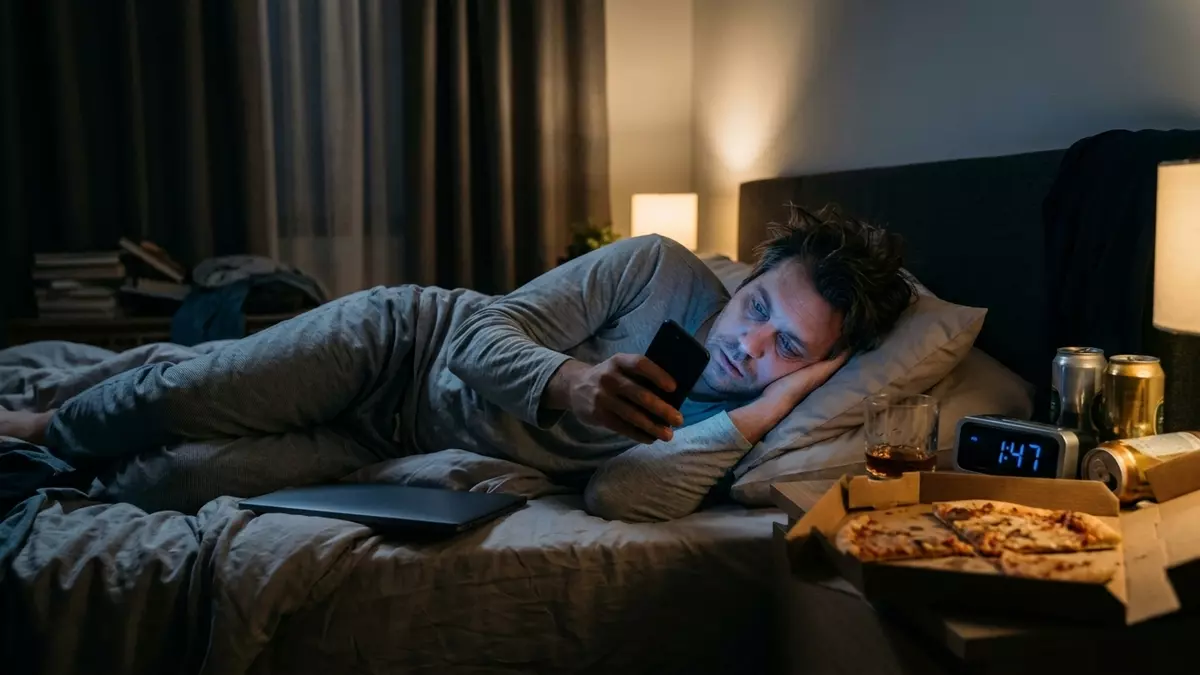
A miserable morning rarely begins with the chime of your alarm clock. More often, it is engineered the night before by a series of seemingly innocent choices: a heavy late-night dinner, a casual evening drink, a glowing phone screen in the dark, or a weekend bedtime that constantly shifts.
When we wake up feeling groggy, exhausted, and reaching desperately for caffeine, our first instinct is to blame our morning routine. However, sleep scientists and neurologists increasingly point to a more uncomfortable truth: sleep quality is determined long before your head hits the pillow.
Healthy sleep is not merely a numbers game based on how many hours you spend unconscious. It is actively shaped by the physiological signals your body receives during the evening. Those signals either instruct your brain to power down smoothly or force it to remain quietly on high alert. When you feed your system the wrong cues, you disrupt your body’s delicate internal architecture, ensuring that even a full eight hours of sleep can leave you feeling entirely depleted by morning.

Your Morning Routine Isn’t Broken—Your Evening Habits Are

1. The Circadian Clock: How Your Body Manages Time
At the heart of human sleep biology is the circadian rhythm—your master internal body clock. This evolutionary system operates on a rough 24-hour cycle, meticulously coordinating when you feel vibrant and alert, when your core body temperature drops, and when your hormone profiles shift into a restorative nighttime state.
According to formal guidelines from the Centers for Disease Control and Prevention (CDC), cultivating a high-performing sleep routine requires strict consistency. This includes:
Going to bed and waking up at the exact same time every single day.
Powering down electronic devices well before your sleep window.
Avoiding large, heavy meals and alcohol consumption late in the evening.

While these recommendations might sound basic, they directly target the exact behavioral habits that subtly compromise your sleep. When these habits are ignored, they create a frustrating paradox: your sleep might feel perfectly “fine” while you are unconscious, but it proves entirely useless for biological recovery by the time morning arrives.
2. Late Dinners: Forcing Your Metabolism to Move Overtime
Sitting down to a large, rich meal close to bedtime forces your gastrointestinal tract to work hard at digesting food at the exact moment your entire physical system is trying to enter a low-energy state.
[Late-Night Heavy Meal] ──► Blood Sugar Spikes & Digestion Stays Active
                                      │
                                      ▼
                      [Core Body Temp Fails to Drop]
                                      │
                                      ▼
                        [Fragmented Deep Sleep Stages]
In a tightly controlled clinical study published in Cell Metabolism, researchers Nina Vujovic and Frank Scheer of Harvard Medical School demonstrated that late-night eating significantly increased subjective hunger, altered appetite-regulating hormones, lowered overall energy expenditure, and shifted fat tissue metabolism in ways tightly linked to a higher risk of obesity. While an occasional late dinner won’t derail your long-term health, turning it into a regular lifestyle habit pushes your metabolic baseline in a highly destructive direction.
Meal timing is equally critical for blood sugar regulation. A randomized crossover trial revealed that consuming dinner just three hours earlier vastly improved 24-hour blood glucose levels and enhanced fat metabolism after breakfast the following morning, compared to a later dinner containing the exact same caloric and nutritional content. When you eat late, your blood sugar, stomach acids, and metabolic hormones remain highly active, preventing your core body temperature from dropping—a prerequisite for entering the deepest stages of physical recovery.
3. The Alcohol Trap: Why Nightcaps Destroy REM Sleep
Using a glass of wine, a beer, or a nightcap to relax before bed is one of the most common sleep strategies in modern society. Because alcohol is a central nervous system depressant, it undeniably acts as a shortcut to unconsciousness, helping you fall asleep faster. The biological tragedy, however, is that it facilitates the first step of the journey while utterly destroying the rest of the ride.
As clinical experts at the MD Anderson Cancer Center explain, alcohol aggressively suppresses REM (Rapid Eye Movement) sleep. This specific stage of sleep is the critical window linked directly to vivid dreaming, cognitive learning, memory consolidation, and deep emotional processing.
| Evening Habit | Biological Impact | Next-Morning Consequence |
| Late Dining | Keeps digestion active; prevents core temperature drop | Metabolic sluggishness; morning hunger spikes |
| Alcohol Consumption | Suppresses REM sleep; relaxes upper airway muscles | Brain fog; restless sleep; morning fatigue |
| Screen Exposure | Delivers blue light; blocks natural melatonin release | Delayed sleep onset; shallow sleep depth |
| Social Jet Lag | Desynchronizes master peripheral body clocks | Systemic grogginess; elevated metabolic risk |
When REM sleep is cut short by alcohol metabolism, you wake up the next morning feeling mentally foggy, emotionally volatile, and physically unrefreshed, regardless of how many hours you slept. Furthermore, this negative impact is significantly magnified in individuals who snore or live with sleep apnea—a condition where breathing repeatedly pauses throughout the night. Alcohol heavily relaxes the muscles in the back of the throat, drastically increasing noisy airway vibrations and triggering frequent, sudden micro-awakenings that tear you out of deep sleep.
4. Digital Hyper-Arousal: Why Your Phone Keeps the Brain On-Call
Bringing a smartphone, tablet, or laptop into bed introduces an artificial environment that is entirely incompatible with sleep. The issue isn’t just the physical light; it is the content. Your screen serves as a direct pipeline to stressful news, social comparisons, work obligations, and stimulating entertainment—giving your mind a hundred distinct reasons to stay highly alert.
A seminal study published in the Proceedings of the National Academy of Sciences (PNAS) regarding light-emitting e-readers confirmed the profound neurological disruptions caused by evening screen exposure:
Delayed Body Clock: Shifts the circadian rhythm backward, making it harder to fall asleep naturally.
Melatonin Suppression: Substantially blocks the release of melatonin, the essential hormone that tells your brain the environment is dark and safe for sleep.
Altered Sleep Architecture: Drastically extends the time it takes to fall asleep, while simultaneously cutting down total REM sleep duration.
Next-Morning Alertness Drop: Results in severe, immediate morning grogginess and reduced cognitive speed.
While modern blue-light filters and software “night modes” can soften the harshness of the light, they are not a biological cure. Reading a stressful work email or scrolling through an intense newsfeed activates your sympathetic nervous system (your fight-or-flight response). It leaves your brain completely on-call, making it impossible for your mind to drift into deep, restorative rest.
5. Social Jet Lag: The Metabolic Cost of Weekend Sleeping In
You do not need to step onto an airplane to experience the physical exhaustion of jet lag. Social jet lag occurs when your sleep-wake schedule on your days off diverges significantly from your schedule during the work or school week.
A large-scale 2025 epidemiological study utilizing comprehensive data from 4,438 U.S. adults discovered that shifting your sleep schedule by more than just one single hour on the weekend was directly tied to significantly higher odds of developing metabolic syndrome—even in individuals who maintained an entirely normal total sleep duration. Metabolic syndrome represents a dangerous cluster of interlinked health conditions, including:
Elevated blood pressure
High fasting blood sugar levels
Excessive body fat concentrated around the waist
Abnormal, unhealthy cholesterol or triglyceride profiles
This doesn’t mean you need to maintain military-grade discipline every weekend. The human body is incredibly resilient and can easily handle minor schedule variations. The danger arises when your routine swings wildly—such as waking up at 6:00 AM all week and then sleeping in until 10:00 AM on Saturdays and Sundays. This constant back-and-forth completely desynchronizes your internal body clocks, ensuring you feel chronically exhausted when Monday morning rolls around.
Paying the Morning Bill: The Price of Sleep Deficiency
When you routinely engage in these four evening habits, your body presents you with a steep biological bill the following day. According to clinical data from the National Heart, Lung, and Blood Institute (NHLBI), ongoing sleep deficiency severely compromises your brain’s fundamental cognitive architecture.
The immediate side effects of fragmented, poorly timed sleep manifest in everyday frustrations:
Sluggish, slow decision-making and delayed reaction times
A profound inability to maintain sustained mental focus or concentration
Increased irritability, mood swings, and emotional volatility
Compromised short-term memory and difficulty absorbing new information
This explains why you can feel completely non-functional even after spending eight full hours in bed. If your sleep stages are fragmented by active digestion, alcohol clearance, or evening blue light, your brain misses out on the deep, uninterrupted cycles required to clear out metabolic waste and restore your neural pathways.
When Routine Adjustments Aren’t Enough: Spotting Sleep Disorders
While optimization of your evening behavior can resolve standard morning tiredness, there is a major caveat to keep in mind. If you systematically clean up your evening routine—moving your dinners earlier, banning screens from the bedroom, and eliminating alcohol—yet your sleep remains consistently light, broken, or profoundly unrefreshing, the underlying problem may be an undiagnosed medical condition.
Certain physiological symptoms serve as clear warning signs that require a formal discussion with a qualified medical provider or a certified sleep specialist:
Loud, disruptive, or irregular snoring that disturbs others
Waking up with frequent, dull morning headaches
Sudden choking, gasping, or coughing fits during the middle of the night
An overwhelming, unmanageable sensation of daytime sleepiness despite ample time spent in bed
An uncontrollable, uncomfortable urge to move your legs while trying to rest
At this stage, your morning exhaustion is no longer a behavioral issue; it may be the result of a structural sleep disorder like clinical insomnia, obstructive sleep apnea, or restless legs syndrome. These conditions require an accurate diagnosis and a personalized medical treatment plan rather than simple lifestyle adjustments. However, for the vast majority of people, taking back control of your mornings simply requires giving your body clearer, calmer instructions before the lights go out.
Frequently Asked Questions (FAQs)
How many hours before bed should I ideally finish eating dinner?
To optimize your sleep quality and metabolic health, you should strive to finish your final meal of the day at least three hours before you turn off the lights. This window provides your stomach with adequate time to process the bulk of the food, allowing your digestion to slow down and your core body temperature to drop naturally.
If alcohol helps me fall asleep faster, why do I wake up feeling so tired?
While alcohol is an effective sedative that knocks you out quickly, it acts as a major disruptor to your underlying sleep architecture. As your liver processes the alcohol over the course of the night, the substance aggressively blocks your REM sleep cycles and causes frequent, shallow micro-awakenings. You spend the night in a light, fragmented sleep state rather than deep, restorative rest.
Do blue-light blocking glasses completely protect my sleep if I use my phone at night?
No. While blue-light filtering glasses can mitigate a portion of the hormonal suppression of melatonin, they do nothing to address the psychological hyper-arousal caused by digital screens. Interacting with work emails, social media feeds, or stimulating videos keeps your central nervous system highly alert and emotionally engaged, which delays your ability to slide into deep sleep.
Why is keeping a consistent wake-up time on weekends so important?
Your internal circadian clock thrives on absolute predictability. When you alter your wake-up time significantly on weekends, you cause an internal mismatch between your social schedule and your biological clock. This desynchronization disrupts your hormone release and metabolic function, leading to a state of chronic grogginess frequently termed “social jet lag.”
What is a simple, healthy alternative to an evening screen routine?
To help your nervous system transition out of a high-stress state, replace your smartphone use with low-stimulation activities during the final hour before bed. Reading a physical fiction book under soft, warm lighting, practicing gentle stretching or yoga, listening to calming music, or journaling about your day are highly effective ways to signal to your brain that it is safe to power down.