
**Certain Bat Lineages Raise Real Pandemic Concerns**
Bats frequently make headlines during disease outbreaks, but a new scientific analysis shifts the focus from blanket fear to smarter, targeted risk assessment. Rather than labeling all bats as threats, researchers have identified specific branches of the bat family tree where viruses with higher epidemic potential tend to cluster — especially in areas where human activities overlap with wildlife habitats.
This nuanced understanding comes at a critical time. With over 70% of emerging infectious diseases originating from animals, pinpointing where risks are greatest helps public health efforts stay ahead of potential spillovers without unnecessary panic. The study emphasizes that while bats host many viruses, only certain lineages combined with human encroachment create the conditions for serious concern.
Certain Bat Lineages Raise Real Pandemic Concerns

### Understanding the True Risk from Bats
Bats stand out among mammals for their ability to carry a wide variety of viruses while often remaining healthy themselves. This unique tolerance makes them important reservoirs, but not every species or individual poses the same level of danger. The latest research moves beyond simple lists of animals to examine evolutionary relationships and real-world transmission factors.
Scientists evaluated nearly 900 mammal species, including over 200 types of bats, along with more than 100 viruses across 23 families. They assessed each virus based on three key criteria: how severe it can become in humans, its ability to spread between people, and its historical death toll. This approach reveals that epidemic potential is not evenly distributed across all bats but concentrated in particular evolutionary branches.

### How Researchers Mapped Viral Epidemic Potential
Led by Caroline A. Cummings, Amanda Vicente-Santos, Colin J. Carlson, and Daniel J. Becker from institutions including the University of Oklahoma and Yale School of Public Health, the study used the mammal family tree to identify high-risk clades — groups of related species sharing common ancestors.
Instead of asking broadly whether a virus can infect humans, the team evaluated “viral epidemic potential.” This metric considers the virus’s harmfulness, human-to-human transmissibility, and documented impact. The result is a clearer picture: specific bats have co-evolved with particular viruses over long periods, creating unique dynamics that warrant closer attention.

Lead researchers highlighted that it’s not all bats carrying all dangerous viruses, but rather particular lineages with specific viral partners. This co-evolution means some bat groups have developed immune strategies that allow viruses to persist, increasing the chance of spillover under the right conditions.
### Which Bat Families Show Higher Risk
The analysis spotlighted several groups:
– **Horseshoe bats (Rhinolophidae)**: These emerged as notable for viruses associated with higher death burdens. Known for their distinctive nose leaves, horseshoe bats have been linked to coronaviruses in past studies, though the current work focuses on broader patterns rather than any single virus.
– **Vespertilionidae**: Often called evening bats or common insect-eaters, this large and widespread family includes many species that live near human settlements.
– **Molossidae (free-tailed bats)**: Fast-flying insectivores frequently found in urban and rural areas worldwide.
– **Emballonuridae (sheath-tailed bats)**: Another group with significant overlap in tropical and subtropical regions.
These families aren’t inherently villainous. Many provide valuable ecosystem services, such as consuming massive quantities of crop-damaging insects, pollinating plants, and dispersing seeds. The concern arises when their habitats intersect with expanding human populations, agriculture, and infrastructure.
### Hotspots Where Human Pressure Meets Bat Habitats
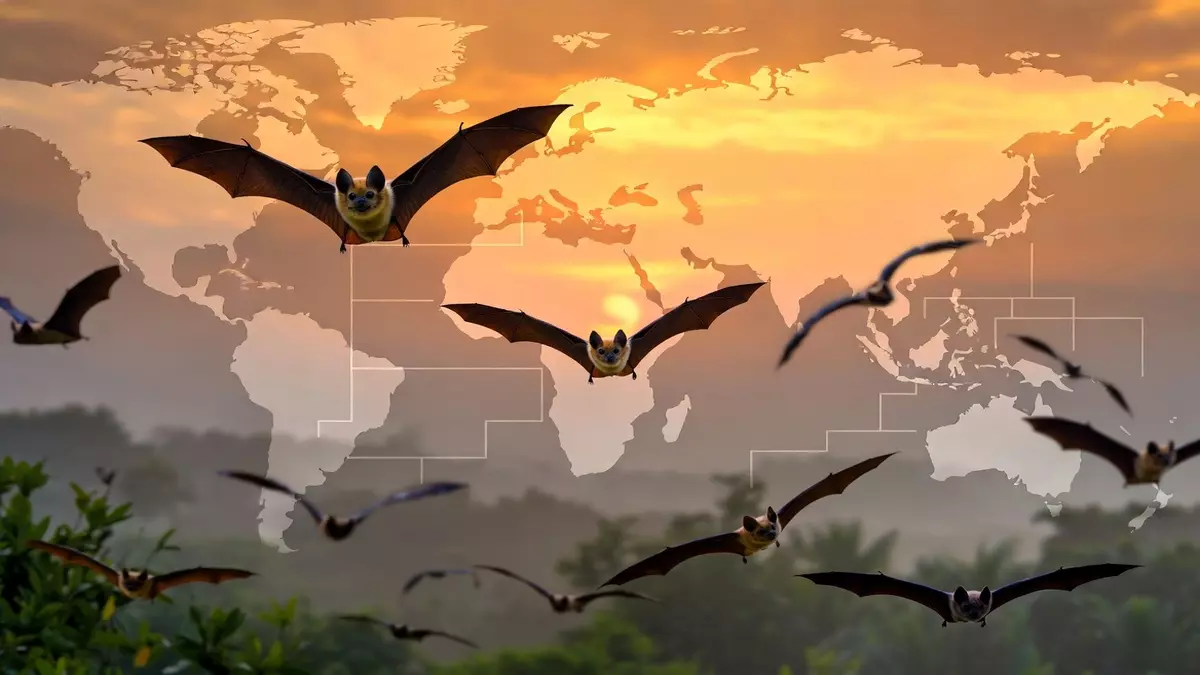
One of the study’s most actionable insights is the geographic overlay. When researchers mapped high-risk bat lineages against areas of intense human activity, clear hotspots appeared in:
– Central America
– Coastal regions of South America
– Equatorial Africa
– Southeast Asia
These areas often feature fragmented forests, expanding farmland, mining operations, and rapid urbanization. Such changes force bats into closer proximity with people, livestock, and domestic animals, raising spillover opportunities through shared water sources, disturbed roosts, or contaminated food supplies.
Forest edges, abandoned buildings, mines, and agricultural zones represent interfaces where accidental contact becomes more likely. This human-wildlife overlap, rather than the bats themselves, drives much of the elevated risk.
### Lessons from Past Spillovers and Research
Previous studies, including work published in *Proceedings of the Royal Society B*, describe spillover as a multi-step process. It requires a reservoir host shedding virus at the right time, in the right place, with susceptible humans or animals nearby. Breaking any link in that chain — through better habitat management, reduced disturbance of roosts, or improved surveillance — significantly lowers the odds of new outbreaks.
Bats’ role in emerging diseases is well-documented, from Nipah virus to certain coronaviruses. However, the current analysis cautions against oversimplification. Not every bat encounter signals danger, and broad persecution of bat colonies can actually increase risks by stressing animals and forcing them into new areas closer to people.
### Why Targeted Monitoring Beats Blanket Fear
Comprehensive monitoring of every bat species everywhere isn’t feasible. Field research demands specialized teams, equipment, permits, and significant resources, often conducted at night in remote locations. By narrowing focus to high-risk lineages and geographic hotspots, public health agencies can deploy resources more effectively.
Practical recommendations include:
– Enhanced surveillance in identified hotspots
– Protecting critical bat habitats to reduce stress and displacement
– Educating communities about safe coexistence, such as bat-friendly building designs and avoiding disturbance of known roosts
– Improved diagnostics for rapid detection of unusual illnesses
Conservation efforts that maintain healthy bat populations may paradoxically lower long-term risks by supporting stable ecosystems less prone to viral spillover.
### The Broader Context of Zoonotic Disease Prevention
Zoonotic diseases represent the majority of emerging infections, making wildlife surveillance a cornerstone of pandemic preparedness. Factors like deforestation, climate change, wildlife trade, and intensive agriculture all amplify risks across species — not just bats.
This study reinforces the need for a One Health approach that integrates human, animal, and environmental health. Investing in biodiversity protection, sustainable development, and global cooperation offers the best defense against future threats.
For individuals, simple actions matter: avoid handling wild bats, ensure pets are vaccinated where relevant, and support organizations working on habitat preservation and responsible land use.
### Balancing Fear, Facts, and Conservation
Public perception often swings between ignoring risks and overreacting with harmful actions like culling bat populations. Evidence shows that killing bats disrupts ecosystems and can worsen disease dynamics by eliminating natural controls on insect populations or stressing remaining animals.
Bats contribute billions of dollars in agricultural value annually through pest control. Their decline would impact food security and increase reliance on chemical pesticides. Respecting their ecological roles while addressing genuine risks represents the balanced path forward.
### What This Means for Future Preparedness
As human populations grow and environments change, understanding specific risks helps prioritize prevention. The research provides a valuable framework for focusing surveillance efforts, guiding policy, and informing conservation strategies worldwide.
Ongoing studies will likely refine these findings further, incorporating new data on viral dynamics, bat behavior, and climate influences. International collaboration remains essential, as viruses do not respect borders.
### Conclusion: Smarter Science for Safer Coexistence
Certain bat lineages and their viruses deserve focused attention, particularly where human activities press against wildlife habitats. This targeted insight marks an important evolution in how scientists and health officials approach zoonotic risks — moving from fear of all bats to strategic protection and monitoring of the most relevant areas and species.
By supporting habitat conservation, responsible development, and evidence-based surveillance, we can reduce the chances of future outbreaks while preserving the vital benefits bats bring to ecosystems and agriculture. The key lesson is clear: informed vigilance and coexistence, not panic or persecution, offer the best protection against potential epidemics.
This research underscores humanity’s interconnectedness with the natural world. As we continue exploring these relationships, we gain tools to safeguard both public health and biodiversity for generations to come.
### FAQ: Bats, Viruses, and Epidemic Risks
**1. Are all bats dangerous carriers of diseases?**
No. While bats host many viruses, only specific lineages show elevated epidemic potential according to the study. Most bat encounters pose very low risk to humans.
**2. Which bat families are considered higher risk?**
Horseshoe bats (Rhinolophidae), Vespertilionidae, Molossidae, and Emballonuridae stood out in the analysis for associations with viruses of greater concern.
**3. What should I do if I find a bat in my home?**
Avoid direct contact. Contact local wildlife professionals or health authorities for safe removal. Do not attempt to handle or kill the bat yourself.
**4. Why do bats carry so many viruses without getting sick?**
Bats have unique immune systems adapted to flight and long lifespans, allowing them to tolerate infections that might affect other mammals more severely.
**5. Can habitat protection really reduce pandemic risks?**
Yes. Maintaining healthy ecosystems and reducing human-wildlife conflict helps prevent the conditions that lead to viral spillovers.
**6. How can everyday people help lower zoonotic disease risks?**
Support conservation efforts, avoid disturbing wildlife, practice good hygiene around animals, and stay informed through credible scientific sources.
**7. Is this study saying we should fear bats in certain regions?**
Not at all. It calls for smarter monitoring and coexistence strategies in high-overlap areas rather than fear or harm to bat populations.